|
Written by Kieran Delamont, Associate Editor, London Inc. | |
LABOUR & EMPLOYMENT
Border patrol
Should Canadian companies rethink employee travel to the U.S.?
| | |
YOU’VE LIKELY SEEN the stories lately of the sharp drop-off in Canadian tourism to the U.S., said to have declined by as much as 70 per cent already, as Canadians adjust their tourism spending in the wake of, well, you know…
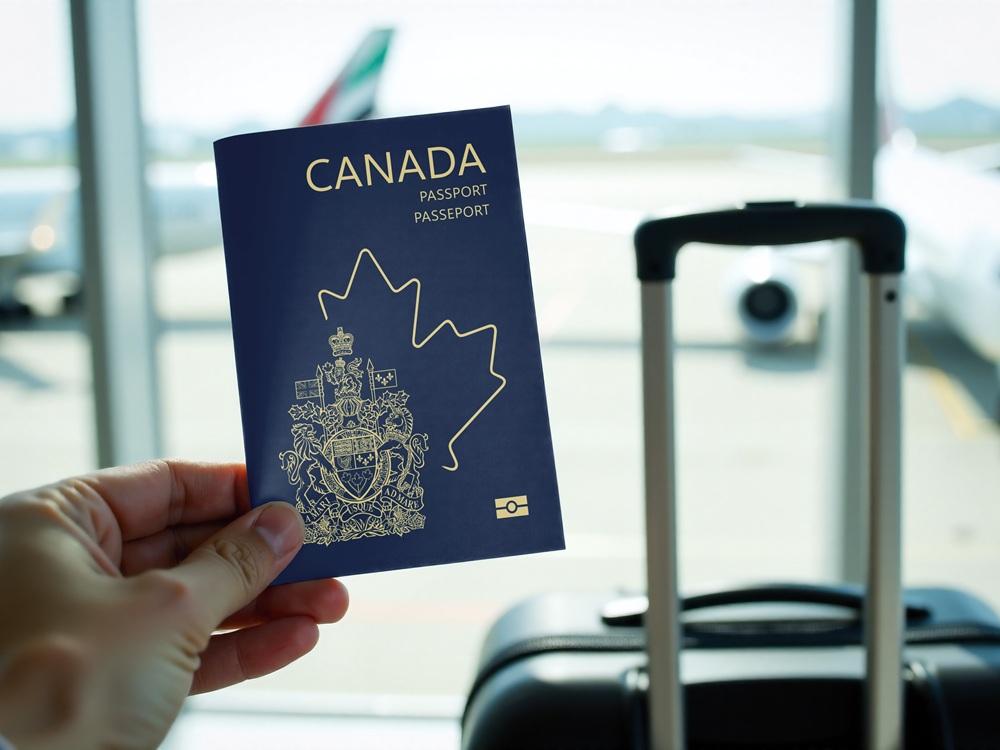
But what about business travel? Should employees be concerned if they are asked to travel to the United States ― and should employers be sending them at all?
“There is just tremendous fear, for numerous reasons,” said immigration lawyer Heather Segal. “There’s fear of getting detained. There’s fear of not getting into the United States. There’s a fear but no one's exactly sure what they’re afraid of. They don’t know what they’ve done wrong. There’s a sense of guilt, but ‘I don’t know what I did.’”
She advises anyone travelling to the U.S. right now to expect extra questions at the border ― and tells clients to only travel with a burner cell phone.
Consulting firm KPMG’s Canadian legal division seemed to echo this sentiment in a bulletin they put out to employers recently, pointing out that any data being stored on a laptop, phone or other electronic device ― including private company data ― is increasingly subject to search by federal border guards. “No information, data or files should be stored on a device that a traveller would not be comfortable sharing with a U.S. government representative,” KPMG Law Canada said.
The high-profile detention of Canadian actress and entrepreneur Jasmine Mooney, who spent 11 days in ICE detention, has heightened the tension on this issue, and contributes to another question for businesses: what do you do if your employee refuses to cross the border?
“In light of the recent detention of Canadian citizen Jasmine Mooney, employers need to take their employees’ concerns about cross-border risks and safety seriously,” said lawyer Lai-King Hum. This is especially true of any employees who are transgender, have had abortions or who have expressed political opinions online. “Employers should avoid sending LGBTQIA+ individuals to the U.S., especially when they express safety concerns. Employers must carefully consider these circumstances to avoid human rights violations or constructive dismissal claims.”
In the end, Hum advises taking a non-confrontational tack right now. If you don’t have to send them at all, it might be prudent to skip it altogether. If it is necessary, don’t send an employee to the U.S. who is uncomfortable with it. “Some employees love travelling, and others do not,” she said. “Employers can simply assign the travelling to workers who love it, which helps maintain team morale.”
| |
CULTURE
It’s time to put a stop to the ludicrous job titles
If you want to be taken seriously, maybe calm down with the goofy job titles
| | |
ONCE UPON A time, the C-suite was a standardized environment: You had your chief executive officer, plus chiefs of marketing, operations, finance, human resources, technology, and that was that.
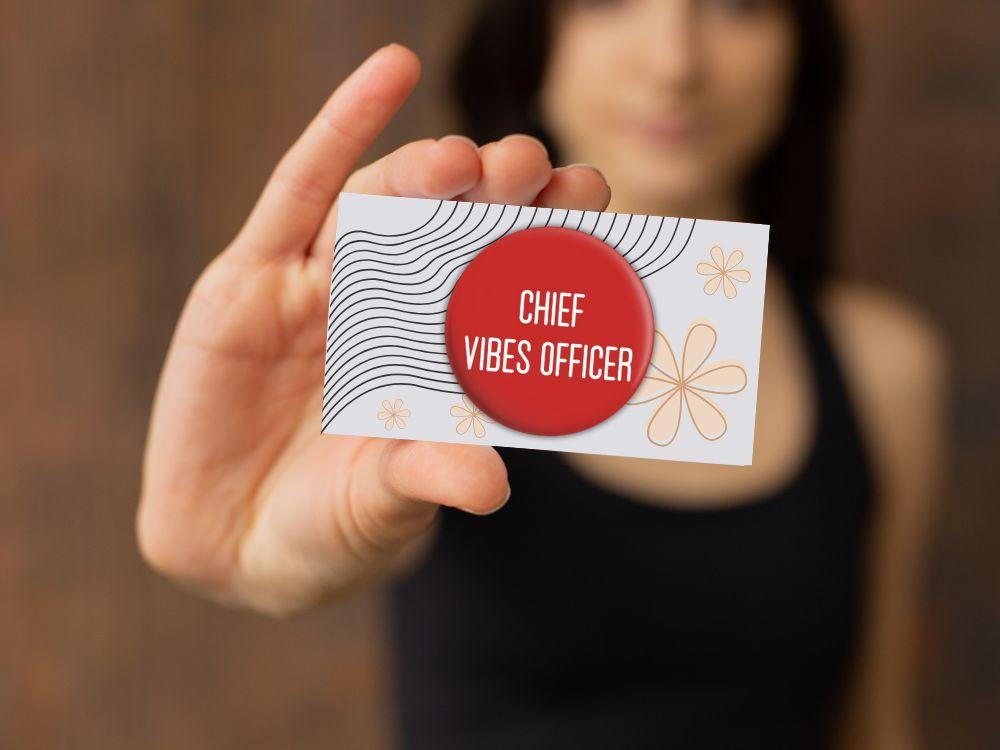
Today? Not so much. The Wikipedia list of corporate titles now lists 55 separate titles, from chief sustainability officer to chief visionary officer. And those are just the conventional titles ― more and more we’re seeing titles like ‘chief vibes officer’ or ‘chief happiness officer’, titles that are meant as signifiers of company culture or priorities. (Possibly the most famous version of this is Elon Musk, who in 2021 officially switched his title from CEO to [sigh] ‘Technoking of Tesla’.)
The trend has been around since the early 2000s, when the dot-com boom birthed a lot of software startups that used unique job titles as tools to attract talent, and to describe functions that didn’t quite pigeonhole into the usual categories. Over the ensuing two decades, these job titles have stuck in varying degrees and generally reflect cultural or branding ambitions of the company using them.
In many digital companies, for instance, the title ‘growth hacker’ has taken hold, describing people whose job it is to find ways to supercharge growth. “The term hacker implies finding clever shortcuts and solutions that others might miss, and appeals to candidates who pride themselves on creativity and seeing opportunities where others don’t,” explained DigiDay writer Tony Case. Other examples include jobs like ‘director of first impressions’ or ‘innovation alchemist’.
There are pros and cons to this, say experts. “For organizations, these inflated titles can indeed attract talent seeking more than a paycheque,” wrote Oliver Smith in Fortune. But the arms race for creative job titles has a downside, he argued, if the terms become so absurd as to lack any real definition. “Does a chief vision officer outrank traditional C-suite execs? Do they overlap with the responsibilities of a strategic director or chief of staff? At what point does a head of vibe become just a branding exercise rather than a role with genuine authority?”
Truth is, most people have caught on to the gimmick by now and using them risks being startup-y ― and not necessarily in a good way. And even if the titles aren’t just gimmicks, they’ve most certainly moved into cliché territory.
“You may want to sound like a cool organization,” cautioned Eric Mochnacz, who has the boring title of director of operations at Red Clover. “But if the title is made up and doesn’t have any weight behind it or it causes more confusion, then why bother?”
| |
| |
Terry Talks: Why the quiet cutting trend could be bad for your business
| In this week’s Terry Talks, Ahria Consulting founder Terry Gillis explores ‘quiet cutting’, a trend which sees companies reassign employees to new roles instead of laying them off. While often well-intentioned, this practice can quietly damage workplace culture, lead to legal risks like breach of contract and erode trust if not handled transparently. Clear, open communication is key to ensuring employees feel respected and involved in decisions that impact their careers ― because how you manage change reflects who you are as an organization. | | | |
WORKPLACE
Five years on: How Covid forever changed the workplace
While the pandemic was devastating for most people, the healthcare system and the economy, it appears to have left a positive legacy for a vast majority of Canadian workers
| | |
IT ARRIVED WITHOUT much fanfare, but we’re exactly five years out from the first days of Covid lockdowns and the remote work explosion; for some, this month will have marked five years since they set foot in an actual office.
It’s also prompting surveyors and pollsters to ask Canadians to look back on the legacy of the pandemic, and they’re finding that despite all the anger and pain the pandemic unleashed, Canadian employees came away from it with a positive legacy.
Seventy-six per cent of Canadian professionals said they are more satisfied with their careers now than they were pre-pandemic, largely owing to the effect of flexible, remote work. Sixty-five per cent say that some level of flexible work is now a must-have for them. Additionally, 70 per cent feel they are more productive, and 54 per cent say they value in-office time more now than before.
“Flexibility wasn’t an extremely common topic of discussion and now it’s certainly at the forefront for employers and employees,” noted Koula Vasilopoulos, the senior managing director for Robert Half Canada.
But it’s not all positive ― “while employees really appreciate that flexibility and that balance, they also feel the workplace culture and employee engagement is suffering,” said Vasilopoulos.
Around a third said that workplace culture and engagement isn’t what it used to be, with one in five reporting they have more strained relationships with their coworkers. “It’s clear that businesses need to work hard to regain [this] lost ground,” said Robert Half himself.
But the negatives, experts suggested, aren’t just about the isolation of remote work, and the positives aren’t just about the flexibility of remote work. “What we found was there are a lot of other things that organizations do that account for people feeling better at work,” said Diogo Borba, a senior research analyst at the Conference Board of Canada, speaking to The Globe and Mail.
Happier employees, it seems, belong to companies who have adapted well to the new ways of working, not just those who try to force you to talk to your coworkers at the water cooler. “If you want to understand loneliness and isolation in the workplace,” said Borba, “you need to go beyond remote, hybrid and in-person.”
| |
REMOTE WORK
Bad microphone? The people on your call probably think less of you
As it turns out, a bad microphone may be standing between you and your next job
| | |
|
BY NOW, MOST of us have got a handle on Zoom calls. Dress appropriately (although this primarily applies to your shirt), have a clean and professional background and a little consideration to lighting goes a long way. All of it will help you appear more put together and agreeable in, say, an interview.
But science has proven it all goes to pot if one thing is wrong ― your microphone, to be specific.
A new Yale study found that having a cheap, “tinny” microphone on your Zoom calls incurs a huge penalty, “leading listeners to lower their judgments of a speaker’s intelligence, credibility and romantic desirability.” They add that it also can hurt an individual’s chances of landing a job.
“Every experiment we conducted showed that a familiar tinny or hollow sound associated with a poor-quality microphone negatively affects people’s impressions of a speaker ― independent of the message conveyed,” said the paper’s author Brian Scholl. “This is both fascinating and concerning, especially when the sound of your voice is determined not just by your vocal anatomy, but also by the technology you’re using.”
Scholl told Gizmodo that the idea for the study came from noticing his own bias ― on a call with one coworker with a good mic, and one with a bad one, he noticed that he thought the person on the better mic was making better points, before the psych professor caught this effect in action.
It’s an interesting bias, the authors note, because how much microphone you can afford does reflect your socioeconomic background to an extent; it also suggests that remote-first companies should make small investments to help equalize the playing field.
But they also note that it can be a pernicious bias because it’s completely hidden from the victim. “During videoconferencing, of course you know how you look,” said PhD candidate Robert Walter-Terrill. “But on a call with dozens of people, you may be the only one who doesn’t know how you sound to everyone else: you may hear yourself as rich and resonant, while everyone else hears a tinny voice.”
|
| | | | |