View as Webpage

October 2026


NC Family to Family Health Information Center

Needs Assessment Surveys

For Families:


The North Carolina Family-to-Family Health Information Center (F2F HIC), a program of the Exceptional Children's Assistance Center (ECAC), wants to hear from families of children and young adults with disabilities and special health care needs across North Carolina.


We want to learn what information, resources, and support would be most helpful to you and your family. Your responses will help us plan future trainings, resources, and services that better meet the needs of North Carolina families.


The survey should take about 10–12 minutes to complete. Your participation is voluntary. Your privacy is important to us. We will not ask for your name or contact information, and your individual responses will be kept confidential. Your answers will be combined with responses from other families to help us better understand the needs of families across North Carolina. Survey results will be used to guide future resources, trainings, and support services provided by the NC Family-to-Family Health Information Center (F2F HIC).


We truly value your feedback!

For Providers:


Providers who serve families and children with disabilities or special health care needs, we want to hear from you too! 


The NC Family-to-Family Health Information Center (F2F HIC), a program of the Exceptional Children's Assistance Center (ECAC), wants to hear from professionals who work with children and youth with disabilities and special health care needs (CYSHCN) and their families.


We want to learn which topics you would like more training or information about and what resources would help you better support the families you serve. Your feedback will help guide future trainings, resources, and professional support offered by the NC F2F HIC.


This survey should take approximately 5 minutes to complete. Your participation is voluntary. We will not ask for your name or contact information, and individual responses will be kept confidential. Survey results will be reported in summary form.


Thank you for sharing your feedback!


Your input will help the NC Family-to-Family Health Information Center develop trainings, resources, and support that better equip professionals to assist North Carolina families of children and youth with disabilities and special health care needs.


Medicaid Updates


  • New information available on the Innovations Waiver Dashboard - Average time waited on wait list before receiving a slot: On page 2 of the Dashboard you can see the “average time waited on wait list until receiving Innovations Waiver slot”. The average waiting time in NC is 12.26 years, according to the latest data available (March 2026). This dashboard should be updated in October. Orange county has the longest wait time at 16.92 years, and Hoke County has the shortest waiting time of 2.99 years. Click here to view the dashboard.
    
  • Updated Website: Requirements for Legally Responsible Individuals as Paid Caregivers - This webpage provides guidance related to the Community Alternatives Program for Children (CAP/C). This guidance is to help Case Management Entities (CMEs) who support CAP/C beneficiaries and provide guidance to CMEs related to requirements when a legally responsible person (LRP) or legally responsible individual (LRI) is a paid caregiver for a CAP/C beneficiary.


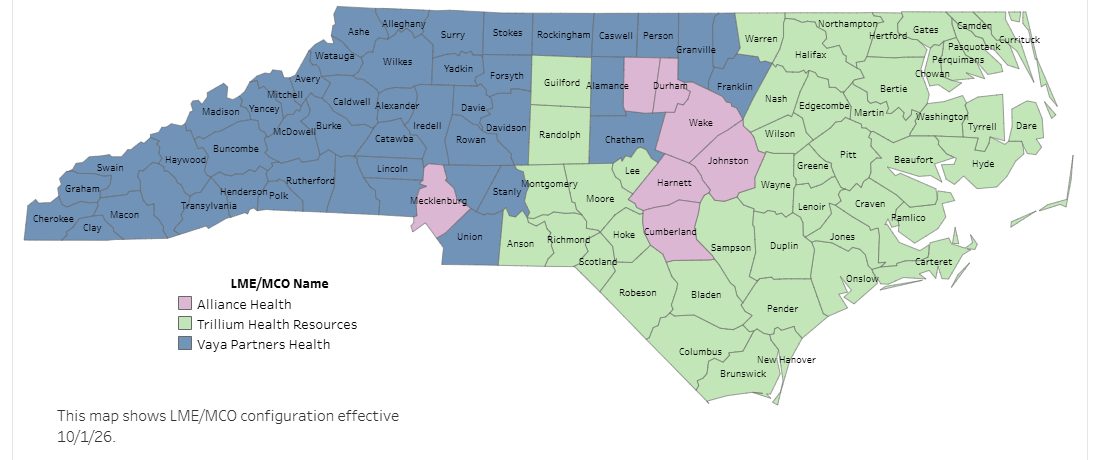
  • Vaya Health and Partners Health Management officially merged on October 1, 2026, to become Vaya Partners.  See the new Vaya Partners website here: https://vayapartners.org/

Non-partisan Voting Project

DRNC’s non-partisan voting project, Access the Vote NC, focuses on making voting accessible and available to people with disabilities.


NEW! Easier Access to Our Resources

Because every family deserves equal access to information, we're committed to making our resources easier to use for everyone.


At ECAC, we believe information should be accessible to everyone. That's why we've added a new accessibility feature to our website powered by DocAccess. When you open PDFs on our website, you'll now have the option to:


  • Read the document in an easy-to-navigate, screen reader-friendly format.
  • Search within the document to quickly find the information you need.
  • Translate documents into more than 150 languages.
  • View documents on your phone, tablet, or computer with improved readability.
  • Ask questions about the document using an AI-powered assistant to help locate information more quickly.


Whether you're looking for information about early intervention, special education, transition, health care, or other resources, we hope this new feature makes accessing our materials easier than ever.


Look for the "Accessible Version" option when opening PDFs on our website!


Innovative Approaches

Emergency Preparedness

Emergency preparedness is especially important for families with children who have disabilities, as their needs may require additional planning and support during a crisis. Being prepared helps ensure safety, reduce stress, and maintain continuity of care when emergencies occur.


Through our Innovative Approaches initiative, ECAC has developed a new Emergency Preparedness webpage featuring helpful tools and resources to support individuals with disabilities, families, and caregivers in planning for emergencies and disasters.

From creating an emergency plan to gathering essential supplies, these resources can help you and your family prepare for the unexpected.


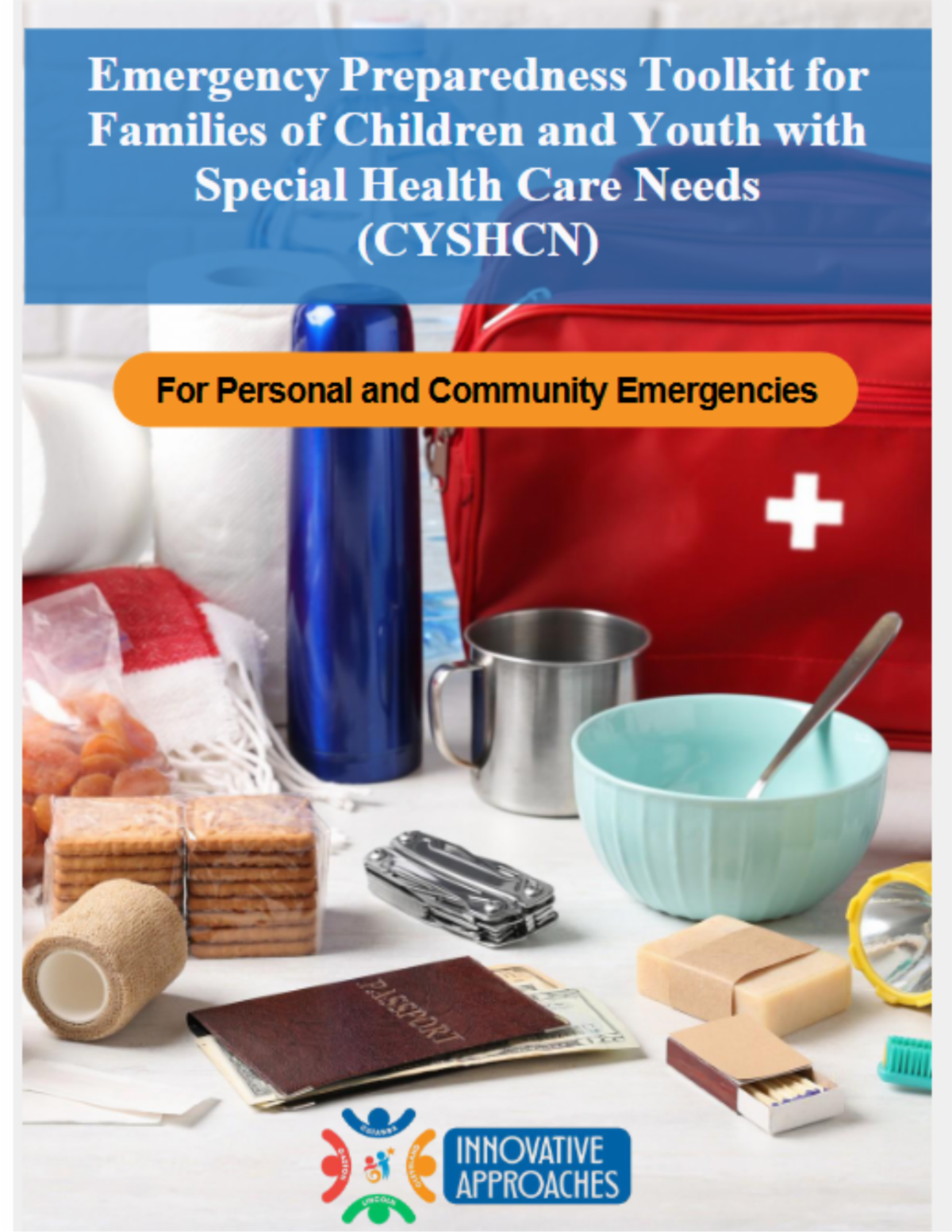
Emergency Preparedness Toolkit


ECAC’s Emergency Preparedness Toolkit offers helpful information and resources to help individuals with disabilities, families, and caregivers prepare for emergencies. Learn how to create an emergency plan, build a supply kit, and address disability-related needs to keep your family safe.


Click here to view the toolkit

Child Emergency Support Plan


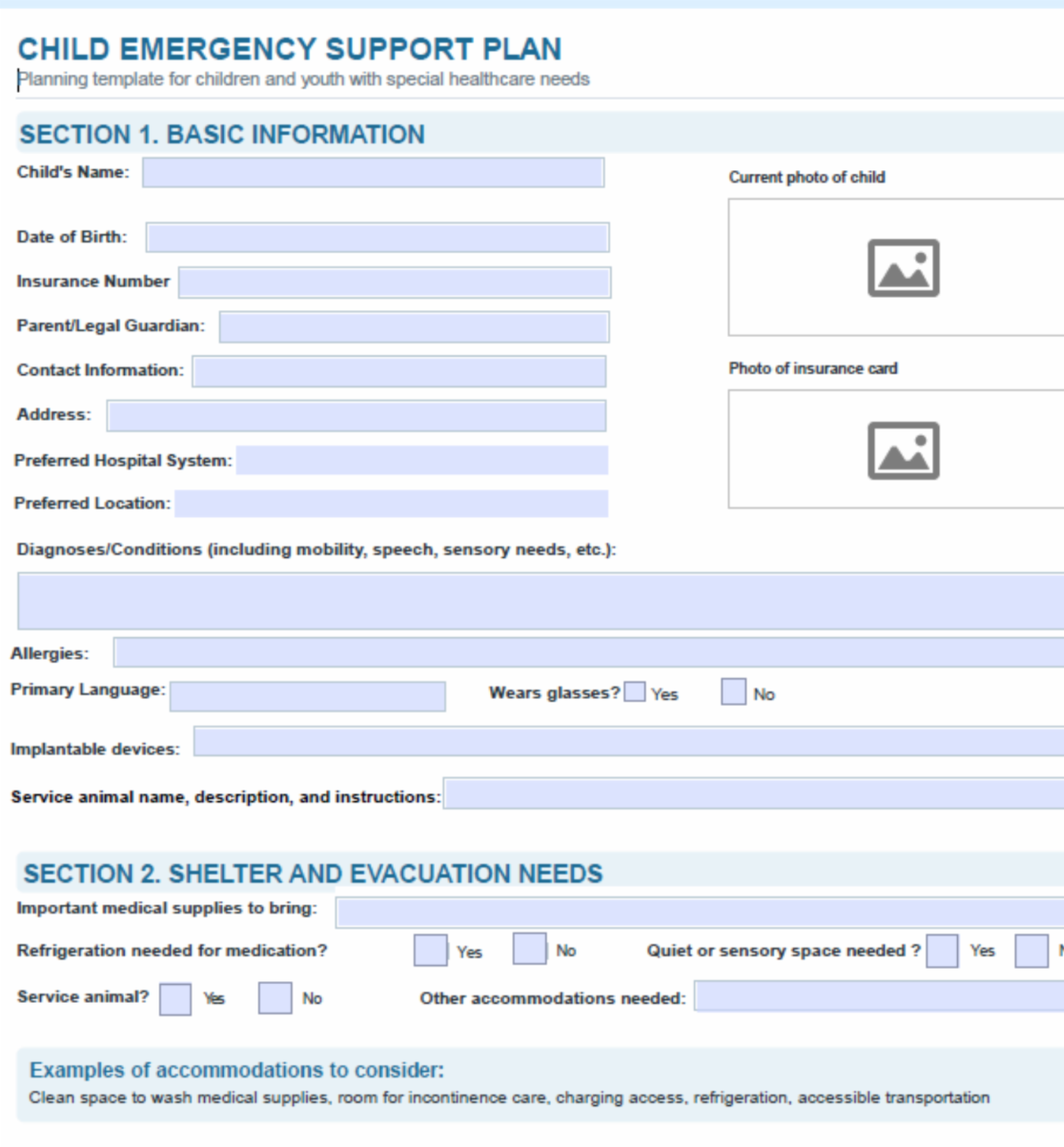
The Child Emergency Support Plan helps families organize important information about their child’s medical, communication, behavioral, and support needs to ensure their safety and well-being during an emergency.


Click here for the Child Emergency Support Plan

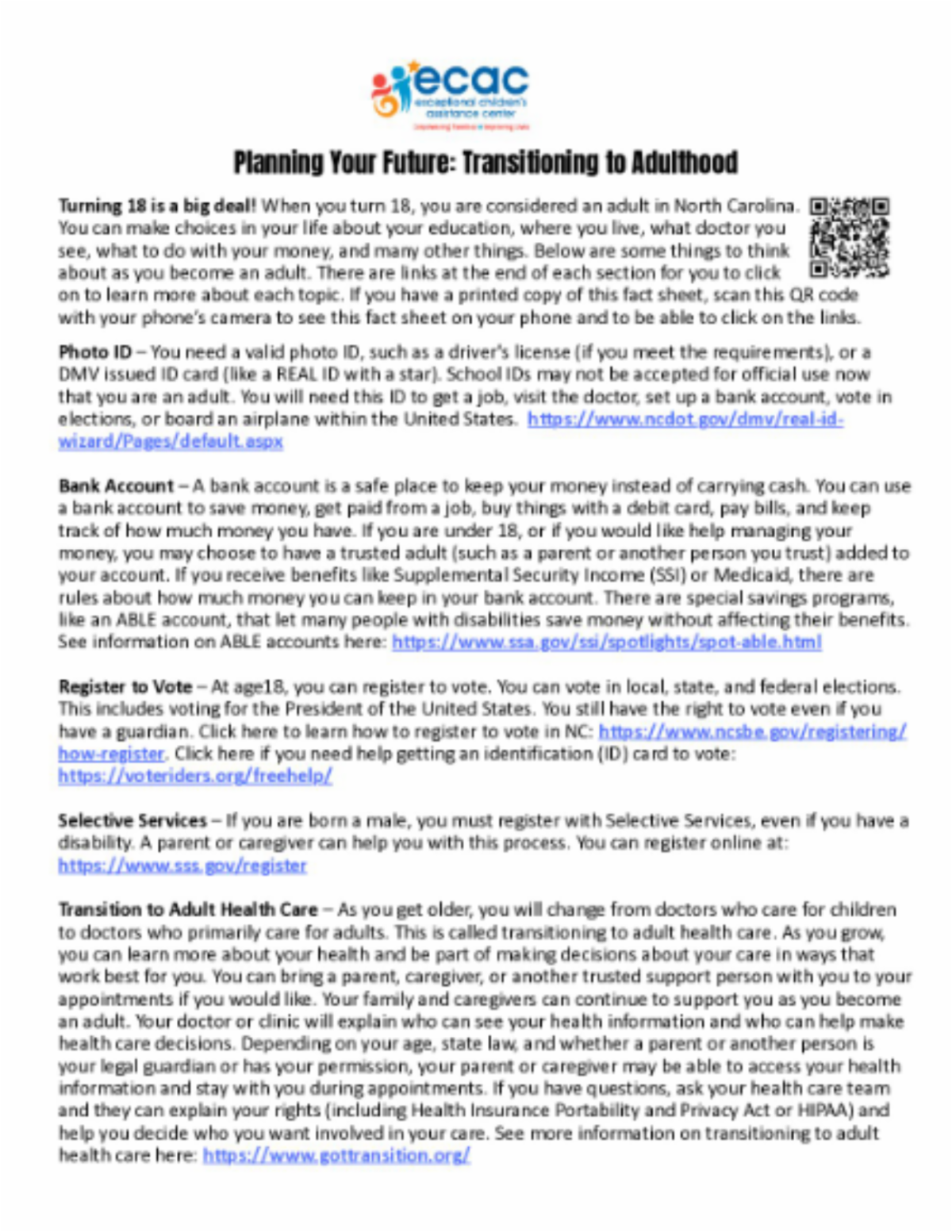
Transitioning to Adulthood


Turning 18 is a big deal! When you turn 18, you are considered an adult in North Carolina. You can make choices in your life about your education, where you live, what doctor you see, what to do with your money, and many other things. Use this document as a resource of some things to think about as you become an adult.


Click here to view the fact sheet

1-800-962-6817

www.ecac-parentcenter.org/

Facebook  Instagram  LinkedIn  X  YouTube