In January 2022, physician practices will face 9.75% cuts and ambulatory surgery centers face 6% cuts.
1. Physician Payment Cuts
- The expiration of the congressionally enacted 3.75% temporary increase to the Medicare physician fee schedule conversion factor, which was set into place to avoid payment cuts associated with budget neutrality adjustment tied to PFS policy changes.
- The expiration of the current reprieve from the repeatedly extended 2% sequester stemming from the Budget Control Act of 2011. It appears that while Congress originally scheduled this policy to sunset in 2021, it will now continue into 2030.
- The Imposition of a 4% statutory PAYGO sequester resulting from passage of the American Rescue Plan Act, presumably extending for at least another 10 years.
2. Facility Payment Cuts
- Under the present status, it appears that ambulatory surgery centers and other facilities will be suffering from a 2% cut from sequester extension and a 4% reduction with the imposition of a 4% statutory PAYGO sequester resulting from the passage of the Budget Control Act of 2011
3. Telephone Only Services
- CMS has eliminated coverage for telephone-only services (CPT 99441-99443), effective December 20, 2021.
|
|
Despite months of public and private efforts to make vaccines widely accessible, about 40 percent of adults in the United States are not yet fully vaccinated. As coronavirus cases surge, overwhelming hospitals in some parts of the country, colleges and universities, private employers, and states and cities are imposing vaccine mandates for employees, students, and customers. With new evidence suggesting that the delta variant is more transmissible than prior strains and that a majority of the remaining unvaccinated are unlikely to seek out vaccination, the United States urgently needs to use all available tools to increase vaccination rates and avoid continued surges, along with their health and economic impacts. The Medicare and Medicaid Conditions of Participation and Conditions for Coverage are untapped levers the federal government can use to support this effort.
To date, more than 500,000 health care workers have contracted the coronavirus and 1,673 have died from COVID-19. Unvaccinated health care workers put patients at high risk, given that their jobs require close interaction with unvaccinated patients and others who are immunocompromised and at higher risk for complications. Yet by the end of May, 1 in 4 hospital workers still had not been vaccinated at all.
|
|
Room Block Update
We will be adding more rooms and extending the room block
deadline to October 1.
If you plan to attend the Thursday afternoon workshop,
Regenerative Medicine Techniques with Ultrasound Guidance,
we recommend you book your hotel reservations today!
|
|
New York state’s healthcare system is bracing for staff shortages this week as a vaccine mandate took effect at midnight on Monday, presenting the largest test case so far of how similar requirements will play out across the country.
The mandate was beginning amid legal uncertainty for similar vaccine requirements in the state. A federal appeals court late Monday reversed an action that blocked a vaccine mandate for New York City’s public school workers.
|
|
Overdose deaths increased 180% among U.S. adults, large study finds
The number of overdose deaths involving psychostimulants besides cocaine -- primarily methamphetamine -- increased by 180% in recent years, a cross-sectional study from the National Institute on Drug Abuse (NIDA) found.
Using data from both the National Surveys on Drug Use and Health (NSDUH) and the National Vital Statistics System Multiple Cause of Death, overdose deaths increased from 5,526 in 2015 to 15,489 in 2019 (P<0.001 for trend), reported Beth Han, MD, PhD, MPH, and colleagues.
Past-year methamphetamine use increased by a weighted 43% over the 4-year period -- from 1.4 million (95% CI 1.2-1.6 million) to 2.0 million (95% CI 1.7-2.3 million, P=0.002), as described in JAMA Psychiatry.
|
|
Study authors and JAMA editorial say probably not
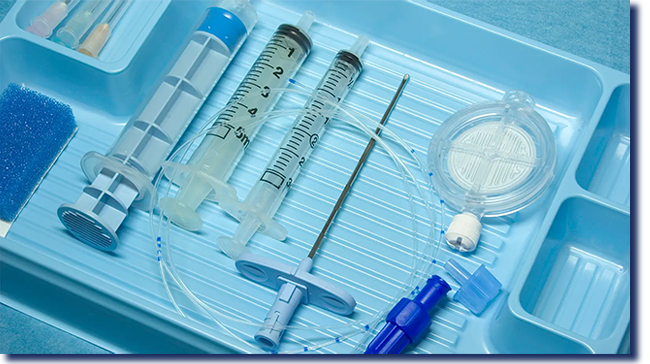
Two big studies hinted at small increases in risk of autism spectrum disorder (ASD) in children born to mothers who received epidural anesthesia during delivery, but their authors said it wasn't clear that there was a genuine association.
And an editorial in JAMA, where the studies were published, argued that even if it's real, it's too small to matter.
One of the studies, conducted in the Canadian province of British Columbia, found a crude hazard ratio of 1.32 (95% CI 1.24-1.40) in an analysis of nearly 400,000 births, which declined to 1.09 (95% CI 1.00-1.15) when adjusted for a variety of covariates.
|
|
A Special ASIPP Invitation |
|
Our collective research, and network is the most powerful instrument of healing. The best medical solutions can only come from continued learning and collaboration with those who administer it. That's why ASIPP is iviing you to join us at the 2021 The Orthobiologic Institute Conference!
Featuring 50+ Lectures, 70+ Speakers, Live Debates & Demonstrations.
|
|
Oxford's Leverhulme Centre for Demographic Science finds years of improving life expectancy have been swept away by the pandemic in countries across most of Europe, the US and Chile.
It showed that life expectancy in 2020-2019 was down across all four UK nations:
England and Wales: -0.91 female, -1.14 male
Scotland: -0.51 female, -1.06 male
Northern Ireland: -0.81 female, -0.76 male
Women in 15 countries and men in 10 countries had a lower life expectancy at birth in 2020 than in 2015, a year that also saw deaths increase due to flu.
|
|
Recommendations now align with terms of FDA authorization, agency says
In a rare move, CDC overruled the recommendations of the agency's Advisory Committee on Immunization Practices (ACIP) regarding who should get a booster of Pfizer's COVID-19 vaccine (Comirnaty).
In a statement released early Friday, the agency said those at high risk of occupational exposure, such as healthcare workers, may receive the Pfizer booster shot at least 6 months after the two-dose primary series, based on their individual benefits and risks. On Thursday, the ACIP voted 6-9 against recommending a booster in this population.
All ACIP recommendations are not final until they appear in the Morbidity and Mortality Weekly Report, which occurs after they are signed by the CDC Director. The agency appeared to couch the reasoning for their decision based on when these workers received their initial two-dose series.
|
|
ASIPP® is pleased to offer a new feature for
its members to help provide value to you and your practice.
Click here to visit ASIPP®'s newly created site where you can
make purchases on our Amazon Store, learn more about and
join the ASIPP® GPO and ASIPP®’s partnership with
Fedora Billing & Revenue Cycle Management Company.
|
|
With Congress looking to rein in Roth conversions, the tax-saving option could go away
Many Americans are using a previously little-known tax method to boost their savings. Now, the government is trying to stop it.
The tax strategy at issue is the mega-backdoor Roth conversion and it has allowed some Americans to amass sizable balances in tax-free Roth retirement accounts. On Sept. 15, the House Ways and Means Committee approved legislation from House Democrats that would prohibit use of the mega-backdoor Roth conversion starting Jan. 1, 2022.
|
|
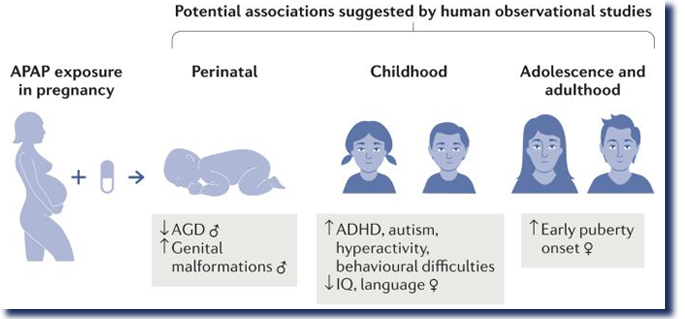
A growing body of experimental and epidemiological research suggests that prenatal exposure to paracetamol (N-acetyl-p-aminophenol (APAP), otherwise known as acetaminophen) might alter fetal development, which could in turn increase the risks of certain neurodevelopmental, reproductive and urogenital disorders1,2,3. APAP is the active ingredient in more than 600 prescription and non-prescription medications used to relieve mild to moderate pain and reduce fever (Consumer Health Products Association — acetaminophen). Sales of APAP-containing products, which are not restricted to pharmacies in many countries, are increasing worldwide4. Adverse effects of APAP are well known; for example, intentional overdose, unintentional overdose5,6 and chronic use have resulted in APAP being the leading cause of acute liver failure in children7 and adults5,8 in the Western world. Of note, APAP is widely used by pregnant women, as the FDA and EMA have long considered APAP-containing products to be of minimal risk when used as directed during pregnancy9,10.
|
|
Pain Medicine Case Reports (PMCR) and Editor-in-Chief Alaa Abd-Elsayed, MD, PhD would like to invite you to submit case reports and case series to the PMCR journal. Your article will be published free of charge.
Open access journals are freely available online for immediate worldwide open access to the full text of published articles. There is no subscription fee for open access journals. Open access journals are no different from traditional subscription-based journals: they undergo the same peer-review and quality control as any other scholarly journal.
Interested in becoming a member of the PMCR Editorial Board?
Editorial board members are asked to review 2-6 manuscripts per year. Please submit your most up-to-date CV to sgold@asipp.org for consideration.
For more information or to submit your articles, click here.
|
|
| CASE REPORT |
Karthik Dwarki, MD, Neil Patel, MD, and Ashish Malik, MD
Abstract
BACKGROUND: Radiofrequency ablation is a common approach for treating axial low back pain stemming from facet arthropathy. Many well-published complications have been addressed in the literature. This case demonstrates a hardware malfunction and underscores the importance of vigilance toward protocols to maintain radiofrequency probes during sterilization and reuse.
CASE REPORT: In our case, the patient underwent a successful bilateral 2-level neurotomy. At the completion of the procedure, we removed all instruments and found that the probe was no longer attached to the connector. Multiple postprocedure x-rays were negative for a foreign body; the probe was later found in the cannula intact. This case report illustrates a rare potential complication for foreign body retention in an outpatient setting.
CONCLUSION: Appropriate maintenance and handling of reusable probes during sterilization and use must be exercised. Alternatives include the use of disposable probes and connector cables.
KEY WORDS: Radiofrequency ablation, foreign body, probe
|
|
| ANAYSIS |
Yun Shen, MPH, Juan M. Hincapie-Castillo, PhD,
Scott M. Vouri, PhD, Marvin A. Dewar, MD, Jill M. Sumfest, MD,
and Amie J. Goodin, PhD
Abstract
BACKGROUND: Florida House Bill 21 (HB21) was implemented in July 2018 to limit Schedule II opioids prescriptions for patients with acute pain to a 3-day supply. Little is known about the potential unintended effects that such opioid restriction policies may have on chronic pain patients, who are exempt from the law.
OBJECTIVE: We aimed to evaluate the effect of HB21 on opioid utilization measures among a cohort of chronic opioid therapy (COT) patients.
|
|
| SYSTEMATIC REVIEW |
Lei Zhu, MM, Tongchuan Cai, MM, Yuzhou Shan, MM,
Wenjie Zhang, MD, Liang Zhang, MD, and Xinmin Feng, MD
Abstract
BACKGROUND: Percutaneous endoscopic transforaminal lumbar interbody fusion (PE-TLIF) has been increasingly used to treat degenerative lumbar disease in recent years. However, there are still controversies about whether PE-TLIF is superior to minimally invasive transforaminal lumbar interbody fusion (MIS-TLIF).
OBJECTIVES: To compare clinical outcomes and complications of PE-TLIF and MIS-TLIF in treating degenerative lumbar disease.
|
|
Since this malpractice insurance program officially launched in November 2018, ASIPP has signed up hundreds of providers with an average savings of 30%. This is professional liability insurance tailored to our specialty and will stand up for us and defend our practices.
Norcal Mutual is 'A' Rated by AM best and is license in all 50 states. To read a few important points to keep in mind about the program, including discounts, administrative defense, cyber coverage, aggressive claims handling, and complimentary award-winning risk management CME activities, click here.
|
|
ASIPP® is now offering our members the benefit of a unique revenue cycle management/ billing service. We have received a tremendous amount of interest in the ASIPP® billing and coding program.
Click here to learn more about the negotiated rate for practices and more!
|
ASIPP® has formed a partnership with Henry Schein and PedsPal, a national GPO that has a successful history of negotiating better prices on medical supplies and creating value-added services for the independent physician. Working with MedAssets, PedsPal provides excellent pricing on products like contrast media that alleviate some of the financial pressures you experience today.
|
|
up-to-date news related to you, your practice, and your patients!
|
|
|
|
|
|
|