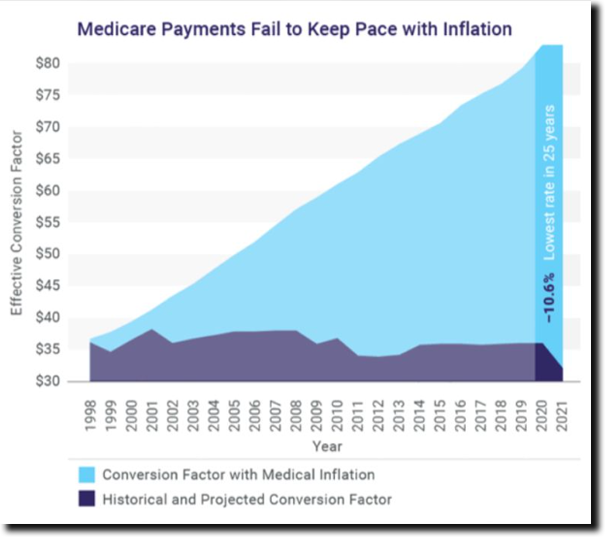
Compounded by an escalating 9% inflation, this equals a 20% cut!
This is worse than we expected. Your survival is at stake - respond now!
Join ASIPP's effort to reverse these alarming trends by clicking here.
|
|
|
To see sample rates compared to 2022, click here. In addition to the 4.4% cuts, some codes have faced higher reductions with very few codes facing increases. The same applies to 10.4% cuts.
In reference to ASCs, as of now, they are not proposing any cuts; however, a 6% cut will remain in effect unless the 2% sequester cut from ACA and 4% statutory PAYGO from the American Rescue Plan Act are eliminated.
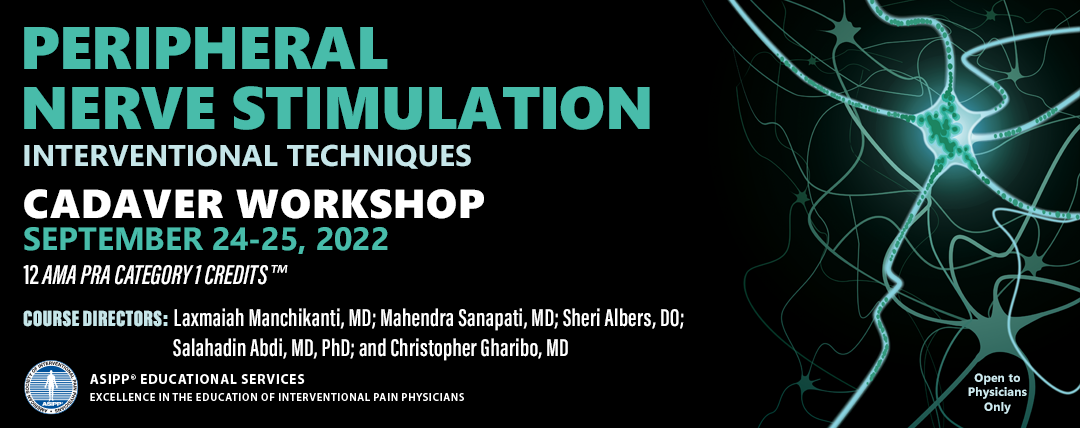
The fee schedule remains stable except for a few small increases. Some of the procedures that received major increases include sacroiliac joint arthrodesis and moderate increases for peripheral nerve stimulators.
|
|
First, let's look at the data
Has anyone noticed that the nation has been going through a 3-month surge in COVID-19 infections and hospitalizations that is just now beginning to abate? The CDC community levels on July 28 reported over 80% of counties at medium or high risk levels, an all-time high since the CDC began reporting such information back in late February. We're not out of the woods yet.
Most would agree that the worst outcome from COVID-19 has been the high degree of premature, avoidable death. This consequence felt more tangible than ever this May, when the U.S. surpassed the milestone of 1 million reported COVID-19 deaths.
But the true toll of the pandemic extends beyond deaths with "COVID-19" etched on the certificate.
As of August 23, the CDC estimates that over 238,000 excess deaths have occurred from causes other than COVID-19 since the start of the pandemic in 2020. In order to prevent this high level of excess mortality moving forward, we need to consider what triggered these non-COVID-19 excess deaths and clarify our takeaways from the mortality data since the beginning of the pandemic.
|
|
Register today for the CALSIPP Annual Meeting and join us for an Evening Cruise on the Bay!
Saturday, October 15 | 7:30 pm
|
|
Enjoy an entertaining three-hour yacht cruise around Newport Bay on a two-level contemporary yacht. Take in the beautiful sights from the outdoor viewing areas on the large bow, aft deck, or by strolling the walk-around decks.
Limited tickets are available, so do not wait! Tickets are $100 per registered meeting attendee or guest and must be selected on the registration form.
Register for the meeting and select the Cruise Add On.
|
|
CALL FOR ABSTRACTS!
has been extended through Friday, September 2.
|
|
No matter your company’s age, size, or legacy, it is vulnerable to a crisis. Recently, some of the world’s most prominent brands have come under fire from the media. Like when Uber lost 200,000 customers after the hashtag #DeleteUber trended when they operated during the Trump strike. Or when United Airlines lost $800 million in value in a matter of hours.
A 2021 PWC study showed that 35% of respondents had a crisis plan in place when the COVID-19 pandemic hit, and only 20% felt the pandemic positively impacted their organizations. Seeing the consequences Uber and United Airlines faced, companies must have a crisis management strategy.
|
|
NEXT EXAM DATES:
Part I
September 17, October 22, November 19, & December 17
Part II
September 23
|
|
Dr. Marty Makary on the public health risk of putting America's fate in the hands of one doctor.
Anthony Fauci is ending his long and celebrated government career by being widely lauded for getting so much so very wrong on Covid-19.
Now 81 years old, Dr. Fauci has spent 38 years as head of the National Institute of Allergy and Infectious Diseases, part of the National Institutes of Health. He has been rightly honored for his many contributions over the decades, most notably during the fight against AIDS, for which he was awarded a Presidential Medal of Freedom by George W. Bush. But to Covid-19 he brought a monomaniacal focus on vanquishing a single virus, whatever the cost—neglecting the damage that can follow when public health loses sight of the public’s health.
As the lead medical authority to two administrations on Covid-19, Dr. Fauci was unwavering in his advocacy for draconian policies. What were the impact of those policies on millions of Americans? And what would the country look like now had our public health experts taken a different approach? As Dr. Fauci is preparing to leave his post, those are a few of the questions worth asking as we consider his various Covid-19 legacies.
|
|
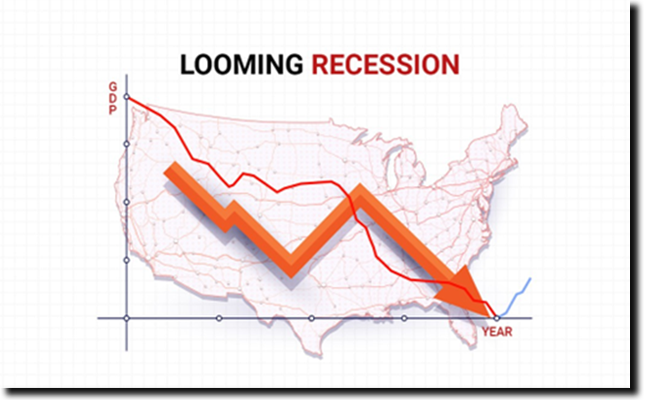
In the face of higher interest rates and rampant inflation, the jobs market is somehow still going strong. For instance, the economy added an estimated 390,000 jobs in May 2022 and 528,000 in July.
Many businesses have “hiring” signs up, proving that although the current global economic crisis is slowing down the U.S. economy, we are not quite in a recession yet. So, here’s a look at how a recession affects unemployment rates.
Unemployment Rate Measures
To better understand the job market and unemployment rates, it’s essential to know the different categories of ‘unemployed.’ To calculate the unemployment rate, the U.S. Bureau of Labor Statistics (BLS) uses six measurements ranging from U1 to U6.
|
|
"Our performance did not reliably meet expectations," said Walensky
The CDC has done a poor job responding to COVID-19 and will make major changes to its operations, CDC Director Rochelle Walensky, MD, MPH, said Wednesday.
"For 75 years, CDC and public health have been preparing for COVID-19, and in our big moment, our performance did not reliably meet expectations," Walensky said in a statement. "As a long-time admirer of this agency and a champion for public health, I want us all to do better and it starts with CDC leading the way. My goal is a new, public health action-oriented culture at CDC that emphasizes accountability, collaboration, communication, and timeliness. I look forward to working with the incredible people at CDC and our partners to realize the agency's fullest potential to benefit the health and well-being of all Americans."
"In April, I launched an effort to refine and modernize CDC structures, systems, and processes around developing and deploying our science and programs," Walensky said in an email to colleagues on Wednesday morning. "The goal was to learn how to pivot our long-standing practices and adapt to pandemics and other public health emergencies, then to apply those lessons across the organization."
|
|
|
|
Please plan to join us at the
2023 ASIPP Annual Meeting
March 16-18 National Harbor, Maryland
Register Early
More details will be posted on our website at asipp.org.
Registration begins November 2022.
|
|
For meeting or exhibitor/sponsor information:
|
|
- ASIPP Members Only Site Information - |
|
-
To log in for the first time you will need to click “forgot password” at the bottom of the login window.
- Check your email and then log in as directed.
-
If you have problems logging into your account, click here.
|
|
Pain Medicine Case Reports (PMCR) and Editor-in-Chief Alaa Abd-Elsayed, MD, PhD would like to invite you to submit case reports and case series to the PMCR journal. Your article will be published free of charge.
Open access journals are freely available online for immediate worldwide open access to the full text of published articles. There is no subscription fee for open access journals. Open access journals are no different from traditional subscription-based journals: they undergo the same peer-review and quality control as any other scholarly journal.
Interested in becoming a member of the PMCR Editorial Board?
Editorial board members are asked to review 2-6 manuscripts per year. Please submit your most up-to-date CV to sgold@asipp.org for consideration.
For more information or to submit your articles, click here.
|
|
| CASE REPORT |
Daniel Lopez, MD, Oleg Desyatnikov, DO, Leon Anijar, MD, Jessica Reyes, MD, and Kristy Fisher, MD
Abstract
BACKGROUND: Providing adequate analgesia for peripheral neuropathy in poorly controlled diabetics remains challenging, and effective invasive therapy increases the risk of infection and delayed wound healing. A peripheral nerve stimulator (PNS) is a beneficial treatment option for neuropathy. This case is IRB exempt from obtaining informed consent for publication. The report is de-identified in accordance with the Safe Harbor method. All 18 individual identifiers are removed, and there is no evidence to suggest that the information could be used alone or in combination with other information to identify the patient.
CASE REPORT: A 29-year-old woman with a medical history of poorly controlled type-1 diabetes mellitus, despite multiple medications, presented to an outpatient clinic with left lower extremity neuropathic pain following a right below-knee amputation (BKA) secondary to sustaining a nonhealing right foot wound. The patient underwent a PNS trial for 4 days, which resulted in a decrease in her pain level by more than half. A left lower extremity wirelessly powered permanent PNS device was placed, which resulted in improved sleep, ability to walk longer distances, and an 88% reduction in pain.
CONCLUSIONS: PNS was safe and successful for left lower extremity neuropathy in a patient with poorly controlled diabetes and a right BKA.
KEY WORDS: Peripheral nerve stimulator, diabetes, neuropathy, case report
|
|
| ONLINE QUESTIONNAIRE |
Brian Brenner, MD, Scott Brancolini, MD, Yashar Eshraghi, MD, Maged Guirguis, MD, Shravani Durbhakula, MD, David Provenzano, MD, Kevin Vorenkamp, MD, Shalini Shah, MD, Michael Darden, PhD, and Lynn Kohan, MD
Abstract
BACKGROUND: The COVID-19 pandemic resulted in a novel challenge for healthcare delivery and implementation in the United States (US) in 2020 and beyond. Telemedicine arose as a significant and effective medium for safe and efficacious physician-patient interactions. Prior to the COVID-19 pandemic, telemedicine while available, had infrequently been utilized in pain medicine practices due to difficulties with reimbursement, the learning curve associated with new technology usage, and the need for new logistical systems in place to implement telemedicine effectively. Given the unique constraints on the healthcare system during the COVID-19 pandemic, the ubiquitous utilization of telemedicine among pain medicine physicians increased, giving insight into potential future roles for the technology beyond the pandemic.
OBJECTIVES: To survey and understand the state of implementation of telemedicine into pain medicine practices across practice settings and geographical areas; to identify potential barriers to the implementation of telemedicine in pain medicine practice; and to identify the likelihood of telemedicine continuing beyond the pandemic in pain medicine practice.
STUDY DESIGN: Online questionnaire targeting Pain Medicine physicians in the US. Participants were asked questions related to the use of telemedicine during the first peak of the COVID-19 pandemic.
SETTING: Online-based questionnaire distributed to academic and private practice pain medicine physicians nationally in the United States.
METHODS: A 34 web-based questionnaires were distributed by the American Society of Regional Anesthesia and Pain Medicine and the Society of Interventional Spine to all active members. Data were analyzed using SAS v9.4
RESULTS: Between December 3, 2020, and February 18, 2021, 164 participants accessed the survey with a response rate of 14.3%. Overall, academic physicians were more likely to implement telemedicine than private practice physicians. Telemedicine was also more frequently utilized for follow-up appointments rather than initial visits.
LIMITATIONS: Although our n = 164, the overall low response rate of 14.3% warrants further investigation into the utilization of telemedicine throughout the COVID-19 pandemic.
CONCLUSIONS: Telemedicine as an emerging technology for efficient communication played a key role in mitigating the adverse effects of the COVID -19 pandemic on chronic pain patients. The utilization of telemedicine remarkably increased after the start of the pandemic within 1 to 2 weeks. Overall, private hospital-based centers were significantly less likely to implement telemedicine than academic centers, possibly due to limited access to secure telemedicine platforms and high start-up costs. Telemedicine was used more frequently for follow-up visits than initial visit encounters at most centers. In spite of the unforeseen consequences to the healthcare system and chronic pain practices in the US from COVID-19, telehealth has emerged as a unique model of care for patients with chronic pain. Although it has flaws, telehealth has the ability to increase access to care beyond the end of the pandemic. Further identification of barriers to the use of telemedicine platforms in private practices should be addressed from a policy perspective to facilitate increased care access.
KEY WORDS: Pain medicine, fellowship, telemedicine, practice management, opioids, COVID-19, health policy
|
|
| OBSERVATIONAL STUDY |
George Deng, MD, Ashley Smith, PhD, and Robert Burnham, MD
Abstract
BACKGROUND: Radiofrequency ablation (RFA) for the lumbar facet joints has demonstrated efficacy in the management of chronic low back pain. The traditional technique uses a conventional monopolar (CM) cannula placed parallel to the putative nerve to produce a thermal lesion resulting in pain relief of the facet joints. A new multi-tined (MT) cannula has come onto the market that allows targeting the putative nerve using a perpendicular to the nerve approach.
OBJECTIVES: This study describes the technique using the MT cannula and compares its efficacy and procedural characteristics to the CM cannula.
STUDY DESIGN: This is a pre-post crossover observational study.
METHODS: Fifty-one patients were recruited between June 2015 and March 2020. Each patient underwent 2 fluoroscopic guided lumbosacral RFA procedures on 2 separate occasions at the same facet joints, using the CM and MT cannula consecutively. The primary outcome measure was change in pain on the 11-point numeric rating scale (NRS). Secondary outcome measures included change in Pain Disability Quality of Life Questionnaire (PDQQ) score, duration and magnitude of pain relief, local anesthetic use, adverse events, procedural and fluoroscopy exposure time, and radiation dose.
RESULTS: There were no statistically significant difference between CM versus MT canula in terms of absolute (4.0 versus 4.3) and relative (52% versus 57%) change in NRS (P = 0.99) and PDQQ (22 versus 22, P = 0.61) at 3 months, or overall pain magnitude (71% versus 72%, P = 0.96) and duration of relief (8.7 months versus 8.4 months, P = 0.68). The procedures using the MT cannula were completed faster (37.6 minutes versus 31.1 minutes, P < 0.001) and required less local anesthetic (15.8 mL versus 11.0 mL, P < 0.001) and radiation dose (41.5 mGy versus 30.2 mGy, P = 0.05). No adverse events were observed with either cannula.
LIMITATIONS: This was an observational study at a single center with the proceduralist not blinded to the intervention.
CONCLUSION: This study demonstrated that the outcomes in terms of pain, disability, quality of life, adverse events, and fluoroscopy exposure time were equivalent between the 2 cannulae. However, RFA using the MT cannula was faster to perform and involved less local anesthetic and radiation.
KEY WORDS: Pain, radiofrequency ablation, facet joint, intervention, lumbar spine, fluoroscopy
|
|
Since this malpractice insurance program officially launched in November 2018, ASIPP has signed up hundreds of providers with an average savings of 30%. This is professional liability insurance tailored to our specialty and will stand up for us and defend our practices.
Norcal Mutual is A-Rated by AM best and is licensed in all 50 states. To read a few important points to keep in mind about the program, including discounts, administrative defense, cyber coverage, aggressive claims handling, and complimentary award-winning risk management CME activities, click here.
|
|
ASIPP® has formed a partnership with Henry Schein and PedsPal, a national GPO that has a successful history of negotiating better prices on medical supplies and creating value-added services for independent physicians. Working with MedAssets, PedsPal provides excellent pricing on products like contrast media that alleviate some of the financial pressures you experience today.
|
|
ASIPP® is now offering our members the benefit of a unique revenue cycle management/ billing service.
We have received a tremendous amount of interest in the ASIPP® billing and coding program.
Click here to learn more about the negotiated rate for practices and more!
|
|
|
up-to-date news related to you, your practice, and your patients!
|
|
|
|
|
|
|