Controversies on the effectiveness of spinal cord stimulation continue. Recently Drs. Manchikanti, Sanapati, and Hirsch wrote a response to the JAMA article (Response), JAMA Randomized Controlled Trial Comparing Spinal Cord Burst Stimulation Versus Placebo Stimulation with Lack of Effectiveness (Full Article).
Drs. Manchikanti, Sanapati, and Hirsch describe multiple issues that limit the generalizability of this randomized clinical trial, specifically in the United States.
|
|
Recently, Dhruva, et al published an article on Long-Term Outcomes in Use of Opioids, Nonpharmacologic Pain Interventions, and Total Costs of Spinal Cord Stimulators Compared with Conventional Medical Therapy for Chronic Pain, showing no difference (click here to read the full article).
In response Drs. Manchikanti, Sanapati, and Hirsch sent a Letter to the Editor pointing out various issues related to this study and potential reasons (click here to read the letter).
|
|
The Office of Inspector General for the United States Department of Health and Human Services has conducted yet another audit on facet joint interventions, this is the third audit. There have been extensive audits from UPICs, SMRC, Nordian, and RAC, and MAC contractors.
In this study (click here to read), OIG looked at 120 sample sessions, with only 54 complying with Medicare requirements.
The overall estimated overpayments appear to be $29.6 million for facet joint interventions for an audit period of August 1 through October 31, 2021, with new LCDs in effect.
Obviously, there will be even more audits and there will be recoupment from multiple providers on these claims.
It is crucial that we follow appropriate algorithmic approach and utilize checklists to avoid such issues.
|
|
Date is 3 years later than before, but AMA, other groups still concerned about program's future
WASHINGTON -- Interest groups here are sounding the alarm about a new report from the Medicare trustees that extended by 3 years the estimate for when the program would become insolvent.
"Based on our best estimates, this year's reports show that the Hospital Insurance (HI) Trust Fund will be able to pay 100% of total scheduled benefits until 2031, 3 years later than reported last year," the trustees explained in a fact sheet on the report. "At that point, that fund's reserves will become depleted and continuing program income will be sufficient to pay 89% of total scheduled benefits."
"Despite the downward revision to economic assumptions, the projected long-term finances of the HI Trust Fund improved since last year's report," the fact sheet continued. "The improvement is mainly due to lower projected healthcare spending stemming from updated analysis that uses more recent data."
|
|
Lessons learned and next steps for public-private vaccines
On May 11, the U.S. public health emergency (PHE) for COVID-19 will end. And with it, many Americans will no longer have access to free, government-sponsored COVID vaccines.
Under the Public Health Service (PHS) Act, the U.S. government purchased and distributed COVID-19 vaccines for free to its populace, regardless of insurance or citizenship status. The U.S. has spent more than $23.5 billion on purchasing 1.2 billion vaccine doses from Moderna and Pfizer (at a weighted average of $20.69 per dose) since they were deployed. This is on top of the initial government investment (through taxpayer dollars) for the development of the COVID vaccines of between $18 and $23 billion. Although the U.S. will continue to give out its substantial stockpile of vaccines for free to the uninsured until supply runs out (sometime in 2024, according to estimates from the Kaiser Family Foundation), COVID-19 vaccines and treatments will transition to being provided by commercial or public insurance entities. Therefore, the vaccine price point set by companies in the private sector will matter.
Moderna raised eyebrows last week -- including from Congress -- when it announced plans to increase the price of its COVID-19 mRNA vaccine by more than 400% from $26 to $130. Although Moderna has promised a patient assistance program to provide its vaccine for free for approximately 30 million uninsured Americans, the details on this program are scant and paperwork for such initiatives can be prohibitive.
|
|
Lumbar Endoscopic Spinal Decompression |
|
|
|
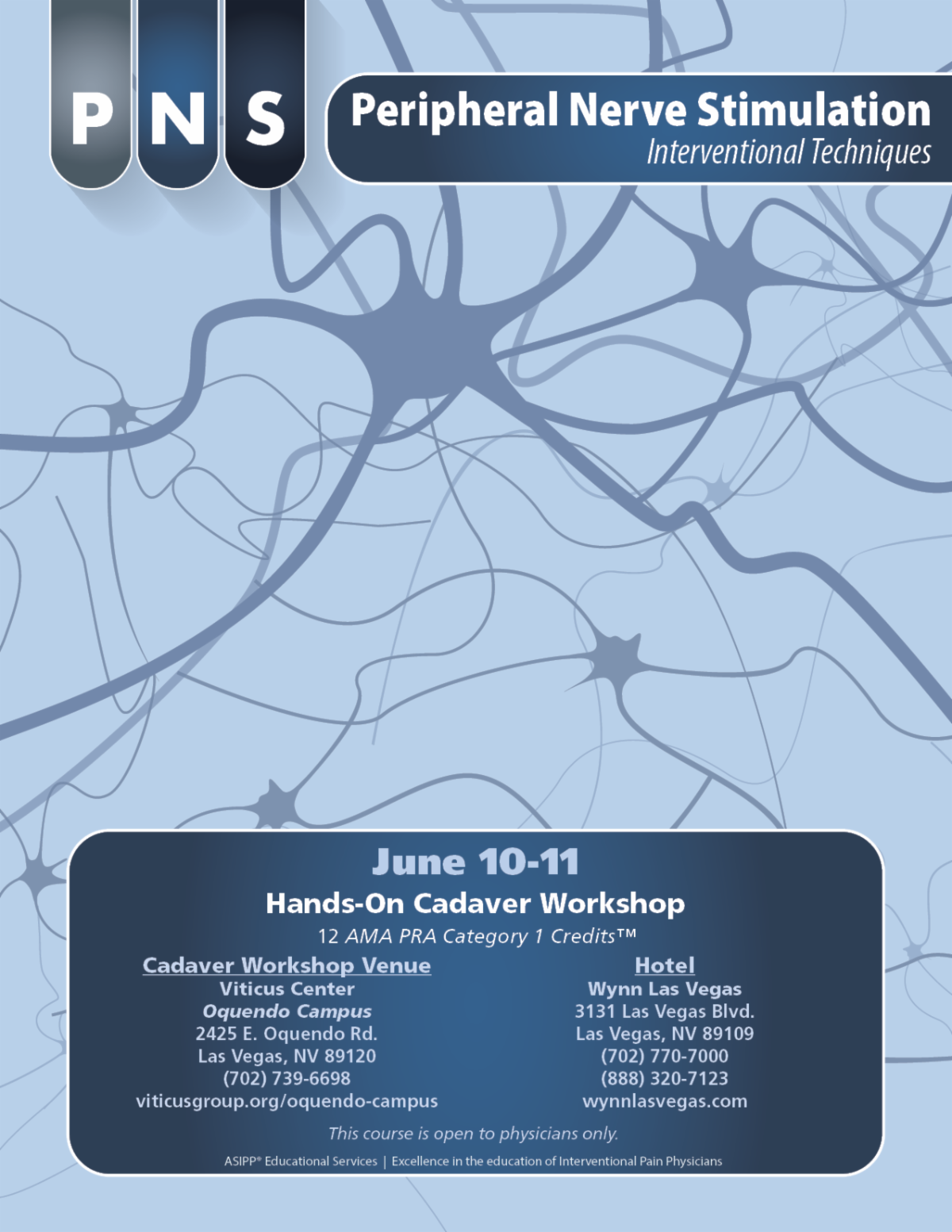
Peripheral Nerve Stimulation |
|
Interventional Techniques in IPM |
|
|
Strategy will provide another option to dispose of unneeded medications, FDA says
The FDA will require manufacturers of opioid drugs that are dispensed in outpatient settings to provide prepaid mail-back envelopes to outpatient pharmacies and other dispensers, the agency announced Monday.
The move is part of the FDA's comprehensive approach to addressing the overdose crisis, according to FDA Commissioner Robert Califf, MD.
"We believe these efforts will not only increase convenient disposal options for many Americans, but also reduce unfortunate opportunities for nonmedical use, accidental exposure, overdose and potential new cases of opioid use disorder," Califf said in a press release. "We're pleased to take this first critical step to increase mail-back envelope options in partnership with the U.S. Postal Service."
|
|
ASIPP has been actively addressing recent coverage issues through letter correspondence to various agencies. The issues and letters include the following:
AIM published new guidelines effective 04/09/2023. Owned by Anthem, Inc (ANTM), the AIM guidelines are utilized by multiple insurers. ASIPP has addressed the guidelines with a comment letter on the guidelines for Appropriate Use Criteria: Interventional Pain Management. Our comments were related to paravertebral facet joint injection/medial branch nerve block/neurolysis/therapeutic facet joint interventions.
We are requesting LCD reconsideration requests to all of the Medicare Contractors for the LCD covering Facet Joint Interventions for Pain Management.
ASIPP immediate past president, Amol Soin, sent a letter to Cigna on February 7 addressing their Medical Policy Update on Peripheral Nerve Block Procedures (for trigeminal and occipital neuralgia) which considering them experimental, investigational, or unproven, with an efficacy date of April 18th, 2023. In the letter, we ask that the policy update restricting the use of peripheral nerve blocks be re-evaluated and modified. We recommended that these procedures continue to be covered and we find the characterization of these procedures to be experimental or investigational to be inaccurate.
|
|
ABIPP Part I; ABIPP Path - Combined DCCPM/CSM virtual exam; ABIPP Competency Exam in IPM; ABIPP Competency Exam in Regenerative Medicine
ABIPP Part II; ABIPP Competency Exam - Practical Portion; ABIPP Regenerative Medicine Competency Exam - Practical Portion
|
|
Filled prescriptions reversed course in March 2020
A steady downward trend in opioids prescribed to women after giving birth reversed course with the start of the pandemic, a cross-sectional study suggested.
The proportion of women with a filled opioid prescription after delivery dropped progressively from more than 41% in 2018 to about 36% by the beginning of 2020. That number was expected to continue to drop to 35% for March to December 2020 but instead jumped to 37.8% -- 2.8 percentage points more than projected.
Moreover, those who gave birth in 2020 after the pandemic started filled more potent (schedule II) opioid prescriptions and filled them more often than before March, Shelby R. Steuart, MPA, of the University of Georgia in Athens, and colleagues reported in JAMA Network Open.
|
|
Reports so far on highly infectious "Arcturus" subvariant do not indicate a rise in severe cases
The World Health Organization (WHO) is monitoring XBB.1.16, an Omicron subvariant that has been detected in over 20 countries and contributing to a recent surge of COVID cases in India.
Known as "Arcturus," XBB.1.16 has been listed as a WHO variant under monitoring since March 22, with 800 sequences of the Omicron subvariant currently analyzed across 22 countries.
"Most of the sequences are from India and XBB.1.16 has replaced the other variants that are in circulation, so this is one to watch," said Maria Van Kerkhove, PhD, technical lead for COVID-19 response at the WHO, during a virtual press briefing last week.
|
|
- ASIPP Members Only Site Information - |
|
-
To log in for the first time you will need to click “forgot password” at the bottom of the login window.
- Check your email and then log in as directed.
-
If you have problems logging into your account, click here.
|
|
Metabolic syndrome in both early and mid-adulthood is associated with symptoms of knee osteoarthritis, according to a study presented at the OARSI 2023 World Congress.
"Relative to those without metabolic syndrome at either life stage, knee pain scores were more pronounced for those who developed metabolic syndrome after young adulthood than those who had metabolic syndrome in young adulthood," Changhai Ding, MD, PhD, a professor and director of Clinical Research Centre at Zhujiang Hospital at Southern Medical University, Guangzhou, China, and an ARC Future Fellow at the Menzies Institute for Medical Research at the University of Tasmania in Hobart, Australia, told attendees at the meeting, which was sponsored by the Osteoarthritis Research Society International.
To supplement existing evidence on the association between metabolic syndrome and joint pain in older adults, the researchers investigated the association in middle-aged adults over a 10- to 13-year period.
|
|
Pain Medicine Case Reports (PMCR) and Editor-in-Chief Alaa Abd-Elsayed, MD, PhD would like to invite you to submit case reports and case series to the PMCR journal. Your article will be published free of charge.
Open access journals are freely available online for immediate worldwide open access to the full text of published articles. There is no subscription fee for open access journals. Open access journals are no different from traditional subscription-based journals: they undergo the same peer-review and quality control as any other scholarly journal.
Interested in becoming a member of the PMCR Editorial Board?
Editorial board members are asked to review 2-6 manuscripts per year. Please submit your most up-to-date CV to sgold@asipp.org for consideration.
For more information or to submit your articles, click here.
|
|
| CASE REPORT |
Michael A. Alvarado, MD, Kristine M. Kallenberger, DO, David G. Sollo, MD, Phuong H. Nguyen, MD, and Felecia A. Newton, PhD
Abstract
BACKGROUND: Celiac artery compression syndrome is characterized by postprandial epigastric pain, weight loss, and occasional epigastric bruit, and can be difficult to treat because there are no definitive guidelines. We present a case of a 47-year-old man who had postprandial pain, weight loss, and chronic diarrhea for 5 years, which was resolved with spinal cord stimulation (SCS).
CASE REPORT: After extensive workup, a diagnosis of celiac artery compression syndrome was confirmed. Due to previous treatment failures, repeat celiac plexus blocks becoming less efficacious, and surgical unsuitability, the patient underwent an SCS trial. They continued having pain relief, so a permanent spinal cord stimulator lead was implanted.
CONCLUSION: We highlight complete resolution of celiac artery compression syndrome using SCS.
KEY WORDS: Case report, celiac artery compression syndrome, celiac plexus block, median arcuate ligament syndrome, spinal cord stimulation
|
|
| NARRATIVE REVIEW |
Waleed Albishi, MBBS, Nasser M. AbuDujain, MBBS, Abdulaziz bin Dakhil, BS, and Meshari Alzeer, BS.
Abstract
Background: In the 1990s, radiofrequency ablation emerged as a novel therapeutic approach tool for pain alleviation that did not result in neurological harm. Radiofrequency techniques are emerging methods as a possible option for upper extremity pain management. Furthermore, joint pain can result from multiple etiologies, and the management can differ based on what joint is affected. With the various management methods available to treat joint pain, radiofrequency ablation could be an effective, minimally invasive, promising intervention.
Objectives: This study aimed to review the current and historical uses of radiofrequency in upper extremity pain compared to other management methods and to address the utilization of radiofrequency in upper extremity pain management.
Study design: This is a narrative review of relevant studies on using radiofrequency techniques in upper extremity pain management.
Methods: On June 26, 2022, Medline/PubMed, Google Scholar, ERIC, and the Cochrane Database of Systematic Reviews were searched for relevant literature documenting the use of radiofrequency techniques in treating upper extremity pain. The terms "radiofrequency," "pain," "upper extremity," "shoulder," "elbow," and "wrist" were used, resulting in 61 studies fitting the inclusion criteria. A narrative review was then undertaken.
Results: Radiofrequency ablation and its techniques are among the contemporary medical procedures that could be cost-effective solutions for patients suffering from chronic and postoperative pain. Its utilization for shoulder-related pain has been frequently studied, as it showed significant improvement with a high satisfaction rate as a solo procedure. When compared to intraarticular corticosteroid injections or local anesthetics, it was found to be more effective than local anesthetics. Although it did not appear superior to intraarticular corticosteroid injections, it had the advantage of infrequent repeat treatment. By comparison, studies involving the elbow and wrist showed promising results but were not as thorough as studies on the shoulder. Therefore, considering the possible side effects and complications, caution is warranted.
Limitations: The paucity of articles available on its application to the elbow and wrist joints. More articles are necessary for the generalizability of the results.
Conclusion: Radiofrequency techniques are a promising, minimally invasive procedure for controlling upper extremity pain. More studies on the topic, especially on elbow and wrist pain, are warranted for the generalizability of the results.
Keywords: corticosteroid injection; elbow; local anesthetics; pain management; shoulder; upper extremity; wrist; Radiofrequency.
|
|
| SYSTEMATIC REVIEW |
Eva Roose, MSc, Astrid Lahousse, MSc, Anke Robbeets, BS, Ella Smout, BS, Kenza Mostaqim, MSc, Eva Huysmans, MSc, Jo Nijs, PhD, Paul van Wilgen, PhD, David Beckwee, MSc, Marijke De Couck, PhD, Annick Timmermans, PhD, Rinske Bults, MSc, and Laurence Leysen, PhD
Abstract
Background: Perceived injustice (PI) is a multidimensional appraisal cognition comprising the severity of loss consequent to injury, blame, a sense of unfairness, and/or irreparability of loss. PI gained increasing interest in pain research since it potentially contributes to the experience and burden of (chronic) pain.
Objectives: This systematic review aimed to determine the prevalence of PI and factors associated with PI in people with pain.
Study design: Systematic review with meta-analysis.
Methods: Web of Science, PubMed, and Embase were screened for cross-sectional or cohort studies encompassing human patients who were diagnosed with a condition causing pain and reported prevalence rates for PI and/or associations between a factor and PI. Meta-analyses were carried out, and subgroup analyses were undertaken based on the methodological quality of the studies, the type of pain population, and whether the outcome measure was valid or not in case of heterogeneity (P < 0.05).
Results: Fifty-four studies were found eligible. The prevalence of PI ranged from 23% to 77% (I2 = 99%, P < 0.001). Association with PI, assessed using the Injustice Experienced Questionnaire, were found with pain catastrophizing (pooled Pearson's r [rp] = 0.66 [0.64, 0.69], P < 0.00001), posttraumatic stress (rp = 0.63 [0.59, 0.67], P < 0.00001), anger (rp = 0.59 [0.49, 0.67], P < 0.00001), anxiety (rp = 0.59 [0.52, 0.64], P < 0.00001), pain acceptance (rp = -0.59 [-0.66, -0.49], P < 0.00001), depressive symptoms (rp = 0.57 [0.52, 0.60], P < 0.00001), kinesiophobia (rp = 0.57 [0.50, 0.64], P < 0.00001), academic functioning (rp = -0.54 [-0.65, -0.41], P < 0.00001), disability (rp = 0.53 [0.47, 0.59], P < 0.00001), emotional functioning (rp = -0.52 [-0.64, -0.39], P < 0.00001), pain interference (rp = 0.49 [0.35, 0.60], P < 0.00001), state anger (rp = 0.48 [0.41, 0.54], P < 0.00001), mental functioning (rp = -0.48 [-0.57, -0.38], P < 0.00001), symptoms of central sensitization (rp = 0.47 [0.39, 0.55], P < 0.00001), social functioning (rp = -0.47 [-0.60, -0.31], P < 0.00001), and physical functioning (rp = -0.43 [-0.53, -0.33], P < 0.00001), pain perceptions (rp = 0.40 [0.40, 0.64], P < 0.00001), trait anger (rp = 0.40 [0.29, 0.49], P < 0.00001), pain intensity (rp = 0.37 [0.33, 0.42], P < 0.00001), and anger inhibition (rp = 0.35 [0.26, 0.43], P < 0.00001).
Limitations: Some articles had to be excluded due to the absence of a full-text version. The findings can largely be applied to developed and high-income countries, but further research is needed in developing countries. Also, no validated cutoff values were available for the National Institutes of Health to determine the methodological quality of the included studies. Lastly, high heterogeneity was observed in many of the performed analyses. However, this was addressed by performing subgroup analyses, which could decrease heterogeneity in some cases.
Conclusions: The prevalence of PI was >= 33% in 75% of the studies indicating that PI is important to consider in people with pain. There is evidence for the association of PI with psychological, pain, and quality of life characteristics in people with pain. The associations of PI with personal, injury, and recovery characteristics were overall not significant or negligible.
Keywords: association; meta-analysis; perceived injustice; prevalence; psychological; quality of life; systematic review; Pain.
|
|
ASIPP is now in collaboration with Curi Medical Liability Program
Since this malpractice insurance program officially launched in November 2018, ASIPP has signed up hundreds of providers with an average savings of 30%. This is professional liability insurance tailored to our specialty and will stand up for us and defend our practices.
Curi is a full-service advisory firm that serves physicians and their practices. Their valued advice is grounded in your priorities and elevated in your outcomes. They are driven by a deep understanding of your specific circumstances in medicine, business, and life. To read a few important points to keep in mind about the program, including discounts, administrative defense, cyber coverage, aggressive claims handling, and complimentary risk management CME activities, visit our website.
|
|
ASIPP® has formed a partnership with Henry Schein and PedsPal, a national GPO that has a successful history of negotiating better prices on medical supplies and creating value-added services for independent physicians. Working with MedAssets, PedsPal provides excellent pricing on products like contrast media that alleviate some of the financial pressures you experience today.
|
|
ASIPP® is now offering our members the benefit of a unique revenue cycle management/ billing service.
We have received a tremendous amount of interest in the ASIPP® billing and coding program.
Click here to learn more about the negotiated rate for practices and more!
|
|
|
up-to-date news related to you, your practice, and your patients!
|
|
|
|
|
|
|