Meet OELA in the Field
This June, you can meet OELA at conferences around the country. Our Assistant Deputy Secretary and Director, Montserrat Garibay, will speak on the Department and OELA’s work to support ELs while highlighting efforts to support multilingual learners (MLs) and promote multilingualism at the following events:
|
|
Get Ready for Summer Learning! |
|
As we approach the summer break, it is essential to understand the importance of continued learning, particularly for ELs who may be at a higher risk of losing their English skills during this time.
The National Summer Learning Association (NSLA) is dedicated to bridging the gap by promoting high-quality summer programs that actively engage students and ensure their academic progress. Here are some key initiatives and resources offered by the NSLA:
-
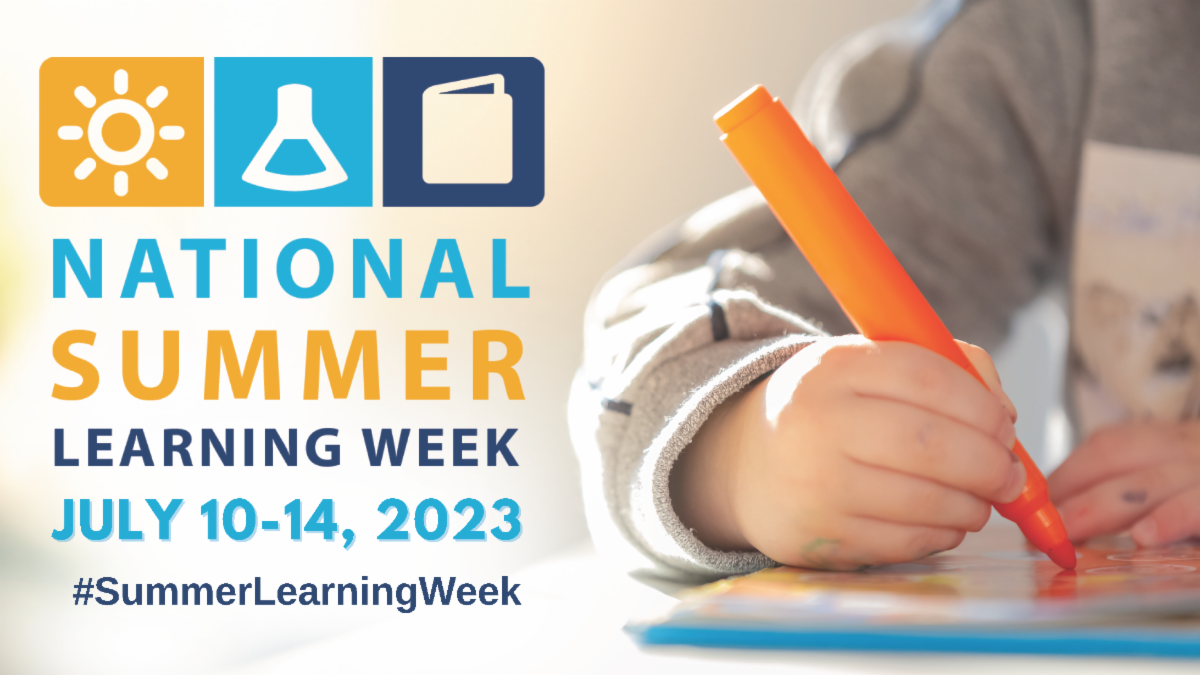
Summer Learning Week: National Summer Learning Week, taking place July 10–14, is a celebration dedicated to elevating the importance of keeping kids learning, safe, and healthy every summer. The goal is to ensure they return to school well-prepared for success in the coming academic year. Families can participate by visiting DiscoverSummer.org for information on summer programs and new summer learning resources.
-
Professional Development: The NSLA offers a range of professional development opportunities for educators and program providers. These opportunities include webinars, conferences, workshops, and professional learning communities that focus on best practices in summer learning, program evaluation, and strategies to engage and support diverse learners.
-
Resources: The NSLA provides many resources, including research reports, toolkits, and guides, to support the development and implementation of effective summer programs. These resources are invaluable for educators and families seeking evidence-based practices and innovative ideas to enhance summer learning experiences.
|
|
Register for the Center for Applied Linguistics’ upcoming webinar for an overview of how to use multilingualism as a tool for meaningful assessment. The 30-minute session will also include examples of multilingual assessments and a discussion of best practices for assessment. Participants will leave the session with an understanding of how to use multilingualism to create meaningful assessments that are tailored to their students’ needs. |
|
Your voice is needed now more than ever. Learn the issues and advocate for the English language teaching profession, your multilingual learners of English, and yourself at the TESOL Advocacy and Policy Summit in Washington, DC, June 20–21, 2023! Register today; space is extremely limited. |
|
Join Switchboard for a three-part webinar series on the impact of traumatic stress on children and youth who have experienced forced displacement and resettlement. Learn how to incorporate trauma-informed care principles into your work with children and families and address post-migration trauma such as abuse, exploitation, and trafficking. The webinar will feature Dr. Jordan Greenbaum, a retired child abuse physician with experience in training and assisting health professionals worldwide in responding to child abuse, exploitation, and trafficking. She also provides training and support to other child-serving professionals on trauma-informed approaches to working with individuals who have experienced trauma due to violence or forced migration.
|
|
June 26–28
Virtual Conference
|
Join SIOP® authors and fellow educators from across the country who are seeking to make a positive impact on student learning for the 2023 SIOP® Virtual Conference hosted by Savvas Learning, an authorized source for SIOP® events and professional learning. The conference offers new and seasoned educators an opportunity to reinvigorate and strengthen their teaching practices to successfully support MLs/ELs. |
|
The English Learners Success Forum (ELSF) will be providing a free virtual webinar for anyone interested in how to make science materials responsive to MLs. Discover the new Science Guidelines developed by ELSF, science educators, and experts in the field. Learn about the five essential design features for MLs’ success in science. Gain insights into the need for linguistic support in science materials and explore examples of lessons aligned with the Next Generation Science Standards. |
|
The Coalition of Community-Based Heritage Language Schools seeks to connect, collaborate with, and document all the community-based heritage language schools teaching all the languages spoken and taught in the United States. Registration is open for this annual conference, which is held at American University in Washington, DC, and online. Check to see if your school, or those you know about, are documented in their school survey. If not, please complete the school survey, or ask the school leaders to do so.
|
|
Registration is now open for the 2023 WIDA Annual Conference. The WIDA Annual Conference is the premier event for educators of pre-K–12 MLs, giving educators from around the globe the opportunity to share best practices and discover innovative classroom strategies. The in-person conference will take place October 17–20 in Milwaukee, WI. A virtual track is also available on October 18 that includes a sampling of sessions from the in-person conference. |
|
Join peers from around the country at the 2023 Families Learning Conference to be held in Omaha, NE. This conference is for passionate people looking for innovative learning strategies and resources to support families in reaching their academic and economic goals. Attendees will gain practices and ideas to create equitable and relevant family learning experiences; exposure to a national network of family-facing professionals, researchers, policymakers, and funders; and inspiration and renewed energy for their work.
|
|
Axios San Francisco
In San Francisco there are 21 schools that offer dual language immersion programs. Researchers examined 1,600 dual language immersion programs in 13 states and Washington, DC, and found that representation of non-native ELs in the city’s dual language immersion programs shrank between 2015 and 2020, while in five of the schools with dual language programs enrollment of White native-English speakers increased. The popularity of dual language immersion programs could result in a “colonization” that displaces non-native ELs if programs don’t ensure equity.
|
|
Mass Live
Thirty-five West Springfield High School students earned a state and global Seal of Biliteracy for proficiency as multilinguists. One of the school’s graduates earned both the state and global Seal of Biliteracy with Distinction for his exceptional proficiency in English, Spanish, and French. The seal, an insignia that appears on a student’s transcripts and diploma, recognizes their proficiency in English and at least one other language. To receive the seal, students must meet all graduation requirements and show proficiency in listening, speaking, reading, and writing. In addition, students must earn a minimum score of 472 or higher on the Grade 10 English portion of the Massachusetts Comprehensive Assessment System test and a score higher than “intermediate high” on a world language assessment.
|
|
Myrecordjournal.com
In Connecticut, most ELs are Latino, speak Spanish at home, and are in elementary school. Among ELs, about six in 10 attend programs that teach English as a second language and three in 10 attend a bilingual program. Connecticut is facing a shortage of bilingual teachers and teachers certified to teach English to learners of other languages. State law mandates that public schools with 20 or more students that speak any language other than English at home must provide bilingual instruction. One of the largest bilingual programs in Wallingford, CT, is at Cook Hill Elementary School. The program has 32 students this year and uses a different approach than most schools in Connecticut by encouraging parents to strengthen their children’s home language.
|
|
Language Magazine
For many years, the science of reading accumulated in journals without benefiting those for whom it was developed—practitioners and students. It is now finally making its way into the work of educators and educational leaders, policymakers, and educator preparation programs and is sought by parents striving to find information on how to address their children’s reading difficulties. Noticeable shifts are occurring across the country—and the world—and the positive data trends in schools that align knowledge, materials, practices, and systems with the research of how students learn to read are causing many to take notice. This resource provides a definition of what the science of reading is, what it is not, and how all stakeholders can understand its potential to transform reading instruction.
|
|
EdSource
One reason we fail to provide ELs with the opportunity to succeed in math is the belief that students must be English proficient to engage in rigorous grade-level learning. This results in low expectations for ELs, and they are often left behind from learning the core content and then excluded from higher-level math. One way to improve student outcomes is to adopt high-quality instructional materials. These materials can guide teachers to use instructional practices that integrate language development and content knowledge. A new educator-friendly rubric from the California Curriculum Collaborative provides state and district leaders with criteria to evaluate whether the materials address EL language and content needs. The rubric outlines five design elements that are essential materials to support ELs. These include simultaneously teaching content; math practices and language development; incorporating language features associated with math tasks; providing language supports; leveraging students’ assets; and consistently using formative assessment of content, math practices, and language to build and improve learning.
|
|
This conference will feature a community of Indigenous educators and researchers to share proven strategies and practical resources through an online platform that participants can immediately use to welcome students to their classrooms and to promote student success. This conference is for preschool, K–12, Tribal, college, and university educators, and concerned community members to share ideas for improving the lives and education of American Indian children, especially regarding the revitalization of their Indigenous languages and cultures. The theme of the conference is Returning to our Languages and Ways of Knowing. Topics include: culturally responsive school practices to promote the success of Indigenous students; language revitalization; parental-community involvement; STEM (Science, Technology, Engineering and Mathematics); and oral tradition.
|
|
Would you like to learn how to boost your students’ vocabulary development, academic language, reading comprehension, and writing skills—across all content areas? Have you always wanted to learn the research-based ExC-ELL Model but haven’t been able to find an institute near you? Are you looking for ways to continue to hone your craft as an educator and/or earn professional learning credits? The 2023 ExC-ELL Summer Institute is all virtual and delivered in three modules. Each module will be offered at two different times to fit busy schedules. Attendees of each module can expect a fun and meaningful 2-hour virtual professional learning session, opportunities to interact with colleagues and practice the instructional strategies learned, and a digital toolkit.
|
|
NAME is seeking proposals for their 31st Annual Conference taking place from November 15–19 in Montgomery, AL. Proposals will be evaluated on a scale of 1–5, with 5 being the highest score. Join NAME and their allies, leaders, educators, researchers, and advocates in their efforts to build a more just, inclusive, and equitable future.
|
|
ATDLE is inviting new Two-Way Bilingual Immersion (TWBI) and Dual Language teachers, coaches, and administrators to attend the New TWBI/DLI Symposium at the Sobrato Center for Nonprofits in San Jose, CA. This symposium specifically caters to individuals who are starting their new roles on July 1, 2023, and were unable to attend the national TWBI conference held in June. The event will feature experienced TWBI program experts and grade-level trainers to share their expert advice on how to start off on your journey this fall.
|
|
NABE 2024 will offer both on-site and pre-recorded on-demand (virtual) presentations. There are approximately 30 presentation strands; proposals that demonstrate how their topic addresses one or more of the following competitive priorities will earn five extra points in the proposal review: Dual Language Learners, Multilingual/Multiliteracy, ELs, and Family Engagement. Proposal notifications will be sent by September 15.
|
|
TQ is seeking proposals from prospective guest editors for the 2025 special topic issue. Proposals are chosen by the TQ Editorial Advisory Board, and the guest editor(s) are responsible for overseeing the review process and selecting the content of the issue. The issue will appear in September 2025. Successful proposals have an overarching theme that is timely and interesting to the TQ readership.
|
|
English Learners Success Forum
Remote
|
|
Education Northwest
Remote
|
|
ICYMI: 2018–20 Biennial Report Released
|
|
The report provides a snapshot of the status of efforts by the U.S. Department of Education to hold states accountable for ensuring that all students classified as ELs make progress in attaining English language proficiency and that ELs and immigrant children and youth are achieving in content areas at the same high levels set by states for all students.
|
|
Subscribe to NCELA Nexus
Did you receive the Nexus from a colleague? You can subscribe here.
|
|
Submit Your News
Do you have news to share with the Nexus community?
Send your alerts, upcoming events, resources, and job postings to AskNCELA
by Tuesday, June 13, 2023 for inclusion in the next edition of Nexus.
|
|
National Clearinghouse for English Language Acquisition (NCELA)
|
|
Disclaimer: NCELA Nexus is intended to share information that can be of use to educators, parents, learners, leaders, and other stakeholders in their efforts to ensure that every student, including ELs, is provided with the highest quality education and expanded opportunities to succeed. The information and materials presented on NCELA Nexus do not necessarily constitute or imply its endorsement, recommendation, or favoring by NCELA, the Office of English Language Acquisition (OELA), or the U.S. Department of Education.
|
|
|
|
|
|
|