This month, we’re honoring Bebe Moore Campbell National Minority Mental Health Awareness Month. Jamarl Clark, Assistant Director of the National Center on Grandfamilies at Generations United, recently published a blog post about this month through Mental Health America. Below, you’ll see that one of our newest resources is well-aligned with this month. Please read on to learn about our next webinar, our latest resources, and other news from around the field. | |
Register for Our Upcoming Webinar! | |
|
Supporting Kinship/Grandfamilies with LGBTQ+ Youth
2:00 p.m. – 3:00 p.m. ET
When a young person comes out as LGBTQ+, their kin/grandfamily caregiver may be the last to know because an LGBTQ+ young person might be fearful of losing that close relationship and unconditional love. Sherrill Wayland of SAGE and Liz Owen of PFLAG National will share strategies from their Supporting Your LGBTQ+ Grandchild toolkit that will guide you on how to help kinship/grandfamilies provide the support that LGBTQ+ youth need.
| |
Listen to Network Director Ana Beltran on The Imprint Weekly Podcast! | |
Ana talked about the new federal rule that gives all Title IV-E child welfare agencies the option to use kin-specific foster care licensing or approval standards and encourages them to limit those standards to federal safety requirements. Kin approved to care for a child under that process must receive the same federally supported foster care maintenance payments as non-kin foster parents would receive if the child had been placed with them. | | |
|
Since we launched our LinkedIn page in September 2023, we’ve shared dozens of resources, funding opportunities, and training events. We invite you to follow our page to keep up with our latest news between monthly issues of this newsletter. | |
What's New From the Network? | |
Guide for Providers: No-Cost Training Resources on Kinship/Grandfamily Mental Health Needs
This guide, created by our partners at USAging, contains resources that will be useful to staff from a range of professional backgrounds. The resources highlighted in this document will increase your understanding about the mental health needs of members of kinship/grandfamilies. Spanish-language resources are included when available. We are grateful to our many professional and lived experience reviewers. A special shout-out goes to Dr. Deborah Langosch for lending us her expertise and encouragement in reviewing and contributing to this guide.
| |
| |
|
Legal Assistance for Native Kinship/Grandfamilies Involved with Child Welfare: How to Find an Attorney & Help Them Help You
This resource, prepared by our partners at the National Indian Child Welfare Association, is for professionals to give to a Native parent or relative caregiver (whether grandparent, other extended family member, or family friend) of a child who was removed from their parents by a state child welfare system. It offers clear guidance to help families find a legal advocate to help them through the child welfare case.
| |
Monthly Resource
Reaching Rural Kinship/Grandfamilies
Kinship/grandfamilies in rural areas have strengths and challenges similar to those of kinship/grandfamilies in other locations. However, data suggests that many families in rural settings face additional difficulties. Use this resource to learn more about how your program can better serve kinship/grandfamilies in rural communities. As always, we thank our partners at ZERO TO THREE and our reviewers for creating and contributing to this resource.
| |
|
Individual Assistance Spotlight | |
The Network is responding free of charge to individual technical assistance (TA) requests from professionals who work in systems and organizations that serve kinship/grandfamilies. To request assistance on the array of issues impacting kinship/grandfamilies, please complete our request assistance form. | |
|
|
We answer questions and respond to requests of all sizes. Some questions focus on a very specific topic and/or location, while others are much broader. Below, we share an example TA request and response.
Request
I'm working with a child who has been placed with his grandmother, and she is interested in finding support groups for people involved with the Department of Health and Human Services/Office of Child and Family Services/kinship families in the Portland/South Portland area of Maine. Please feel free to reach out via email or phone call with any information that could assist with this. Thank you so much!
Response
Hello! You may refer the caregiver to Adoptive and Foster Families of Maine (AFFM), which runs support groups for resource families, including kin caregivers. Here is a link to their support group meeting list: https://docs.google.com/document/d/1X9IZRS-IBYNIsAA3XtJM3DOr6TwLy54T463naqogIKc/edit. Some of these groups meet virtually and some in person.
Since the caregiver is new to these support groups and this agency, I’d suggest they first call or email AFFM to reconfirm the meeting dates/locations and introduce themselves to the agency. The caregiver may be offered more supports and services if needed.
AFFM was recently designated as an Exemplary Program through the Grandfamilies & Kinship Support Network. You can read more about the program at https://www.gksnetwork.org/resources/the-kinship-program-adoptive-and-foster-families-of-maine-inc/.
To make an individual request, please complete this form and we will get in touch.
| | |
Unique Resource Supports Youth in Kinship/Grandfamilies
Inspired by an individual TA request from a kinship navigator, we created a first-of-its-kind resource on the FAFSA that has detailed directions for students raised by kin to complete the federal financial aid application that opens doors to money to pay for college. As with most things, the instructions for these students are different than for students being raised by parents. The great news is that, in most circumstances, only the students' income and assets are considered in determining aid.
Our unique resource has been well received by the US Department of Education and has filled a void in FAFSA outreach – it even led to a Town Hall with the National Parents Union, viewed by over 50,000 people! The Network is proud to provide this type of practical help that supports kinship/grandfamilies and those who directly work with them! As one community service provider noted to us, “you have made it so clear for new families and I can't thank you enough.”
|
|
What's New Around the Network? | |
Engagement Session – Handbook of Standards and Procedures, Version 2.0
Title IV-E Prevention Services Clearinghouse, Administration for Children and Families, U.S. Department of Health and Human Services
Thursday, July 25, 2024
1:30 p.m. to 3:00 p.m. ET
This newly released Handbook describes the standards and procedures that will be followed by the Title IV-E Prevention Services Clearinghouse (Clearinghouse) staff as they review and rate child welfare prevention programs and services, including kinship navigator programs, for inclusion in the Clearinghouse. To be included and thereby eligible for ongoing federal financial reimbursement, the Clearinghouse staff must determine that the program or service meets the Clearinghouse's evidence-based standards. Pending reviews will continue to use the Handbook of Standards and Procedures, Version 1.0 during a transition period to the new Handbook.
During this engagement session, you will have the opportunity to share your questions about the new Handbook and ideas for new resources that may help users apply or interpret the Standards.
| |
| |
|
Webinar – Upcoming Changes for Dually Eligible Individuals—the Final 2025 Medicare Advantage Rule
Justice in Aging
Wednesday, July 31, 2024
2:00 p.m. – 3:00 p.m. ET
In April, the Centers for Medicare & Medicaid Services finalized a rule that will affect how dually eligible individuals access Medicare Advantage plans and Medicare benefits. The rule makes several modifications, including changing when individuals can switch plans, when individuals can switch from Medicare Advantage to Traditional Medicare, and which individuals can enroll in Dual-Eligible Special Needs Plans (D-SNPs).
| |
Translating Kin-First Commitments Into Practice: 3 New Resources
Harvard Kennedy School Government Performance Lab
To accompany its publication of Translating Kin-First Commitments Into Practice: Management Strategies for Child Welfare Leaders, the Government Performance Lab has released several resources related to the six management strategies identified in the report. In June, they published a worksheet called “Building a Kin-First Communication Strategy,” a PowerPoint called “Kin Placement Dashboard Guide,” and an “Annotated Family Finding Connections Log.”
| |
| |
|
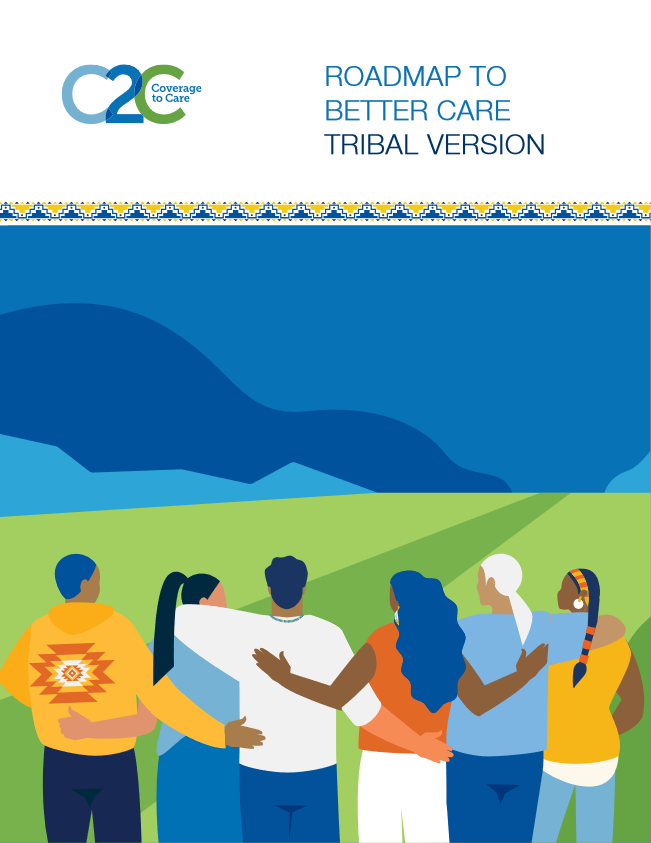
Roadmap to Better Care: Tribal Version
Centers for Medicare & Medicaid Services, U.S. Department of Health and Human Services
This roadmap is designed to help sustain cultural richness and strengthen the well-being of present and future American Indians and Alaska Natives. It seeks to help the Indigenous community connect to health care, including benefits provided through the Indian Health Service, Medicare, Medicaid, Marketplaces, or private insurance.
| |
Investing in Culturally Responsive Services: Lessons from Washington State
Harvard Kennedy School Government Performance Lab
This case study details how the Washington State Department of Children, Youth, and Family (DCYF) used community engagement to shape its approach to addressing service gaps that may contribute to racial disproportionalities in child welfare removals of children from their parents. For child welfare and other jurisdictional leaders, the DCYF story offers ideas on how to collect and elevate insights from service providers and community members — and then act.
| |
| |
|
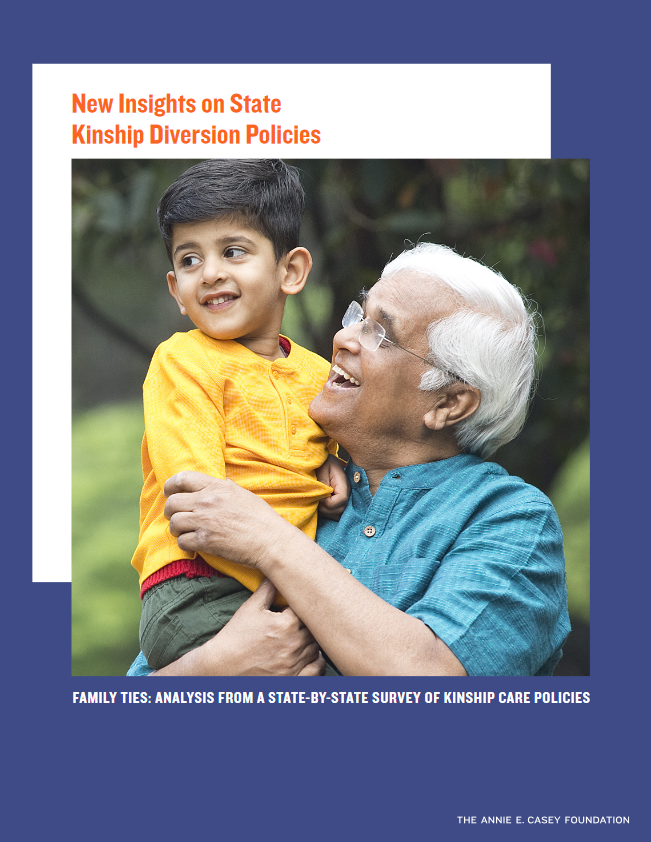
New Insights on State Kinship Diversion Policies
Annie E. Casey Foundation
This report is the newest output of the Annie E. Casey Foundation’s current series, Family Ties: Analysis From a State-by-State Survey of Kinship Care Policies. Kinship diversion occurs when a state moves a child into the home of relatives or family friends without bringing the child into foster care and placing them in state custody. This brief shares data and analysis from a 2022 survey fielded for the Annie E. Casey Foundation by Child Trends.
| |
Notable Funding Opportunities | | |
|
The U.S. Department of Agriculture (USDA) Food and Nutrition Service invites State agencies that administer the National School Lunch Program (NSLP) and School Breakfast Program (SBP) to apply for Direct Certification Improvement Grants to fund the costs of improving their direct certification rates with the Supplemental Nutrition Assistance Program (SNAP) and other assistance programs. Applications are due by Monday, July 29, 2024.
The USDA’s Rural Housing Service is accepting applications to its Rural Housing Preservation Grant. Qualified public agencies, private nonprofit organizations, and other eligible entitles can apply for grants to assist very low- and low-income homeowners in repairing and rehabilitating their homes in rural areas. In addition, the program assists rental property owners and cooperative housing complexes in repairing and rehabilitating their units if they agree to make such units available to low- and very low-income persons. Applications are due by Monday, July 29, 2024.
The National Children’s Alliance (NCA) has opened the 2025 Request for Proposals for Awards for the Establishment, Improvement, and Expansion of Children’s Advocacy Centers (CACs). These awards primarily focus on funding expanding services in developing CACs, maintaining the provision of core services at CACs that experienced financial setbacks, supporting CACs in working to meet the new accreditation standards, expanding reach, and developing teleservices and providing medical/forensic interviewing equipment and operational technology. Applications are due by Friday, August 2, 2024.
The U.S. Department of Housing and Urban Development has opened applications to its Eviction Protection Grants Program. Grants will fund nonprofit organizations and government entities to provide no-cost legal assistance to low-income tenants at risk or subject to eviction. Applications are due by Tuesday, August 20, 2024.
The USDA’s Broadband Technical Assistance (BTA) program provides financial assistance through cooperative agreements to eligible entities to receive or deliver broadband technical assistance and training. Applications are due by Tuesday, August 20, 2024.
The WIC Community Innovation and Outreach (CIAO) Project Team at the Food Research & Action Center (FRAC), a Network Subject Matter Expert organization, has opened the WIC CIAO Round 2 Subgrants Request for Application (RFA). Optional letters of intent (LOIs) are due by Thursday, July 25, 2024. The application deadline is Friday, September 6, 2024.
The Fiscal Year (FY) 2025 AmeriCorps Seniors RSVP Opportunity is now accepting applications. AmeriCorps Seniors RSVP engages people ages 55 and older in a diverse range of volunteer activities designed to meet community needs. Among the priorities for this funding opportunity are initiatives that reduce isolation, improve mental health, offer peer support, and provide support. Around the country, RSVP volunteers are and can be used to support kinship/grandfamilies. Applications are due by 5:00 p.m. ET on Thursday, September 18, 2024.
| | |
|
Next Avenue, July 9, 2024
This article elevates the strengths and needs of grandparents raising grandchildren and includes quotes from Network Director Ana Beltran.
July 8, 2024
The Office of Child Care (OCC), Administration for Children and Families (ACF), will soon publish a Notice of Proposed Rulemaking (NPRM) that proposes a regulatory change that would allow all Tribal CCDF Lead Agencies to serve Indian children in their service area regardless of family income or assets.
| | |
Please follow the Grandfamilies & Kinship Support Network on LinkedIn here! |
|  |
All of our previous newsletters are linked on our website, so you can access them anytime. |
| |
Did you receive this newsletter as a forwarded email? You can sign up to get it in your inbox every month! |
| |
Generations United is committed to diversity, equity, and inclusion. For more information, read our full statement. | |
|
The Grandfamilies & Kinship Support Network is the first-ever national technical assistance center for those who serve grandfamilies and kinship families. It was created to help guide lasting, systemic reforms. The Network is a new way to collaborate, to work across jurisdictional and systemic boundaries, to eliminate silos, and to help one another and be helped in return. Thank you for being part of it.
We'd love to hear from you! Please send any feedback on this newsletter to mweiss@gu.org.
| |
|
The Network is supported by the Administration for Community Living (ACL), U.S. Department of Health and Human Services (HHS) as part of a financial assistance award totaling $9,950,000 with 95 percentage funded by ACL/HHS and $523,684 and 5 percentage funded by non-government sources. The contents are those of the authors and do not necessarily represent the official views of, nor an endorsement, by ACL/HHS, or the U.S. Government.
|
| | | |