|
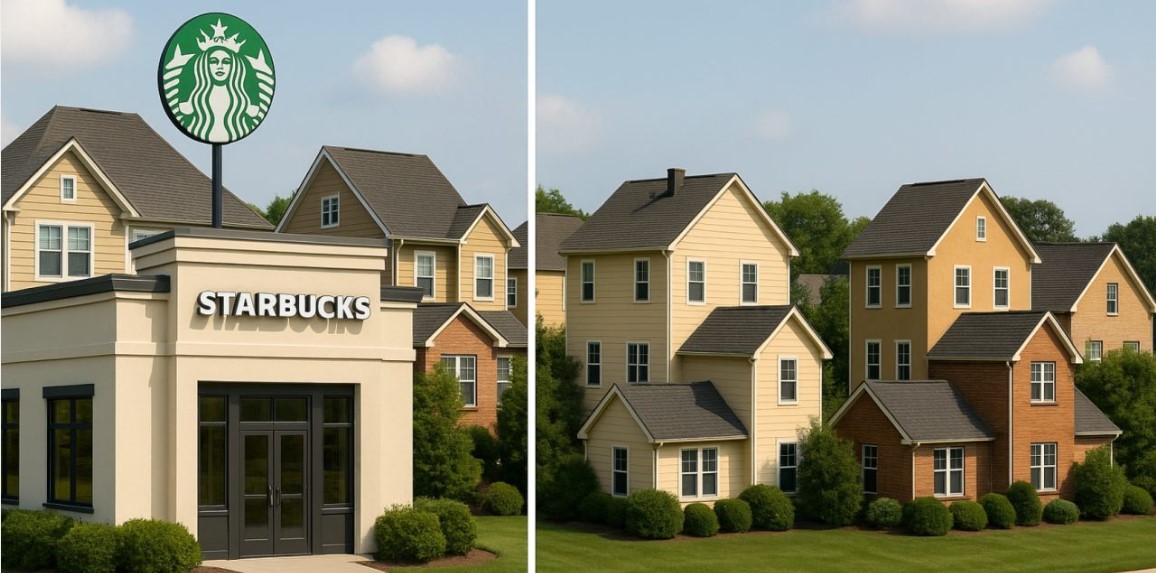
Between 1997 and 2014, homes within a quarter mile of a Starbucks rose in value by 96%. Meanwhile, nationwide, home prices climbed only 60% in that same period.
For years, that difference was enough to convince investors that the coffee chain’s presence was a shorthand for growth. But according to a recent Bigger Pockets report, the “Starbucks Effect” may finally be running out of steam.
The company is closing hundreds of stores across North America, and it’s not just caffeine lovers who are noticing. Landlords and investors are watching too, wondering whether the exit of one of the most recognizable retail brands could signal something deeper about consumer habits, neighborhood stability, and the future of urban commercial space.
How Starbucks Became a Real Estate Signal
For more than two decades, a new Starbucks was like a stamp of approval from the real estate gods. The familiar green-and-white awning often appeared in neighborhoods already on the upswing, acting as a magnet to investors, higher-income residents, and other major retailers.
Hannah Jones, senior economic research analyst at Realtor.com, explained that Starbucks’ presence was more of a reflection of growth than a driver of it.
“The presence of the café could then add to the area’s appeal, along with the other factors that convinced the company to open the location to begin with. Put differently, Starbucks doesn’t cause home values to rise on its own; instead, it tends to open stores in neighborhoods where other factors, such as economic growth, rising demand, and increasing property values, are already at play.”
In other words, Starbucks didn’t make the neighborhood hot; it followed the heat. But for landlords and investors, it was an easy indicator that the area had momentum.
Where the Closures Are Happening
Starbucks plans to close 400 underperforming retail stores while cutting around 900 corporate jobs. The company still operates about 18,000 physical locations in the U.S. and Canada, but the closures are concentrated in dense urban areas where the brand once thrived.
Cities like Philadelphia, Northern Virginia, Baltimore, and Washington, D.C. have already seen clusters of stores shut down.
Philadelphia alone lost five locations. In the D.C. metro area, 16 stores have closed, including nine within the city itself.
Jones told BiggerPockets that most of these closures align with “high-profile urban locations” where foot traffic still hasn’t recovered. Many of these are city-core corridors that depend on commuters, who are still a vulnerable segment of the commercial market since the pandemic shifted work patterns.
|