Facebook  Instagram  Bluesky  Youtube  Linkedin
 

HRAF News Vol. 2026-11

HRAF at the AAA Annual Meeting in St. Louis

HRAF will be an exhibitor at the American Anthropological Association (AAA) Annual Meeting, which will take place in St. Louis, Missouri, on November 18-22, 2026. HRAF will be at Booth 312 in the exhibit hall.


Exhibit Hall Hours:


Thu, Nov. 19, 10:15 AM-6:30 PM


Fri, Nov. 20, 10:15 AM-4:00 PM & 6:00 PM-7:30 PM


Sat, Nov. 21, 8:00 AM-1:00 PM


President Carol Ember and Director of Membership and Outreach Matthew Longcore will be at the HRAF booth. If you are attending the meeting, please visit the booth to learn about eHRAF World Cultures and eHRAF Archaeology. We will be giving away HRAF tote bags, free trials of the databases, and special discounts to those in attendance.


The importance of the AAA is described on the organization's website as follows:


"Founded in 1902, the American Anthropological Association is the world's largest scholarly and professional organization of anthropologists. The Association is dedicated to advancing human understanding and applying this understanding to the world’s most pressing problems."


Click here to read about the 2026 AAA Annual Meeting

The Society for Anthropology in Community Colleges (SACC) is a section of the American Anthropological Association (AAA).

SACC will lead a session titled

Teaching Strategies Across the Five Fields on Friday, November 20 from 8:30 AM-10:00 AM in Room 222 at the America's Center Convention Complex.


Today's educators must compete for students' attention against smartphones, social media, and AI. Thus, captivating delivery of material is more important than ever to facilitate active learning and cognitive engagement with the material. The event aims to offer a platform for experienced educators to share their solutions.


Matthew Longcore will present Teaching Anthropology with the eHRAF Databases. The session will cover the eHRAF Workbooks which are designed to complement introductory courses in cultural anthropology and archaeology. The workbooks are presented as visually appealing PowerPoint slideshows that instructors can modify to suit their own teaching styles, with activities based on searching or browsing in the eHRAF databases.

Students are taught how to analyze and interpret ethnographic and archaeological data, looking for similarities and differences to make comparisons across cultures and traditions.


Click here to read about the HRAF-SACC Collaboration

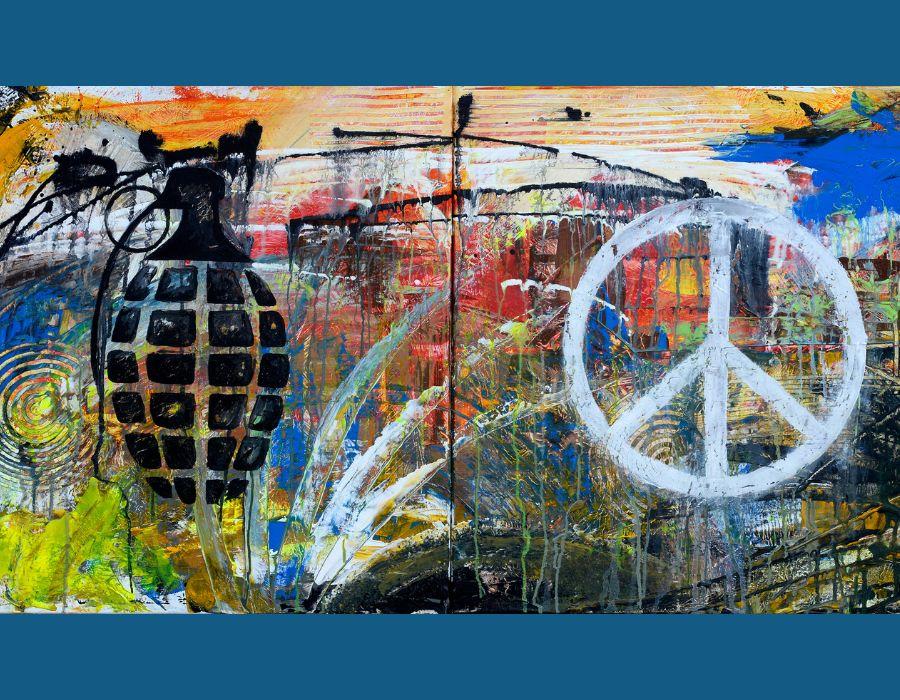
HRAF has added a new Armed Combat and Warfare topical summary to Explaining Human Culture (EHC). The summary was authored by HRAF President Carol R. Ember and co-authored by Hattie Berke and Jonathan Zhang, two recent Melvin Ember Interns. The literature on armed combat and war is vast. This summary concentrates on what researchers have found using data from the anthropological record to test theories about how and why armed combat and warfare vary cross-culturally.


The Armed Combat and Warfare topical summary attempts to answer certain questions, including: How pervasive was armed combat and warfare? How did it vary across historical eras? Why have some societies been more peaceful than others?


Explaining Human Culture (EHC) is a database produced by HRAF which summarizes the results of over a century of cross-cultural research. EHC provides a way for researchers to uncover the tentative answers from over 1250 cross-cultural studies by searching for topics of interest.

EHC also includes Topical Summaries of what we have learned from cross-cultural research. The importance of the eHRAF World Cultures database ultimately lies in what it can tell us about patterns of cultural variation. There are now a total of 14 summaries in EHC.


Click here to access the Armed Warfare and Combat summary

The Outline of Cultural Materials (OCM) is a comprehensive, standardized subject classification system developed by HRAF. It is used to index, organize, and cross-reference ethnographic and archaeological data covering human culture, social life, and behavior worldwide. Using OCM subjects in an advanced eHRAF search facilitates finding pertinent information, especially when words are ambiguous. Paragraphs of texts with specific OCM codes enable researchers to compare specific cultural traits across hundreds of societies.


The OCM was originally developed by George Peter Murdock and his colleagues in the 1930s to facilitate cross-cultural comparative research. Over the years, it has been revised and expanded. The new OCM online open-access service allows users to freely download a PDF of the entire OCM that can be viewed completely offline. It also provides users with a way to search the entire OCM, as well as by three different views for searching:


Alphabetical Display: All terms are organized as a single alphabetical sequence.


Major Subjects: The broad subject categories are analogous to a chapter in a book.


Hierarchical Display: Shows an array of narrower terms under its parent broader term.


Click here to access the Outline of Cultural Materials

 
HRAF at Yale University|hraf.yale.edu