|
COLLAGE ON VIEW
at Frances Lehman Loeb Art Center, Poughkeepsie, New York, USA through 31 January 2027. Typically understood as a tool for seeing the world as it is, photography is equally valuable for imagining what could be. This exhibition argues that the visionary potential of photography has been chiefly expressed through design. Spanning a century, from the 1920s to the present, this exhibition offers “photo-design” to describe how graphic designers, architects, and artists use photography to imagine new ways of living in times when the future seems uncertain and not guaranteed. MORE
| | |
ARTIST LAB UPDATE
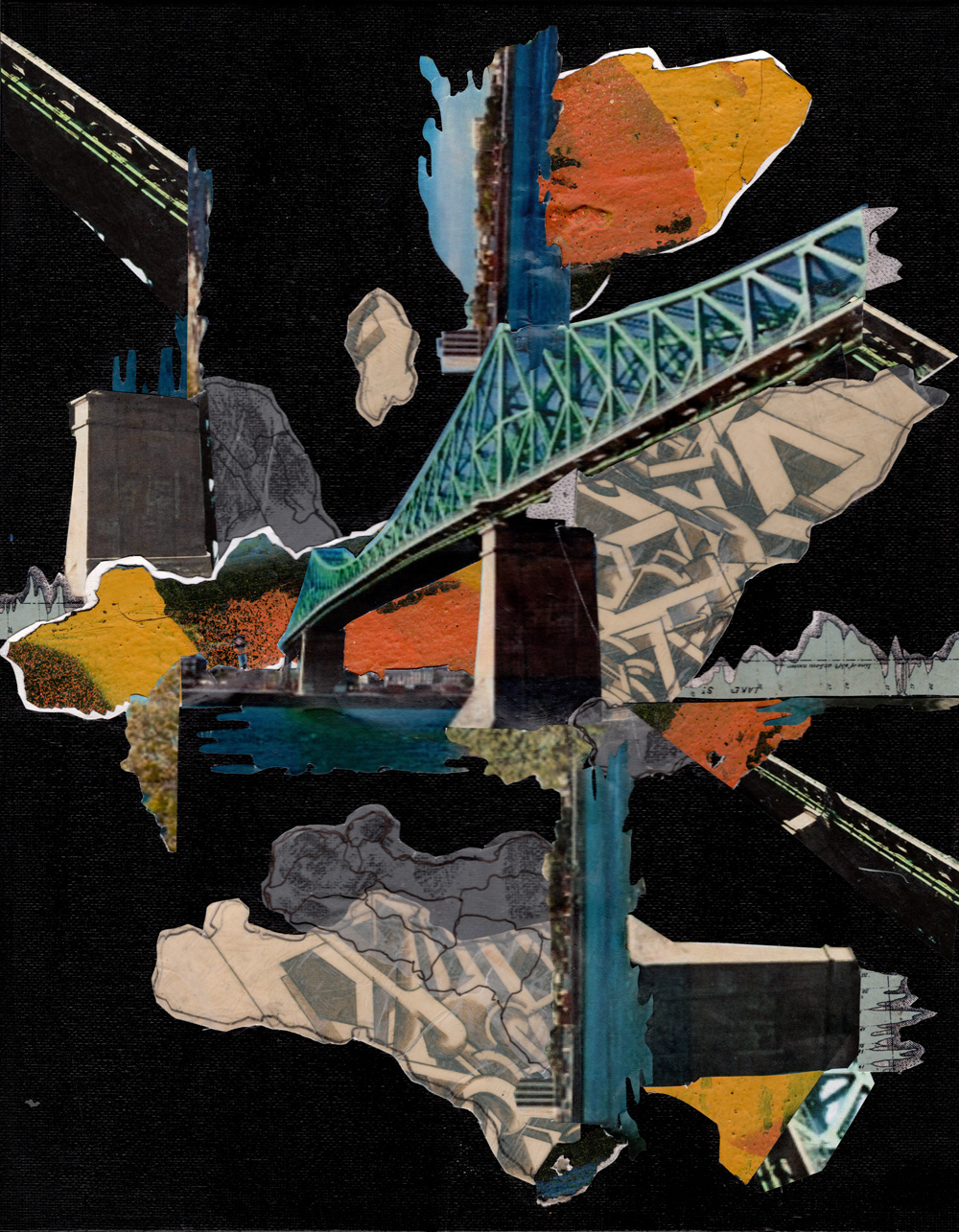
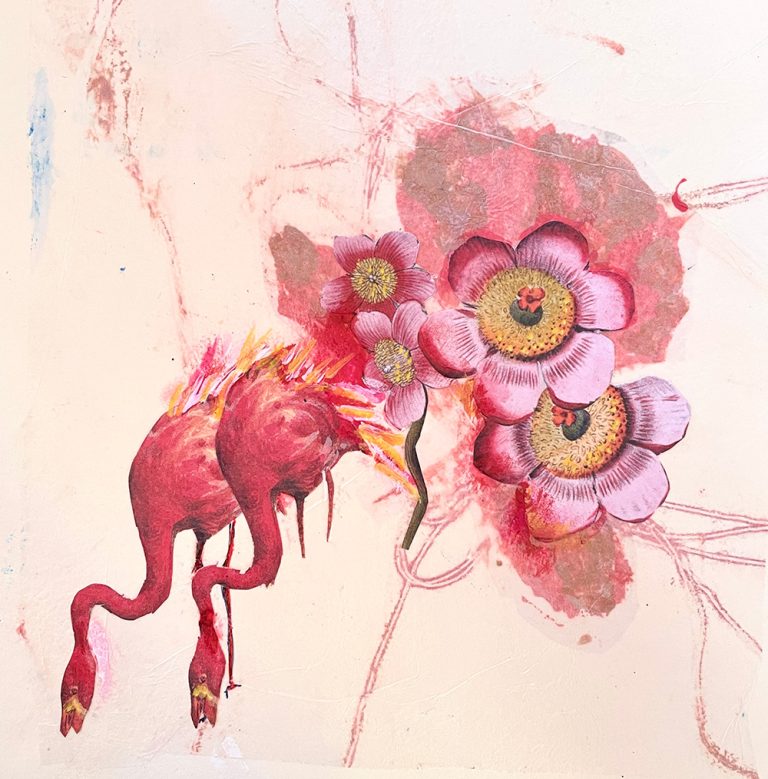
From 6-11 October 2026, five artists joined Ric Kasini Kadour in Montreal. Participating artists include Carolyn Bliss (Seattle, Washington, USA), Lindsey Friman (Alameda, California, USA) (image above), Bill Gaylord (Seattle, Washington, USA), and Jodie Thorz (Cedar Grove, New Jersey, USA). Based at Atelier Galerie 2112, artists used research, neighborhood walks, discussion, and collage making to investigate place as archive, including the history documented by the Écomusée du fier monde.
Work developed during and after the Lab will be considered for a 2027 exhibition at Kolaj Institute Gallery in New Orleans and future Place as Archive publications. MORE
| | |
KOLAJ LIVE ONLINE
Monday, 26 October 2026 7-9PM EDT
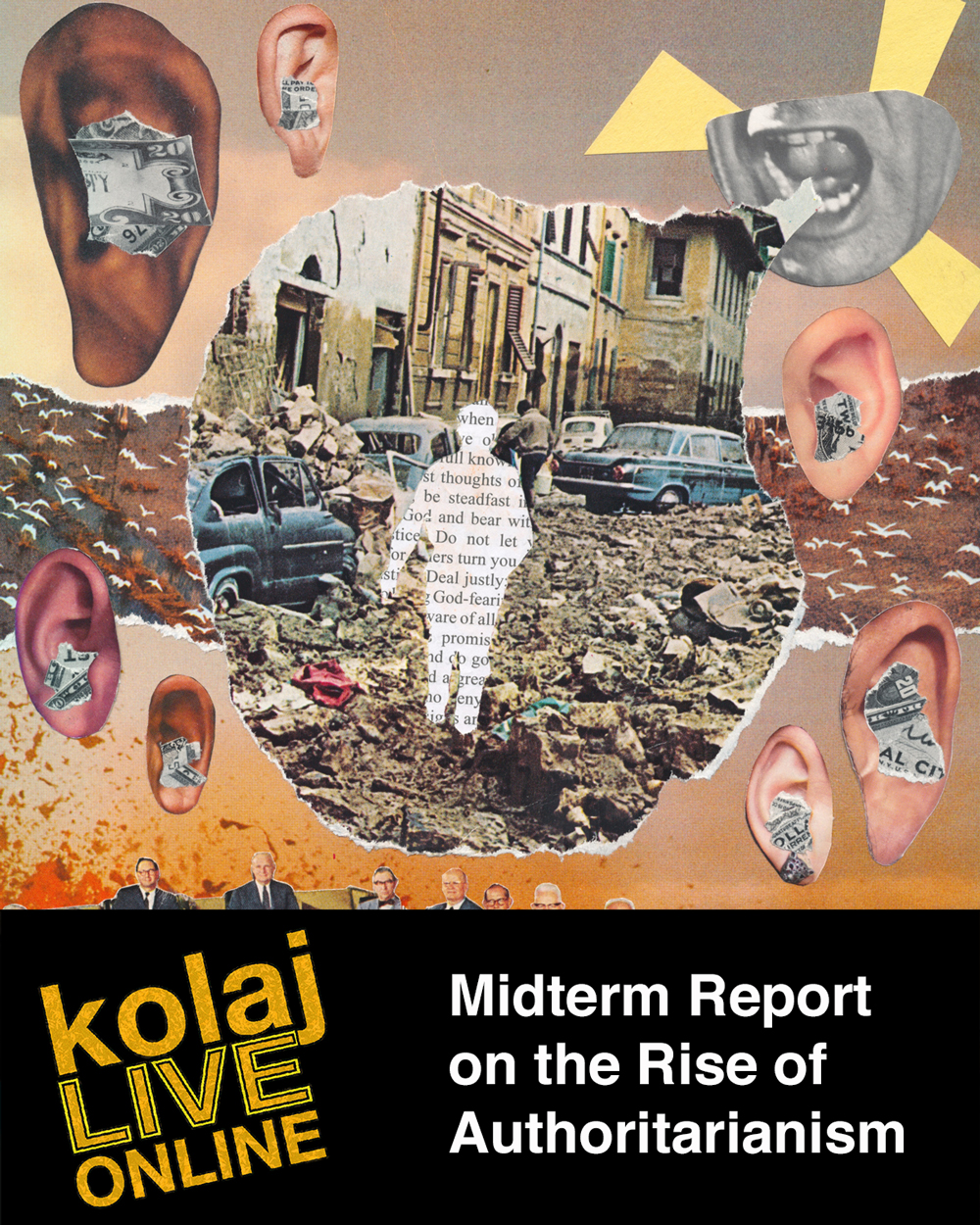
(Zoom). Join this event to hear from artists who participated in Politics in Collage: Midterm Report on the Rise of Authoritarianism. How do collage artists respond to the global rise of authoritarianism? Using The Authoritarian Regime Survival Guide as a starting point, a group of artists learned to recognize and decode authoritarianism and explore strategies for resisting it through art. The effort, led by G.E. Vogt, examined the history of political collage and how contemporary artists can contribute to civic discourse. Their artwork is being published in the zine Midterm Report on the Rise of Authoritarianism. During this Kolaj LIVE Online, we will hear from these artists and take a look at their work. MORE
| | |
CALL TO ARTISTS
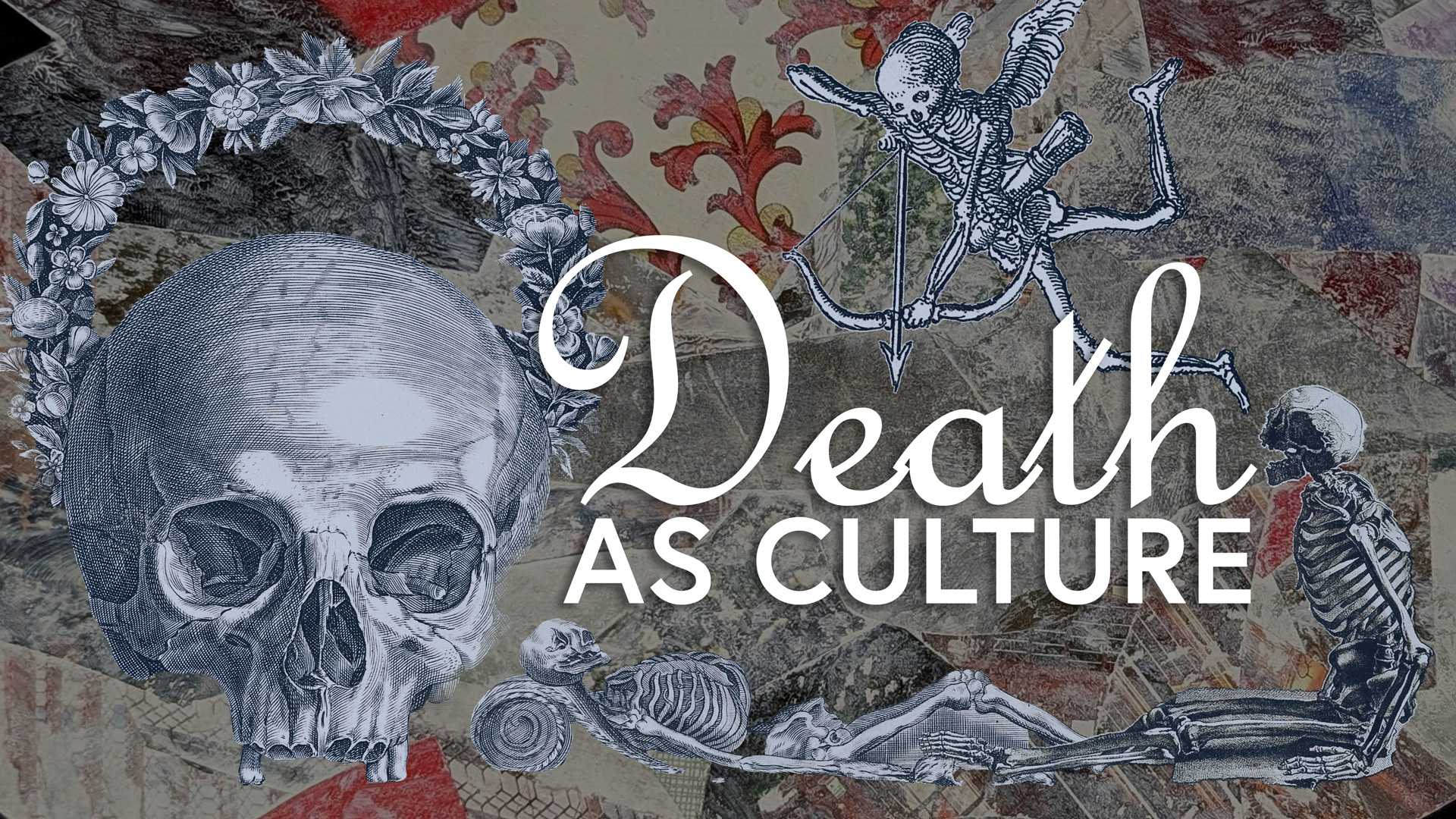
Early Deadline to apply: Sunday, 25 October 2026. The inevitability, finality, and universality of Death as a human experience makes its presence in folklore ubiquitous and unsurprising. Kolaj Institute will investigate Death as Culture through a four-week, virtual/online residency from Sunday, 29 November to Sunday, 20 December 2026, during which we will research how death is expressed in a diverse array of cultures. Collage artists will consider the death-related folklore that speaks to the origin of death, the afterlife, and those in the liminal spaces between life and death such as ghosts and spirits. Artists participating in the virtual residency will research expressions of death as culture in their own communities, including folklore, cemeteries, traditions, and social organizations. The artwork made during and after the residency will be considered for a January 2027 exhibition at Kolaj Institute Gallery in New Orleans and an October 2027 exhibition at the New Orleans Healing Center in conjunction with Fet Gede Celebrations. Artwork and writing will be considered for Folklore Collage Society, a printed journal dedicated to artwork and artists who activate, transmit, and celebrate folklore as a form of cultural expression and a strategy for community resilience. LEARN MORE
| | |
FROM THE ARTIST DIRECTORY
Magdalena, New Mexico, USA. In her recent collages, Estelle L. Roberge explores visual ideas through surfaces created from photographs and papers developed in her studio. Some of the cut and torn images originate from the world around her, while others are deliberately staged and photographed to achieve a conceptual outcome. She draws inspiration from a range of surfaces—textiles, marbles, magazines, wilderness areas, and tree bark. For example, she might float color into a bath of Irish moss and then photograph the resulting surface. From these photographic prints and papers, Roberge creates new collages by combining textures and forms—juxtaposing them with visual intention. The resulting two-dimensional surface becomes an entirely new image, constructed from two, three, or four mediums: photography, collage, painting, and printmaking. MORE
| | |
COLLAGE ON VIEW
at Trotoar, Zagreb, Croatia through 7 November 2026. In “The Wild Gene,” Ivana Fischer rejects the idea of an autonomous subject that emerges from nothing, as a causa sui. Instead, identity appears as a process of constant reconstruction in which objects, images, meanings, traditions, social patterns, and personal experiences are continually brought into new relationships. “The Wild Gene” thus leaves open questions of the authenticity of one’s identity, the space for emancipation between conditioning and belonging, as well as the existential anxiety arising from the need to nevertheless experience one’s “self” as one’s own. MORE
| | | | |
KOLAJ INSTITUTE NEWS
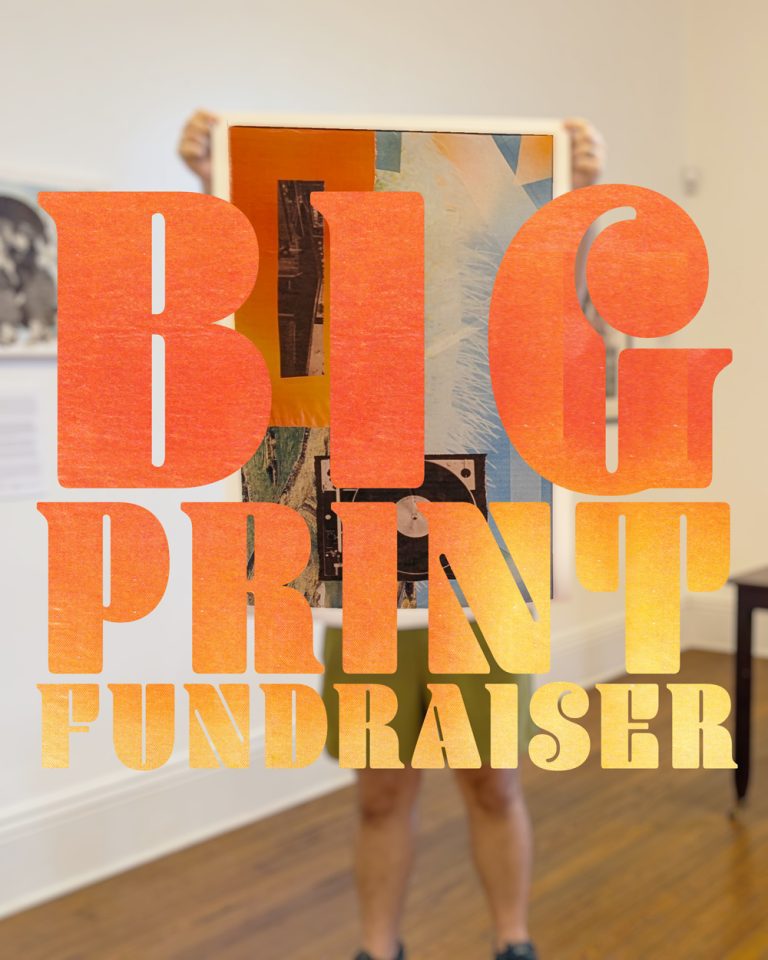
Want to see your collage BIG? Kolaj Institute’s Big Print Fundraiser is back for 2026!
Make a donation to support Kolaj Institute, and we’ll enlarge one of your collages and print it on a 24"x36" sheet of paper. It’s an opportunity to experience your artwork at a new scale while supporting the exhibitions, artist residencies, publications, workshops, and community programs that help grow the international collage community.
The Big Print Fundraiser runs through 31 December 2026. Make your donation today and see your collage BIG! LEARN MORE
| | |
FROM THE ARTIST DIRECTORY
Florence, Italy. Enid Johnstone's work is driven by contrast–strength and vulnerability, order and chaos, death and rebirth. She explores the tension between opposites, capturing moments where things come together and fall apart. Magic lives in these in-between spaces. As a mixed media artist, Johnstone combines drawing, painting, photography, and collage. She uses oils, acrylics, markers, vintage paper, posters, candy wrappers, and other overlooked materials to tell layered, tactile stories. She gives new life to forgotten things, linking past and present. Art-making is both playful and grounding for her–a way to explore the absurd and the fleeting while holding on to what feels lasting. MORE
| | |
CALL TO ARTISTS
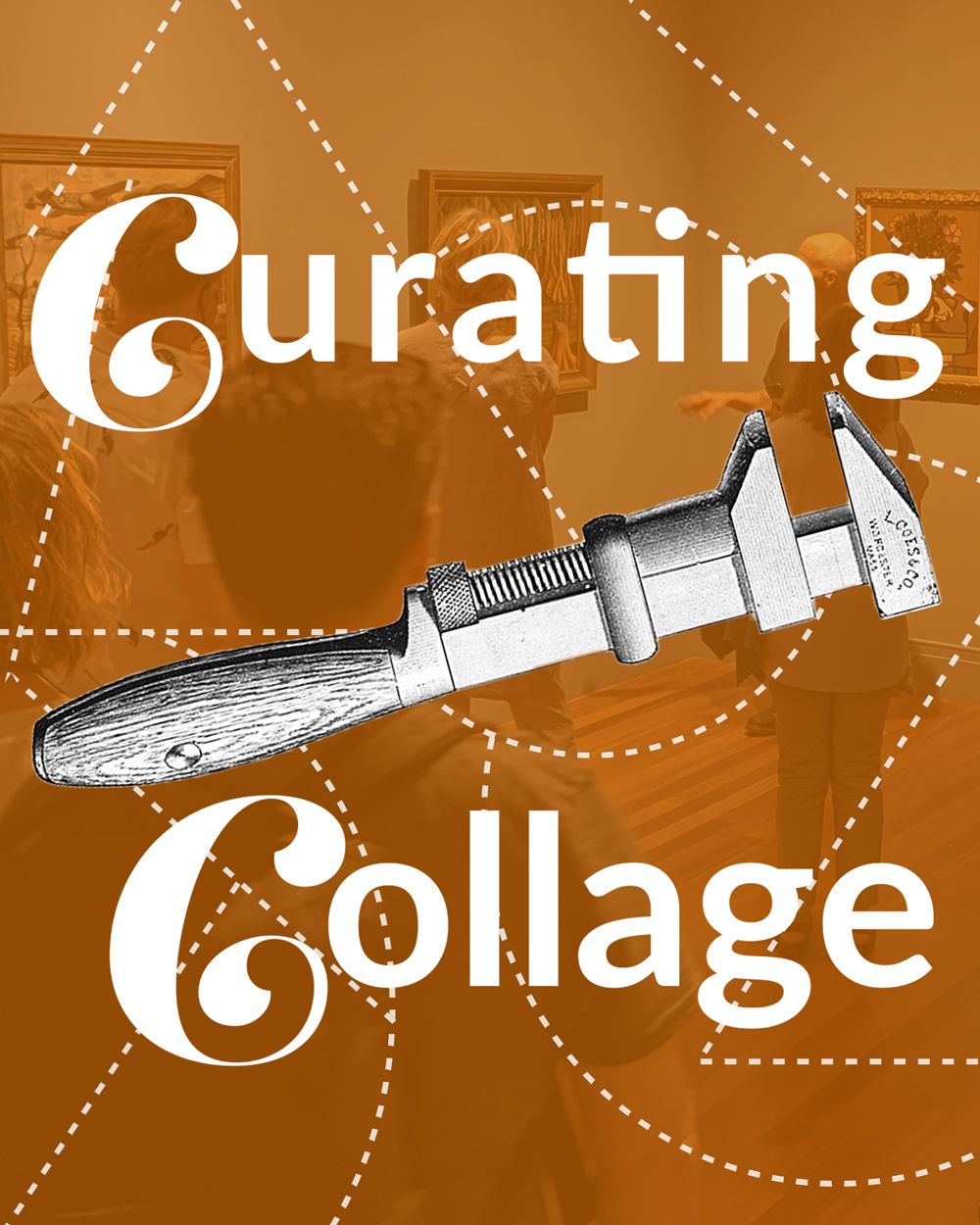
Final Deadline to apply: Sunday, 18 October 2026. A five-week, virtual/online workshop with Kolaj Institute
Next Session: Saturdays, 7 November-5 December 2026, 1-3PM EST
Curating is a vital part of art’s function: a curator creates a bridge between artwork and audience. For artists, this process can be confusing and mysterious. The goal of the Curating Collage Workshop is to equip artists with the tools to curate their own work, to work with curators, and build exhibitions that connect with diverse audiences. LEARN MORE
| | |
SUBSCRIBE TO KOLAJ MAGAZINE TODAY
Kolaj Magazine exists to show how the world of collage is rich, layered, and thick with complexity. By remixing history and culture, collage artists forge new thinking. To understand collage is to reshape one's thinking of art history and redefine the canon of visual culture that informs the present. Your support of this magazine keeps us going and makes it possible for us to investigate and document collage and to promote a deeper, more complex understanding of the medium and its role in art history and contemporary art.
DON'T MISS OUT!
| | |
CALL TO ARTISTS
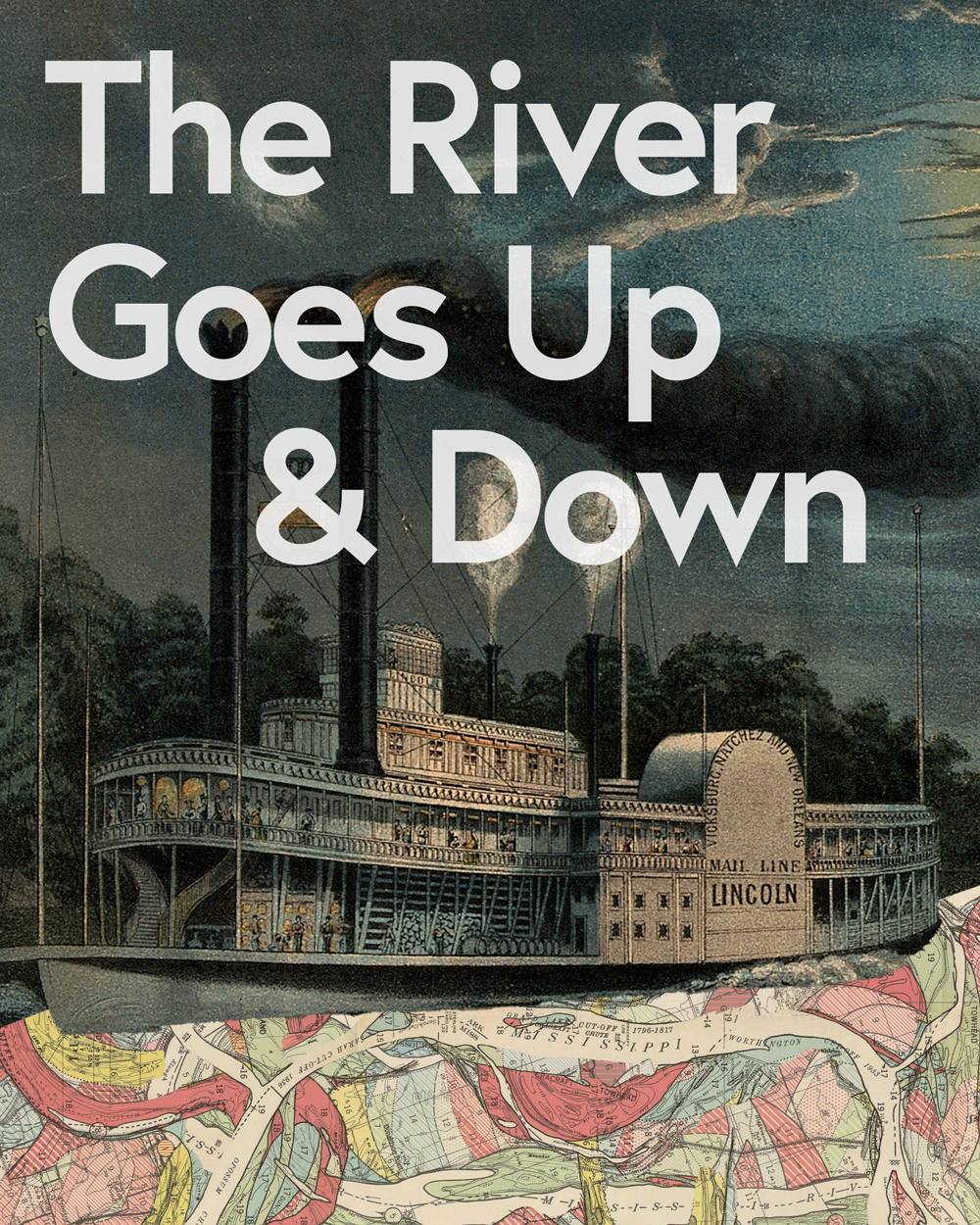
Final Deadline to apply: Sunday, 25 October 2026. A four-week, virtual/online Artist Lab with Kolaj Institute in November & December 2026
The River is not one thing, in one place, at one time. At any place along The River, there is an Up River and a Down River. The River itself is constantly going Up and Down. These observations seem obvious but they have profound implications for how we see the River as Culture: Who is coming to us? Who is going away? What do we send up or down the river? What happens when the River goes up or down too much? As Kolaj Institute continues its year-long exploration of the River as Culture, during this Virtual Collage Artist Lab, artists will research and make art about the Ups and Downs of the River and consider such wide-ranging events as 19th-century steamboat racing and the Great Flood of 1927. LEARN MORE
| | |
CALL TO ARTISTS & WRITERS
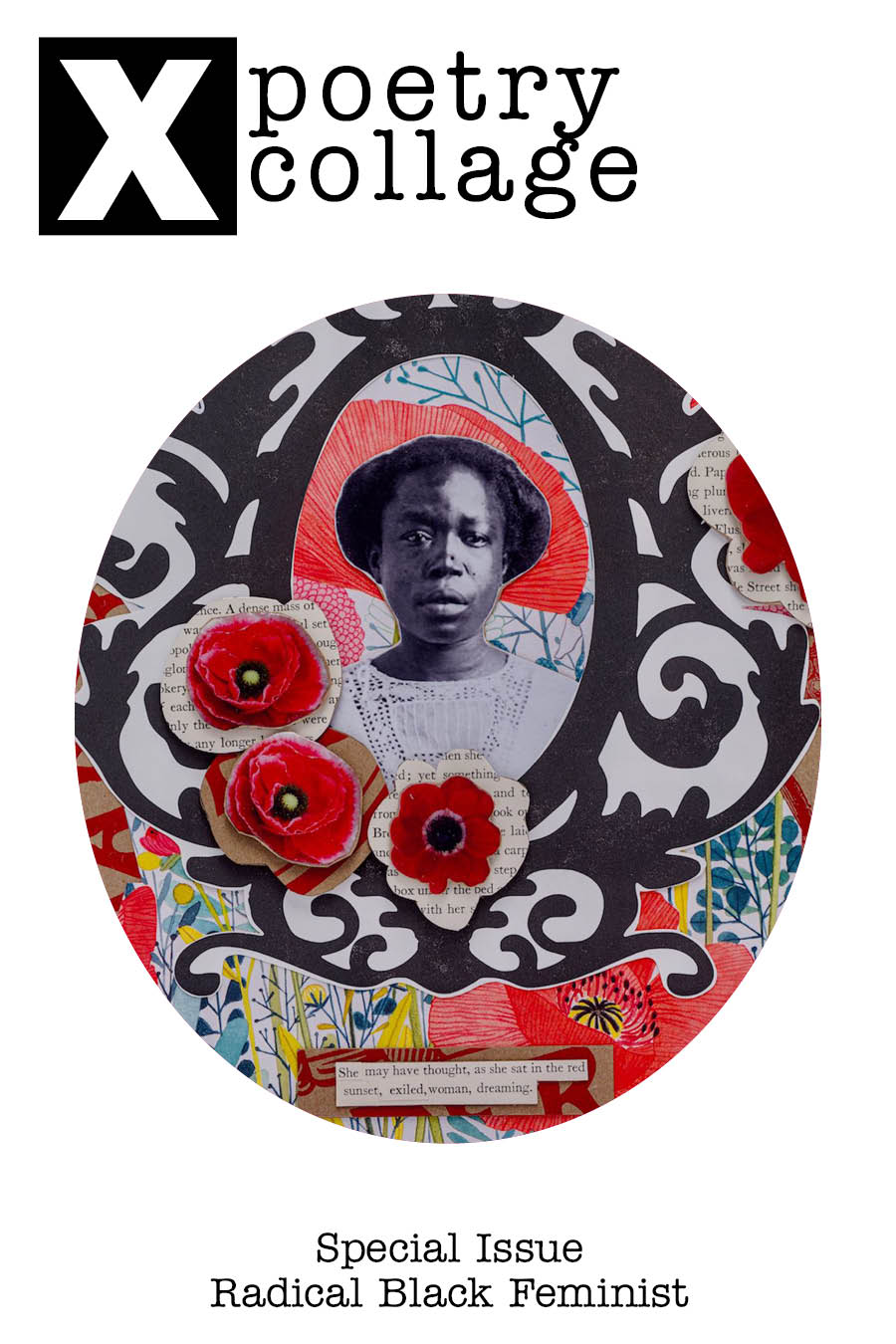
This special issue is being guest edited by S. Erin Batiste. To be considered, writers and artists who identify as Radical Black Feminists are invited to follow the regular submission process for PoetryXCollage to express their interest and how their practice and submission explores and reflects Radical Black Feminist theory. Please be mindful of your relationality and points of intersection and intervention when putting together your submissions. Alternatively, they may send an EMAIL to S. Erin Batiste. Submissions are accepted on a rolling basis. LEARN MORE
| | |
CALL TO ARTISTS
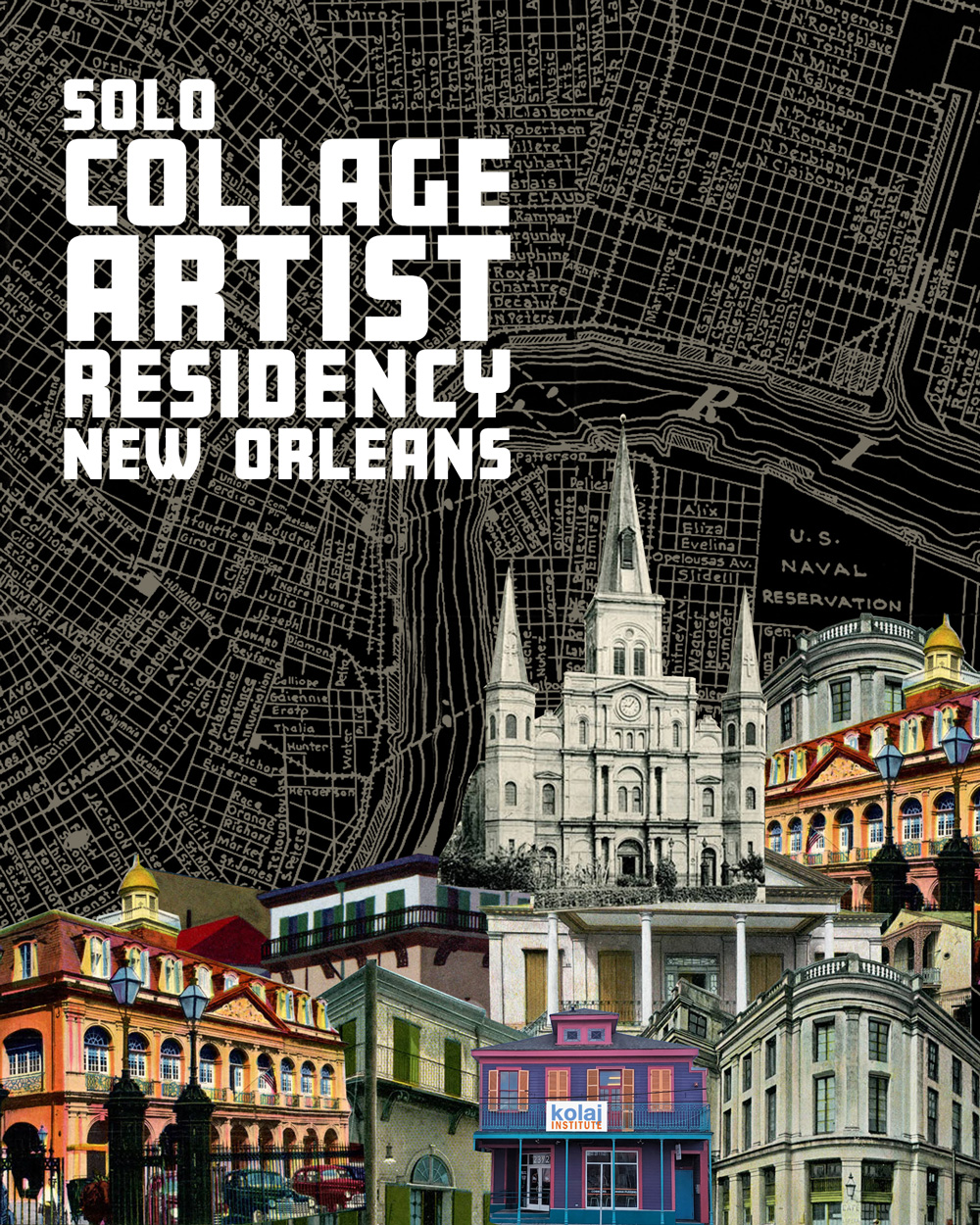
Kolaj Institute’s solo residencies in New Orleans are designed to provide artists, curators, and writers with dedicated time and space to work on a project. We are open to your ideas. We are looking for artists with an articulated goal for their time in New Orleans. That goal need not to be explicitly related to New Orleans, though priority will be given to those artists whose projects need time in New Orleans. These Solo Residencies are taking place at Kolaj Institute’s home in the New Orleans Healing Center and help further Kolaj Institute's mission to support artists, curators, and writers who seek to study, document, and disseminate ideas that deepen our understanding of collage as a medium, a genre, a community, and a 21st century movement. MORE
| | |
CALL TO ARTISTS
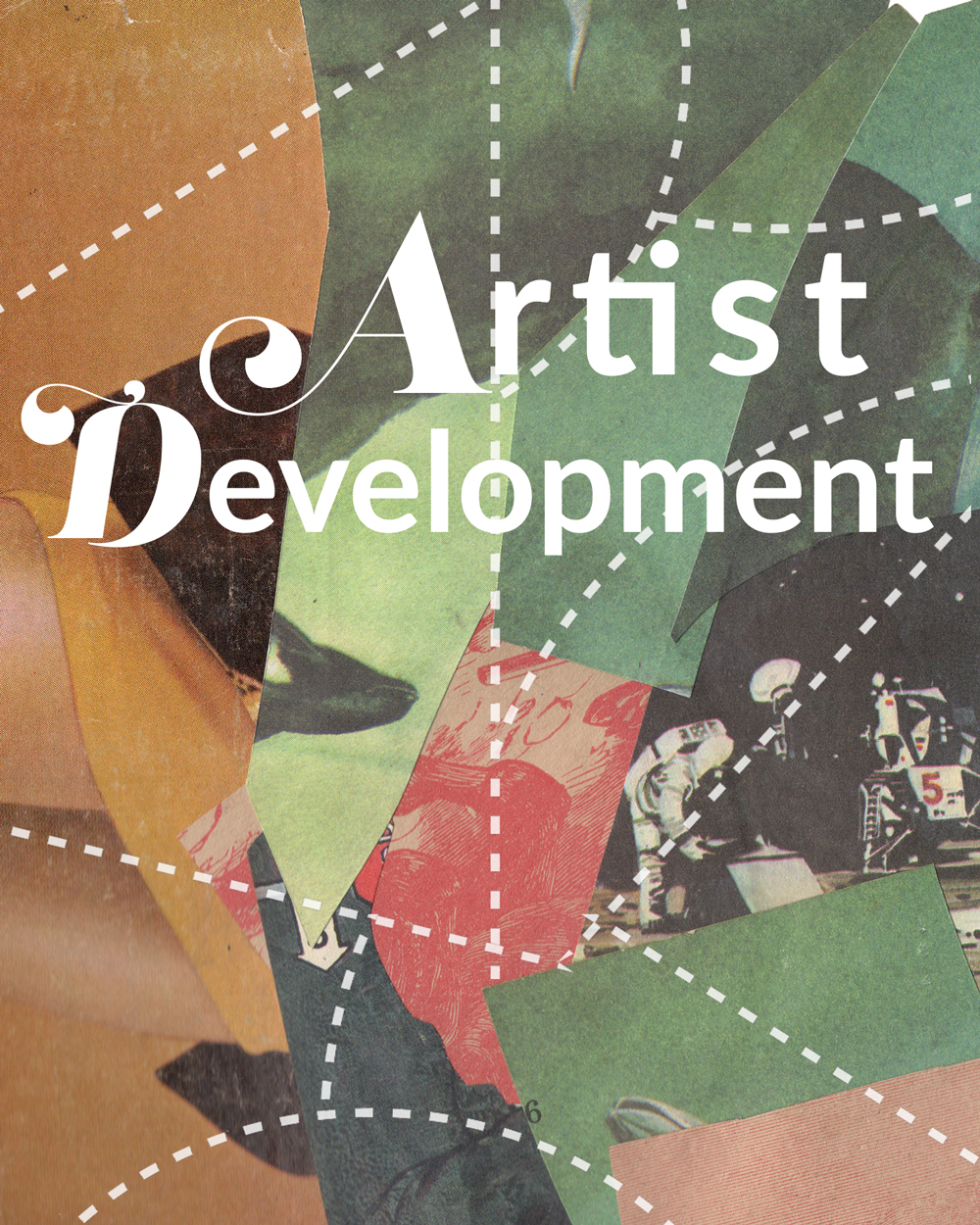
At Kolaj Institute, our philosophy is that if we bring artists together, explore ideas and concepts, share knowledge, we can stretch and develop as artists. When we bring that knowledge and skill into our communities, we raise the standing of collage and contribute to the civic discourse. Kolaj Institute's Artist Development Program is a collection of three core workshops for self-motivated artists, at any stage in their career, who want to develop and expand their collage-based artist practice and work towards professional goals, particularly in the areas of exhibitions and publishing. LEARN MORE
| | | | |
NEW PUBLICATION
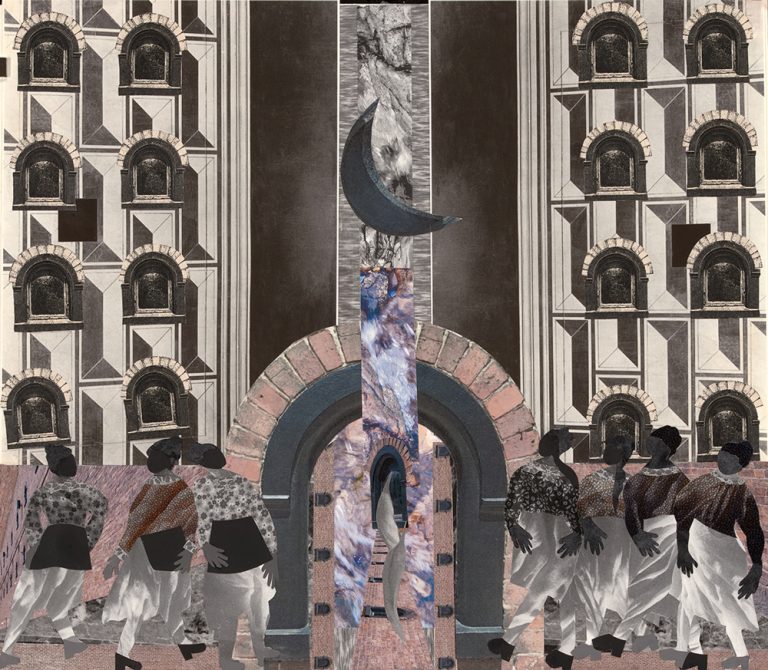
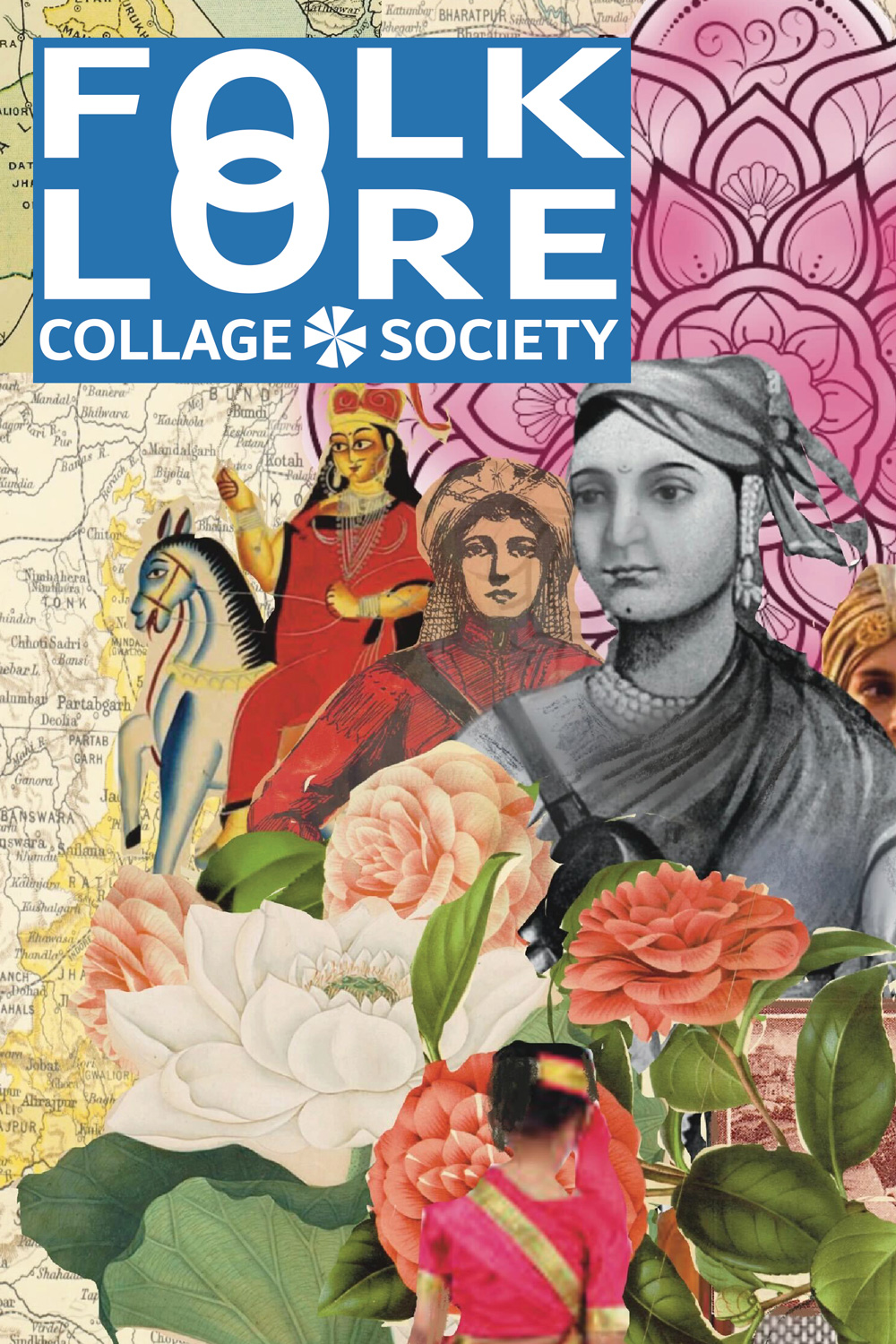
Folklore Collage Society is a printed journal dedicated to artwork and artists who activate, transmit, and celebrate folklore as a form of cultural expression and a strategy for community resilience. In its pages, stories, statements, essays, field notes, poetry, and song lyrics mingle with collage art that shows how collage artists are thinking about the folklore. In Folklore Collage Society, Volume 1, editor Ric Kasini Kadour lays out the inspiration behind the project. Kate Sutherland and Bella LaMontagne share Irish and Celtic folklore. Indira Govindan considers the story of Lakshmibai. Jennifer Lentfer offers an example of counter folklore. Jacoub Reyes explores Taíno oral histories. We share Field Notes about crows and witches turning into hares. Sarah Cowling and Eli Craven makes art of their own family folklore Leanne Poellinger explores the symbolism and community of apple pie. Dean Reynolds offers us photographic evidence of gateways between realms. Natalie Vestin shares stories of Swedish smallfolk. And Verónica Poblete Villanueva takes us to Algeria and shows us the dance of Ouled Nail Tribe. MORE
| | |
NEW PUBLICATION
Authoritarian Regime Survival Guide
Authoritarian Regime Survival Guide is a collage. The book combines the text of a Polish human rights activist Martin Mycielski with the artwork of seven collage artists to create a space in which we can think about the rise of authoritarianism and how to navigate the troubling, difficult times in which we find ourselves. Organized as a series of lists, the book illustrates what to expect under authoritarianism and offers rules for surviving authoritarian regimes and engaging their supporters. The introduction traces how the text came into existence and how the artists came together to make collage about it. Ric Kasini Kadour shares historical examples of artists responding to authoritarianism; John Heartfield’s anti-fascist collage and a 1979 exhibition in East Germany that was described as a “victory over false consciousness.” Authoritarian Regime Survival Guide is a testament to the role art can play in our communities.
| | |
NEW PUBLICATION
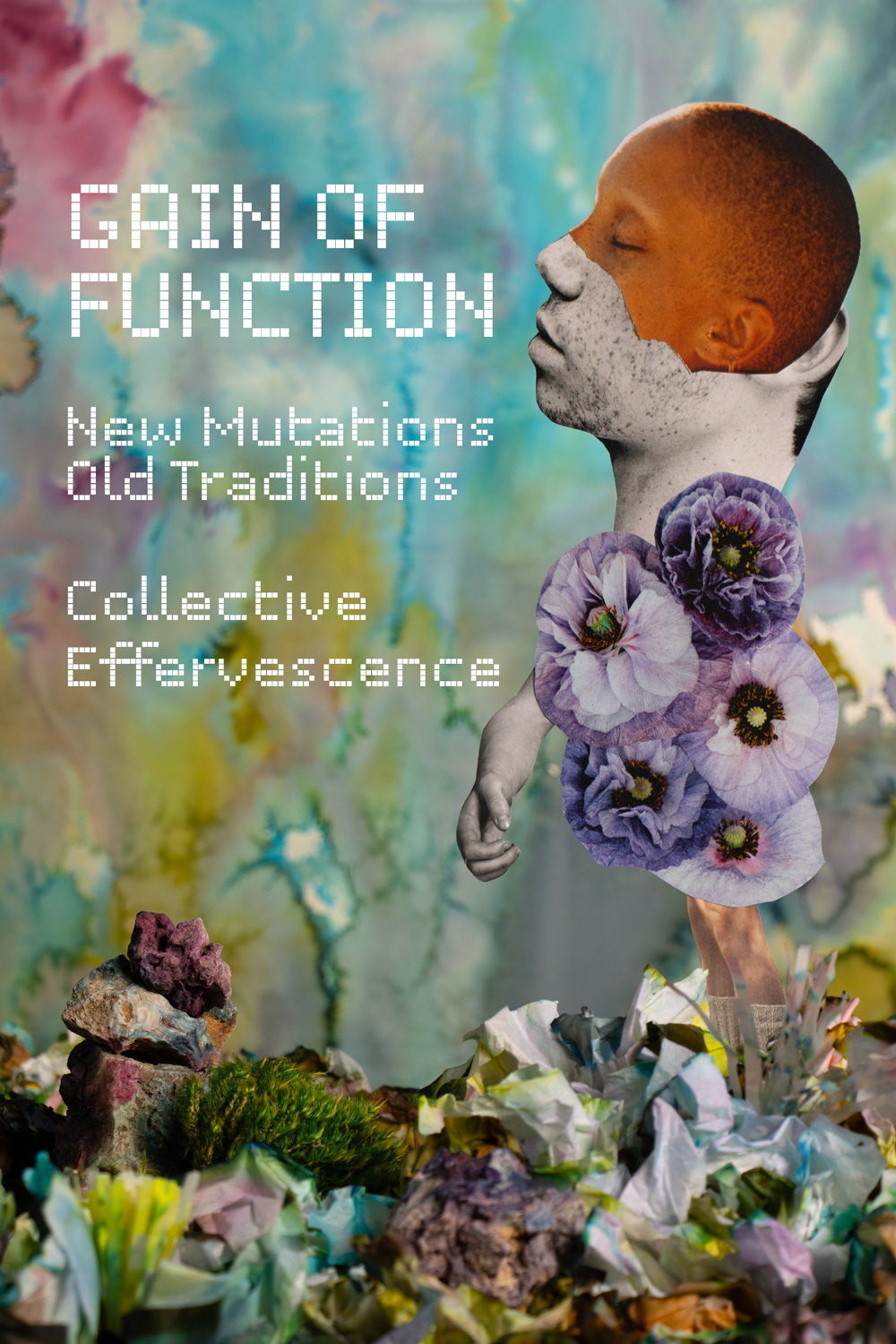
This project led by Cape Girardeau, Missouri, USA-based artist Emily Denlinger speaks to the role of art, ritual, and resilience. Building on her own work, Denlinger engaged with thirty-nine artists at the 2025 edition of Kolaj Fest New Orleans to make locative collage photographs in an artist-created landscape inspired by global masking traditions. The resulting artworks are presented in this zine published by Kolaj Institute. "The project functions as 21st century folklore with each character potentially representing a magical creature or masked performer in some yet-to-be-imagined ritual," wrote Kolaj Institute Director Ric Kasini Kadour. "Like the odd, creature-like figures of early 20th century Surrealists, they, too, are a response to deeply troubled times and offer us the opportunity to find a collective effervescence to see us through them."
| | |
SPECIAL EDITION
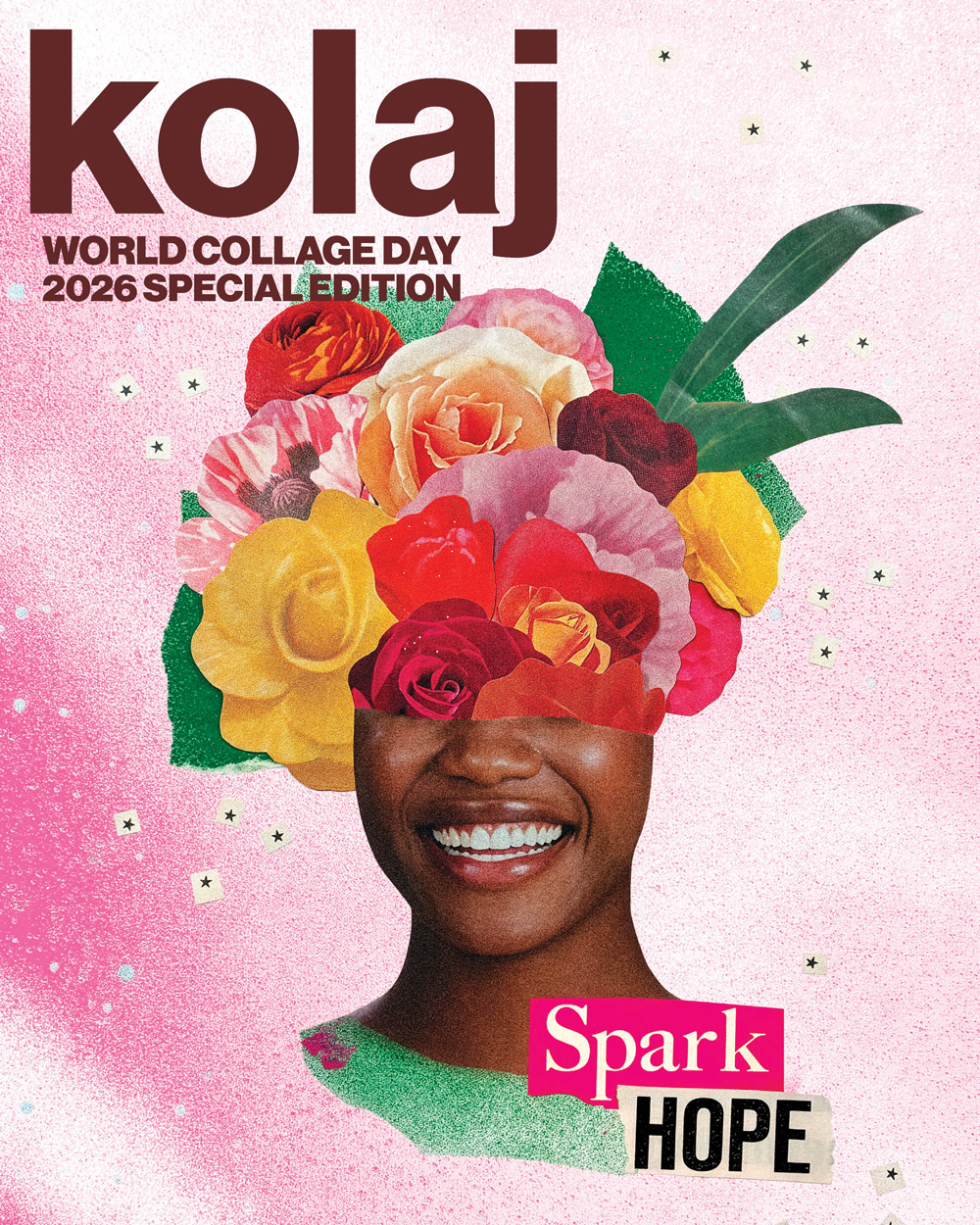
In honor of World Collage Day, 9 May 2026, Kolaj Institute released a special edition of Kolaj Magazine. Highlights include a profile of World Collage Day 2026 Poster Artist Jessa Dupuis, an Editorial by Ric Kasini Kadour about technologies of the self on World Collage Day, the story of the Eclectic Collage Collective in London, Ontario by Sarah Cowling, Jerome Bertrand shares his experience creating a Living Collage in a day-long performance at Atelier Galerie 2112 in Montreal, Quebec, Canada and Cut-Out Pages from inspiring collage artists. MORE
| | |
PRINT MAGAZINE
Since 2011, Kolaj Magazine has documented, reported on, and explored the amazing artists who make up the international collage community.
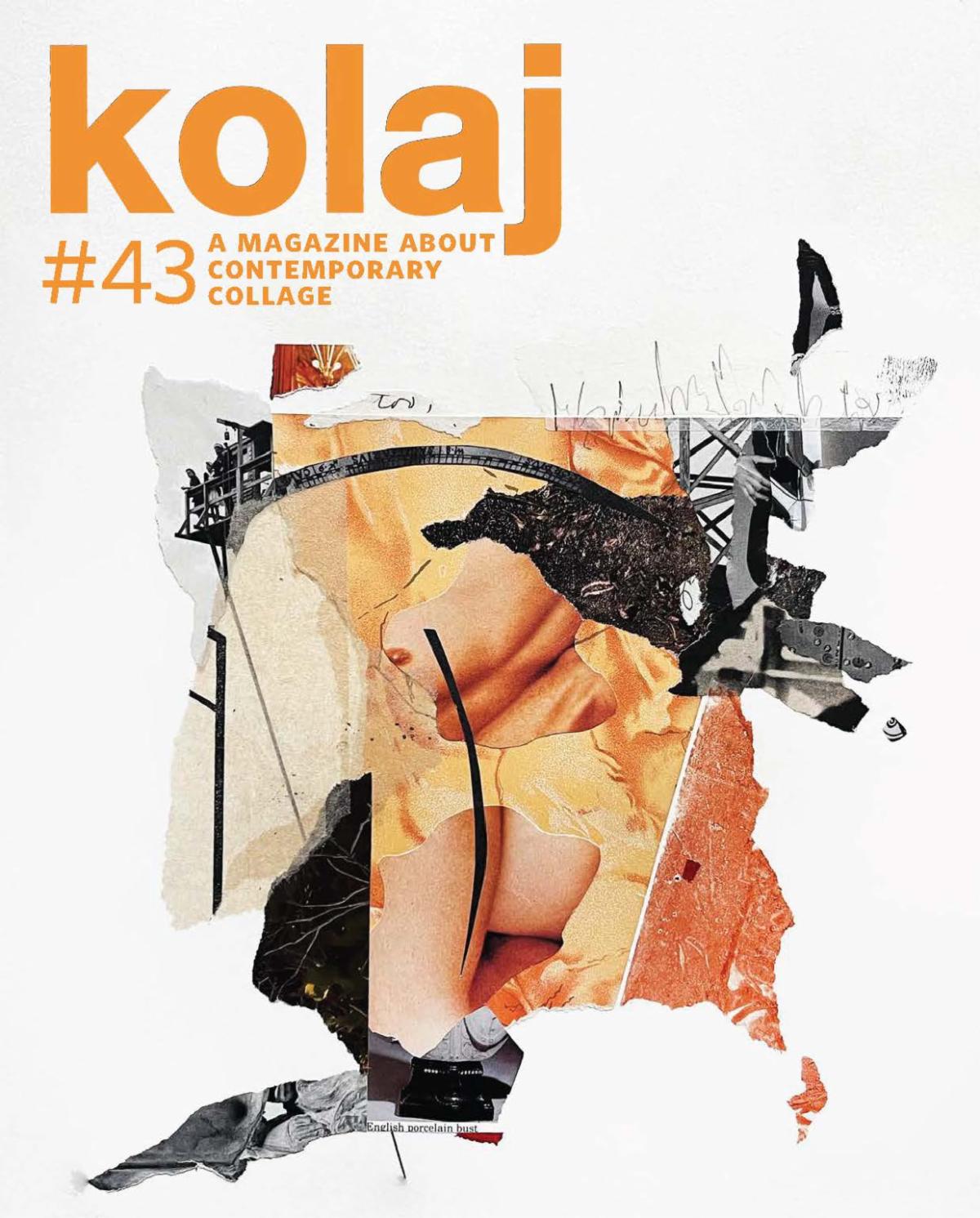
In Kolaj #43, you’ll discover “The Fluctuation of Likeness” by Portland, Oregon collagist Clive Knights; Irish collagist Anthony D Kelly on basic income for the arts in Ireland; an interview with photomontagist Mark Rappaport about images, art, and cinema; Ric Kasini Kadour’s editorial, “Blank Cartridge Pistol”; a report on The Rose, an exhibition and book exploring female narrative through archival and embodied collage practices; Anthony Michael Ryder on collage and trauma; Emily Denlinger on bringing “Gain of Function” to Carnival in New Orleans; “Selections from the Collection” featuring Meikel Church’s Self-Inflicted Regret, curated by Susan Simpson; and collage news from Montreal, Paris, Germany, Kolaj Institute, World Collage Day, PoetryXCollage, and more.
Our goal with every issue is that Kolaj Magazine is essential reading for anyone interested in the role of contemporary collage in art, culture, and society. MORE
| |
|
NEW PUBLICATION
Frankenstein
| |
This new version of Mary Wollstonecraft Shelley’s classic 19th century novel Frankenstein; or, the Modern Prometheus features seventy-six illustrations by International Collage Artists who delved into the novel’s rich narrative and visual potential and created thought-provoking artworks that reflect the essence of Frankenstein in a 21st century context.
| | | |  | |
NEW PUBLICATION
Magic in the Modern World
Taking a broad view of magic and drawing from multiple histories, the book, Magic in the Modern World, proposes a way to think about magic in the 21st century, what it means to communities, and how it negotiates itself in systems of power. Generously illustrated, the book features the artwork of fifteen collage artists and dozens of historical images.
| | | |
ARTSHOP
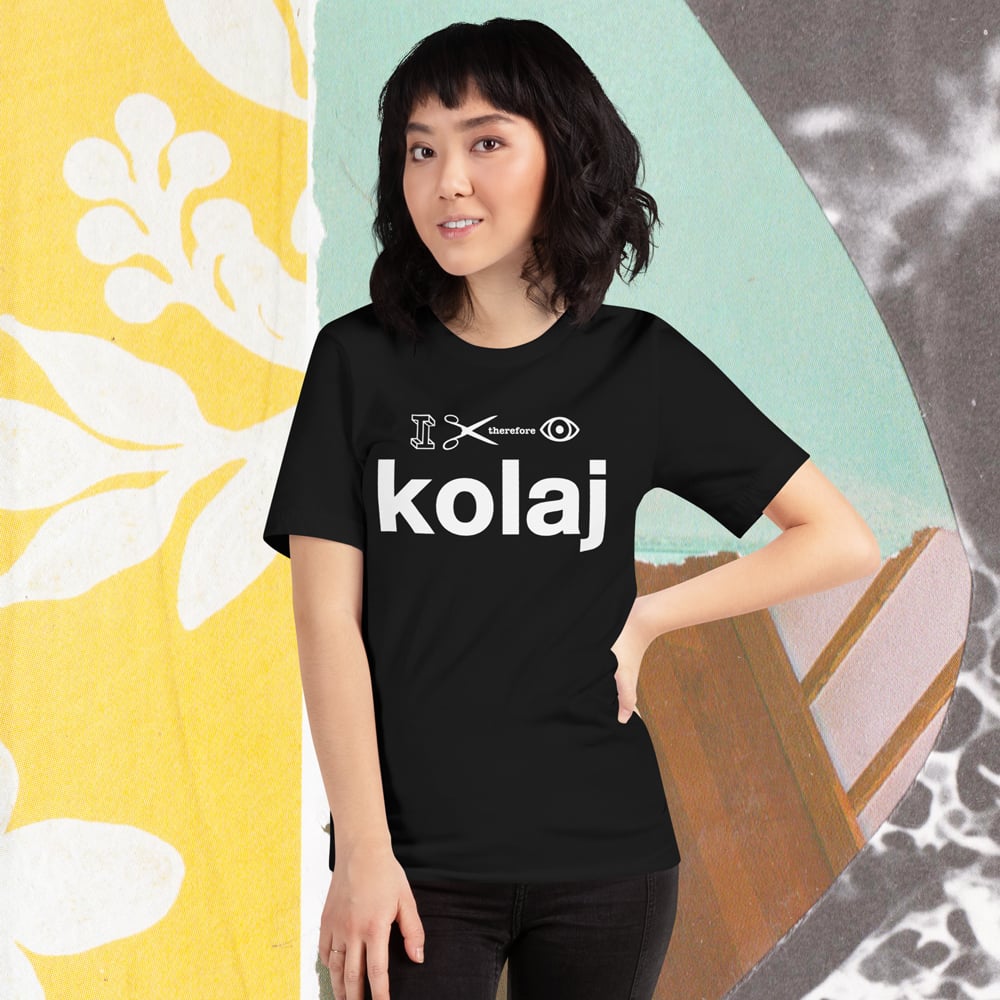
"I Cut Therefore I Kolaj" T-shirt
Since we started Kolaj Magazine in 2011, people have been asking about t-shirts. Well, we finally made one. We are pleased to announce the "I Cut Therefore I Kolaj" T-shirt. We hope you like it and wear it with pride.
| | |
TRADING CARDS
Kasini House Artshop works with the Kolaj Magazine Artist Directory to produce curated packs of the Collage Artist Trading Cards. Each card is a full color, 5.5” x 3.5” postcard with rounded corners. An example of an artist’s work is on the front of the card and the artist’s public contact information is on the back. Collage Artist Trading Cards come in packs of 15.
| |
About Kolaj Magazine
Kolaj Magazine is a quarterly, printed, art magazine reviewing and surveying contemporary collage with an international perspective. We are interested in collage as a medium, a genre, a community, and a 21st century art movement. Kolaj is published in Montreal, Quebec by Maison Kasini. Visit Kolaj Magazine online.
WEBSITE | ARTIST DIRECTORY | SHOP
About Kolaj Institute
The mission of Kolaj Institute is to support artists, curators, and writers who seek to study, document, & disseminate ideas that deepen our understanding of collage as a medium, a genre, a community, and a 21st century movement. We operate a number of initiatives meant to bring together community, investigate critical issues, and raise collage’s standing in the art world.
WEBSITE | CALLS TO ARTISTS | SUPPORT
| | | | |