October 2026

SACRAMENTO STEPS FORWARD

MONTHLY NEWSLETTER


October Newsletter Highlights:

Learn about Sacramento's new mobile app designed to help youth find support, read about recent policy updates that impact homelessness and housing, hear from SSF's CEO on how a new state law and local efforts are working toward a stronger system, meet new members to the Continuum of Care Board, and more.


A New Way for Sacramento Youth to Find Local Resources 


A message from Geoffrey Fralick, Youth Program Specialist, Sacramento Steps Forward 


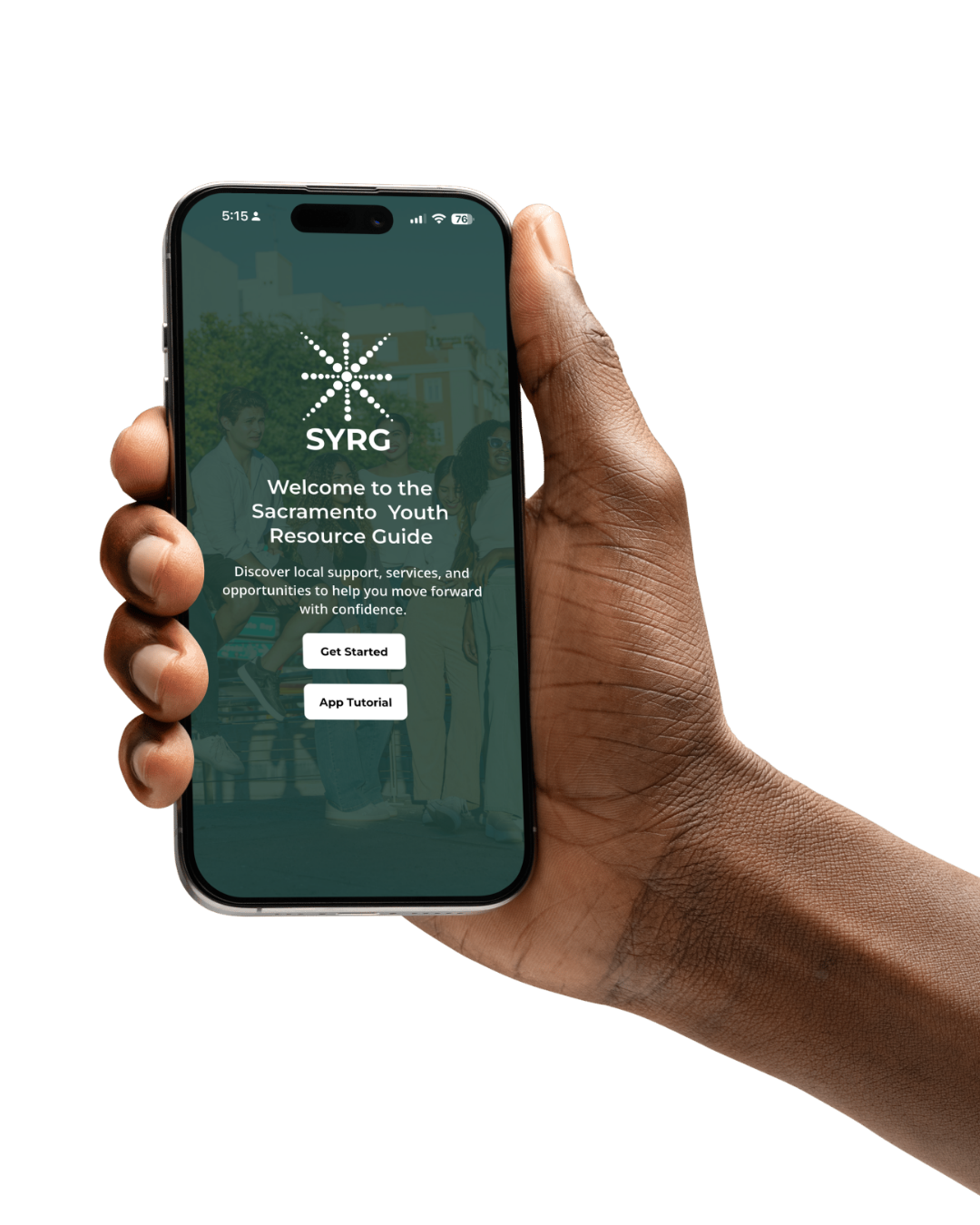
On September 30, we launched the Sacramento Youth Resource Guide (SYRG) app, a new mobile tool designed to make it easier for transition-aged youth to find local resources and connect with support. 


I have worked with youth programs for more than five years and that experience has shown me how important a project like this is for our community. I have seen how quickly a young person can find themselves in a difficult situation without the resources or support network that many adults have had more time to build. 


Youth experiencing homelessness or housing instability may be trying to finish school, find their first job, navigate health care or learn how to live independently while also figuring out where they are going to sleep. Some are leaving foster care or other systems without a stable family network to fall back on. In those circumstances, even figuring out what resources exist, who qualifies and how to reach them can become one more hurdle. 


Putting local resources in one mobile place 


The SYRG app gives users a new way to search for services directly from their phone. It includes information about housing and shelter, food, health and wellness, transportation, employment, education, legal services, basic needs and other community resources. 


That information comes directly from 2-1-1 Sacramento’s database. Rather than creating a separate resource directory, the SYRG app makes an existing source of local information available in a searchable, mobile format. Users can search by keyword, explore by location, save resources they want to revisit, and connect with 2-1-1 Sacramento when they want additional assistance navigating their options. 


Because the SYRG app was developed with youth-focused funding, its design centers the needs and experiences of transition-aged youth (generally, those from 16-24 years old). The Sacramento Continuum of Care’s Youth Action Board brought the perspective of youth with lived experience into conversations about how the app should function, what it should include and how people may actually use it.  


The SYRG app was developed in partnership with the Youth Action Board, 2-1-1 Sacramento, SkyClutch and Sacramento Steps Forward using funding from California’s Homeless Housing, Assistance and Prevention Program and federal Youth Homelessness Demonstration Program. 


Caleb Merrill, a Youth Action Board member who also serves on the CoC Board, Governance Committee and Project Review Committee, described what that collaboration means for the app: 


“The Sacramento Youth Resource Guide is a community resource navigation app developed [that] empowers people to find the vital resources they need in an easy, interactive, and personalized way. From housing and wellness services to food and respite centers, this app brings our community's resources into the pockets of youth and the case managers who support them on their journey.” 


The app is not restricted by age. Anyone who could benefit from having local resources available in one mobile place can use it, and we encourage case managers, clients and community members of all ages to download the app and see how it may be useful to them. 


A tool for clients and the people working with them 


The SYRG app was built so someone can use it independently, but it can be just as useful when a provider and client are looking for options together. 


A case manager can open the app during an appointment, search alongside a client and talk through what is available. An outreach worker can use it to quickly look up nearby services in the field. And for someone who is not already connected to the homelessness response system, the app offers another place to begin looking for resources. 


The SYRG app is not a replacement for 2-1-1 Sacramento, the Coordinated Access System or the providers doing this work every day. It is a tool for connecting people with existing resources and systems. 


There are also limits to what any app can do. It cannot create housing where there is a shortage or make a service available when a program is full. What it can do is make information easier to find, put it in a format people can carry with them and provide another path to the services that are available. 


Help us keep improving the SYRG app 


Now that the SYRG app is in people’s hands, we want to know how it is working in practice. 


We are continuing to work with youth, providers and community partners to fine-tune the app. As you use it, you may notice information that could be clearer, a feature that could work better or a resource you think should be easier to find. 


Please send recommendations to syrg@sacstepsforward.org or submit feedback directly through the app. Feedback from the people using the SYRG app, and from providers sharing it with clients, will help us continue improving it. 


Learn more and download the app ➜ 


Events & Invitations


Continuum of Care Meetings


Get involved in our local Continuum of Care (CoC), which leads our regional planning, coordination, and funding to resolve homelessness. This month's upcoming meetings include:


CoC Committee Consolidation


The Sacramento Continuum of Care (CoC) has consolidated the Homeless Management Information System (HMIS) and Data Committee and Point-in-Time (PIT) Count Committee into the System Performance Committee (SPC), bringing related data, performance, and planning work together within one committee.


Starting in November, this work will continue through the SPC’s regular monthly meeting schedule. Visit the Sacramento Steps Forward website for upcoming meeting dates, materials, Zoom information, and other committee updates.


View upcoming CoC Committee Meetings ➜


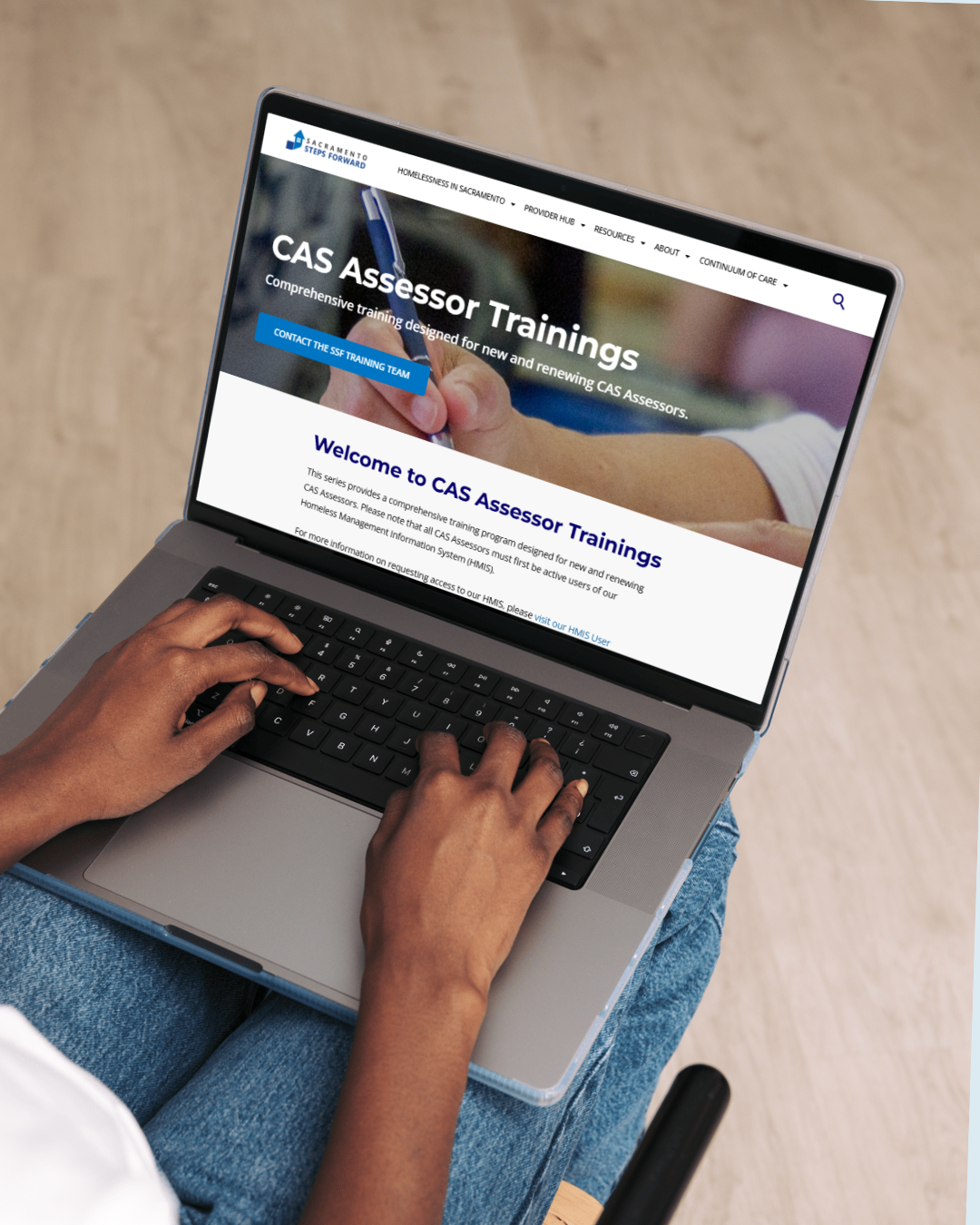
CAS Assessor Training Is Now Self-Paced


We’ve updated the Coordinated Access System (CAS) Assessor training process to make it easier for providers to complete certification on their own schedule.


CAS Assessors are active Homeless Management Information System (HMIS) users with advanced access to complete CAS assessments and support clients through the coordinated entry process. The training is intended for new and renewing assessors, including service providers and outreach workers who need access to tools such as the Crisis Assessment and Individualized Support Plan (ISP).


The self-paced training includes six pre-recorded modules, slide decks, job aids, and other resources covering CAS fundamentals, HMIS, document readiness, trauma-informed practice, vicarious trauma, and the Survivor Coordinated Access System.


After completing the materials, trainees can take the CAS Assessor Quiz and finish the remaining certification steps.


Unpacking The Shortage Report: What Federal Data Reveals About Gaps in Resources to End Homelessness


The National Alliance to End Homelessness will host a webinar on October 22 at 9:00 a.m. PT exploring findings from its new Shortage Report, which examines gaps between available homelessness response resources and the level of need across communities.


The webinar will highlight key findings from the report and outline steps participants can take to encourage elected leaders to address funding and resource shortages.


Updates & Progress Points


Moving Toward One Regional Structure: How a New State Law and Local Efforts Can Strengthen Our Homelessness Response 


By Dr. Trent Simmons, CEO, Sacramento Steps Forward 


A new state law, SB 802, requires Sacramento to do something our region has considered for years: create a Joint Powers Authority (JPA) to govern our local homelessness response system. This law raises important questions for our community, our partners, Sacramento Steps Forward (SSF) and, most of all, the people we serve. 


We don’t yet know how the law will be implemented. But we do know what it requires, how it connects to planning work underway, and what comes before the JPA must be formed in January 2028.  


LEARN MORE ABOUT THE LAW AND WHAT'S NEXT ➜


Sacramento Submits FY2026 Continuum of Care Application for Federal Funding


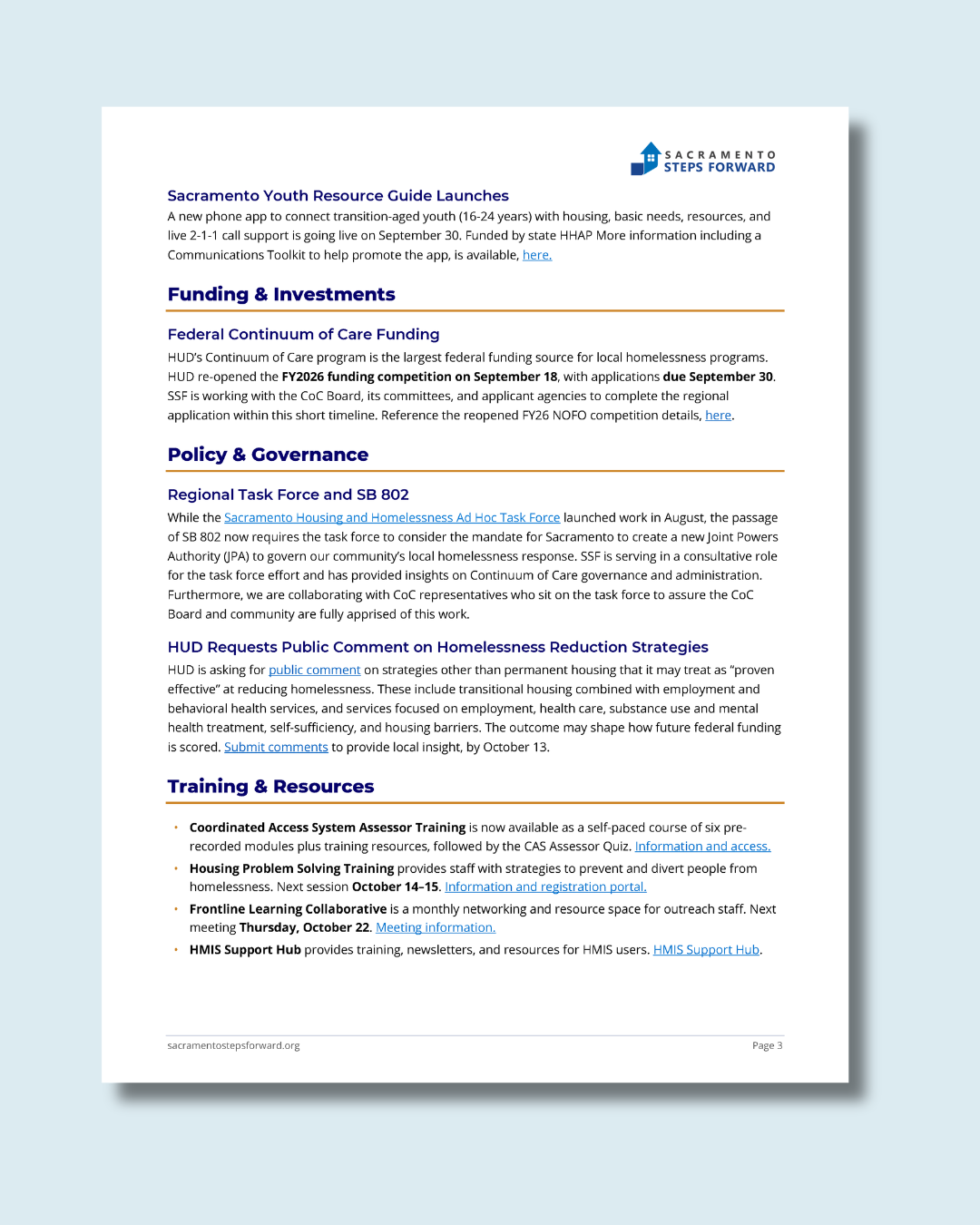
After four months of work and an unusually complicated federal funding cycle, Sacramento’s Fiscal Year 2026 Continuum of Care (CoC) application is officially with the U.S. Department of Housing and Urban Development (HUD).


Sacramento Steps Forward submitted the application on September 30 on behalf of the Sacramento City and County CoC, requesting $50.4 million to support housing, services, and CoC planning. Most of that funding would continue existing local programs, with $41.7 million requested to sustain projects already serving people experiencing homelessness across Sacramento.


We’re grateful to the providers, CoC Board and committees, Review and Rank Panel, community partners, and staff who adapted throughout the process and helped move Sacramento’s application forward so we can continue to support our neighbors together.


HUD will now review applications from communities across the country and make final funding decisions.


New Members join the CoC Board


The Sacramento Continuum of Care (CoC) Board has recently welcomed three new members. Michael Baker, representing Sober Living Providers; Renee John, representing Workforce Development; and Kelly Sullivan, representing Specialty Courts, each bring valuable experience and perspectives to the Board.


We’re grateful for their willingness to lend their time and expertise to this work and look forward to the contributions they’ll make. Get to know our newest Board members and learn more about the backgrounds they bring to Sacramento’s homelessness response system below.


Monthly Homelessness Response Report


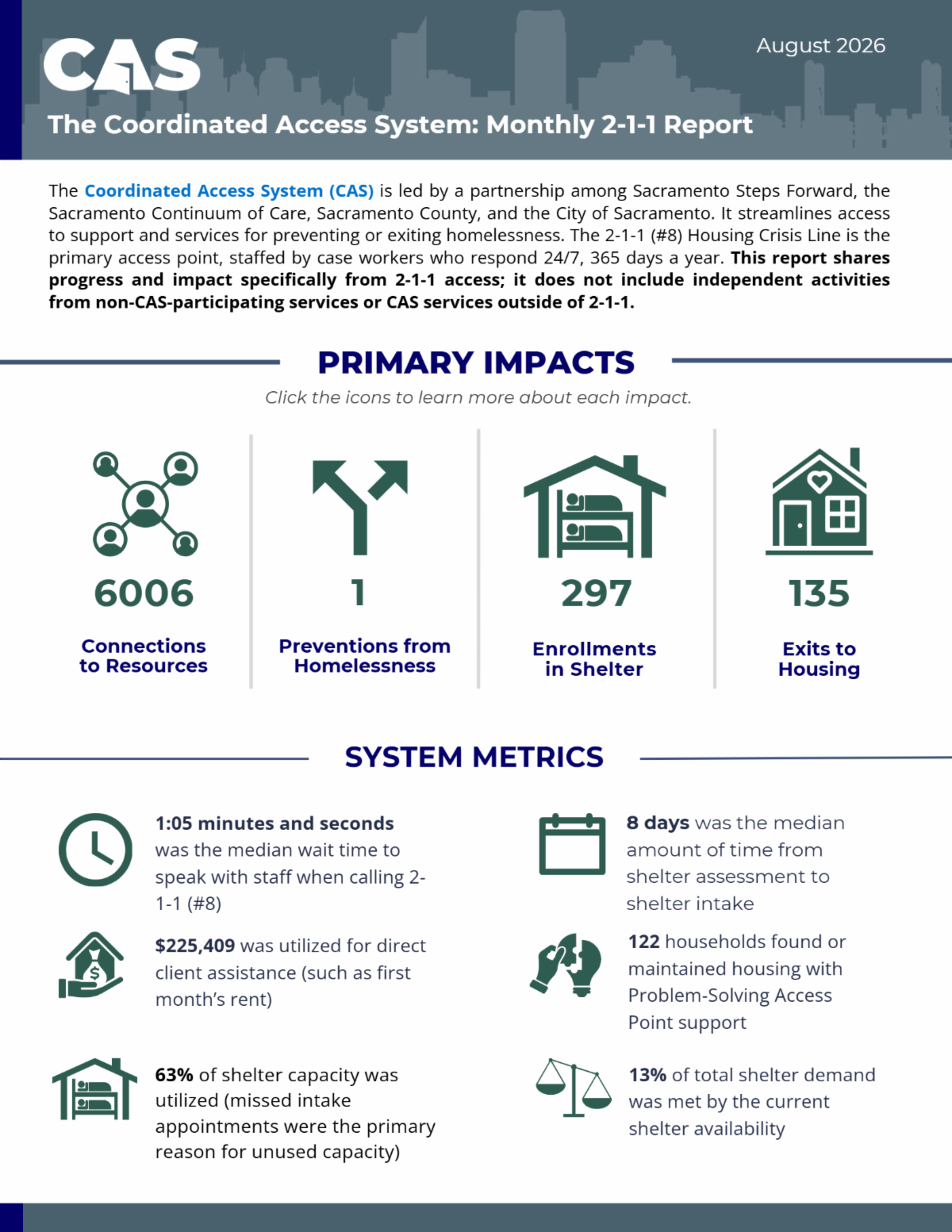
Sacramento Steps Forward has launched a new monthly report that brings key information from across our programs and partnerships into one place, making it easier to understand Sacramento’s homelessness response.


The reports offer a snapshot of both the numbers and the work, bringing together the latest available data on housing exits, service engagement, shelter and housing capacity, and financial assistance, alongside program, funding, policy, and training updates.


Policy Insights & Impacts for Sacramento


This new section of the newsletter reviews policies and legislation that are relevant to Sacramento's homelessness response system. This month, we provide updates on the following:


  • Vacating of the immigration verification requirement proposed by federal agencies.
  • Transition of the Emergency Housing Vouchers program to ensure continued housing for those who depend on it.
  • A new state law that integrates prevention into homelessness response.
 

The Coordinated Access System:

August Data


In August, we saw growth in the role of the Problem-Solving Access Points (PSAPs) program in helping households identify housing solutions that fit their individual circumstances. PSAPs supported 122 households in finding or maintaining housing, nearly doubling the 62 households supported in July.


One emerging trend is the increased use of shared housing as a pathway to housing stability. As households navigate rising housing costs and limited affordable housing options, shared living arrangements can provide another opportunity to access and maintain housing while reducing financial barriers.


The system also connected 6,006 households to resources, down slightly from 6,080, and supported 135 exits to housing, down from 144.


The People Behind the Work: Tamandeep Garcha


There are many different roles behind the work of resolving homelessness, including here at Sacramento Steps Forward (SSF). Our new Staff Spotlight series is a chance to get to know some of the people who make that work possible.


We’re starting with Tamandeep Garcha, Administrative Director at SSF. Her role touches nearly every part of the organization, helping ensure teams have the systems, processes, and administrative support they need to keep moving.


As Tamandeep puts it, “Meaningful change requires compassion, collaboration, and a strong community support system.”


Opportunities & Resources


Survey for People Working in Homelessness Services


If you currently do homelessness-related work, University of Washington researchers are seeking your input on experiencing harassment. They are seeking participation via an online survey from those who work in homelessness services, outreach, shelter or housing programs, academic research, public administration, policy, advocacy, legal work, public education, or related fields.


Participation is voluntary, anonymous unless you provide contact information, and you may skip any question you do not wish to answer. 


Foster Youth Guaranteed Income Program


United Way California Capital Region is now accepting applications for a new Foster Youth Guaranteed Income Program supporting eligible current and former foster youth in Sacramento County.


Participants selected for the program can receive $900 per month for up to two years as they transition toward greater stability and independence. Eligibility includes former foster youth who exited care after age 16, as well as those preparing to exit foster care, who meet the program’s additional requirements.


The program is funded by the City of Sacramento through Measure L: Sacramento’s Children’s Fund and is administered by United Way California Capital Region.


Providers working with current or former foster youth are encouraged to review the eligibility requirements and share the opportunity with those who may qualify.


October Wellness Tip: Don't Carry the Hard Stuff Alone


Some situations are harder to leave at work than others. Maybe a conversation did not go the way you hoped. Maybe you are still thinking about a client, a decision, or what you could have done differently.


When that happens, talking it through with someone you trust can help. A colleague or supervisor may notice something you missed, help you sort out next steps, or simply remind you that you do not have to work through every difficult moment on your own.


Peer support and reflective supervision are recognized practices in homelessness response work for a reason. This work can be complicated, emotional, and demanding. Making room to talk through the harder parts can help teams learn from one another and stay connected through it.


What helps you recognize and work through the emotions that can come with this work? We’d love to hear about it! Use the button below to share what works for you.


Share Your Work: Be Featured as a Provider


Help us highlight the great work happening across Sacramento! We’re inviting providers to share their progress, challenges, and opportunities for collaboration to be featured in our upcoming newsletters and other communications. This is a chance to showcase your impact, inspire new partnerships, and help shape the conversation around homelessness response. Fill out the form below to share your story and connect with the broader community.


Facebook  Instagram  LinkedIn  X