Having trouble viewing this email? Click here to view in a browser.

March 2026

Volume 13, Issue 1

PROJECT 10 TOPICAL BRIEFS are published on a bi-monthly basis. Each issue focuses on a specific topic or theme, highlighting current and upcoming information and events related to secondary transition.


This March edition of the Project 10: Transition Education Network Topical Brief is For Your Secondary Transition Planning Research Enjoyment: A Reader-Friendly Summary of the Predictors of Post-School Success & How They Were Formed.


Research studies indicate that students with disabilities have less success than students without disabilities in the area of post-school outcomes. In this “Reader-Friendly Summary of the Predictors of Post-School Success and How They Were Formed”, post-school outcomes are defined as activities that support student living after high school, including:


  1. Receiving training through a specific training program or attending college and potentially earning a degree.
  2. Finding a job that is meaningful and provides a steady income.
  3. Living independently with supports as needed and desired.


Mazzoti, et al. (2021) Secondary Transition Predictors of Post-School Success: An Update to the Research Base

Use the green button below to share this Topical Brief with someone who would benefit from this edition. 

PART ONE – The Problem: Prior to this research study, 20 predictors of positive post-school outcomes were identified across multiple studies. The strength of the research methods lacked consistency between the studies. This left secondary transition planning researchers perplexed because some of the studies were identified under more stringent standards than others.


PART TWO – The Challenge: The researchers, Mazzotti, (et al. (2021)), wanted to engage in further research to determine if any additional predictors of post-school success could be identified. In addition, they also wanted to review the data on the 20 currently identified predictors to ensure that there was a consistent level of evidence to ensure all of the predictors met the criteria of “evidence-based”.


Research studies have varying levels of rigor. Because research studies use research practices with varying levels of strength, it is necessary to consider the type of research practices being used when interpreting the research results. The National Technical Assistance Center on Transition: The Collaborative (NTACT:C) developed criteria to categorize the various levels of research strength.


The NTACT:C Criteria for Levels of Evidence provides context for categorizing the evidence base for secondary transition, vocational rehabilitation, and career technical education practices for secondary students with disabilities. The quality indicators and criteria used for categorizing the evidence base is intended for use by (a) NTACT staff in identification of these practices, and (b) by groups or individuals conducting special education research at the secondary level (i.e., middle, high) for students with disabilities” (Introduction to NTACT Criteria for Levels of Evidence, 2018).


The criteria are divided into four levels:


  1. Evidence-Based Practice: This is the highest strength level of research practices. For a research study to be classified at this level, numerous examples of the most rigorous research practices must be evident.
  2. Research-Based Practice: This is the second highest strength level of research practices. For a research study to be classified at this level, some examples of the most rigorous research practices must be evident.
  3. Promising Practice: This is the third highest strength level of research practices. For a research study to be classified at this level, fewer examples of reliable research practices must be evident.
  4. Unestablished: This classification indicates that “insufficient research exists to meet the criteria for any of the other levels of evidence” (Introduction to NTACT Criteria for Levels of Evidence, 2018).

PART THREE – The Purpose: “The purpose of this systematic literature review was to update the secondary transition correlational literature published since Test, Mazzotti et al. (2009) to identify (a) additional evidence to support existing predictors of post-school success and (b) three newly identified predictors of post-school success for youth with disabilities.”


Correlational research is not experimental research, but it can provide important information. For example, experimental research can be commonly recognized in pharmaceutical research in which an experiment is required to demonstrate the effectiveness of a new medicine. During this type of research, participants are divided into two groups. One of the groups receives the new pharmaceutical product and the other group receives a placebo (a harmless product with no effect). The purpose of the experimental study is to find evidence that verifies the new product works effectively.


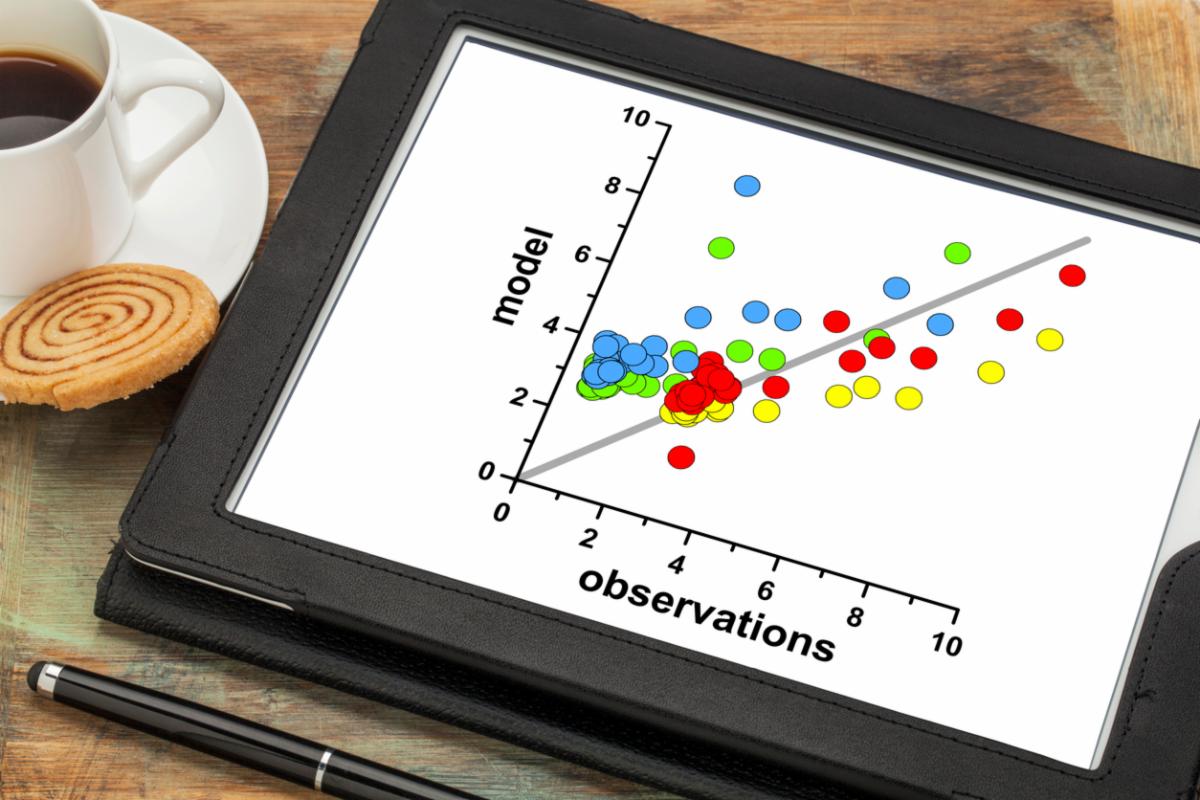
Correlational research is a type of research that looks for an association between two things, such as icy roads and car accidents, but there is a bit more to explain.


Correlational research studies can have a variety of outcomes or relationships between the variables, but the three most common ones are—positive, negative, or no correlation.


  1. “Positive Correlation - When two variables move in the same direction (when one increases, the other also increases or when one decreases the other also decreases).
  2. Negative Correlation - When two variables move in opposite directions (when one increases, the other decreases).
  3. No correlation: There is no relationship between the two variables (Cherry, 2024).”


Examples of the most common correlations:

  1. Example of Positive Correlation: When the road conditions are icy, more car accidents occur.
  2. Example of Negative Correlation: When road conditions are icy, fewer car accidents occur.
  3. Example of No Correlation: Regardless of the presence of ice on the roads, or the lack thereof, car accidents occur at the same rate.


Correlational Studies Do Not Show a Causal Relationship


It is essential to remember that correlational research must be examined guardedly. Without careful analysis correlational data can be misapplied. One of the most commonly used examples of a misapplied correlation is the correlation between shark attacks and ice cream sales.


How are ice cream sales and shark attacks related? Does eating ice cream make you more delicious for sharks to attack? That's not the real relationship here.


There's a correlation between ice cream sales and shark attacks, but one is not causing the other. So why do their graphs look similar? In hotter weather, more people are eating ice cream and spending time at the beach, where sharks can attack them (Saint Anselm College Research Guide, n.d.).


Cherry, K. (2024). Correlation studies in psychology research. Verywell Mind website. Updated May 4, 2023. https://www.verywellmind.com/correlational-research-2795774  

Conclusion

The 23 predictors of post-school success are based on inestimable hours, weeks, months, and years of educational research. “The transition to adulthood is a lifelong journey that requires educators, adult service providers, and policy makers to continue to work together to ensure a smooth transition for all youth. Likewise, the field of secondary special education and transition continues to mature by pinpointing and promoting research-validated practices and predictors to prepare students with disabilities for adult life” (Mazzoti, et al. (2021) Secondary Transition Predictors of Post-School Success: An Update to the Research Base).


Last, but not least. . . “Predictors of Postsecondary Outcomes” a Project 10 publication shares descriptions of each of the 23 validated predictors. In addition, suggestions for helping families and school personnel to interact with students about activities and practices that help prepare them for post-school success. Download your copy from this link today - https://project10.info/Documents/Predictors_of_PSOs_-23-_3.20.24.pdf

Keep Yourself in the Loop by Following Project 10 on Facebook


Would you like to be part of our amazing transition planning community? Project 10 provides weekly information on transition-related events and topics, products and training launches, and other important state and project announcements. Please follow us on Facebook at https://www.facebook.com/project10usfsp. Be sure to like, follow, and share us - and help spread the news!


Join Our Mailing List


About Project 10 Topical Briefs:

Project 10 Topical Briefs provide informational summaries and resource links related to secondary transition.


Have a question? Want to find or recommend a resource? Have some great news to share? Email us at project10@stpete.usf.edu.


For back issues of Project 10 Topical Briefs, visit our Topical Briefs page on the Project 10 website.

Project 10: Transition Education Network

Assists Florida school districts and relevant stakeholders in building capacity to provide secondary transition services to students with disabilities in order to improve their academic success and post-school outcomes.


Project 10: Transition Education Network

University of South Florida St. Petersburg

Questions or comments?

Email us at project10@stpete.usf.edu.

www.project10.info