Weekly Digest Number 27 - July 7, 2021 |
|
Please note: The verbal rendition of this week's Summary will be delayed until the PM of Tuesday, June 1st. Thank you for your patience and understanding. |
|
Eight years after the Lac-Mégantic disaster the window for a recurrence is still open |
|
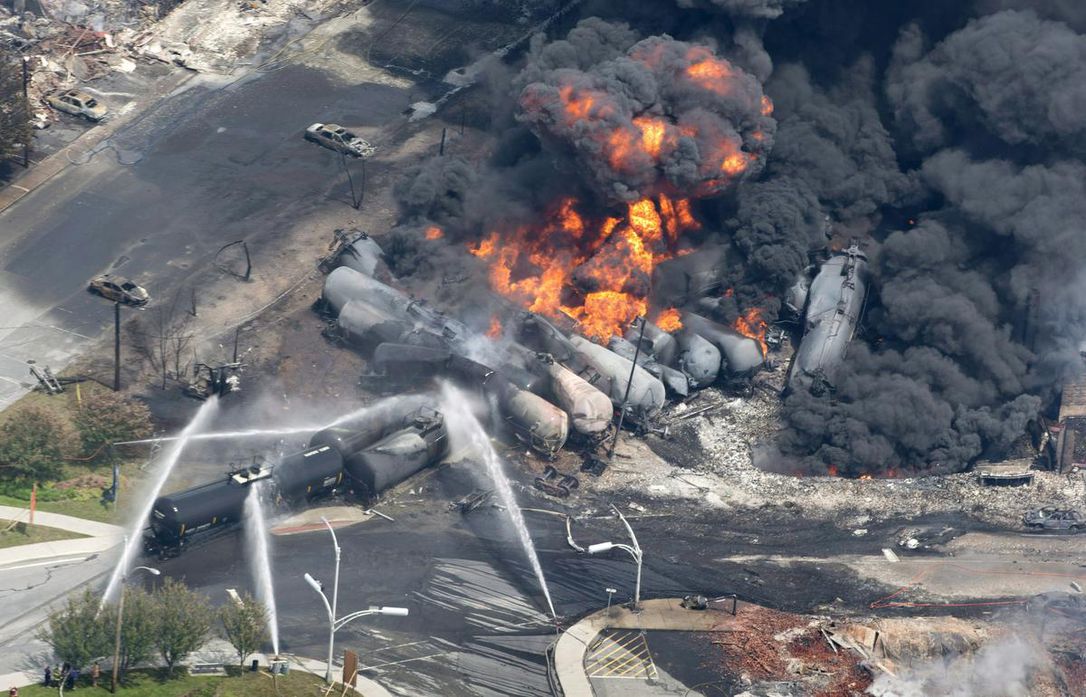
The Lac-Mégantic oil train derailment on July 6, 2013 was the worst industrial disaster on Canadian soil in over a century: 47 people killed; 26 children orphaned; the town centre incinerated; an unprecedented six million litre spill of toxic shale oil; ongoing environmental, physical and post-traumatic health issues affecting community members.
Eight years have passed since the catastrophe. Transport Canada still has not taken the necessary actions to minimize safety risks. The window for a recurrence of a Lac-Mégantic is still open as the Environmental Commissioner in Auditor General’s Office told reporters on the release of his October 2020 report into the transportation of dangerous goods.
His statement is especially chilling given the post-Lac-Mégantic increase in dangerous goods traffic, rail accidents, and “uncontrolled movement of railway equipment” — a trajectory interrupted only by the 2020 pandemic lull.
|
|
Teamsters Rail Conference Joins High-Speed Rail Coalition |
|
Dennis R. Pierce, President, Teamsters Rail Conference announced today that the Teamsters Rail Conference, following a unanimous vote by its Policy Committee, has joined the U.S. High Speed Rail Coalition Executive Committee. The Committee is comprised of passenger and high-speed rail stakeholders, proponents and supporters from all corners of the Nation.
The Committee’s Campaign will focus on educating elected officials at all levels of government, as well as the public, of the benefits of federal investment in expanding high speed rail service. Among the key goals of the Campaign are:
• a minimum of $205 billion for true high-speed rail;
• the establishment of a Rail Trust Fund;
• the formation of a High Speed Rail Development Agency within USDOT; and
• maintaining the robust labor standards outlined in the American High Speed Rail Act.
|
|
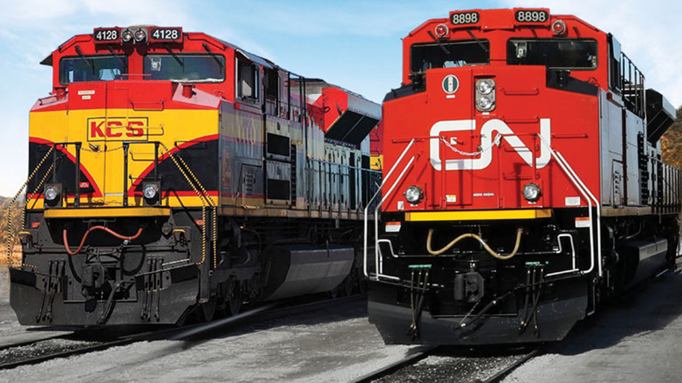
Editor's Note: The merger battle between the CN and the CP to see which RR gets the KCS appears to get worse as two rail unions weigh in on opposite sides! |
|
More Unions Across North America Call on STB to Reject CN Voting Trust |
|
Canadian Pacific Railway Limited announced today that unions representing railroad employees across the U.S., including SMART-Transportation Division General Committee GCA-457 representing Kansas City Southern employees, have written letters urging the Surface Transportation Board to reject Canadian National's proposed use of a voting trust.
Many of the unions express concerns about job loss, increased CN debt load and regulatory challenges a CN/KCS transaction would face.
|
|
CN-KCS Voting Trust Receives Additional Support from Organized Labor |
|
CN and Kansas City Southern today announced that three local union committees representing CN and KCS employees in the United States that are affiliated with the Brotherhood of Locomotive Engineers and Trainmen have filed four letters in support of the proposed voting trust with the Surface Transportation Board.
These letters were filed as part of the STB’s public comment period for its review of the CN-KCS voting trust, which will close at midnight today. These letters underscore the significant benefits for organized labor from a CN-KCS combination.
|
|
Regional Interests Take Sides In Kansas City Southern Merger Fight |
|
The debate over which Canadian railway would provide greater benefits to stakeholders through a merger with Kansas City Southern appears to be pitting regions of the U.S. against each other, based on Monday releases from both railways.
Canadian Pacific says it has support from North Dakota congressional leaders as well as from a number of Upper Midwest grain shippers, while CN says it has backing from state and federal leaders from the Gulf Coast and southern Plains states.
Both CN and CP want to merge with Kansas City Southern (KCS), but they need regulators' approval for that to happen.
READ MORE HERE...
|
|
Job Opening: Assistant to the President-Legislative |
|
The BMWED-IBT National Division Headquarters is seeking applicants for the position of Assistant to the President-Legislative. Candidates must be driven, self-motivated, organized, familiar with the political issues paramount to Unions and its membership and committed to the ideals and goals of organized labor and the BMWED.
Responsibilities of the Legislative position include lobbying activities focused on federal legislation affecting our membership, as well as fostering relations with various federal agencies in connection with matters of interest to the BMWED. This person will also work closely with BMWED State Legislative Directors.
The BMWED is presently accepting applicants for this position. If you are energetic, confident, motivated and well-organized, we would like to hear from you immediately. Benefit package includes health, dental and optical insurance. Salary is commensurate with duties.
The BMWED is an Equal Opportunity Employer.
|
|
North American railroads report higher carload, intermodal volumes for Week 25 |
|
U.S. railroads logged 516,167 carloads and intermodal units during the week ending June 26, a 12.4% increase compared with the same week a year ago, according to Association of American Railroads (AAR) data.
Carloads for the week totaled 237,117 units, up 17.7%, while intermodal volume reached 279,050 containers and trailers, up 8.2%.
For some rail traffic categories, year-over-year percentage changes for the current week are inflated because of the widespread shutdowns — and subsequent large reduction in rail volumes — that impacted many economic sectors last year at this time.
|
|
ADMIN NOTE: We continue to see "experts" from outside the rail industry, news reporters and right wing think tanks parrot the carrier's press releases about two person train crews. |
|
THE DAILY SIGNAL: Legislators Should Embrace Railroad Innovation, Not Hinder It |
|
This week, the House of Representatives is expected to consider its massive $547 billion surface transportation bill.
Unfortunately, instead of focusing on how we can make better use of existing infrastructure, such as by reducing regulatory barriers, the legislation would actually increase regulatory barriers that would hinder the use of existing infrastructure.
There is one harmful regulatory barrier that is emblematic of the regulatory absurdities contained in the bill: a prohibition on having fewer than two people in a freight train’s locomotive cab.
Some freight railroads have been able to reduce the number of locomotive crew members from two employees down to one. Even passenger rail, such as Amtrak, for which an accident would pose a greater risk for loss of human life as compared to freight rail, has been using one-person locomotive crews (this doesn’t include conductors and other workers who are on board to assist passengers).
|
|
The US is a first-world nation with a third-world rail system |
|
So why has the U.S. failed to develop and implement a high-speed rail system, as many developed and developing nations have? As Yonah Freemark, a senior research associate at The Urban Institute in Washington, D.C., argues: “American society has proven itself incapable of pooling either the sustained motivation or the resources to complete a single major high-speed inter-city rail project.”
The increased politicization and partisanship surrounding the transportation issue, with special interest groups and lobbies always in the fray, have contributed to perpetual gridlock with little hope of resolution at the national level. Recognizably, the success of our interstate highway system, which began during the Eisenhower presidency, combined with the increased affordability of automobiles and air travel are major factors that have impeded a high-speed rail system in the U.S. But diagnosis is not prescription.
|
|
Why Sectoral Bargaining Matters for the Labor Movement |
|
On March 9, 2021, the US House of Representatives passed the Protecting the Right to Organize (PRO) Act to increase federal protections against some of the systemic violations of worker freedoms. The PRO Act would revise key pieces of the National Labor Relations Act (NLRA) of 1935, providing real financial punishments for violations of organizing rights. The bill now faces a tough fight in the US Senate, and business pushback — the killer of numerous labor-law reform efforts in recent decades — hasn’t yet begun in earnest.
Still, the bill is an important one. To understand why the PRO Act would be so transformational for American labor, we have to discuss the broader labor-relations system that the PRO Act would change — in particular, the American political history that has created such enormous economic inequality and a 10.8 percent union density (the percentage of workers who are union members, or 14.3 million workers) and a 12.1 percent union coverage rate (the percentage of workers covered by collective bargaining agreements, or 16 million workers).
As unions are the historical instrument of redistributing wealth and power downward, the significance of understanding how labor law impacts workers’ ability to build power can’t be understated.
|
|
Analysis: Are trailers reaching the end of the intermodal road? |
|
Intermodal analyst Larry Gross has gone out on a limb. In his latest “Intermodal in Depth” report, Gross predicts the demise of TOFC, or trailer on flatcar service, within the next four years.
In some ways, this shouldn’t be a surprise. Trailers have become a smaller and smaller part of the intermodal world as railroads have emphasized domestic containers that can be double-stacked. TOFC is long gone in Canada and Mexico, and so far this year trailers represent just 8.5% of U.S. intermodal loads, down from 60% in 1988.
But trailers have seen an on-and-off resurgence over the past few years amid a chronic shortage of truck drivers and the rise of parcel traffic due to the boom in e-commerce. In fact, trailer volume has surged 26% through the first four months of 2021.
|
|
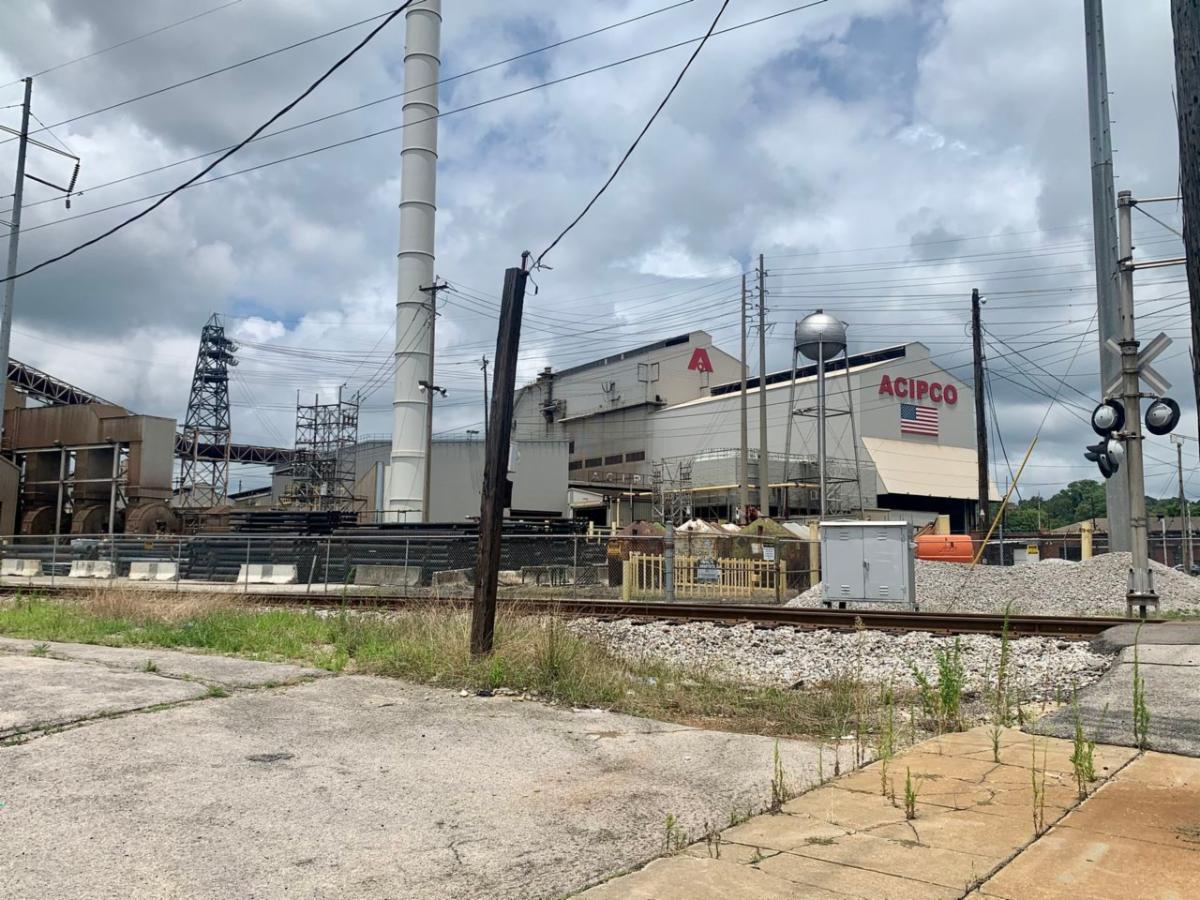
ACIPCO employee killed in Thursday-morning accident |
|
An ACIPCO employee was killed Thursday morning in an industrial accident at the north Birmingham facility.
The accident happened at 10:45 a.m. at ACIPCO on 31st Avenue North. Details of the accident have not yet been released, but authorities said the incident happened in the railyard.
Company officials identified the employee as Mark McAlpine. He was in his 57 and lived in Hayden.
The Jefferson County Coroner’s Office said McAlpine sustained blunt force injuries when the train he was riding on partially derailed.
|
|
EDITOR'S NOTE: What the article does not mention is that we continue to see carriers utilize the appeals process in order to drag out enforcement of the OSHA orders and the Department of Labor does next to nothing. |
|
OSHA investigation finds CSX employee was fired for reporting safety concerns; Company must pay nearly $222K in damages and back wages |
|
An investigation conducted by the Occupational Safety and Health Administration (OSHA) reports that CSX Transportation has demonstrated a pattern of retaliation after firing an employee in 2019 for reporting safety concerns.
OSHA documents report that in December 2019, the employee reported an unsafe customer gate and an on-the-job injury. Following the report, the employee was issued a charge letter and subjected to an investigative hearing that eventually led to their termination.
This is a breach of the Federal Railroad Safety Act, which protects whistleblowers from retaliation if they report workplace violations. The company has been ordered to pay almost $72,000 in back wages, interest, and damages — plus $150,000 in punitive damages.
“CSX Transportation’s actions are unacceptable,” explained OSHA Regional Administrator Eric Harbin in Dallas. “Federal law protects employees who report hazards in the nation’s transportation sector and OSHA is committed to enforcing these rights to keep workers safe.”
|
|
Maglev is the better investment in the future | READER COMMENTARY |
|
The recent letter to the editor approving of Baltimore’s rejection of maglev compares apples to oranges to support his opinion (”Baltimore correct to reject maglev train,” June 25). Alan Shecter of Towson compares the cost of renovating the Penn Station ($400 million) to the cost of building a new maglev line complete with stations.
The reader doesn’t discuss the $4 billion for constructing new tunnels for the Amtrak line from Penn Station to Washington, D.C. Nor does he talk about the planned $5 billion in upgrades to Union Station. No mention, too, of the hundreds of millions of dollars being spent to replace the Acela trains and the potential for hundreds of millions more to replace the slower trains running between Baltimore and D.C. today.
The letter’s other failure is in not comparing the speed of service. The Acela is a great train, but it is still far slower than the high-speed systems in other countries. Its top speed (160 miles per hour for the replacement trains) is not bad, but even with the $9 billion in upgrades to track and the hundreds of millions in replacement trains it will not run at its top speed for most of the route because of limitations in the track alignment.
Is the reader proposing that we spend billions more to acquire new property to allow the track to be straightened and rebuilt to allow the train to reach its top speed along the Northeast corridor? And still result in a system that is half the speed of maglev?
|
|
|
|
|
|
|