Weekly Digest Number 8 - February 23rd, 2021 |
|
COVID Relief Bill: What’s in it for Passenger Rail? |
|
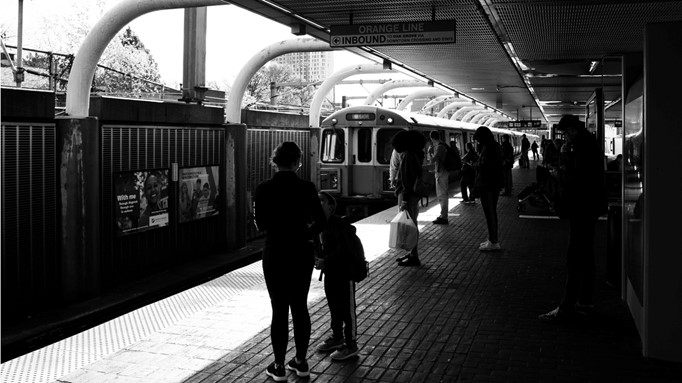
Everybody who manages, or even rides, Amtrak or transit in this country knows that we have lost much of it since the COVID-19 virus began ravaging the nation and the world. Railway Age and sister publications Railway Track & Structures and International Railway Journal documented this decline as it happened last spring. Ridership and revenue on Amtrak and on transit everywhere have plummeted, and both “America’s Railroad” and America’s transit have suffered.
|
|
US Dept. of Transportation Should Take the Lead on Rail |
|
An open letter from Virginia Rail Policy Institute President Meredith Richards and Executive Director Michael Testerman to Transportation Secretary Pete Buttigieg on the Institute’s National Freight Strategic Plan Critique.
Dear Secretary Buttigieg:
The Virginia Rail Policy Institute congratulates you on your appointment as United States Secretary of Transportation. We wish you much success in transforming our nation’s transportation system to meet the challenges of the 21st century.
In the waning days of Secretary Elaine Chao’s term, the United States Department of Transportation issued the National Freight Strategic Plan. Many years in the making, this plan falls far short of delegating any new mobility responsibilities to the rail freight industry over the next quarter century beyond the status quo and maintaining rail freight’s meager market share.
Virginia Rail Policy Institute has prepared and enclosed a four-page National Freight Strategic Plan Critique (download below), which calls for the USDOT to take the lead in fostering greater reliance on the rail mode for freight transportation as the United States transitions to a carbon-free global economy.
|
|
Biden Talks Transportation Infrastructure With Senators |
|
President Joe Biden, Vice President Kamala Harris and U.S. Transportation Secretary Pete Buttigieg met last week with Senate Environment and Public Works (EPW) Committee Chair Tom Carper (D-Del.) and other senators to discuss transportation infrastructure legislation.
The bipartisan group of senators included Ben Cardin (D-Md.), Shelley Moore Capito (R-W.Va.) and James Inhofe (R-Okla.). Biden has proposed a $2 trillion infrastructure plan that would grow the economy and reduce the transportation sector's greenhouse gas emissions (GHGs). The size of the package is still under discussion, The Washington Post reported. After the White House meeting, Carper said in a prepared statement that Biden made it clear that investing in transportation is a top priority for his administration.
|
|
Transportation Secretary Pete Buttigieg: "I Want the United States to be Leading the World in High Speed Rail"
Secretary of Transportation Pete Buttigieg joins The ReidOut to talk about the future of high speed rail in the United States and having racially equitable transportation policy.
|
|
Amtrak's Proposed 'Corridor' Expansion, Explained |
|
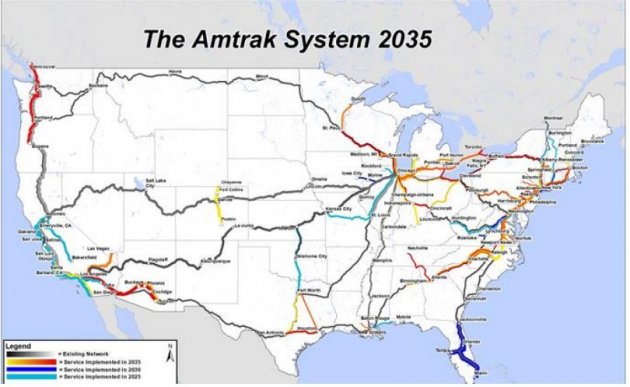
Even while dealing with the economic fallout of the pandemic, Amtrak is forging forward with plans to expand intercity rail passenger service around the country.
But Amtrak also has plans for a $25 billion expansion of service that is moving forward amidst the uncertainty and contractions of the pandemic. A recent article by Eric Anderson describes the scope of Amtrak's "corridor" plan that would add intercity passenger rail service all over the country—places like Tennessee, Texas, and Nevada. An article about the five corridors proposed for Ohio was the most-read news article of the first week of February on Planetizen.
"Amtrak is focusing on developing new 'corridors,' routes tying together population centers that are several hundred miles apart and offer frequent train service..."
|
|
It is a key ingredient to U.S. energy independence - Liquified Natural Gas. LNG, as it’s known, is plentiful in America and can be transported in specially-built rail cars.
The question the CBS12 News I Team is exploring is whether that could have dangerous consequences right here in South Florida. An accident involving LNG is challenging for firefighters because they can’t dump water on it, and safety advocates are concerned an LNG explosion could literally level several blocks- even a whole town. Last year, the rule requiring special permits to transport LNG on trains expired, so now it’s easier than ever for companies to move it and they can do so with greater quantities.
But the Biden administration could bring back the old restrictions. That would frustrate the energy sector, but be welcome news for the watchdogs fighting the battle against what they call, “bomb trains.”
|
|
Virginia Governor Calls for $50 Million in General Funds to Expand Amtrak Service |
|
Virginia Gov. Ralph Northam has proposed $50 million in one-time general fund dollars in fiscal-year 2022 to help improve intercity passenger-rail service along the corridor of U.S. Route 29 and Interstate 81.
The proposal would include a second daily round trip of Amtrak service, with stops in Roanoke, Lynchburg, Charlottesville, Culpeper, Manassas, Burke and Alexandria; extension of the existing and new second trains to New River Valley; and improved freight- and passenger-rail reliability, the Virginia Department of Rail and Public Transportation (DRPT) reported in its winter 2021 newsletter.
Improved passenger-rail service along the corridor has been a priority for more than a decade. The first discussion of a second train started in 2014. Virginia officials are in negotiations with Norfolk Southern Railway to finalize an agreement, according to the newsletter.
|
|
U.S. Rail Volume Remains Steady, Thanks to Intermodal Traffic |
|
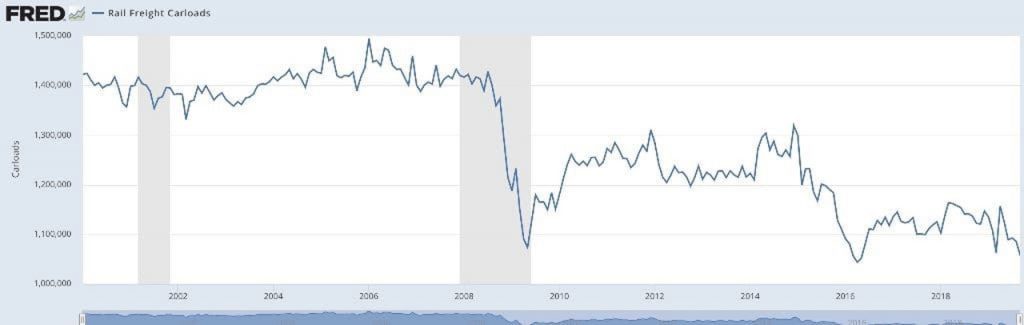
(Editor's Note: Intermodal's increase can be understood as continuing increase in imports from China. The ongoing decline in carload traffic is a direct result of U.S. railroad corporate policy. The rail industry is shipping less freight than it did 15 years ago, to the tune of hundreds of thousands of carloads! See the graph below. |
|
U.S. freight railroads moved 480,483 carloads and intermodal units during the week ending Feb. 13, up 0.3% compared with the same week in 2020, according to Association of American Railroads (AAR) data. Carloads declined 7% to 211,420 units, while intermodal volume climbed 6.9% to 269,063 containers and trailers.
Five of the 10 carload commodity groups that AAR tracks every week posted an increase. They included grain, chemicals and forest products. Commodity groups that posted decreases included coal, nonmetallic minerals, and motor vehicles and parts.
|
|
Winter Weather Wallops Class 1 Railroads |
|
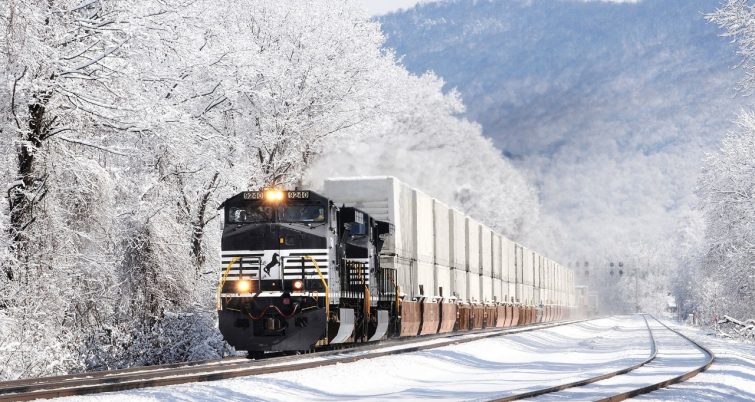
North America is experiencing a severe winter storm, the likes of which we haven't seen in a long time. Arctic air is pouring into most of the lower 48 states, extending as far south as Texas and even Mexico. While snow and ice have made it difficult to get trains over the road, the real culprit of this storm are the bitterly cold temperatures in areas that are not used to this type of weather.
While the weather has been especially severe in Texas, other parts of the country are dealing with the storm, too. The majority of the country is experiencing low temperatures below zero or between 0 and 32 degrees.
RT&S did a quick survey of how the nation’s Class 1s are handling the weather. We were able to obtain some information from all of the Class 1s, and here is what’s going on:
|
|
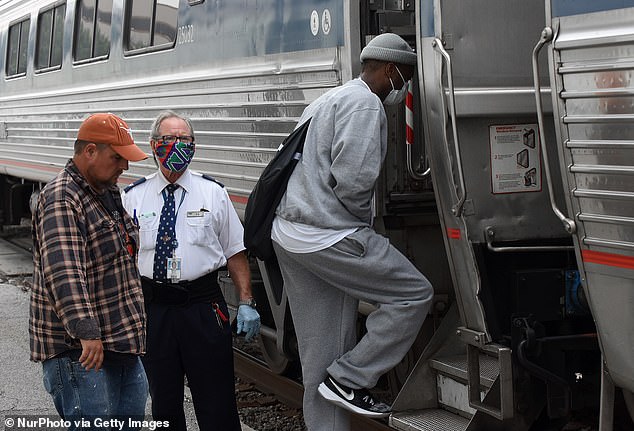
Coronavirus Is an Occupational Disease That Spreads at Work |
|
For both Democratic and Republican politicians, blaming social gatherings for coronavirus’s spread is convenient. But they’ve ignored or denied the central role workplace transmission plays in driving up infections. We need to treat coronavirus as the occupational disease it is — and that means restricting the power of business owners.
What is the one setting that accounts for most coronavirus transmission in the United States? Many governors believe they have the answer to this question. In countless press conferences and public statements, they claim that transmission primarily happens at social gatherings with friends and family.
The risk is particularly high, according to these political leaders, when the meetings do not happen in spaces that generate profit or serve important institutional functions. In contrast, US politicians have largely ignored, and even outright denied, the central role that workplace transmission plays in driving up coronavirus rates across the country.
|
|
|
|
|
|
|