|
Greetings Dear Reader,
With just a little guidance from professional artists, the elementary and middle school-aged kids each carefully secured colored tile fragments – splintered and oddly shaped – and placed them in a stunning mosaic within the only public playground in the small town of Cruz Bay, St. John where I lived for several years. The rehabilitation of the playground, which was destroyed during a string of Atlantic hurricanes, was like taking the broken pieces and magically creating a textured wall of playfulness, resilience and hope through the hands of local youth. It’s a distinctive feature in a small town with no stop lights, tall buildings or retail chains. It showcases the pride and celebratory spirit of youth who survived the storms and who may share the story of the mosaic for many years to come.
Last month, OCR collaborated with the National Endowment for the Arts for a Smart Growth Network Quarterly Discussion on the topic, Applying Smart Growth Principles in Rural Communities. It was an opportunity to learn about placemaking, arts and culture in defining community identity. Ascala Tsegaye Sisk, Senior Deputy Chair, National Endowment for the Arts, summed up one key takeaway: art and artists are a resource for finding creative and resonant solutions for communities. This statement connected directly with my experience of the children’s art mosaic in Cruz Bay.
Art can support a community’s sense of place and create a visual representation of shared values that can be strengthened and passed down over time. One of the panelists at the meeting – Kory Hayden of Siskiyou Economic Development – reminded the audience that art heals. As she said, the skill of the artist is to make things beautiful, to bridge division through art and beauty and heal history. Our office is tuning in to how partners like NEA are providing opportunities for communities to define themselves and their place through art and culture as they rebuild their economies and move toward a more resilient tomorrow.
When communities rebuild and chart a course to the future – whether through infrastructure, economy or art – the equitable distribution of resources is critical. We must incorporate the perspectives of community members who understand and can contextualize the community’s sense of place. For example, this internalized wisdom might lead to building resilience hubs in existing spaces that may need a new life, rather than designating new spaces and creating new buildings separate from the community. Partnerships with organizations like NEA, cultural institutions and philanthropic organizations, can help contribute to the funding and preservation of beauty.
We continue to explore the many aspects of placemaking as we support communities that are planning for a more sustainable, equitable, and prosperous future in a changing world. What aspects of placemaking are most important to you? I’d love to hear your thoughts. Feel free to send us an email or reach out to us via social media.
Sincerely,
|  | |
Nigel A. Fields
Director, Office of Community Revitalization
| | | |
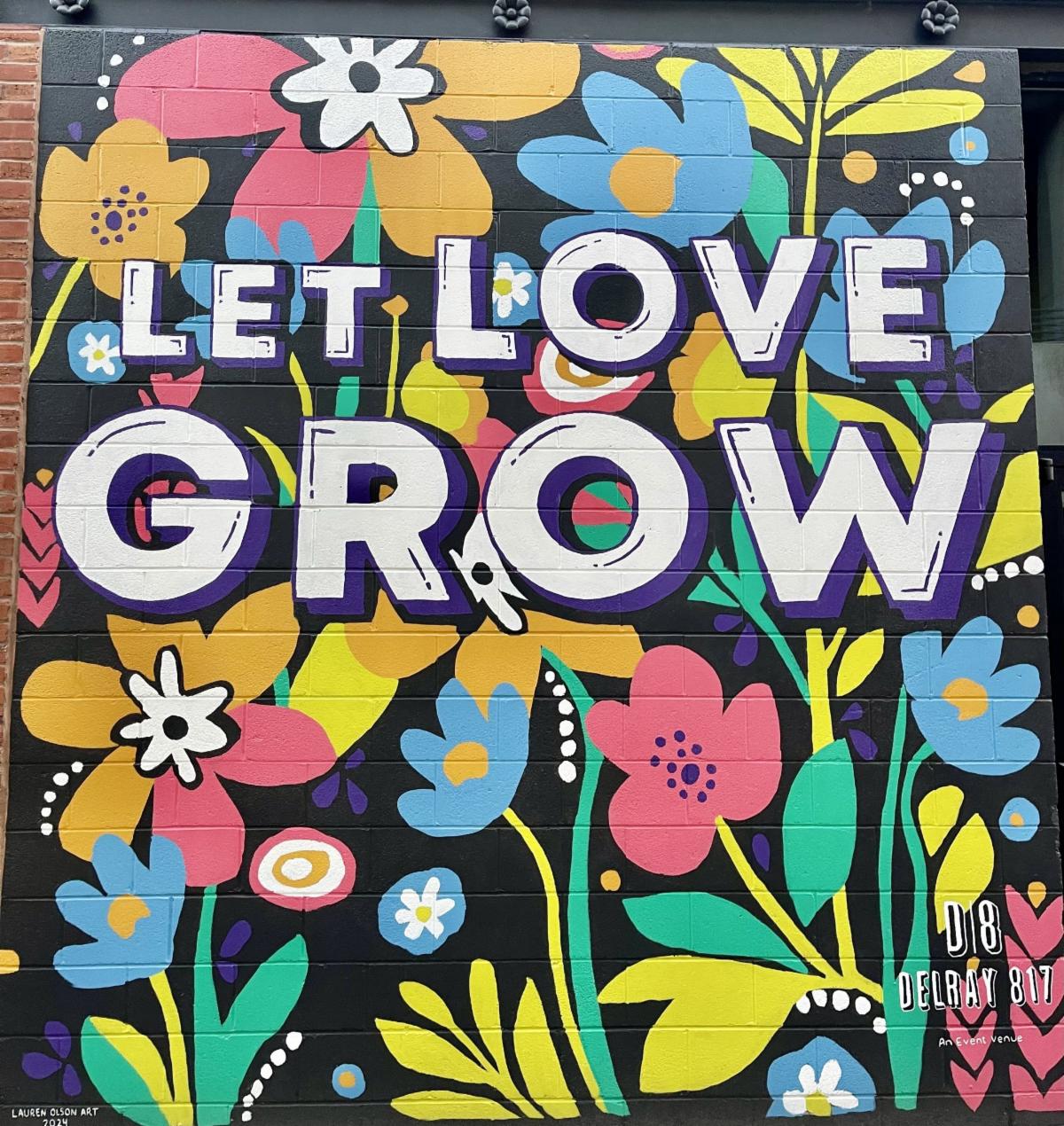
Photo: Picture taken by Nigel Fields of a newly painted 2024 mural designed by Annsley Cook and completed by Lauren Olsen Art in Lincoln, NE. | |
Brooklyn Park Explores Transportation Electrification Opportunities
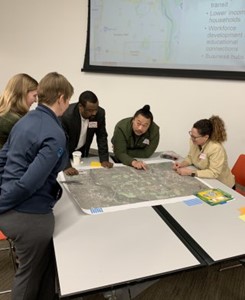
Brooklyn Park is in Hennepin County, about 10 miles northwest of downtown Minneapolis. In 2023, residents, businesses and government representatives came together in a collaborative workshop to share their needs and ideas for potential solutions regarding transportation electrification. They created new relationships and developed innovative ideas. Community members and industry representatives discussed a draft list of transportation electrification goals and brainstormed strategies to achieve them. Since the workshop, the city of Brooklyn Park and its partners have already pursued several actions identified as next steps!
Their experience may serve as a model for other communities seeking to engage residents, as well as private and nonprofit partners seeking to develop strategies to take advantage of increasing investment in electrifying transportation. Read their story.
| |
December 2024 Quarterly Discussion
Wednesday, December 4, 2024 | 2:30 PM ET
EPA and the National Association of Realtors invite you to join us for the Smart Growth Network’s December 2024 Quarterly Discussion on the theme, Strategies to Boost the Supply and Improve the Quality of Affordable, Resilient Housing.
Participants will hear from experts, ask questions and participate in breakout groups guided by discussion questions. SGN members are also invited to share briefly about their own work related to affordable housing and smart growth. An informal networking hour will follow the main program.
Host: National Association of Realtors
Where: 500 New Jersey Ave. NW, Washington D.C. 20001
RSVP Deadline: Wednesday, November 27, 2024
Please RSVP to attend.
| |
|
National Leadership Forum on Rural Development
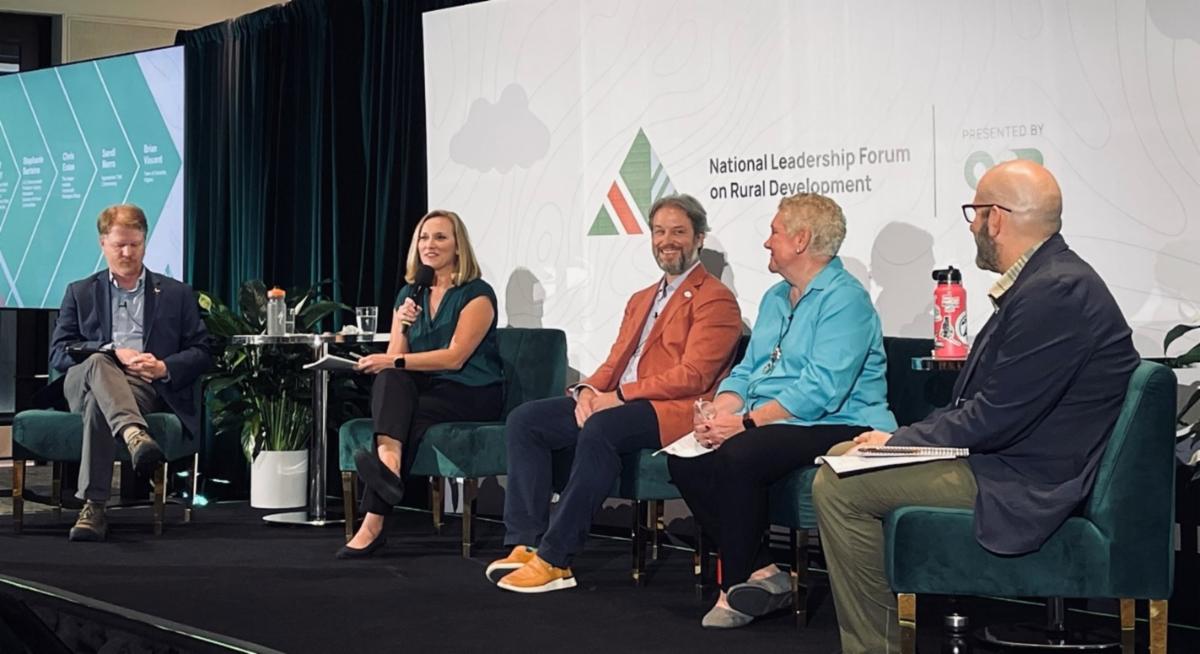
Earlier this month, OCR’s Steph Bertaina presented on the Activating Communities panel at the National Leadership Forum on Rural Development. Steph shared lessons learned from the Recreation Economy for Rural Communities program and other OCR programs that serve rural and small communities.
The forum convened 70 national leaders in economic development, outdoor recreation and conservation to identify shared priorities and opportunities for rural communities looking to enhance their economies through outdoor recreation.
Thanks to the Outdoor Recreation Roundtable and Richard King Mellon Foundation for hosting this important event!
| |
Participants from left to right: Danny Twilley (moderator, West Virginia University), Steph Bertaina (EPA), Brian Vincent (Mayor, Farmville, Virginia), Sandi Marra (Appalachian Trail Conservatory), and Chris Estes (Aspen Institute Community Strategies Group). | |
Funding and Technical Assistance Opportunities | |
Building Blocks for Sustainable Communities
The Building Blocks for Sustainable Communities program is now accepting letters of interest! The program will provide planning assistance to local governments working in partnership with community organizations to help mitigate the effects of urban heat islands in overburdened communities. Research shows that neighborhoods with populations that are low-income and/or people of color often experience higher temperatures relative to adjacent neighborhoods in the same city.
Learn more about the current round of assistance and how to submit a letter of interest.
Selected local governments will work with neighborhood residents alongside federal and state agency partners and consultants to participate in a planning process that helps identify the community's vision, goals and actions to:
- Incorporate smart growth principles.
- Increase green space and improve infrastructure to reduce the heat island effect.
- Improve livability.
As part of this round, OCR will also pilot a related effort to engage area youth in up to three of the five communities. OCR will work with school or neighborhood groups to meaningfully include youth voices in the planning process, introduce them to planning and sustainability career paths, and to ensure they have an active role in implementing the resulting action plan.
Deadline to Apply: December 12, 2024
| |
Sustainable Communities Accelerator Network
The Sustainable Communities Accelerator Network — a new national peer learning network — is now accepting applications.
Once a local sustainability plan is finalized, communities can face challenges to implementation. SCAN will support teams as they move an idea from paper to action. This program is designed for leaders in the environmental, land use planning and sustainability fields. Each community may nominate a team of up to two leaders to participate in the program. The community must be prepared to undertake a specific project, action or policy that prioritizes sustainability in their local community.
EPA held an informational webinar about the program and how to apply on October 29, 2024, at 1:00 PM ET. Watch the recording here.
Deadline to Apply: Wednesday, November 13, 2024
| |
2024 Tribal and Territory Grants
Diesel Emissions Reduction Act
November is Native American Heritage Month! EPA has announced new DERA grant opportunities for Tribes and territories to upgrade or retire their existing diesel engine fleet. The upcoming 2024 DERA Tribal and Territory Notice of Funding Opportunity is the first since the FY2022 DERA Tribal and Insular Area NOFO. This opportunity incentivizes the upgrading or retirement of legacy diesel engines, vehicles and equipment.
Of the available funding (totaling $9 million), $8 million is designated for Tribes and $1 million for territories. EPA anticipates awarding twelve to eighteen grants or cooperative agreements of up to $800,000 per application to Tribal governments or intertribal consortia and Alaska Native Villages. Three to five grants of up to $400,000 per application are anticipated for territory governments.
For more information, view presentation materials (PDF) from the recent informational webinar.
Deadline to Apply: Friday, December 6, 2024
| |
Voluntary School and Child Care Lead Testing and Reduction Grant Program
Water Infrastructure Improvement for the Nation Act
Through the WIIN Act, Biden-Harris Administration announced in August 2024 that $26 million in grants will go toward protecting children from lead in drinking water at schools and childcare facilities.
Non-competitive grants will be awarded to states, territories and Tribes, and must utilize EPA’s 3Ts for Reducing Lead in Drinking Water guidance. Flexibility is permitted for grantees using applicable existing state programs or regulations that are no less-stringent than EPA’s 3Ts – training, testing, and taking action – guidance. EPA awards funding based on an allocation formula that includes factors such as population, including a set-aside tribal allotment. Prior to applying for their allotments, states must submit draft workplans to their respective EPA Region.
Deadline to Apply: Monday, December 30, 2024
Helpful Resources
| |
READY Grants to Grow
Appalachian Regional Commission
The Appalachian Regional Commission is now accepting applications for READY Grants to Grow. This year, $9 million has been allocated for building capacity at the individual, organizational and community-levels to grow your local agricultural economy. Capacity building can involve recruitment, training, investing in new capital equipment and stakeholder engagement, among other categories.
Grant awards are up to $500,000 for implementation projects, and up to $100,000 for planning projects. For distressed communities, match waivers may be applied. Filing a Letter of Intent is required to apply.
Deadline to File Letter of Intent: Friday, November 1, 2024 | 5:00 PM ET
Deadline to Apply: Friday, February 14, 2025 | 5:00 PM ET
| |
Recreation Economy for Rural Communities in Greater Bangor
We're celebrating with the Greater Bangor Recreation Economy for Rural Communities program, which has received $195,000 from the Maine Office of Tourism’s Marketing Recovery Program for branding, market research and marketing. The GBRERC Steering Committee applied for funding assistance to implement the RERC goal of promoting the area as an outdoor recreation and cultural tourism destination. EPA and its RERC partners worked with the group to develop an implementation plan through community workshops, community assessment, and technical assistance.
Read more from local media.
| |
Photo Credit: Risteen Bahr | |
EPA's Artist in Residence Program
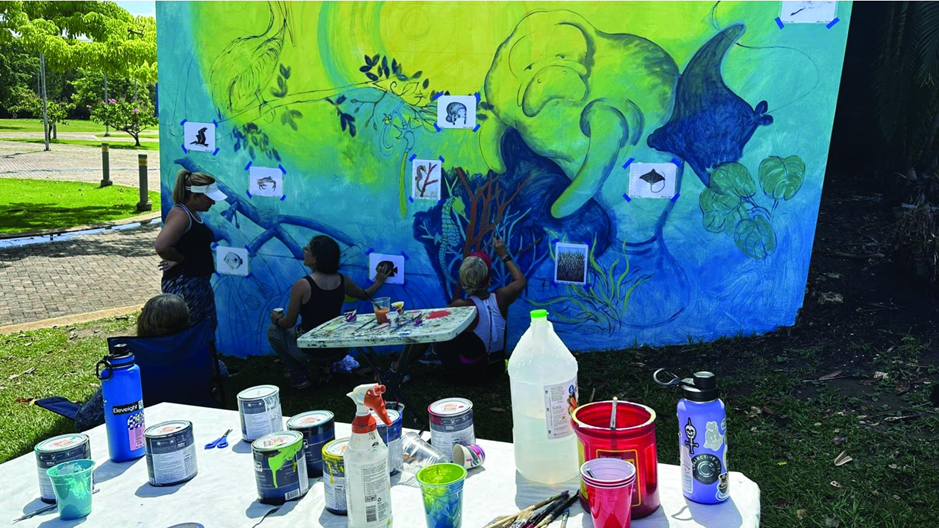
One thing we love is EPA’s Artist-in-Residence Pilot, which is collaborating with the National Endowment for the Arts to invite artists and culture bearers to capture the community’s connection with the beauty and function of water, specifically estuaries and urban waterways. By launching this program, EPA is investing in arts and culture to boost engagement, awareness and participation in critical water challenges ranging from aging infrastructure to climate impacts like flooding and storm surge to investment in safe drinking water to bring visibility to water issues and how healthy waters can provide additional benefits to the communities they serve.
The San Juan Bay Estuary in Puerto Rico is one of the six locations chosen from long-standing partnerships in EPA’s National Estuary Program and Urban Waters Federal Partnership Program that have restored and protected treasured water bodies across America. Pictured below is an example of art used to exhibit native flora and fauna and raise community awareness about their importance in the local ecosystem, and how the ecosystem relates to the community.
| |
Photo Caption: Mural with Consciousness in San Juan Bay Estuary, Courtesy of Estuario. | |
|
Like our new look?
We're updating some of our communications tools to keep you better informed.
Want to learn more?
Visit our new and improved website at epa.gov/smartgrowth.
Let's keep in touch!
We have plenty of upcoming news, so keep watching this space. If you received this email from a colleague, please subscribe so we can connect with you directly!
| | | | |