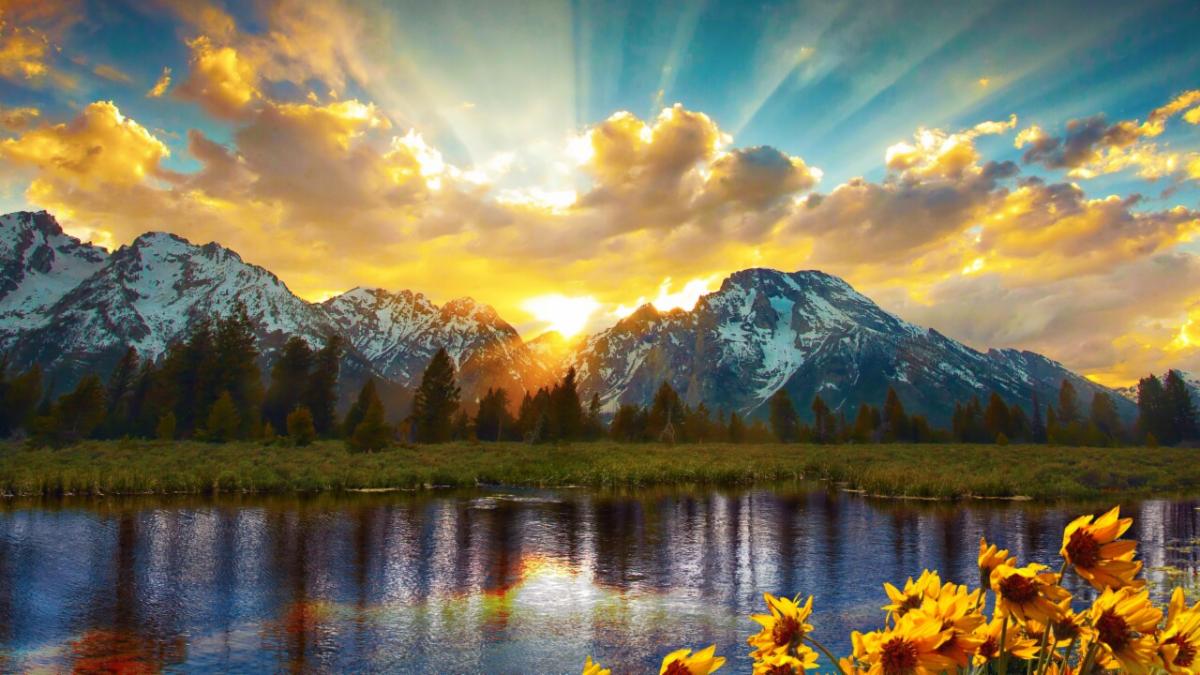
Panorama of the Grand Tetons with reflection in lake

Image provided by Adobe Images/2021

Volume 13, Issue 5 | May 2024


Hi!


Most Americans have grown up learning and regularly reciting the “Pledge of Allegiance” and singing “America the Beautiful,” “God Bless America,” and the “Star Spangled Banner.” I know that as an adult I have continued to feel a bit emotional, a tingling in my body when I hear any of the aforementioned at some public gathering—I guess the sense of patriotism has been deeply ingrained in my psyche.


Last Sunday, the opening congregational songs at Unity of Prescott were spiritual tunes and I robustly sang out loud. Since it was Memorial Day weekend, the final song that had been chosen was “America the Beautiful.” As soon as I heard the opening measure, I started crying vehemently and could not utter a word. This response listening to a patriotic song came from a deeper place than the usual one, and clearly conveyed to me how dearly I hold this country of the United States of America in my heart (while I am aware of its shortcomings).


Witnessing the values that many people seem to have discarded over the past several years and the new ones they’ve embraced—their deteriorating behaviors towards others too—has been a real shock to me, to my soul. Hearing “America the Beautiful” felt like I'd been stabbed in my heart. Its meaning so contrasted with these current times and made me feel this country’s ideals have been betrayed.


The lyrics capture much more than just the stunning, physical landscape of America. They also reflect a belief in community and social justice. "America the Beautiful" reads in part as a plea and a prayer for the United States to use its material wealth for the common good and to live up to its high ideals. The words also honor those who died to give America its freedom.


Our founders united us by a universal human principle, the principle of the equality of humankind, expressed through democracy. The Declaration of Independence had two purposes: (1) its practical purpose was to formally separate the British colonies from England, and (2) its philosophical purpose was to assert the natural equality of all men.


“...We hold these truths to be self-evident, that all men are created equal, that they are endowed by their Creator with certain unalienable Rights, that among these are Life, Liberty, and the pursuit of Happiness. That to secure these rights, Governments are instituted among Men, deriving their just powers from the consent of the governed...” 


I truly wonder if the freedoms still in place now will be wiped out and if the gains that have been made to treat all individuals equally will be erased. I also wondered this past Memorial Day if those who gave the ultimate sacrifice, and even those who made it home, have given their service in vain.


There is the very real, life-altering decision that the peoples of this country need to vote on in several months: will democracy in America continue or fascism formally take over. In upcoming elections culminating in November, vote as if your life depends on it—because it does.


I am affirming that when next I hear “America the Beautiful” I will sing out with joy and gusto in celebration that democracy in America has prevailed. And, I’ll know that those who have served their country have not done so in vain.

Alan Jackson performed "America the Beautiful" on “A Capitol Fourth,” aired July 4, 2021 on PBS.

"America the Beautiful" by Peter Yarrow; sung by Alan Jackson

More about the song “America the Beautiful”


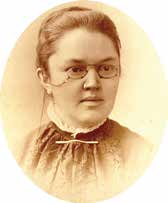
The lyrics of "America the Beautiful" were written by Katharine Lee Bates, an English professor, poet, and writer. She wrote the words as a poem, originally entitled “Pikes Peak,” inspired by the sights she saw during a train trip to Colorado in 1893. It was first published two years later on the Fourth of July, 1895. Bates’ work with the disenfranchised and her own experiences with prejudice were major influences for “America the Beautiful" as her life’s work was actually in the realm of social reform and education, being a fierce advocate for African Americans, poor people, women, and immigrants.


The first known melody was written by Silas Pratt and at least 75 different melodies had been written by 1900. A hymn tune composed in 1882 by Samuel A. Ward, an organist and choir director, was generally considered the best music as early as 1910 and is still the popular tune today.


[See the Closing for a fun activity singing the song!]

Blessings,


Spirituality

The Baha’i Tradition's Approach to Voting

I came across an article that discusses how people of the Baha’i tradition approach voting and found it very thoughtful.


Baha'is keep the following underlying principles in mind when casting their vote:


  1. The Baha’i writings talk about individuals showing honesty and loyalty to their governments.
  2. The Baha’i faith, with its lack of clergy and its democratically-elected global administrative structure, exalts the benefits of participatory democracy.
  3. Baha’is who live in democratic countries take the responsibility of voting very seriously.
  4. Baha’is believe in universal suffrage—and have supported the right of women and minorities to vote long before most Western governments granted them that right.
  5. The Baha’i teachings encourage social activism and participation in the political process—as long as it can be accomplished without party affiliation or political partisanship.


So, with those five underlying principles in mind, how do Baha’is actually vote?


Essentially, Baha’is approach the voting booth as true independents, casting their votes based on the character, qualities, and qualifications of each candidate, rather than his or her party affiliation.


You can read the complete article, "5 Spiritual Reasons to Vote Your Conscience," posted on BahaiTeachings.org.

Inspiration and Contemplation

Voting as a Spiritual Practice

"What we can know is the value of the act of voting itself. Voting asks you to get in touch with your authentic self and identify what is important to you. Voting connects you with your neighbors as you consider the programs and policies that affect all of you. And voting encourages you to consider the larger whole of which you are a part. An American motto is E Pluribus Unum — out of many one.


"Voting does what spiritual practices do: connect you with your true self, your community, and the One."


—Excerpted from a talk by Mary Ann Brussat

People—and Other Beings—Making a Difference

The Spirit of Patriotism

In a commentary from The San Diego Union-Tribune about the spirit of patriotism, short writings were included from individuals from various walks of life.


The following excerpt was written by Alexis Cormier, a college student at the time. It focuses on people who make a difference in the lives of others now and for future generations within the context of patriotism.


“Patriotism is bred in those who cultivate and foster our future generations. It can be seen in everyday individuals such as teachers, nurses, counselors, social workers, librarians and plenty more of those seemingly ordinary people. They devote their time toward educating and shaping our future citizens who, in turn, will shape the future of our country for the better. To do so isn’t just simply helping youth but rather expanding the minds of our future politicians, scientists, doctors and journalists. Patriotism is doing the hard work today, knowing it is going to benefit those of tomorrow.”

For years after "America the Beautiful" was written, it was sung to popular or folk tunes that would fit with the lyrics; "Auld Lang Syne" was the most popular of these tunes—try it out!


O beautiful for spacious skies,

For amber waves of grain,

For purple mountains majesties

Above the fruited plain!

America! America!

God shed His grace on thee,

And crown thy good with brotherhood

From sea to shining sea!


Blessings,


Let Us Not Forget!

Newsletter Archives
You, Me, and Spirit Blog
Join My Mailing List

Joyce S. Kaye, MSW

928.301.7292

joyce@thecomputerspirit.com

e-newsletter designed, developed, written, and published by Joyce S. Kaye

You, Me, and Spirit


I was a devout atheist until 34 years ago when I "came to believe" in a Power greater than myself. Thanks to hearing the novel idea (well, at least it was to me!) that one could choose their own concept of God—and name too (Spirit, The Great Mystery, All That Is, etc.)—and the workings of synchronicity, I embarked on a new way of thinking, a new way of living, a new way of being in the world and with others. It impacted all aspects of my life and relationships.


Since that time of commencing my conscious spiritual journey, I have endeavored to remember The Presence in all that is, all whom I meet, and all that I do—including working with clients in my own business, academia, and the corporate world. I strive to be of service and to nurture the human spirit in all environments.