Sandhill Cranes taking flight at sunrise in Southern Arizona. | Photo: Adobe Stock / Robin | |
In honor of World Migratory Bird Day, Manomet Senior Fellow Trevor Lloyd-Evans traces the evolution of bird monitoring, from early field guides and radar "angels" to satellite transmitters tracking shorebirds across continents. Science has transformed, but the urgency has not: accurate monitoring and public engagement remain essential to protecting the species that we share this planet with.
Whether you're a seasoned bird bander or a casual eBird user, your observations matter. Read Trevor's full reflection and learn why every count matters.
LEARN MORE HERE >>
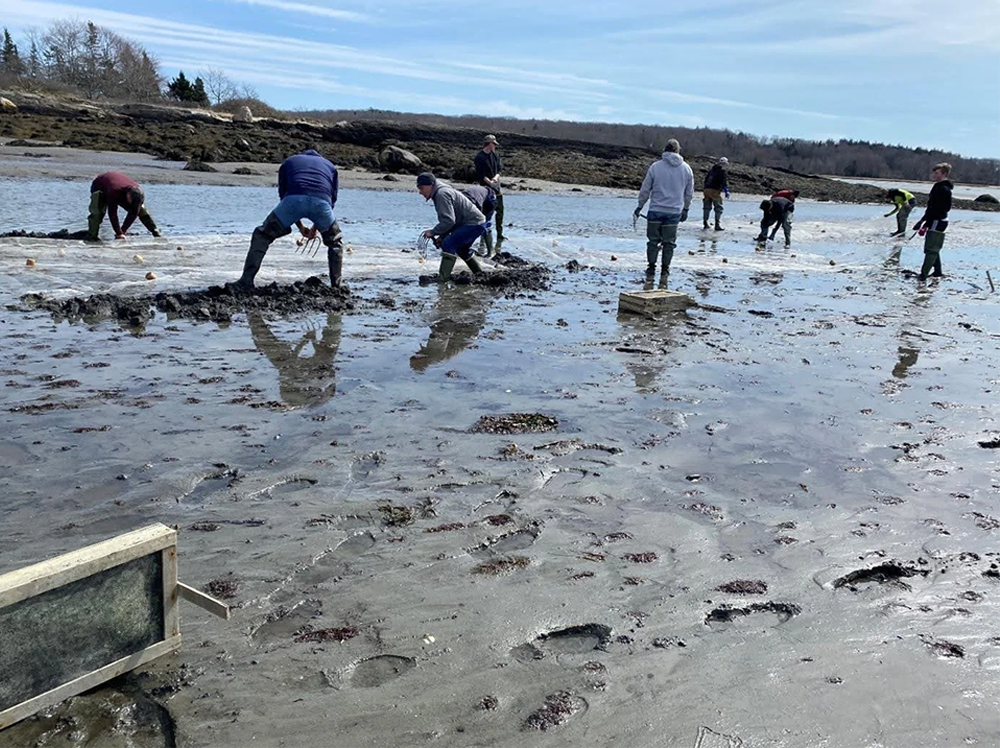
| Shellfish harvesters and community members reseeding the mudflats in Georgetown | Photo: Manomet / Marissa McMahan | | |
Some of the most important ecosystems on our coast are the ones we barely see. This story takes us onto Maine’s tidal mudflats—places that may look empty at first glance but are full of life, history, and livelihood. These intertidal zones support everything from shellfish and shorebirds to entire coastal economies, yet they are often overlooked and underrepresented in research and policy.
LEARN MORE HERE >>
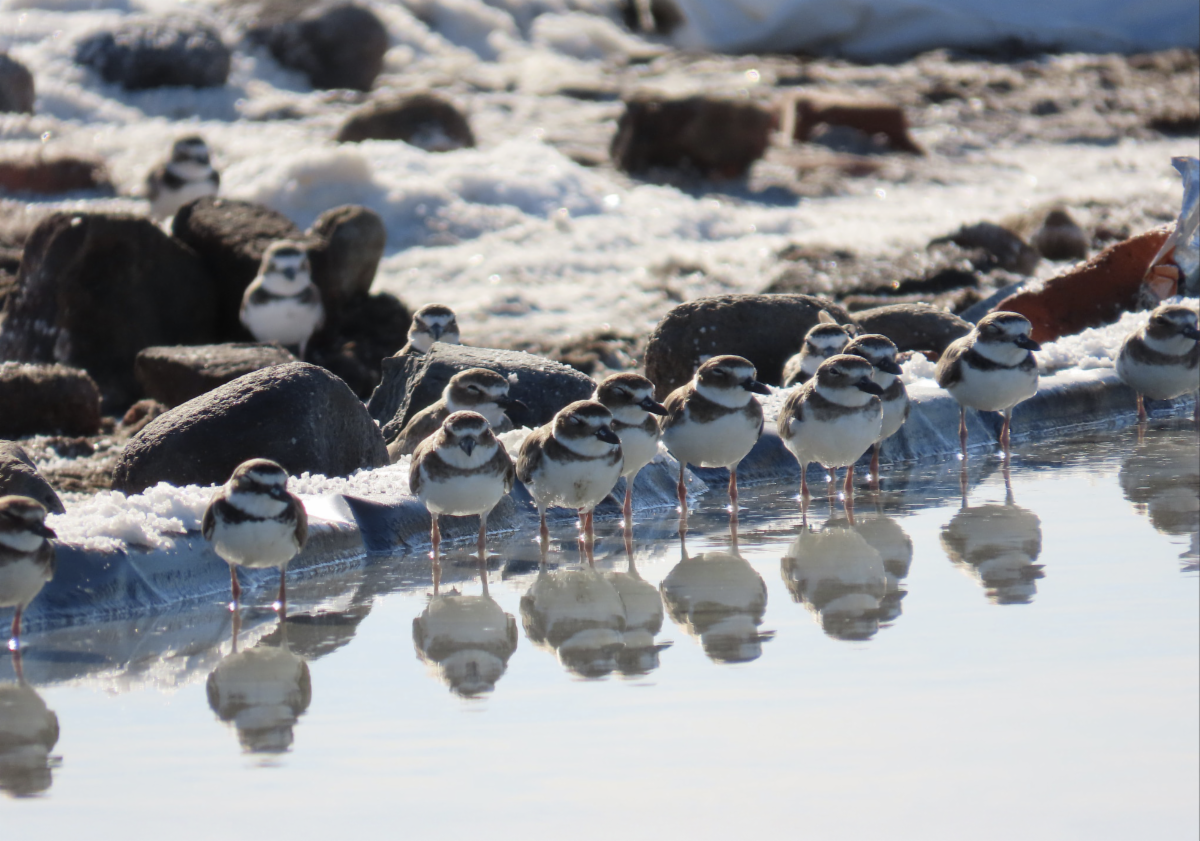
| Wilson's Plover in a Salt Farm. | Photo: Manomet / Julia Salazar | |
Resilient Salt Production that Benefits Local Communities and Shorebirds in San Lorenzo Bay, Honduras
In San Lorenzo Bay, Honduras, artisanal salt producers and migratory shorebirds have long shared the same intertidal landscape, and Manomet has been working to ensure they continue to do so. Six months into a pilot farm redesign program supported by the UK Government's Darwin Initiative, 10 salt farms have been redesigned to boost climate resilience and production while also creating dedicated habitat for tens of thousands of migratory shorebirds, expanding employment opportunities, and empowering women producers to take a central role in both salt production and conservation.
READ THE FULL STORY >>
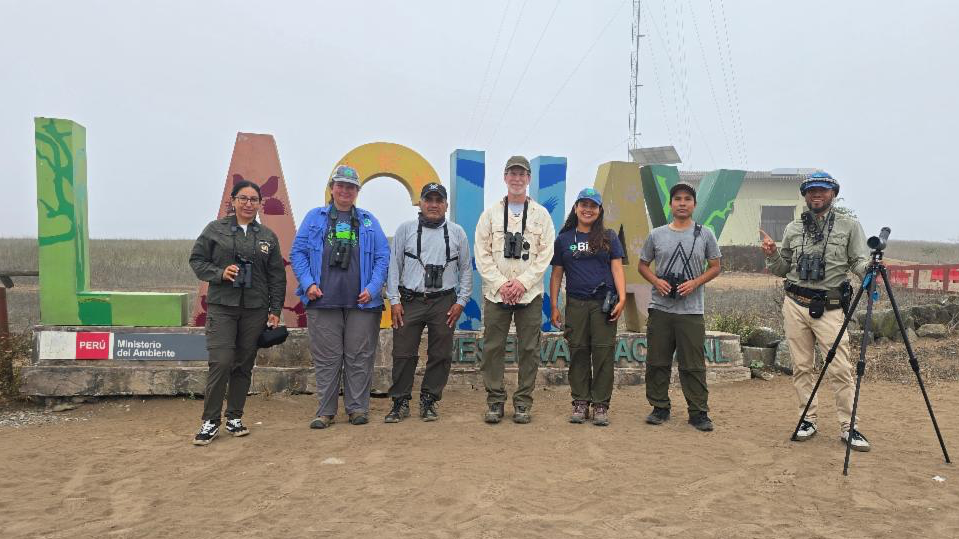
| Park rangers, Brookline Bird Club members, Manomet Conservation Sciences staff, and Manomet Small Grants awardees at Lomas de Lachay National Reserve. | Photo: Mariamercedes Antezana | |
Fluent in Birds: A Story of Connection Across Borders and Generations
What happens when a Boston birding club and two early-career researchers in Peru discover they share the same passion? Something truly powerful. Read how the Manomet Small Grants Program is building connections across borders, languages, and generations, and how your support can help the next generation of shorebird conservationists get the resources they need to do their work.
READ MORE >>
|
|
Hudsonian Whimbrel Tagging in the Gulf Coast
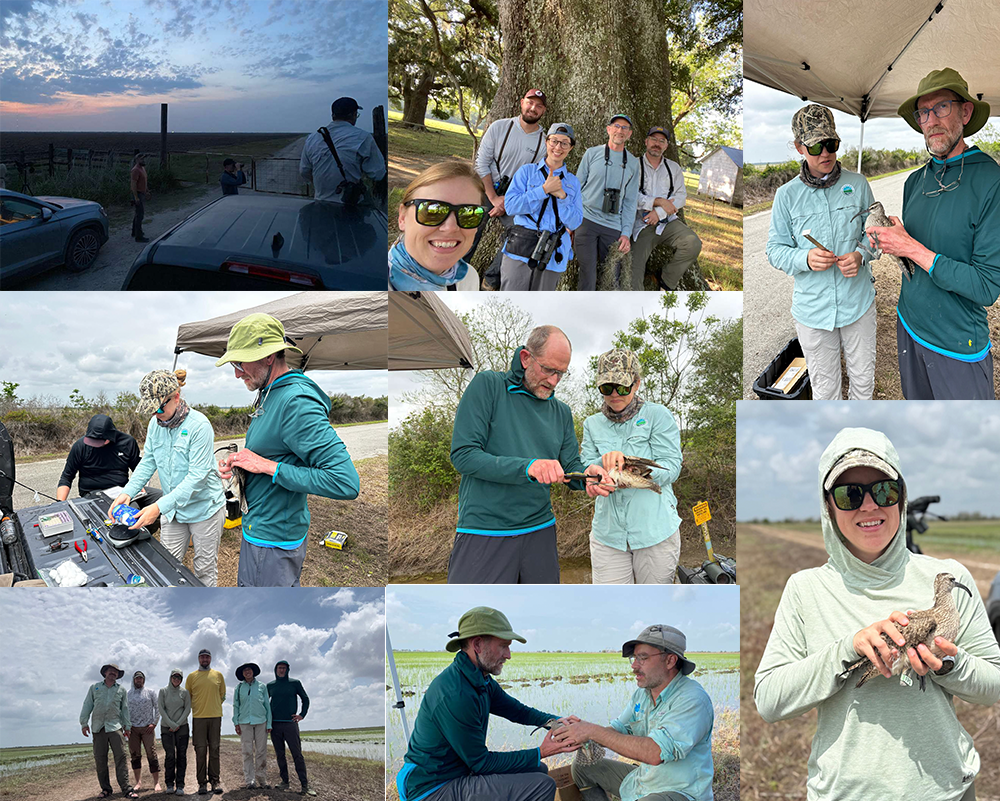
Field season is here! A crew of Manomet shorebird scientists spent two weeks on the Gulf Coast of the United States studying Hudsonian Whimbrel at their spring staging sites. The team worked across Louisiana and Texas, counting whimbrels at evening roost sites and capturing birds to fit with GPS tracking devices.
They were not the only ones showing up. EA2, the Hudsonian Whimbrel tagged in Texas in 2022 and spotted in Maranhão, Brazil back in January, has returned to Anahuac, Texas, for the fourth year in a row. The tracking records show that so far this season, the bird has already visited both of our Gulf Coast study sites and stopped at Sandy Neck on Cape Cod, covering nearly every Manomet focal area along the way.
The crew also came back with some striking numbers. Roost counts in Texas reached a new record high of 13,200 birds across three sites, with an additional peak count of 4,200 at the Louisiana site — bringing the total to 17,600 Whimbrel counted across four roost sites in Texas and Louisiana. That's the highest single-season count in our six years of surveys.
| |
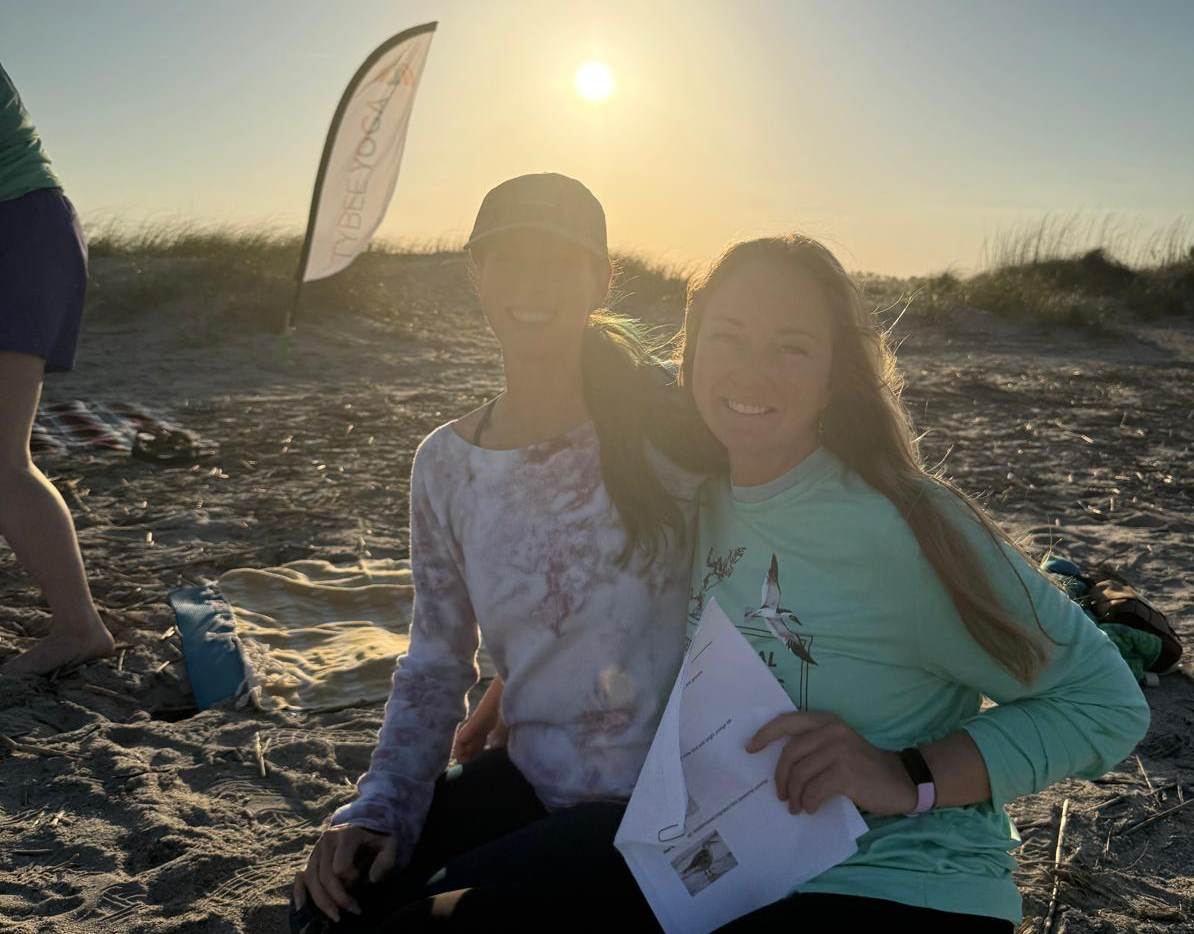
Have you ever imagined yoga poses inspired by shorebirds? On Tybee Island, Georgia, that became a reality when Manomet shorebird biologist Allie Hayser teamed up with yoga instructor Laurie Kinkel-Dale of Tybee Yoga & Healing Arts, a current volunteer with Manomet’s Georgia Coastal Bird Ambassador program, for a one-of-a-kind event blending bird-inspired movement with coastal conservation.
Read more about this shorebird-inspired activity here >>
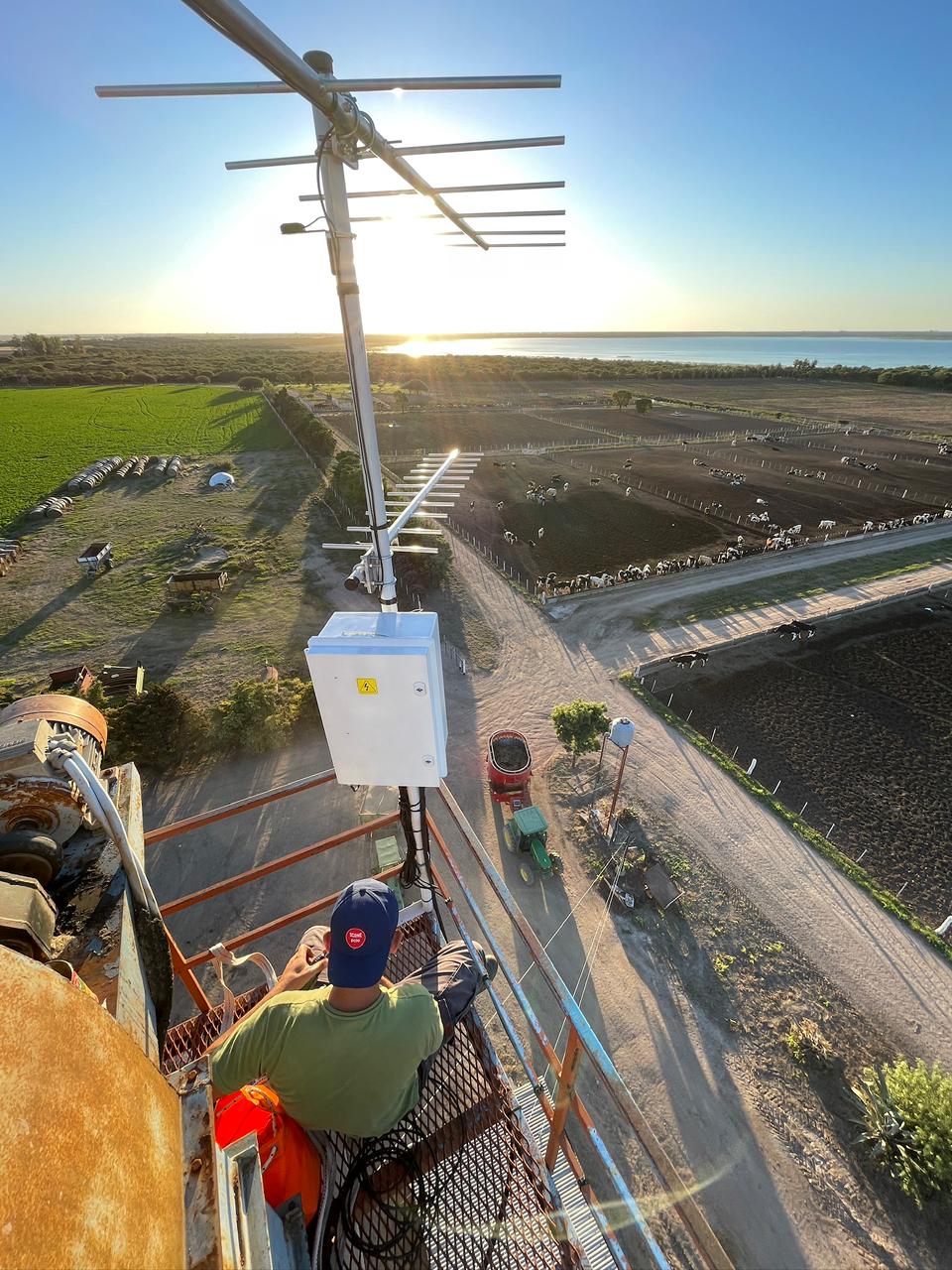
| New Motus tower in Mar Chiquita | Photo: Manomet |
A New Motus Tower Takes Root in Mar Chiquita, Argentina
Laguna Mar Chiquita, a critical stopover for Wilson's Phalarope and many other shorebird species, has expanded its reach in the global conservation network. Marcela Castellino and Pablo Gigy Gregoret, Manomet's Saline Lakes Conservation Specialists, began by signing a Memorandum of Understanding with a local agricultural and livestock farm landowner—a new committed, bird conservation ally—before successfully installing a second Motus Wildlife Tracking System tower on the property. Even with the hands-on support of local technicians, this was no small feat in a region where low-lying terrain and fluctuating water levels make every installation a hard-won achievement.
Motus towers track tagged birds, bats, and insects in real time, mapping migratory corridors, identifying critical habitats, and generating the data needed to protect species across flyways. This matters especially here because Laguna Mar Chiquita is the largest saline lake in South America and a Western Hemisphere Shorebird Reserve Network (WHSRN) Site of Hemispheric Importance. A safe haven for more than 500,000 shorebirds every year, each new tower in Laguna Mar Chiquita expands what we can see and strengthens the science behind every decision made to protect them.
| | United States
Plymouth, MA
Plymouth, MA | |
Fish Migration and the Annual Herring Run Festival
After a long, cold winter, every resident of New England appreciates the return of spring weather! River herring waiting in the Gulf of Maine and Plymouth Bay sense the warming waters of New England's coastal rivers and streams and use the rising water temperature as a signal to begin their migration. Manomet and the Gulf of Maine River Herring Network are also keeping a close watch on changing water temperatures, using temperature loggers, such as those deployed at the outlet of Sewell Pond in Arrowsic, Maine.
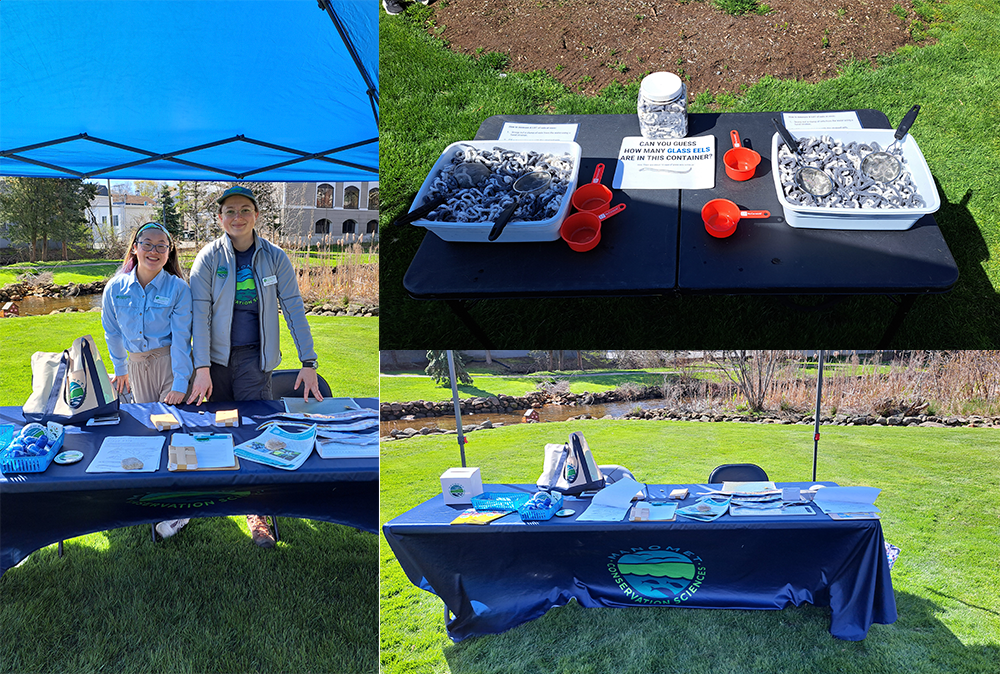
Chilly weather and cloudy skies on Saturday, April 25th, meant that not too many fish were making the journey up Town Brook in Plymouth, Massachusetts, but river herring enthusiasts were thick on the ground at Brewster Gardens for the annual Herring Run Festival. Manomet Conservation Sciences Science Educator Lily Green, and Sea Run Fisheries Monitoring Coordinator Anne Zegers, were on hand to share information about river herring and other migratory fish, demonstrate how to count a swarm of glass eels, and explain how to tell an alewife from a blueback herring.
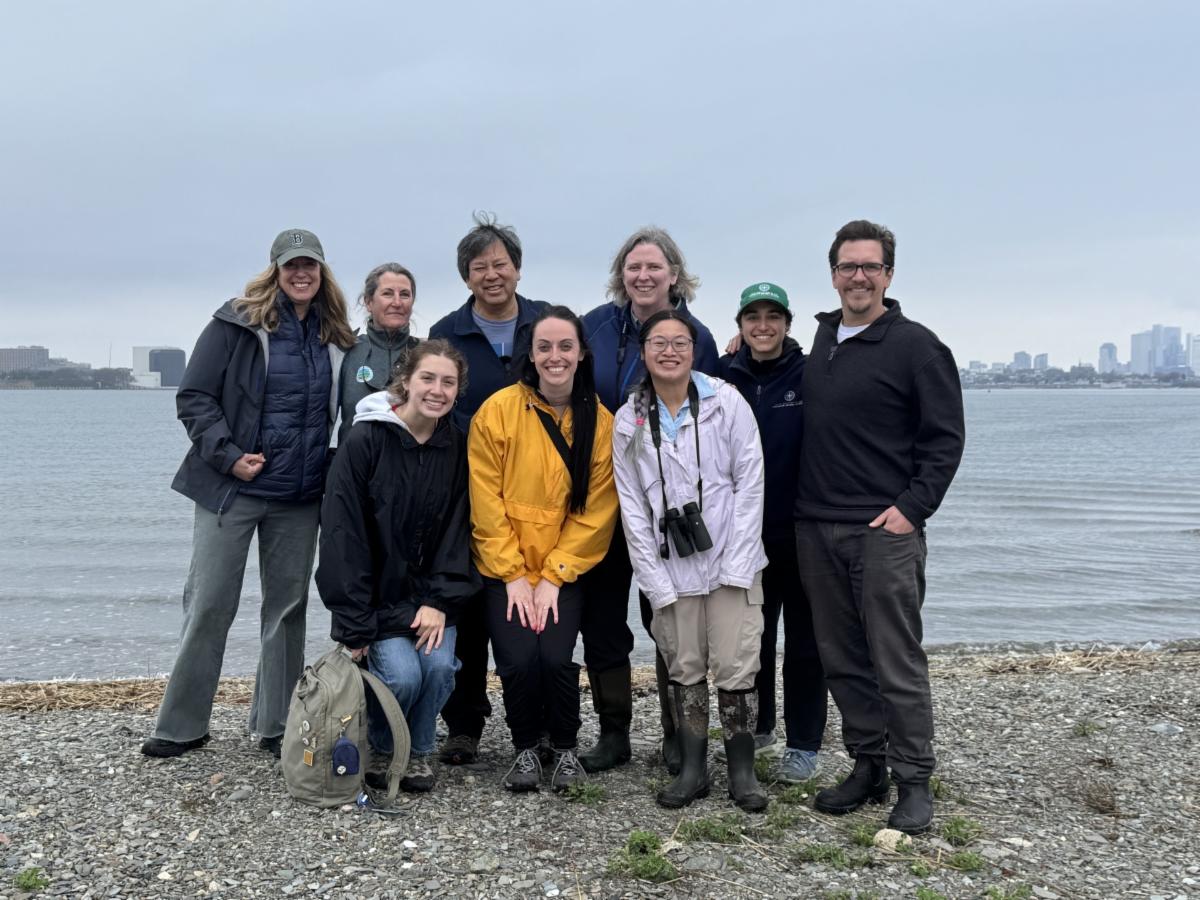
| | Manomet Conservation Sciences Education Team at Cathleen Stone Island | Photo: Manomet | |
Outward Bound with the Manomet Conservation Sciences Education Team
A short boat ride from Boston, Cathleen Stone Island offers something rare: a place where students can learn science by doing it. Manomet Conservation Sciences President Lizzie Schueler and the Manomet Education Team recently visited Cathleen Stone Island, where Manomet is collaborating with the Cathleen Stone Island Outward Bound School, Stone Living Lab, and the Stone Foundation to bring hands-on science and coastal resilience education to students in Boston Public Schools. Manomet educators took the opportunity to explore the island, brainstorm with partners, and consider the island's geographic and biological features from a teacher's-eye view.
Kara Doherty from the Wade Institute at Manomet, who is leading the curriculum design process this spring, enthused, "Learning the island’s history and educational purpose from the Outward Bound staff, whose passion and appreciation are unmistakable, has been thrilling. Being on-site somewhere like Cathleen Stone Island has us overflowing with ideas and further inquiry."
Manomet and its partners will begin piloting the new learning sequence with Boston students in September, so stay tuned for more!
| | Thank you to our recent corporate partners for helping Manomet deliver its mission of improving the health of flyways, coastal ecosystems, and working lands and seas. | | | | |