Teen Dating Violence Awareness Month |
|
|
February is National Teen Dating Violence Awareness and Prevention Month (#TDVAM) which is a time to shine a light on the importance of healthy relationships and the role we all play in preventing abuse before it starts.
At Expect Respect, we are proud to highlight the work we do every day to help young people build skills, confidence, and connection rooted in respect. This month, we’re excited to launch our new three-minute Expect Respect video, showcasing the heart of our primary and secondary prevention approaches and featuring a few of the incredible community partners who make this work possible.
Teen dating abuse remains a serious public health concern. According to the Centers for Disease Control and Prevention’s Youth Risk Behavior Survey (2021), among U.S. high school students who reported dating in the previous 12 months:
-
About 1 in 12 experienced physical dating violence.1
-
About 1 in 10 experienced sexual dating violence.2
These numbers remind us why prevention matters.
Serving the Austin area since 1989, Expect Respect works to promote healthy relationships and prevent violence and abuse among children and teens. Through innovative, research-based programs and trainings, we partner with schools, healthcare providers, law enforcement, and other youth-serving organizations to create safer, more supportive environments where all young people can thrive.
We invite you to join us in centering healthy relationships this month and every month.
Please watch and share our video to be part of the movement toward respect and safety!
| | | | Expect Respect Support Groups | |
|
When Marisol joined the support group, she mostly listened. She wasn’t sure how much to share, but she liked knowing she wasn’t alone. But one afternoon, after another participant talked about feeling “stupid” for staying in a painful relationship, Marisol exhaled and whispered, “I thought it was just me.” The group leaned in, letting her know they were right there with her. As she continued, her voice trembled through memories she had never said out loud before: the constant monitoring, the name‑calling, the fear of making her partner angry. It was raw and painful, and yet, for the first time, she didn’t feel judged. She began sharing a little more each session, and feeling like her experiences mattered.
A turning point came when a facilitator explained that emotions like anger, fear, and sadness could indicate that her environment and relationships were unsafe. Marisol learned that her anger, her numbness, even her mistrust, weren’t signs that she was “broken.” Slowly, Marisol began to understand that her emotions were signals that her body and heart were trying to protect her. But what made the biggest difference, she later said, was the way the group accepted her. All of her. The parts she liked and the parts she wished she could erase. In that circle, Marisol was not “too much.” She wasn’t “dramatic.” She wasn’t “a mess.” She was a whole person who was seen, heard, and valued. In experiencing that safety, she could begin to imagine a different future for herself. One where she could trust her feelings, ask for what she deserves, and build relationships rooted in respect and care.
| | | | Youth Leadership at Goodnight Ranch | | |
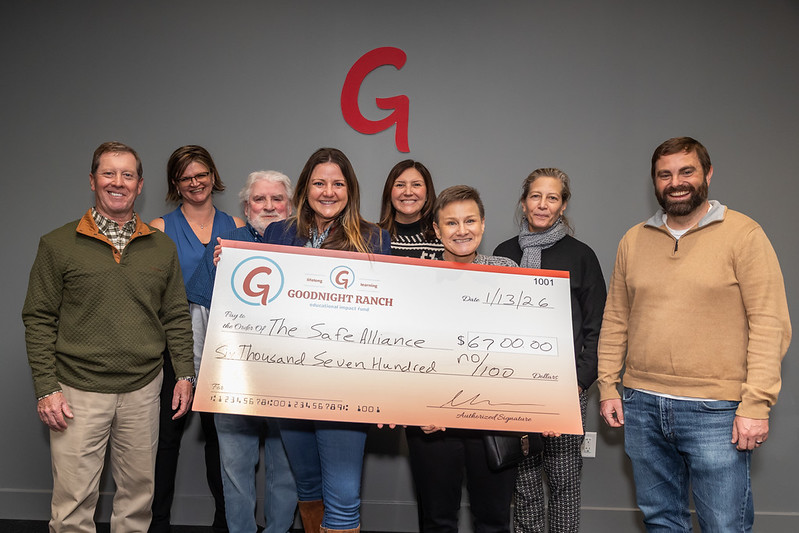
We are honored to share that Expect Respect is a recipient of Goodnight Ranch Educational Impact Fund Grant for the 2026 cycle. This unique initiative brings together a housing community and local nonprofits in meaningful partnership. Established by residents in 2022, the Fund was created to help make Goodnight Ranch an even stronger, more connected place to live by supporting educational opportunities that promote health, wellness, and lifelong learning.
We are grateful to partner with the Goodnight Ranch community and an inspiring circle of organizations, including Ballet Austin, Creative Action, Hi How Are You Project, Blazier Intermediate, Austin Youth River Watch, Urban Roots, and Generation Serve, to strengthen connection and belonging for young people and families. Together, we are advancing our mission of violence prevention through connection. We are excited for the year ahead and what we will build in partnership with this vibrant community.
| | Changing Lives Tour Begins | |
“Four names. Four narratives. Four chances to crack that dang safe, and one opportunity for me to crack the truth right open. I’m going to need to take this way back, before secrets got spilled, before tempers snapped. Let’s figure out how we got here…” | |
The Changing Lives Youth Theatre Ensemble, a collaboration between Creative Action and Expect Respect (a program of SAFE), returns with their 2026 school tour of A Safe Place to Fall Apart, written and performed by an ensemble of artists aged 14-18.
Detective Noa R. is on the case in this Film Noir-inspired whodunit that follows four high schoolers struggling to build (or rebuild) relationships and clarify their boundaries. Sisters Sid and Estrella grew up together in Puerto Rico, until Sid moved to Texas. Eight years later, the two are reunited, but Estrella begins sabotaging Sid at work to get more attention from her sister. Meanwhile, a budding artist named Solace struggles when a new friend, Jessie, starts demanding more and more while they work together on a high school talent show, even threatening Solace’s chances at a college scholarship.
Inspired by Shel Silverstein’s The Giving Tree, A Safe Place To Fall Apart explores what happens when the balance of give and take in a relationship gets out of sync. It encourages middle schoolers to explore: Where’s the line between helping someone you care about and compromising your own future and well-being? This play helps youth (grades 6-8) identify teen economic abuse, learn to set and enforce boundaries, and see healthy examples of young people communicating their needs all through a fun Film Noir lens.
| | | |
|
24/7 SAFEline
Call: 512.267.SAFE (7233)
Text: 737.888.7233
Chat: www.safeaustin.org
- Emergency shelter
- Supportive housing
- Sexual assault services
- Foster & adopt support
- Counseling & peer support
- Community education
- Parent education & support
| | | | | | | |