|
Vintage Ventures - Yucatán 2018
February 2018
Tulum
| |
VINTAGE VENTURES: I write my travel journals to look back and remember our ventures. A secondary reason is to allow me to organize all my trip photos. I have thousands of photos. Organizing them into a cohesive story makes sense. | |
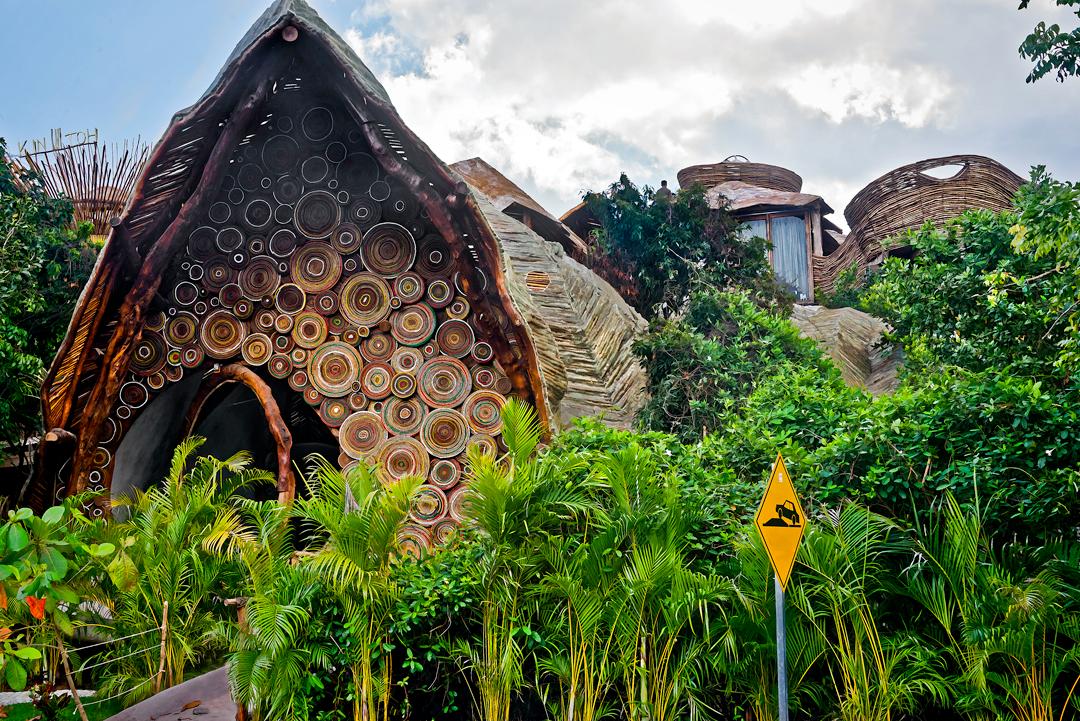
Beach Hotels on the coast near Tulum were unique. On the positive side, many resorts and hotels tried to blend in with the jungle. On the negative side, they restricted access to the beach. The only public beach access in Tulum was Playa Publico. Fortunately, Playa Publico was expansive and gorgeous. | |
|
DAY 5 – Wednesday, February 7, 2018
CENOTES
BACKGROUND: The Yucatán peninsula is a giant slate of limestone, which is quite porous. Consequently, there are no rivers. Water doesn't run off on the surface; it quickly permeates to a great network of underground rivers and tributaries that run for miles. Sometimes the surface gives way and opens up a sinkhole providing access to these rivers. Here, these sinkholes are called cenotes. Each cenote is unique. Some have huge openings with crystal clear bluish-tinged water near the surface. Some have tiny surface holes but open up to a large open-air cavern with the water far below the surface, necessitating a long steep stairway or ladder to reach. Most cenotes have deep underwater caves that go on for miles. Divers love them, and some diving companies have set up guide ropes through these caves. All in all, cenotes are an exceptional snorkeling and diving experience.
We were a little faster this morning and hit the streets around 9 am. First, we repeated our light breakfast at the bakery. We dutifully took our malaria pill even though I had still only seen that one mosquito. Wanda assures me that hordes are a’comin’.
Many cenotes around Tulum are a few kilometers away - a bit far to walk. We decided to try renting a bike. There are hundreds of tourists zigzagging around on them in Tulum. They can't be all wrong.
There are several rental shops to choose from. We settled on the one closest to the bakery. We haggled the guy down a bit - from 120 pesos per bike to 100 pesos. In return, we got two funky single-speed bikes with a handy large basket and a bike lock. As a deposit, I had to give them my driver's license. I can't say I felt too good about that, but a guy returned a bike and promptly got his license back while we were there.
Now that we had wheels, it was time to burn some rubber. Off we went down the main drag toward to road to the town of Coba, where three cenotes were within reach of a bike. Riding bikes down the main drag proved to be daunting. The lanes were narrow, the traffic was heavy, and street construction exacerbated everything. Like everyone else with bikes on Main Street, we spent much time walking our bikes.
But once on the road to Coba, it promised clear sailing. The road is a two-lane road with ample shoulders. The problem was that people liked driving halfway on the shoulder. They have this nice wide lane, yet they use much of the shoulder. And when there are a bunch of cars, this two-lane road with ample shoulders becomes a very tight four-lane highway.
Leaving town, we had the breeze to our backs and what turned out to be a very slight downhill slope - imperceptible at the time but more than noticeable on the return. We were flying and made the 4-kilometer trek to Grand Cenote in no time.
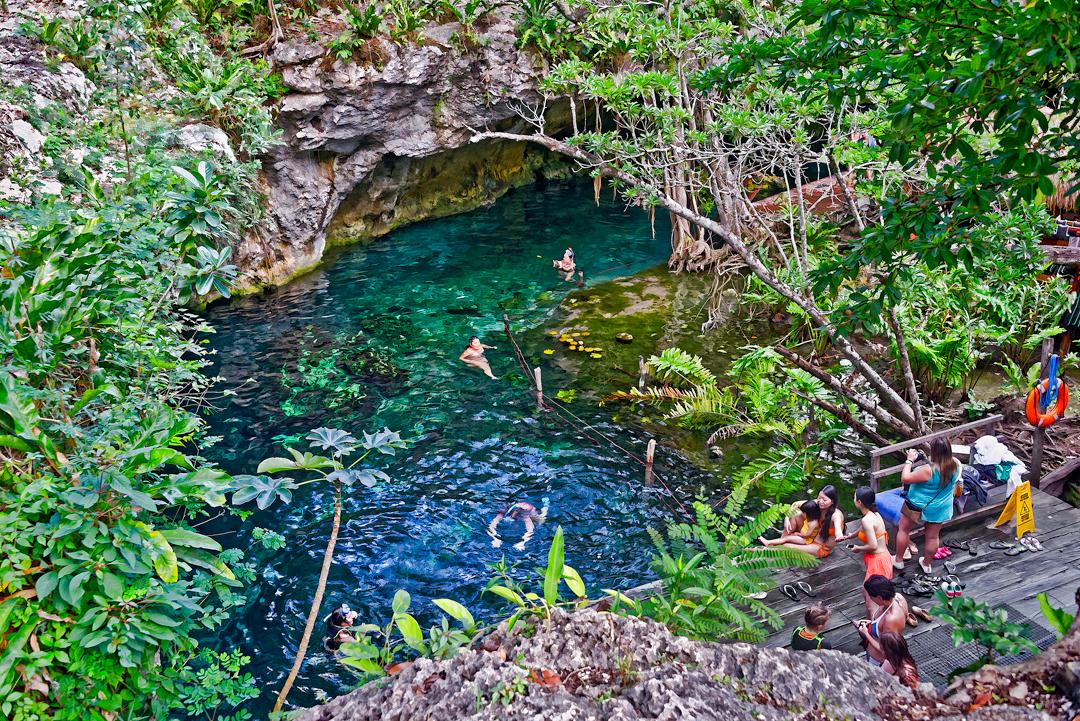
Grand Cenote is one of the premier cenotes in the Yucatán. The admission was a stiff 180 pesos ($10 US). Being so nice and heavily advertised means big crowds. Fortunately, like Spaniards, Mexicans and Mexican touristas are late risers, so the crowd was sparse this early - 10:30 am.
The Grand Cenote set the standard for cenotes for us. It is located in the middle of a well-maintained lush jungle area. The sinkhole opening is a large hole about 100 feet in diameter. The water level is 20 feet below the opening. A stairway descends to a good-sized platform in the middle of the cenote, built on a little island in the middle (later, we saw that many cenotes are donut-shaped with the water ringing around an island center).
Under the water was a vast and intricate world of stalactites, stalagmites, deep dark caves, colorful fish, turtles, and many nooks and crannies to explore. We spent two spectacular hours examining all the details before it started to get crowded. The water is reported to be 78 degrees - but we did get chilled after a while. The bike ride to the next cenote cured that.
|  | |
Car Wash Cenote located another 2 kilometers down the highway, was very different from Grand Cenote. I read somewhere that they used to wash taxicabs out there before turning it into a tourist stop. This cenote is primarily open, with the water only a foot or two from the surface, making it easy to jump right in.
Car Wash Cenote is a sizeable water-filled bowl with several underwater caves radiating in many directions, like spokes attached to a wheel hub. One side has pretty green underwater foliage with plenty of fish playing in it. The underwater structure is much plainer than Grand Cenote, lacking stalactites, stalagmites, and nooks and crannies accessible to snorkelers. There are tons of deep nooks and crannies accessible to divers. It is fun looking down into one of those deep black caves and watching a speck of light grow as divers emerge from the depths).
| 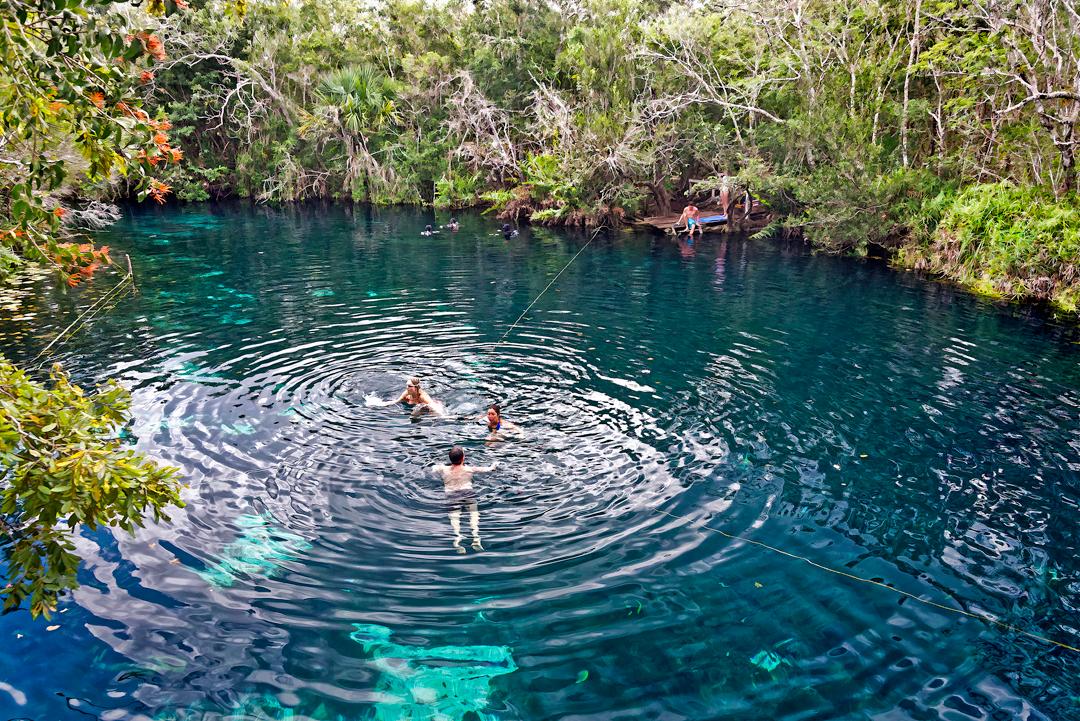 | Car Wash Cenote was more of an open pit filled with water. Underwater, however, was a labyrinth of the similar gorgeous structure we enjoyed at Grand Cenote. | |
The return bike ride was brutal. It was hot, into the wind, and up that pesky upgrade for 8 kilometers. There was one more cenote only one kilometer from town, but we were starving and had our sight set on a mid-day meal. Foolishly we passed it up and never got back to it.
Instead, it was seafood tacos at El Pollo Branco, a tiny corner restaurant on the main drag. They were delicious, and they included the usual unique house sauces.
Then we rode out to Chedraui, the local large big box store. We picked up some pastries, milk, juices, bananas, and a giant wrinkled-up mandarin orange. The juices, one mango and the other guava, were terrific. Like in Europe, the milk isn’t refrigerated. We needed a little bit for the malaria pills for the next couple of mornings, so we bought a small carton.
I still haven’t seen any more mosquitoes, but Wanda keeps reassuring me that they will be here shortly. And the big ugly mandarin orange was awesome – sweet, juicy, and bursting with flavor.
Mexican pastries, however, are starting to disappoint. We were spoiled in Spain with the French-like delicate and dainty dessert pastries. I am afraid that Mexican pastries don’t meet the standard set by Europe. Too bad because the rest of the Mexican menu is kick-ass.
We returned the bikes, and I got my driver's license back. On the walk home, we took a back street and stumbled onto a plaza filled with local people and activity. There were plenty of food and snack carts. Wanda has been clambering for Mexican ice cream on a stick called paletas, which she used to devour as a kid when she lived in the Texas border town of Del Rio.
Sure enough, we found a shop selling them at the plaza for 15 pesos. Mexican ice cream isn’t really ice cream. Helados is made from milk, not cream, so it is light. Paletas are handmade from fruit puree. Often real fruit chunks are still in the paletas. The puree is frozen on a stick like a Popsicle. But paletas, pure fruit, not like popsicles, which are nothing more than artificial flavor and tons of sugar water. Wanda got a guanabana flavor. Mine was Nance. Nance is my new favorite fruit flavor. The nance paleta was so authentic that it still had three marble-sized seeds left in them.
As we have been wandering around town, we have noticed scores of hostels – maybe as many as 50 in Tulum. Some seem geared specifically toward scuba divers, but most are just dorms with beds for rent. They are cheap, usually around $12 to $15 US per night. We thought about them, but with the two of us, it would cost around $25 to $30 per night for a dorm bed and communal bathroom. Our private and spacious Airbnbs averaged about $35 per night. Still, hostels would be a cheap way to go if young and single.
| |
DAY 6 – Thursday, February 8, 2018
COBA RUINAS
This morning we had our breakfast in the Airbnb room. We had our pastries, excellent mango fruit juice, milk, the gigantic ugly but terrific mandarin orange, and one malaria pill. I am starting to give up on the mosquitoes.
Our original plan was to catch a colectivo to the little town of Coba, where there are ruins from a substantial Mayan city of 60,000 inhabitants. There are remnants of many stone buildings, including the tallest pyramid in the Yucatán. We had trouble locating the colectivo stand because our map indicated it was on the main street, but in reality, it was on a side street around the corner. By the time we realized it, the colectivo had taken off, and it would probably take a long time for another one to come by and fill up. A taxi driver offered to take us for 200 pesos one way, about twice as much as the colectivo, but we declined.
I knew that ADO provided bus service to Coba, but I didn’t know the schedule. We took a chance and walked to the ADO bus station. Fortunately, a bus was going to leave in just 15 minutes, and one was returning in the afternoon. We bought a round-trip ticket for peanuts ($21 US for both of us) and boarded the bus. Again, the ADO buses are top-notch. Interestingly, each seat is provided with a video screen, but they primarily play crappy American 'B movies' dubbed in Spanish. The words don’t sync with the lips, which only adds to the fun.
Coba is a tiny village. Catering to the ruins is the only business in town. Coba does have the unique distinction of being home to a couple of lakes, a rarity in the Yucatán, where all water is underground. I had read that these are swimmable, but we couldn’t find a beach area. Coba is primarily one round town square ringed with restaurants and shops, all funneling tourists toward the Coba ruins entrance. The fee is 70 pesos and well worth the price.
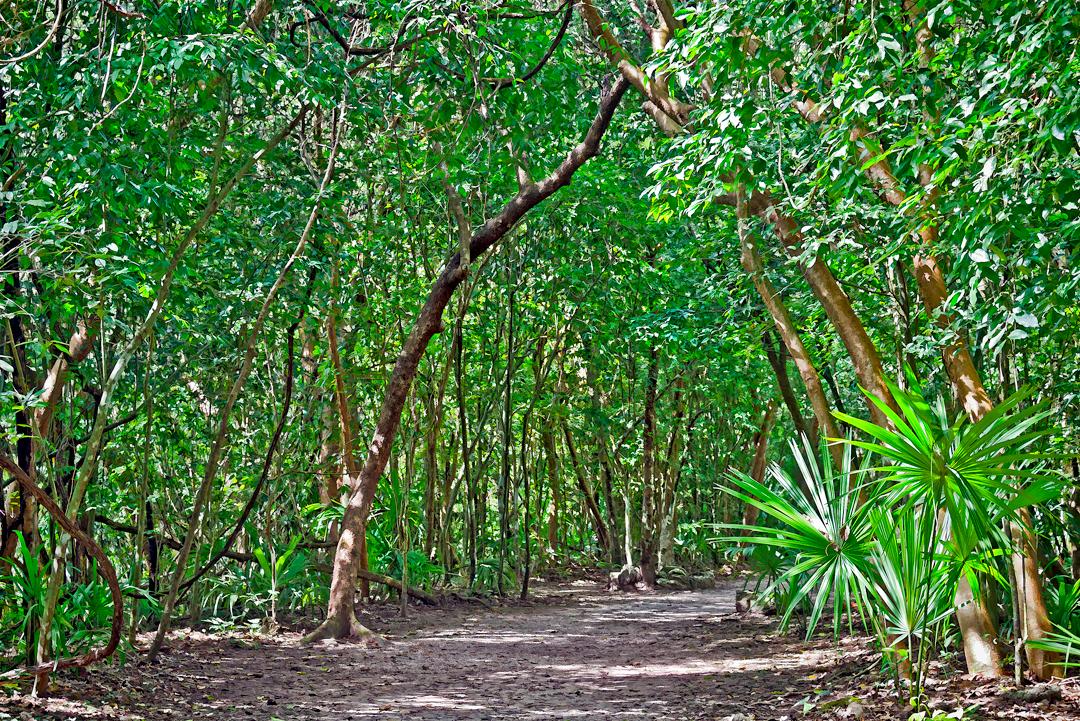
The ruins are spread over several kilometers of sacbes (Mayan roads). Coba was a major hub with several sacbes radiating out to other major cities like Chichen Itza and Tulum and the agricultural areas to the south. A sacbe is about 15 feet wide, smooth, and paved with white limestone for good visibility at night.
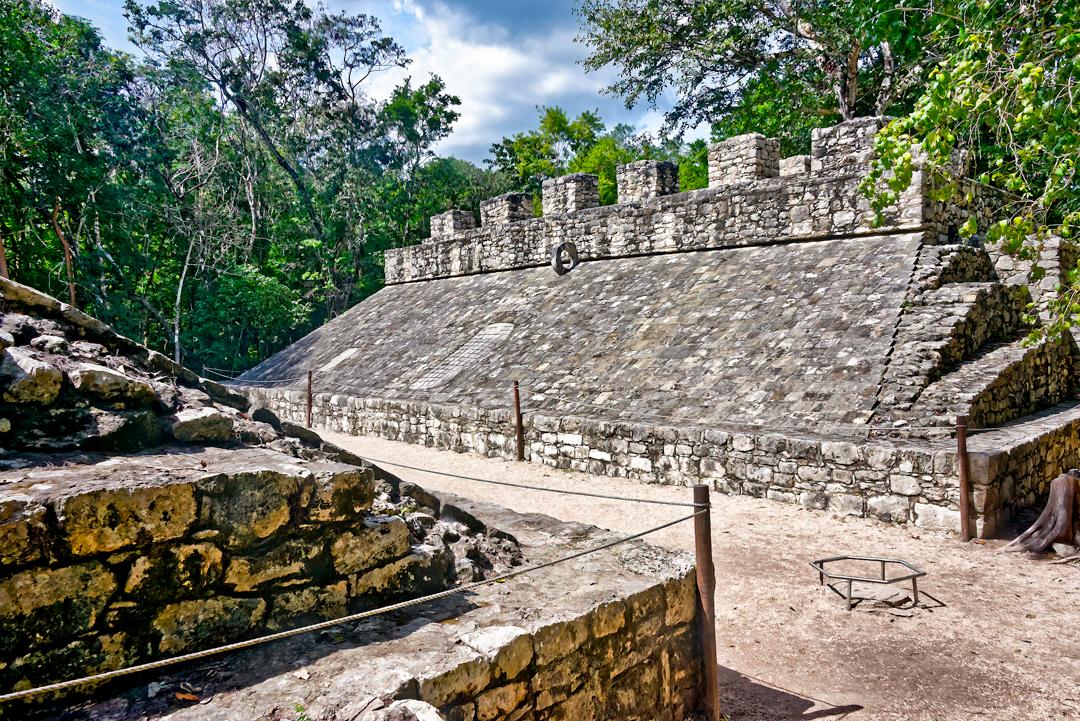
There are three main ruin sites at Coba, separated by a couple of kilometers of fine sacbes (there are also many smaller ruins along the way). You could walk, which we did, rent a bike, or ride on a bicycle-powered tuk-tuk. The first group of ruins included El Tempo, a sizeable beautiful pyramid, and a well-preserved ball court. (Coba was so big that there were two ball courts in 2 different areas).
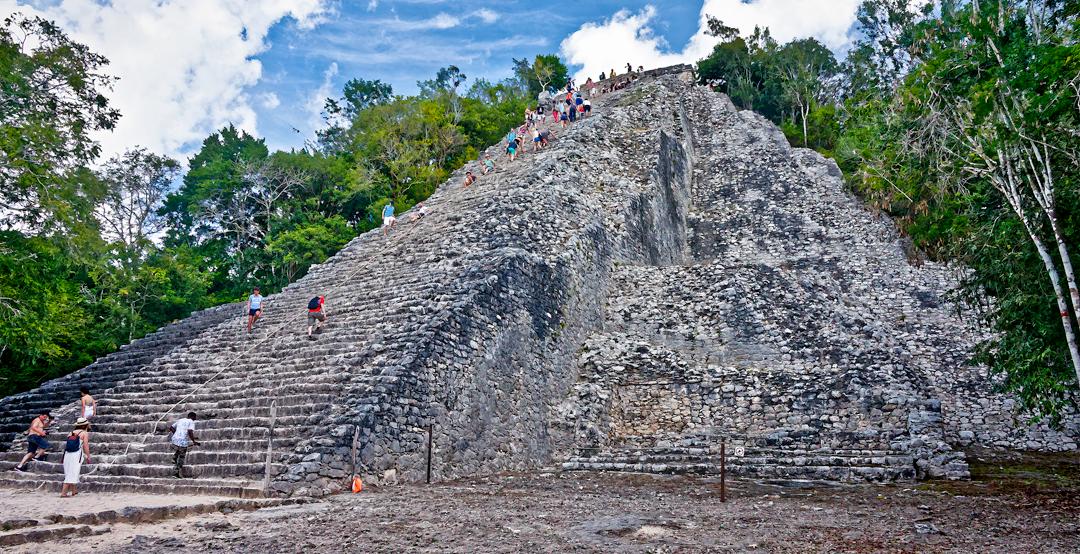
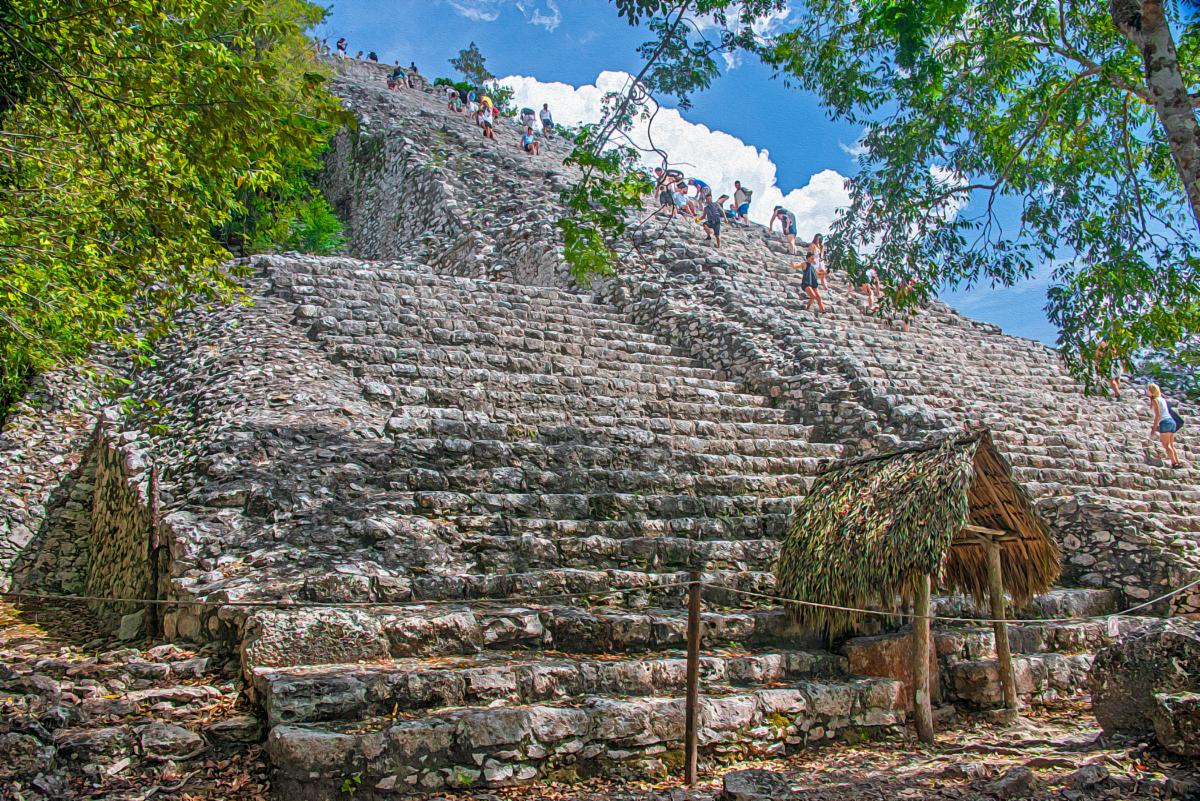
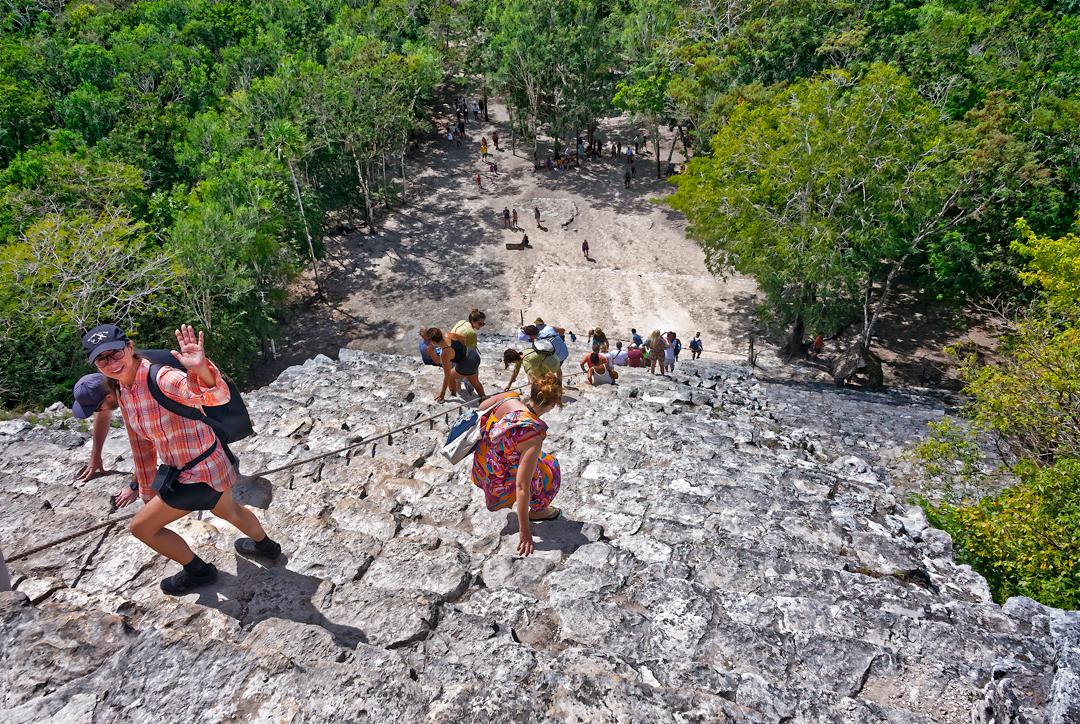
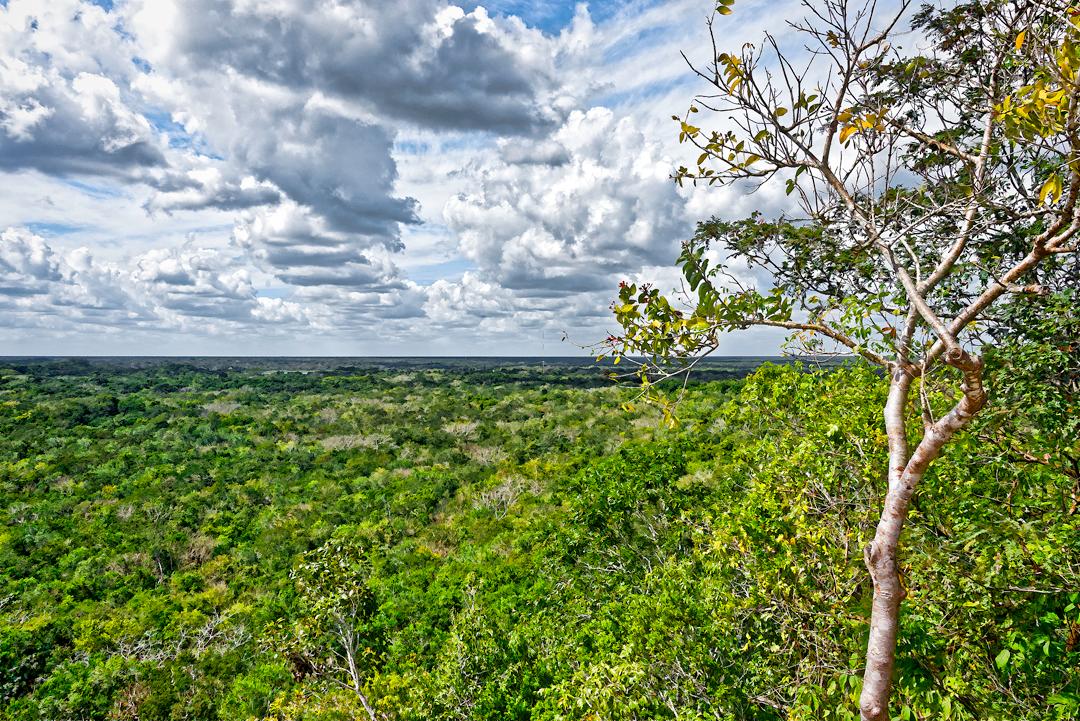
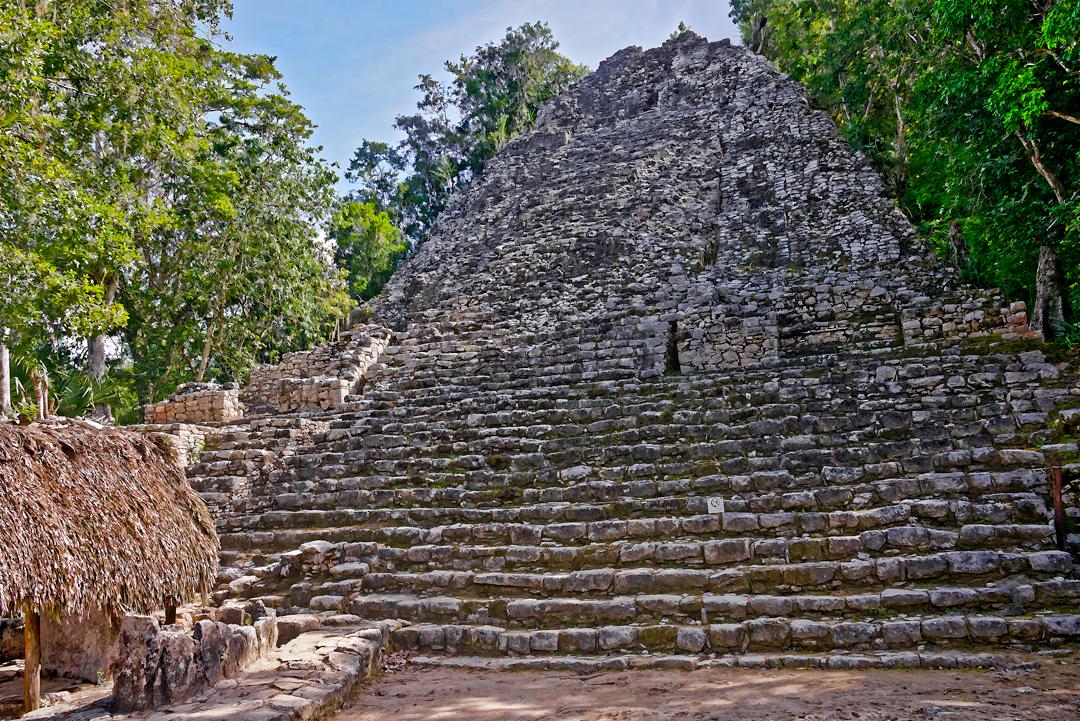
The next group that we went to had several smaller ruins. It was the third group that blew us away. We rounded a curve to an opening in the jungle to see Nohoch Mul, the colossal pyramid – the tallest in the Yucatán and we were allowed to climb it. This was not an easy task. There are 120 large, steep, and slippery steps to the top. The Mayans were small in stature, yet all the steps we have seen so far are enormously tall. The Mayans must have climbed the steps using all four limbs, which many of the more squeamish tourists were doing. Once on top, at 42 meters (equivalent to a 15-story building), the view of the dense green jungle was terrific.
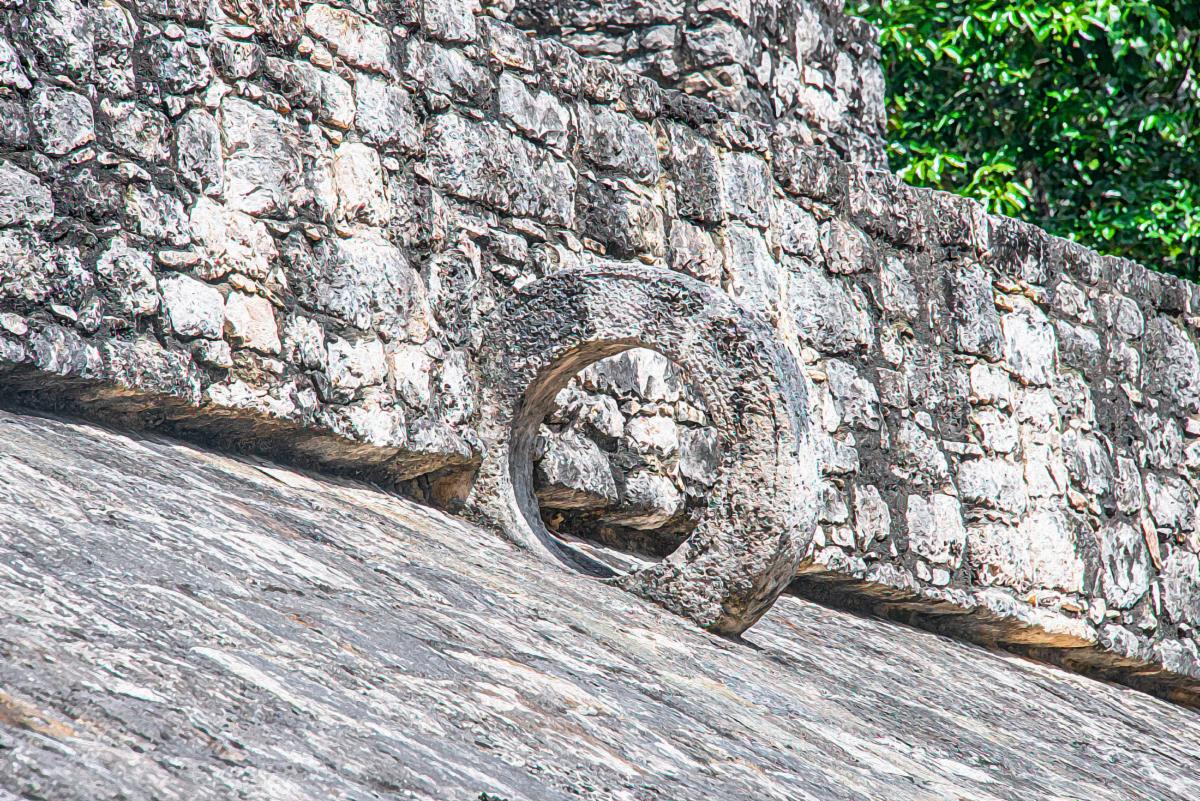
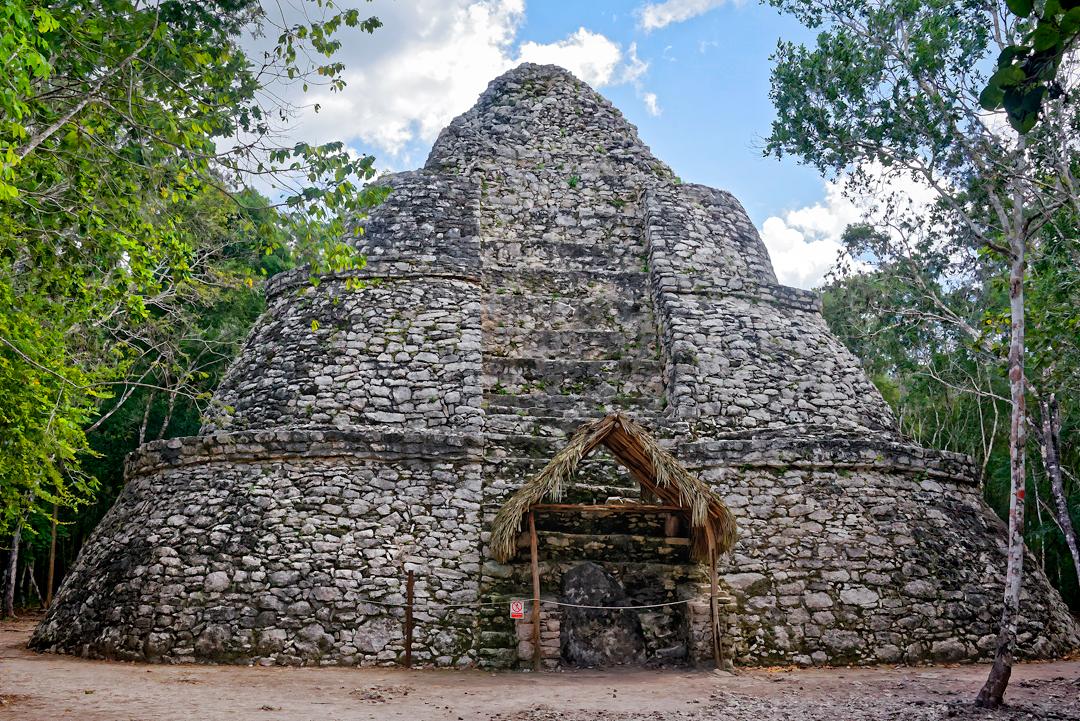
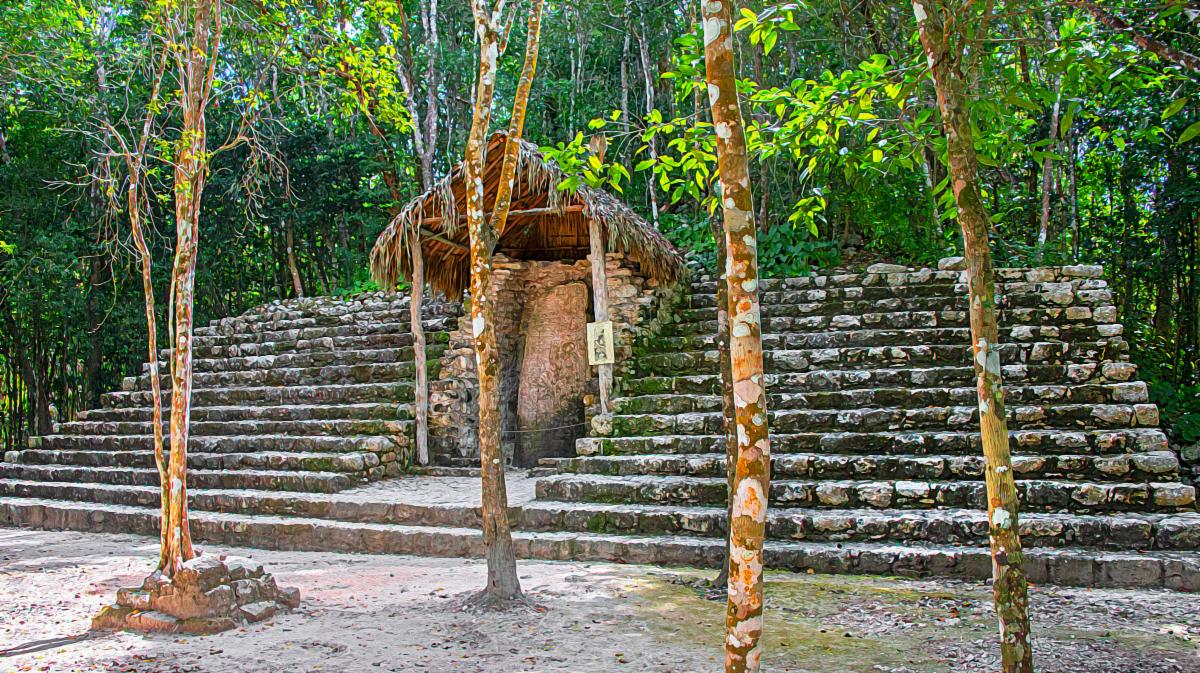
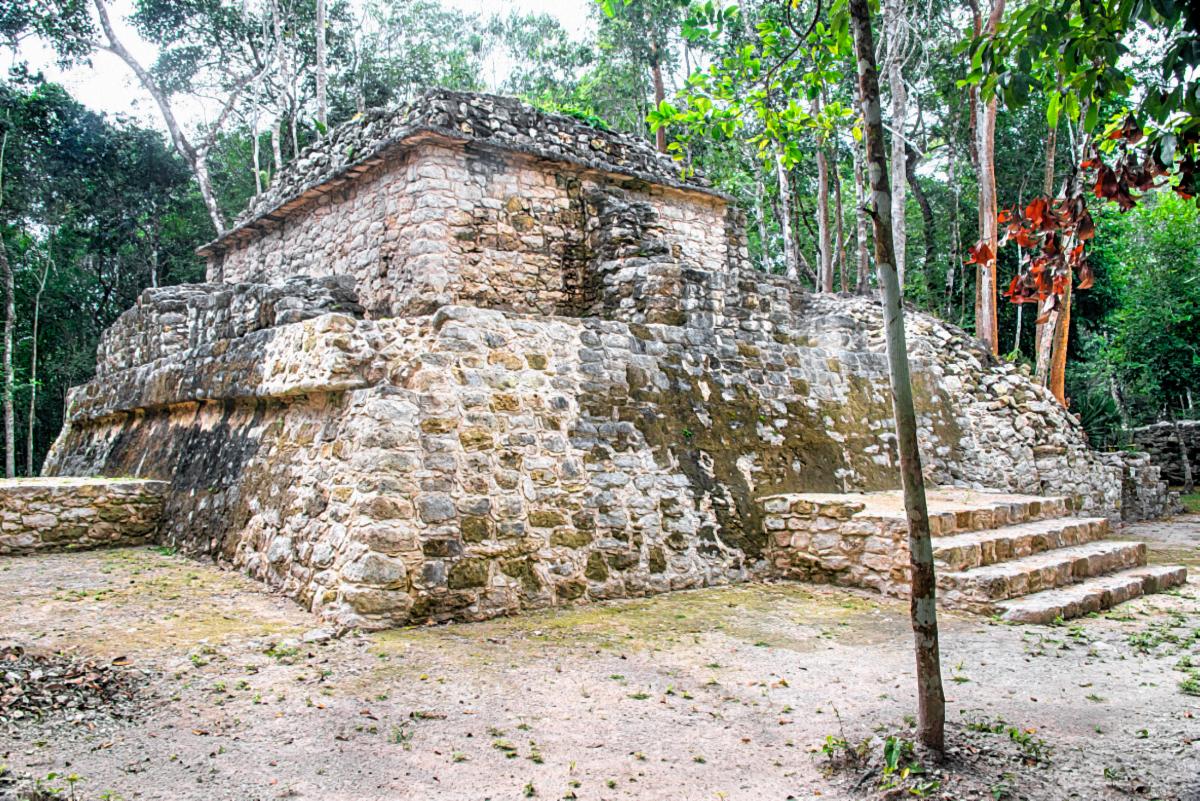
| 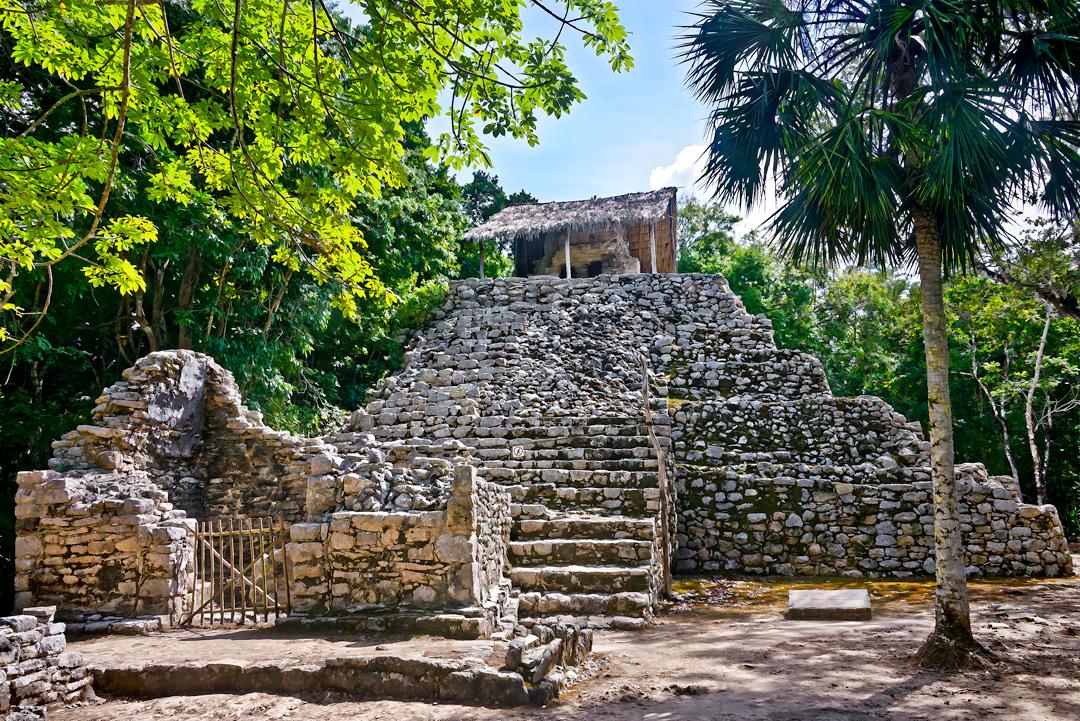 | Coba Ruins had many buildings along a network of sacbes (roads). | This is a sacbe, an intricate and efficient network of roads through the jungle built centuries ago. | This is an example of a Mayan ball court. Notice the small ring or hoop in the middle of the slanted wall. No one knows exactly how the game was played; however, it was known that a ball had to go through the hoop. | |
Above and below: Nohoch Mul, the tallest Mayan pyramid in the Yucatán. | |
A rope was used to assist in climbing Nohoch Mul. | The view of the jungle from the top of Nohoch Mul. | |
The second tallest pyramid at Coba. | |
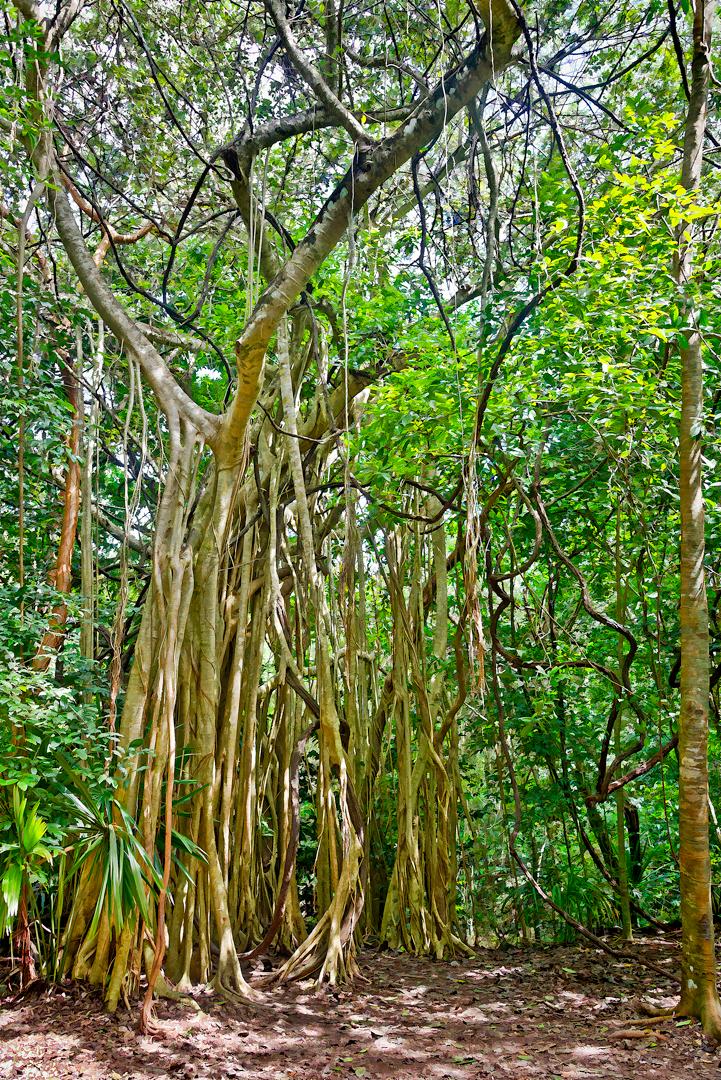
I was fascinated by the jungle foliage. | |
ADO gave us 3 hours at the ruins before returning to Tulum, which was perfect. Before hopping back on the bus, we looked for a spot to swim in the lake next to the village of Coba. It is a pretty big lake, so we didn’t get around to the other side, but we couldn’t see a beach area, yet I read somewhere that swimming was available.
It was late afternoon when the ADO bus dropped us back off at the Tulum station. It was just about time for El Aserdero to open. This was the upscale restaurant that Barb had recommended, but it had the 30-minute waiting time on the evening that we arrived. It turned out to be a family-owned and operated business, and the owner was, rightfully, very proud of his business and took a personal interest in our story.
We ordered one plate of beef tacos to split, and it was nothing short of the best I have ever eaten. Gourmet tacos might sound like an oxymoron but not in this case. The tender grilled beefsteak strips, piled high on the plate, melted in your mouth. There were four of the best sauces I have ever put on a taco, including a white sauce made of sweet cream and some incredible spice, a Mayan achiote sauce, and a couple of hot picantes. You wrap this up in the 20 or so hot tortillas that come with the dish. Even the homemade tortilla chips were top-notch. We wandered the streets a bit more and then turned in early.
| |
DAY 7 – Friday, February 9, 2018
BEACH DAY
After a lazy morning, we went to the colectivo stand that was supposed to be for the beach area. Little did we know that a couple of different colectivos operated from this stand. Sure enough, we got in the wrong van. I immediately knew something was wrong when the van took off in the opposite direction. We quickly hopped off and returned to the colectivo stand.
Wiser, we correctly picked the beach van this time, but again, we had to learn the hard way. The road to the beach is 3 kilometers long. The road comes to a “T” intersection when it reaches the ocean. To the left or the north fork, the road goes to the public beach area we enjoyed the first day. To the right or south fork, the road passes miles of private gated hotels with very little access to the beach.
The colectivo only takes the south fork because it is mainly for the hotel workers to get to their jobs. These hotels are not Miami-style high-rise hotels. They are tiny buildings that blend in nicely with the jungle surroundings. Some are “eco-style” hotels. But, unlike the funkier bungalow rentals on the northern beach, these are all expensive, exclusive places where the general public just isn’t all that welcome without, maybe, forking out $6 or $7 US for a beer.
Embarrassed, we had to ride the colectivo back north toward the fork. We did find one small public access to the beach on this southern stretch and hopped out of the van. Sadly, the day was beginning to turn stormy. The wind was howling, and the surf kicked up to the point that it was washing chunks of weeds up on the beach. Also, some ominous-looking rocks were sticking up in the water.
So, we started walking north. We knew that, eventually, we’d reach the Public Beach. We did find one very narrow access between two hotel compounds that was a designated public access; however, when we reached the beach, it was a small piece of sand wedged between two walls of rocks – pretty, but essentially a tiny private beach shared by two hotels.
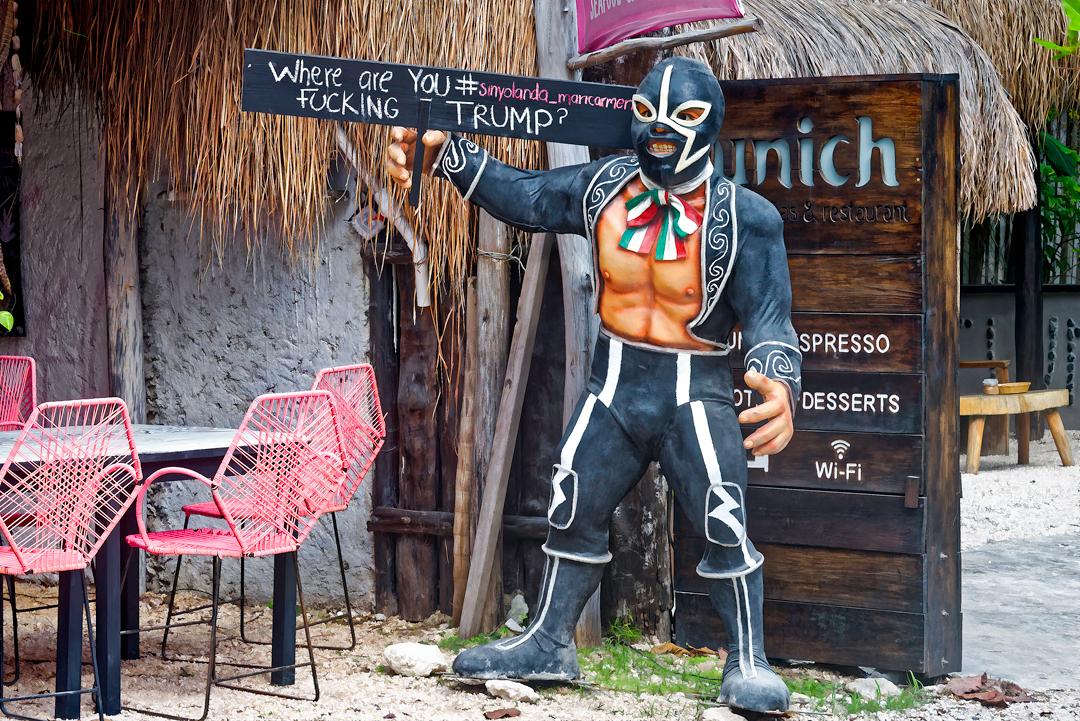
| 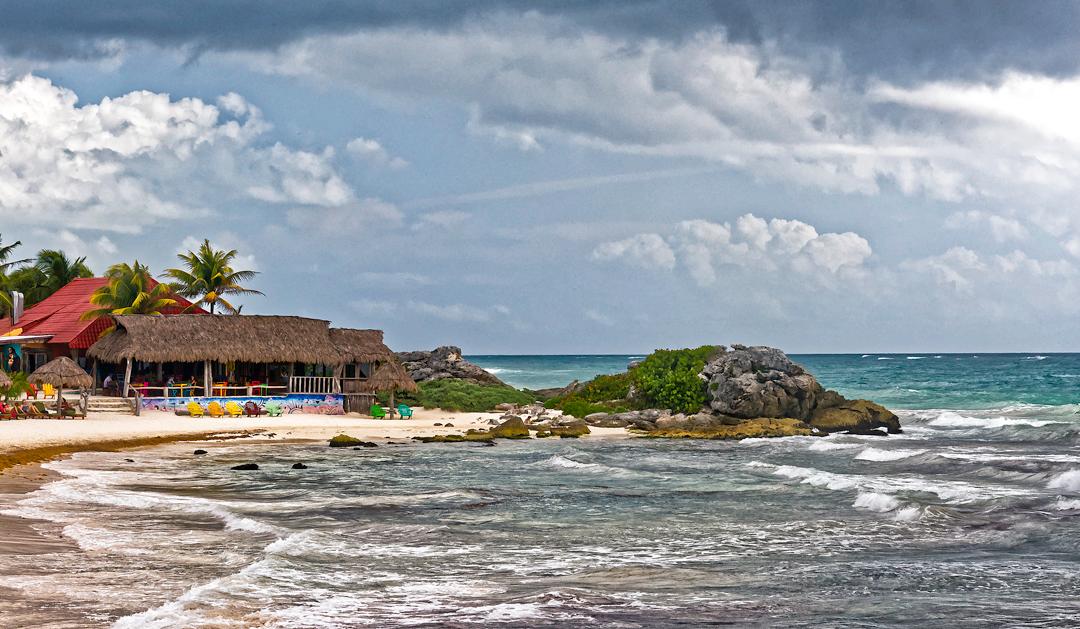 | This small beach was filling up with seaweed. We decided to skip it and walk another kilometer to Playa Publico. | Trump was not popular in Mexico. We also noticed this in Puerto Vallarta last year. | |
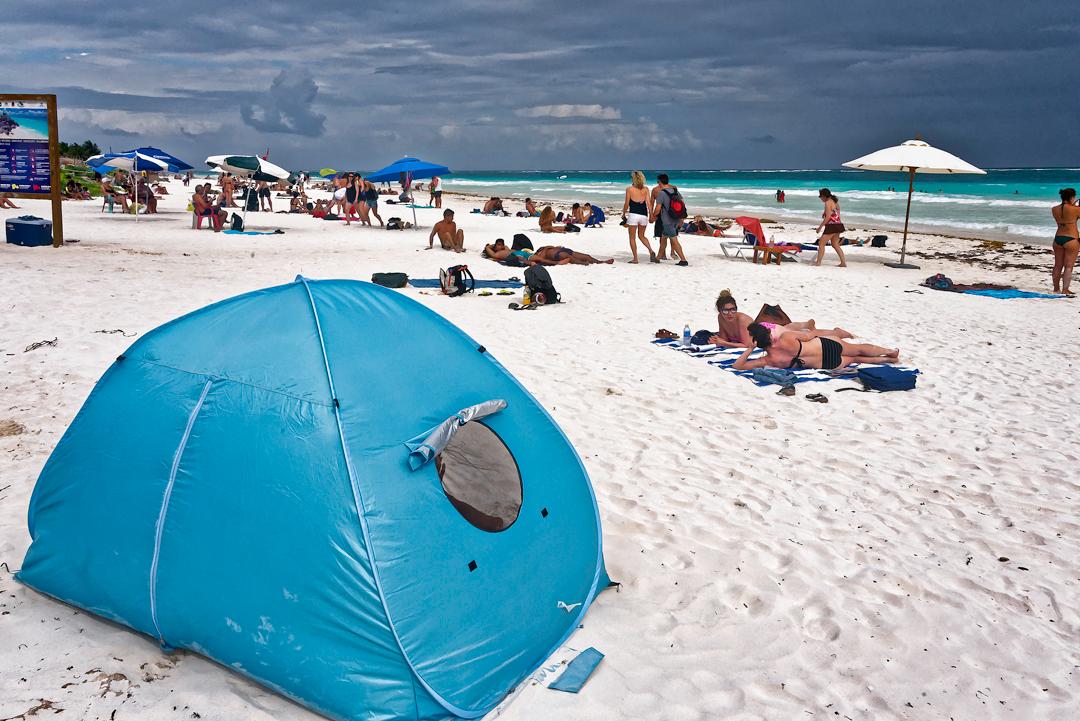
We kept walking north and finally reached the beautiful Playa Publico (public beach). By this time, the sky was turning black, especially in the eastern and southern sky. However, it looked like the worst of it would slip past us to the south, so we popped open our little popup sun-tent, staked it down, and jumped into the surf to play in the waves kicked up by the stiff breeze. Again, a couple of topless ladies and a multitude of thronged women entertained me.
It occasionally sprinkled, and occasionally the sun would find a hole in the clouds to peek through. The air was warm, and the water was pleasant. The southern sky turned very black, and we heard a few thunder rumbles, but it was all slipping past us.
Suddenly, the wind shifted 180 degrees, and within minutes the southern black was barreling down on us. Popping open the popup sun-tent was easy, you just gently toss it in the air, and it opens. Folding it up is another matter. With the rain racing our way, we were frantically trying to fold the sun-tent up and it wasn’t going well. Finally, we just jammed it, with about a ton of sand, into the bag and ran for a taxi. Just as we jumped in the taxi, the sky opened up with a deluge. This turned out to be only one of two days of rain we had the whole month.
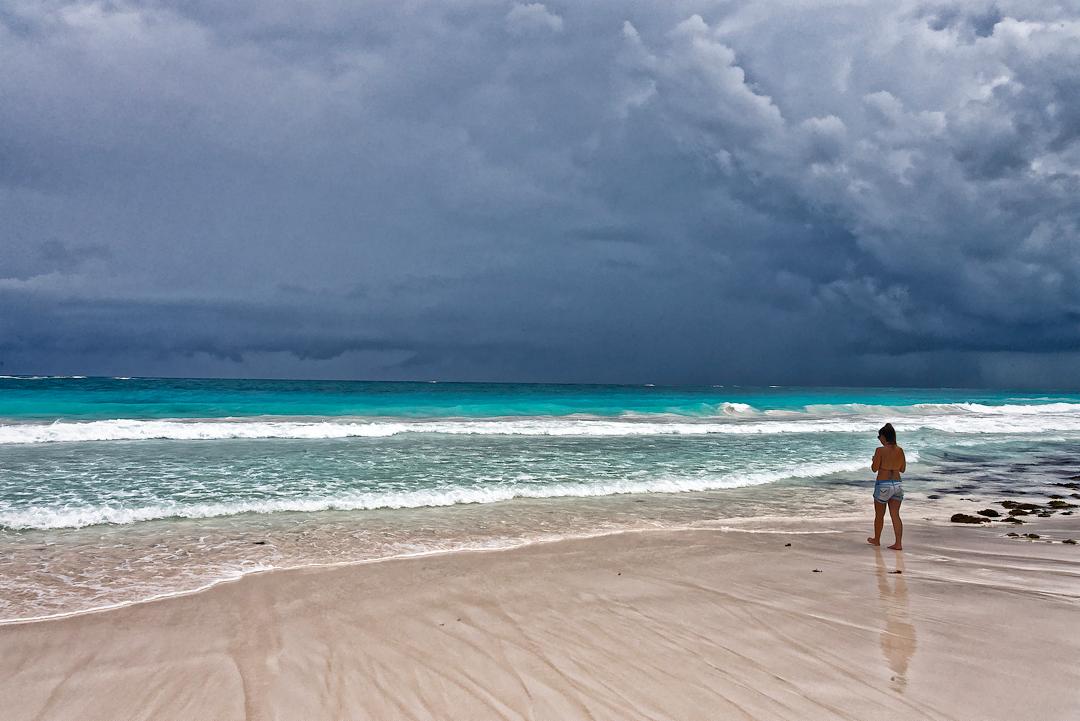
| 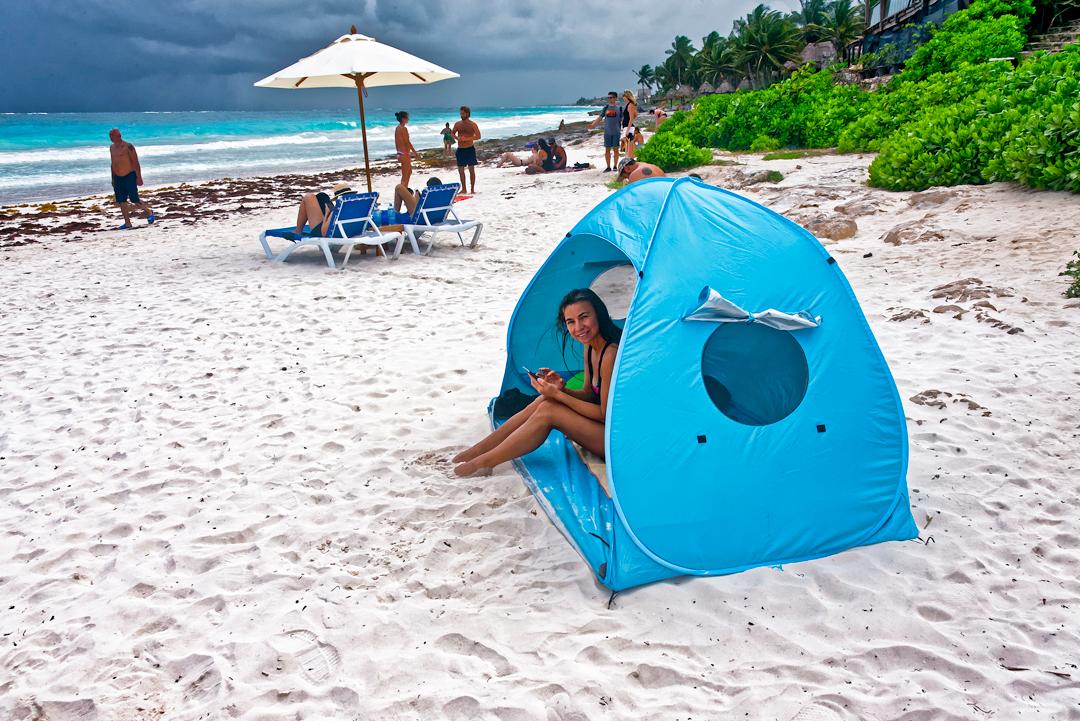 | The sun didn't stay out very long after popping up our sun-tent. The sky turned ominously black. | When the sky turned this black, we frantically tried to take down the sun-tent. This was a challenging task. Pop-up tents pop up quickly, but they don't pop down easily. There is a trick that takes a lot of practice to master. We lacked that practice. Gusting wind and the oncoming rain didn't help. | |
|
The rain had slowed to a light sprinkle when we reached our Airbnb. It was close to supper, so we ate at Barb’s El Gourmet sandwich shop. We split a foot-long Lulu sandwich and a strawberry/guava drink. Both were delicious.
Soon, the rain completely stopped, and we walked to Chedraui for more pastries and extra sunscreen. Just before bed, we packed for our trip to the next Airbnb in Valladolid.
| | | | |