|
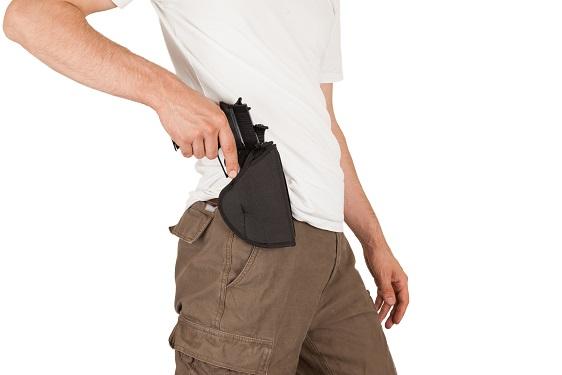
On September 10, 2025, the First District Court of Appeal in McDaniels v. State of Florida ruled, contrary to the Florida Supreme Court’s 2017 decision in Norman v. State of Florida, that 790.053, Florida Statutes (Florida’s “Open Carry Ban”), enacted in 1987, was unconstitutional.
Prior to this case, Norman had upheld the Open Carry Ban, which stated it was “unlawful for any[one] to openly carry on or about [their] person any firearm or electric weapon or device,” except to “briefly and openly display the firearm to the ordinary sight of another person,” where the display was “[not] in an angry or threatening manner” or “in necessary self-defense.”
In McDaniels, however, a three-judge panel of the First District Court of Appeal—the appellate court with jurisdiction over thirty-two Florida counties—held the Open Carry Ban unconstitutional, opening the door to open carry throughout the state of Florida. It remains possible that another Florida appellate court may rule differently setting up the potential for review by the Florida Supreme Court. In the meantime, Florida Attorney General James Uthmeier issued guidance advising that open carry should be considered lawful throughout the State of Florida. Furthermore, the Florida Sheriffs Association, composed of sixty-seven county sheriffs in Florida, has advised deputies that they should no longer enforce the prior Open Carry Ban, except in situations where exclusions apply, or conduct is inconsistent with permitted open carry.
The McDaniels decision has raised many questions about how it may impact private property owners. Below is a summary of some of the issues and this author’s point of view. Of course, the conclusions here may be affected by further appeals or other changes to the laws approved by the Florida legislature and governor from time to time.
Can HOA’s, Condos and Cooperatives Still Prohibit Firearms in Common Areas? Yes — and Here’s How
Many community association boards are asking whether they can adopt rules or amendments to keep guns out of their shared spaces. The answer is yes: associations retain the authority to regulate possession of firearms in their common facilities.
Authority of HOA’s, Condominiums and Cooperatives
- Private Property Rights
- Common areas such as clubhouses, gyms, pools, and meeting rooms are the Association’s private property. Just like a business can set conditions for entry, Boards may adopt reasonable rules or amendments prohibiting firearms in these spaces.
- Preemption Does Not Apply: Florida Statute § 790.33 preempts cities and counties from enacting firearm regulations. But this statute does not restrict private property owners—including associations. Boards may enforce “no firearms” rules in common facilities without running afoul of preemption.
- Parking Lot Exception: One important limit: under Florida Statute § 790.251 (the “parking lot law”), owners, residents, and guests may keep lawfully possessed firearms locked inside their vehicles parked on Association property. Rules cannot override this statutory protection.
Practical Steps for Boards
- Adopt a clear rule or amendment prohibiting firearms in common areas (but not private units). Amending your declaration or bylaws is preferred over a board-made rule since board-made rules are subject to more scrutiny for whether they are reasonable than are amendments to the declaration or bylaws.
- Post conspicuous signage at entrances to common facilities to provide notice.
- Train staff or security to handle violations consistently: request compliance first, then treat refusal as a violation and proceed consistent with procedures for all other violations.
Associations should consult with their legal counsel to help prepare rules or document amendments which are consistent with Florida law if the Board wants to limit open carry of firearms in common facilities.
|