|
Last Interest Rate Cut of the Year
Hello Wanda,
As was widely expected, the Federal Reserve Bank ended its last FOMC meeting of the year with a third-straight interest-rate cut of 25 bps, bringing the Federal Funds Rate down to a range of 4.25%-4.5%. With this decision, the Fed has reduced borrowing costs by a full percentage point over the last three meetings, the steepest series of reductions outside of a crisis since 2001.
However, it may be some time before we see another rate cut as the Fed adjusts its policy in line with current economic indicators, particularly inflation, which seems to have stalled short of the institution’s targeted 2% rate. Meanwhile, the labor market has proved resilient, with payrolls growing by an average 173,000 over the last three months and wages rising. The unemployment rate ticked to 4.2% in November but remains low by historical standards.
“As we think about further cuts, we’re going to be looking for progress on inflation,” said Fed Chair Jerome Powell during the press conference following the announcement. “We have been moving sideways on 12-month inflation.”
With much uncertainty on the economic scene in the months ahead, the Federal Reserve Bank remains cautious. “It’s kind of common sense thinking that when the path is uncertain, you go a little bit slower,” added Powell. “It’s not unlike driving on a foggy night or walking into a dark room full of furniture. You just slow down.” Officials now foresee their benchmark rate reaching a range of 3.75% to 4% on average by the end of 2025, implying two quarter-percentage-point cuts instead of the previous expectations of four cuts.
How Does This Affect Homebuyers?
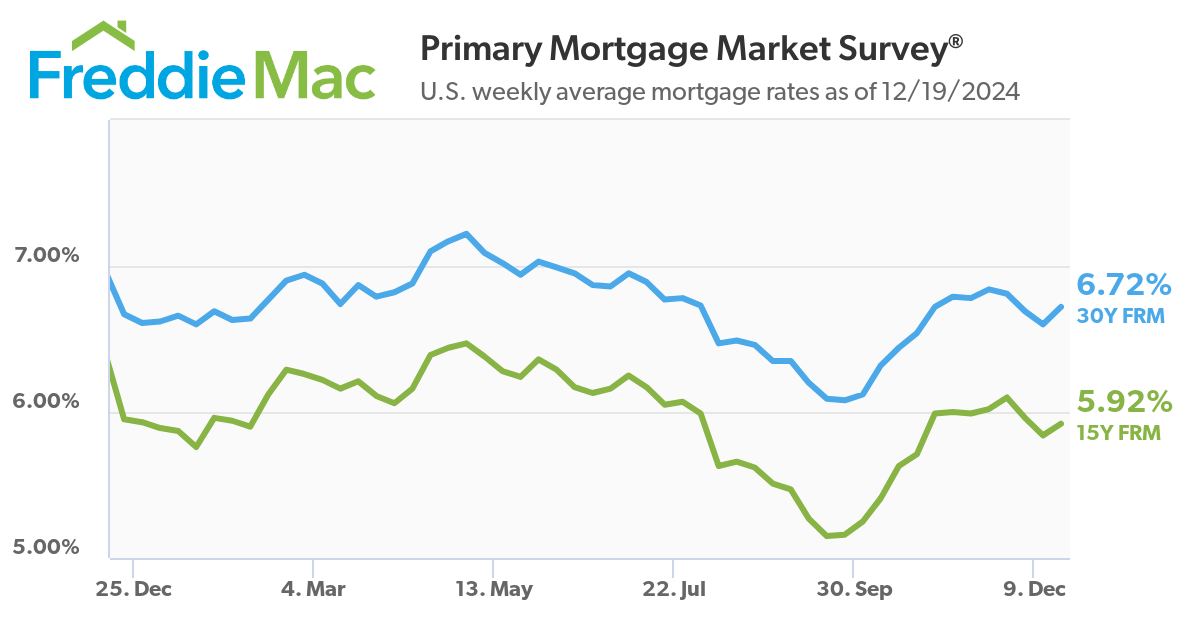
This is likely not the news that aspiring homebuyers were hoping to hear. However, the mortgage rate reaction following the Fed’s announcement proves that the variations in the institution’s lending rates are far from the only factor determining how much borrowers can expect to pay in interest. The 30-year fixed mortgage rate climbed to 6.50%, while the 15-year fixed rate rose to 5.84% for the average borrower.
This is because lenders care more about the general direction taken by the economy than individual rate cuts. Most lenders had already slashed their mortgage rates in anticipation of the first rate cut in September. In addition, with the lending rate predicted to remain higher for longer, mortgage rates are expected to be more stable and, therefore, more easily traded in the secondary market. However, would-be borrowers can still get the more advantageous rates by improving their credit score and debt-to-income ratio.
We will be on break for the next two weeks and will resume on January 10th. We wish you and your loved ones a very pleasant holiday season.
|