|
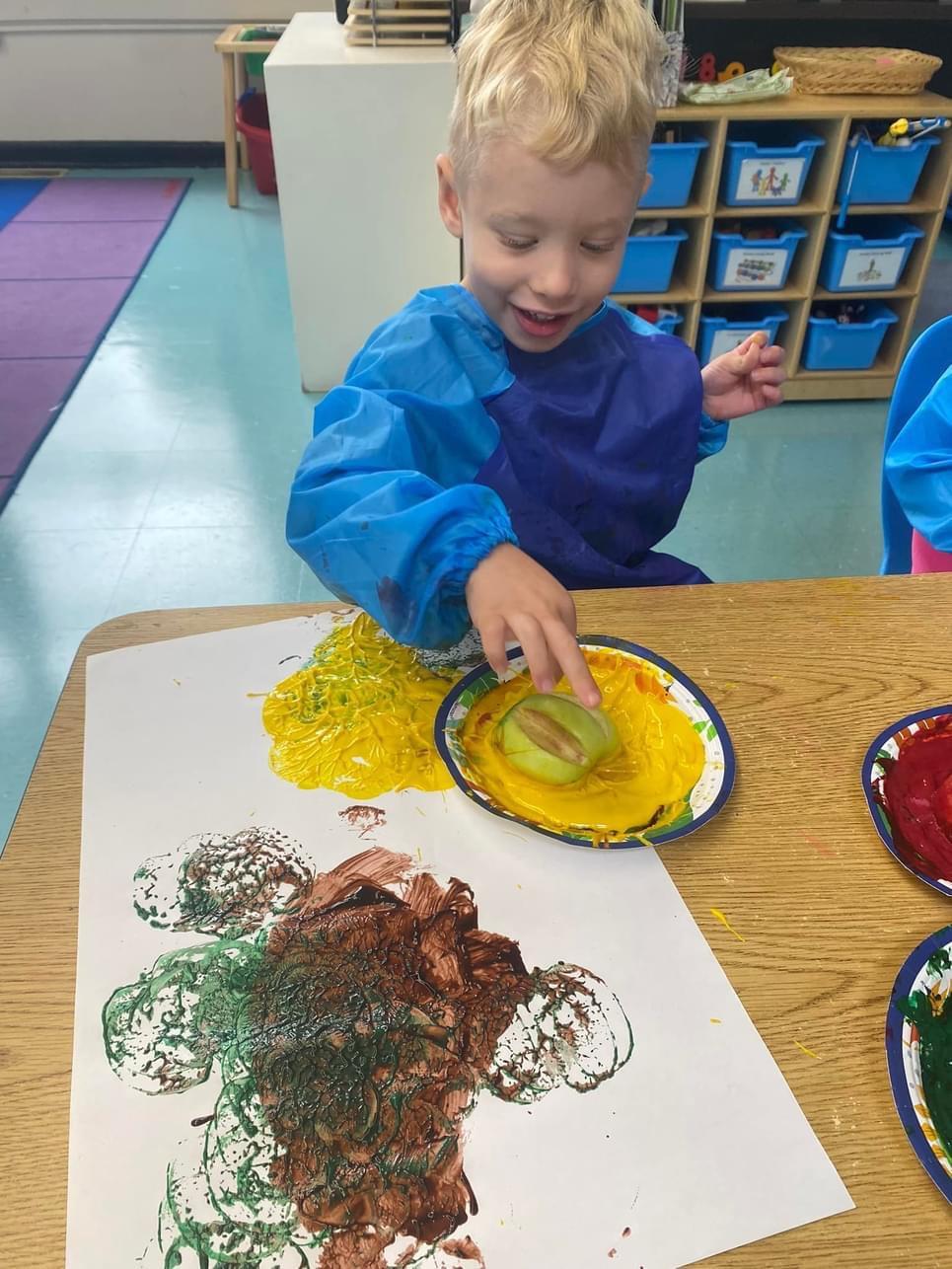
It’s difficult to supervise children in a way that is non-judgmental, especially when it comes to artwork. It means not making a big deal over what children have created, while providing positive conditions under which they can work and stay involved in the experience. As educators, we’re conditioned to tell young children that their work is “beautiful” or “fantastic.” According to an article in Edutopia by Annet Weterings and Sabine Plamper, children who hear these comments become dependent on your opinion. The goal for educators should be to help children follow their interests while doing research and working to make discoveries.
The authors suggest being mindful of disturbing concentration. This allows for extended interaction between students as well. They warn to stay away from asking, “What are you making?” Children will let you know what they are making at their own pace. They shouldn’t stop to answer questions in the middle of their processes. Try not to compare the children’s work with that of their peers. Additionally, you shouldn’t direct by saying what you think the project should be or defining the intention. As tempting as it might be, educators shouldn’t interfere with a child’s work by drawing on it or sticking clay on it somewhere; they should also avoid giving pointers. “Children are in charge of their own work!”
Weterings and Plamper suggest that it’s useful to know how and when to ask questions. They say a valid question is: “Would you like to tell me something about it?” Children may choose not to explain what they are doing. Instead, educators can offer help with a question like: “Do you need anything else?” Consider offering a challenge or the opportunity to solve a problem: “How would it be if you…?” or “What could you use to make that?”
Educators can affirm what children are doing: “Boy, you’re working really hard.” You might also draw attention to the materials being used, while asking how they feel and what they look like. “Stay close to a child if they are having difficulty-do not underestimate the support your presence can provide,” say the authors. “A child will feel seen and acknowledged.
Frustrated children can be supported emotionally. Try not to demonstrate artistic techniques for them, and encourage them to visualize their thoughts creatively. You shouldn’t show them how to draw things, as it “can provoke an unequal relationship with the child.” Encourage children to help one another. Educators should stand beside children as they work. “We create an atmosphere of equivalence by sharing their curiosity,” say the authors. “This kind of process only works if the adult steps back from imposing their image of the world on children in advance.” Work with students to help them engage in dialogue with one another instead.
Click here to learn more about child-directed art exploration in Pre-K.
|