News and information to help journalists serve the public and stay safe.
|
|
L.A. Times to cut pay, begin furloughs
|
News organizations, already under budget strains before the pandemic, have lost ad revenue during the outbreak.
“Due to the unexpected effects of COVID-19, our advertising revenue has nearly been eliminated,” said Chris Argentieri, president and COO of the media group that owns the Times.
Gannett last month announced furloughs across its news operations and McClatchy announced it would furlough 4.4 percent of its job force.
|
|
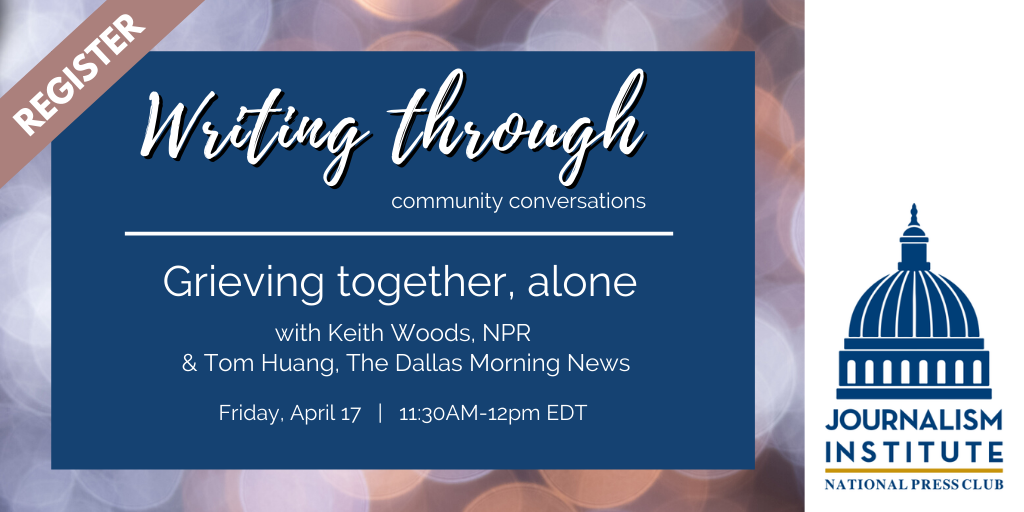
Join us on
Friday, April 17
to explore writing about personal loss in a time of collective grief.
Keith Woods
, NPR’s chief diversity officer, and
Tom Huang
, The Dallas Morning News assistant managing editor for journalism initiatives, will discuss their experiences with
“Grieving together, alone”
and take questions from 11:30 a.m. to noon.
|
|
Editorial cartoonists are known for their whip-smart ability to, in a single image, “pick a fight.”
But, says
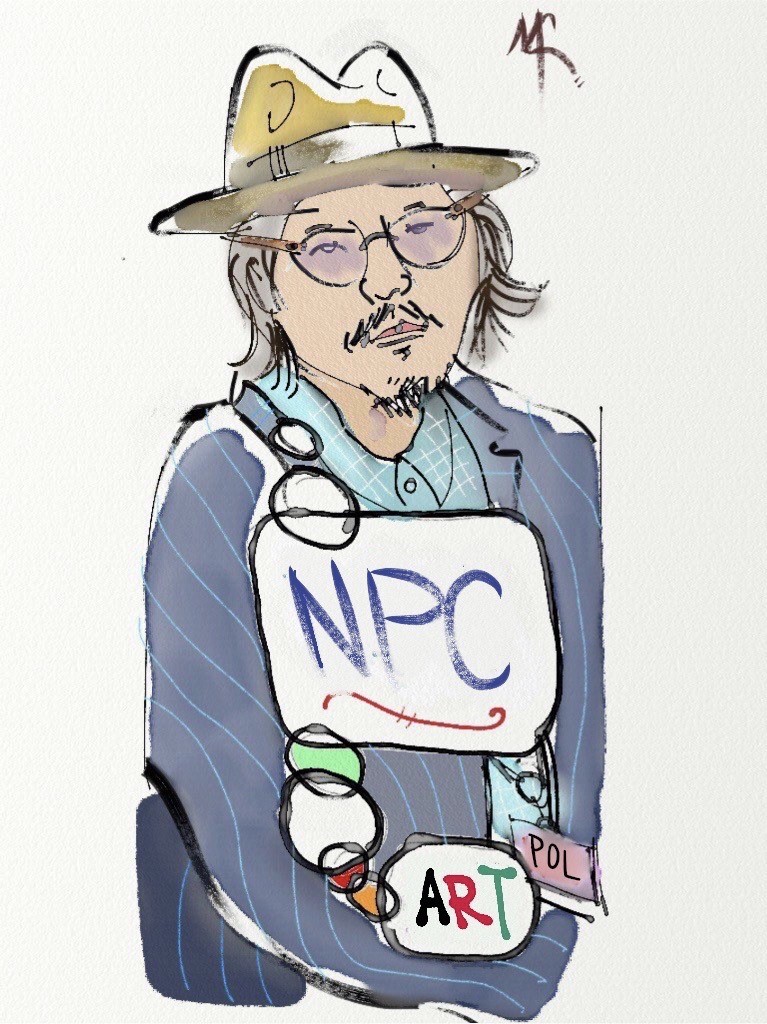
Michael Cavna
(shown in this self-caricature)
of The Washington Post, “emotional uplift” has its place in the political cartoonist’s repertoire. “In times of national or global crisis, cartoonists will break out the triumphant trumpets occasionally between their Bronx cheers — and we have countless heroes to spotlight in this current virus crisis.”
We reached out to Cavna, whose
“Comic Riffs” column
runs in The Post’s Arts & Style section. He covers everything from cartoons to comic culture and has been keeping up with artists and their work during the pandemic.
What’s important for readers (and editors) to know about the work this community of artists and illustrators creates?
Cavna
: Political cartoonists strive daily to provide an entertaining and thought-provoking moment of illuminated truth in a fresh way — that you might generally spend fewer than 30 seconds on. Hours and hours go into this snippet of reading experience — and the best cartoonists make the result look effortless.
How can artists and illustrators balance humor in their work with the global uncertainty that lies ahead?
Cavna
: Humor as a tool contains multitudes — from subtle to blunt, from highlighted absurdity to skewered reality — and the pandemic contains so many battle fronts. In general, though, a cartoonist can rarely go wrong by smartly punching up at anyone in power who is failing us.
And any official who denies aspects of that “global uncertainty” — claiming to have too many of the answers too readily, or who doesn’t listen to the people who put him or her in power — is a plump beefsteak-ripe target for sharp humorous skewering.
What about an illustration makes it click — and stick — with readers?
Cavna
: The secret behind most effective political cartoons is rooted — as with any worthy high-proof concoction — in the distillation.
A strong image has the first benefit of sheer speed: It registers so quickly that it bypasses all those critical filters in the brain — the very filters that make straight prose get stopped and inspected by the sensitive TSA wand that is our prefrontal cortex.
A good cartoon sticks because its message — its clear point of view — makes us experience this synthesized idea in a new way, even if we don’t agree with it. We laugh or we wince or we gasp — the reaction of someone sitting ringside at a high-contact pie-fight.
Read on
to learn how cartoonists are shifting gears, tips for staying creative in isolation and how communication is important to self-care.
|
|
Race
: “With respect to COVID-19, it’s important to understand why some populations have been more vulnerable than others. It’s not enough to report the numbers, journalists need to probe for reasons. They need to develop coverage that reflects the systemic issues that color American society. For example, while Black people make up about 30 percent of
Chicagoans
, they make up 72 percent of COVID-19 deaths. Same thing in
Milwaukee County, Wisconsin
, where black people account for about 26 percent of the population, but more than half of all COVID-19 cases. And in
Charlotte, North Carolina
, which is 32.9 percent black, black people accounted for 44 percent of confirmed cases.”
Class
: In “New York magazine’s March 10 article “
The Coronavirus Puts the Class War Into Stark Relief
,” reporter Sarah Jones looked at the difference in decisions to close schools made by private and public educational institutions. In Missouri, an all-girls Catholic school was prompted to close after a man violated quarantine orders and took his daughter to a school gala, possibly exposing others to COVID-19. Jones pointed out that some schools can make the decision to close school easier than others. Families with means can handle a closure, while it puts a strain on working-class and middle-class families.”
Gender
: “This week, there were many stories about how men in New York City were dying at a higher rate from COVID-19 than women. This
New York Times story
talked about how similar rates of death were found for men in Italy and China. A bunch of stories about this disparity could be found across multiple platforms. I wonder, however, if more women were dying than men, would their deaths receive the same amount of coverage? To take this one step further, if more women of color than men were dying, what kind of coverage might they receive?”
|
|
|
Bill Plante Chair in Leadership & Media Integrity, Loyola University Chicago
Freedom Forum Fellow in Women’s Leadership
|
|
|
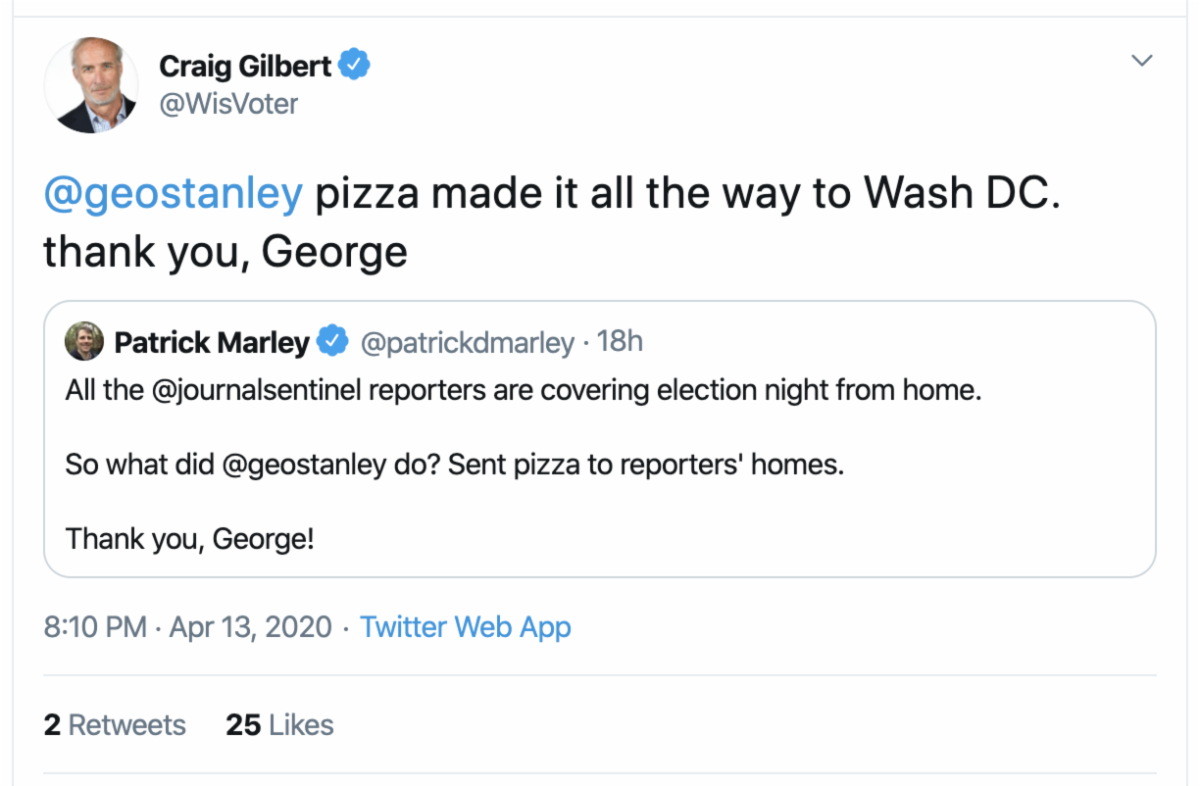
A tip of the hat to my friend
George Stanley
, editor of the
Milwaukee Journal Sentinel
, whose team has been beyond busy covering both COVID-19 and the roller coaster of Wisconsin’s spring primary. When it comes to showing appreciation for a job well done, this guy delivers.
|
|
Self-Care: Give a little, get a lot
|
Call it the helper’s high.
Whether volunteering is a regular activity on your schedule, or you find time when you can, you might be missing that positive feeling you get when you give your time and talent to someone in need.
Here are ways you can help others from home:
- Become a “senior angel.” Write letters to residents of nursing homes in your area. (Here’s one example.)
- Buy meals for or send thank-you emails to first-responder agencies, grocery store managers and government agencies still in operation. Hint: Remember to ask them to share your note with their employees.
- Sew face masks for your neighbors, or prepare a meal for a neighbor in need.
- Have a special skill? From copywriting to mobile app prototyping or performing social media audits, Catchafire.org matches you with an organization in need.
- Points of Light has created a clearinghouse for virtual volunteer opportunities.
Have you been training for a marathon or triathlon that’s been postponed due to COVID-19?
Tell us
how you are adapting your training plan.
|
|
|
This newsletter is written & edited by the National Press Club Journalism Institute staff: Beth Francesco, Holly Butcher Grant, Jim Kuhnhenn, and Julie Moos.
Send us your questions and suggestions
for topics to cover.
|
|
The National Press Club Journalism Institute promotes an engaged global citizenry through an independent and free press, and equips journalists with skills and standards to inform the public in ways that inspire civic engagement. Support our important work with a tax-deductible contribution today.
|
|
|
|
|
|
|