Sasakawa USA Newsletter June Highlights | |
|
Included in this issue of the newsletter:
- Message from Sasakawa USA's Chairman Satohiro Akimoto
June Activities
- Congressional Study Group on Japan (CSGJ): Chief of Staff Study Tour to Japan
- US-Japan NEXT Alliance Initiative: Mapping the Future of U.S.-Japan Cybersecurity Cooperation
- Washington Kenkyu Group: Discussion with Mr. Saburo Takizawa
- Sasakawa USA Emerging Experts Delegation (SEED): Pre-Departure Briefing with Ambassador Melanne Verveer
External Engagements
- Mr. James Schoff Participates in War Games Scenarios at MIT
Publications
-
Commentary & Analysis: New Book Publication on Europe's Evolving Strategic Vision for the Indo-Pacific: Nine Perspectives (Various Authors)
Upcoming Activities
- Sasakawa USA Emerging Experts Delegation (SEED): 2023 SEED Women, Peace, and Security (WPS) Study Trip to Japan
Announcements
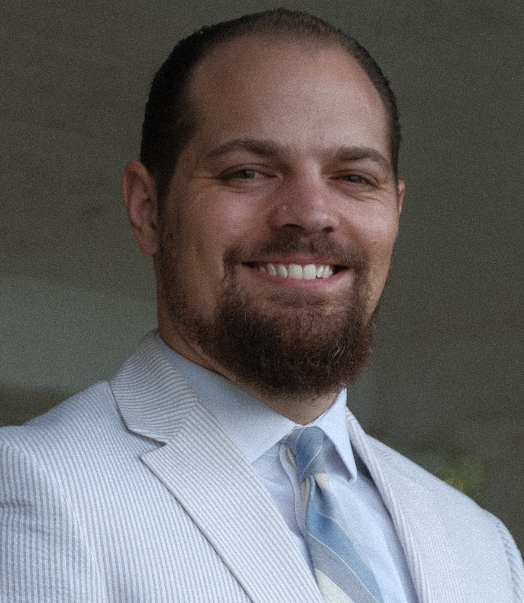
- US-Japan NEXT Alliance Initiative: Welcoming New Non-Resident Scholar Mr. Erik Jacob
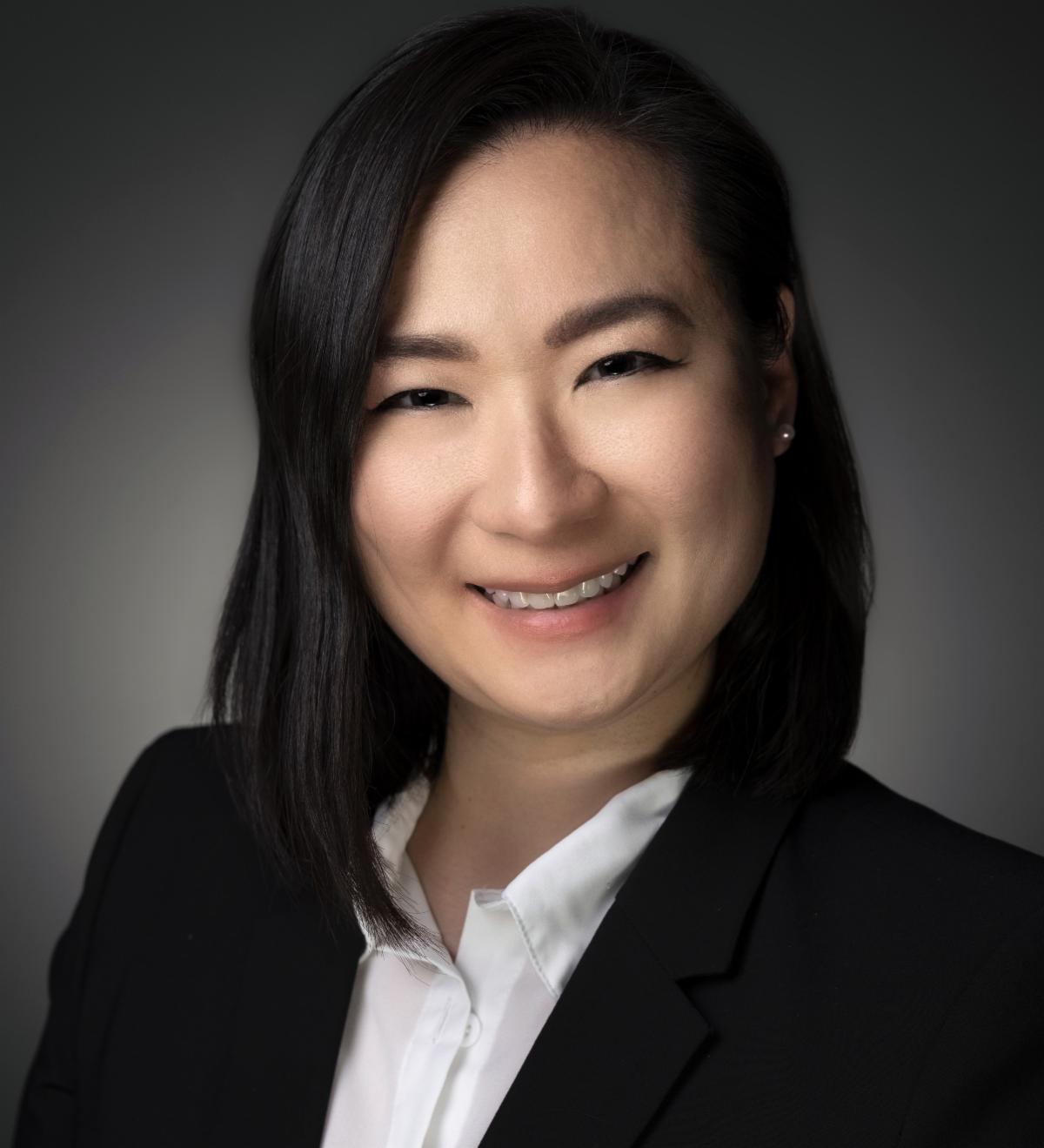
- US-Japan NEXT Alliance Initiative: Summer 2023 Intern Ms. Hanah Bloom
Featured Staff
| |
Message from Sasakawa USA's Chairman Satohiro Akimoto | |
|
At this time, we are witnessing a significant advancement in trilateral strategic cooperation among the U.S., Japan, and South Korea. The three countries seem to have begun deepening trilateral cooperation to promote a free and open Indo-Pacific to an unprecedented level. For example, U.S. Defense Secretary Lloyd Austin, Japanese Minister of Defense Yasukazu Hamada, and South Korean Minister of Defense Jong-Sup Lee agreed early last month on the fringe of the Shangri-La Dialogue in Singapore to activate a sharing mechanism to exchange real-time missile warning data before the end of the year to improve each country’s ability to detect and assess missiles launched in the Northeast Asia region.
Close strategic cooperation among the three countries in terms of diplomacy and national security are only natural considering the geopolitical environment and national security threats in the region. After all, the U.S., Japan, and South Korea are natural allies, as the three countries share common national interests in maintaining peace, stability, and prosperity in the region. But the strained relationship between Japan and South Korea has long prevented the creation of a trusted relationship among the three countries. To be fair, there have been some efforts made by cool-headed and future-oriented political leaders in both Japan and South Korea to improve the bilateral relationship beyond complicated and emotional historical issues. However, those efforts have failed to fundamentally change a framework of strategic dialogue between Japan and South Korea to go beyond the history issues. As a result, there has been a sense of pessimism even among the most realistic security experts and practitioners in both Japan and South Korea that the bilateral relationship between the two countries is forever troubled. However, there emerges a sense of optimism that this time may be different.
Prime Minister Fumio Kishida visited the White House in January to advance the U.S.-Japan security alliance, arguably the most important bilateral relationship in the Indo-Pacific, based on Japan’s new national security strategy. President Suk-yeol Yoon made a rare visit to Tokyo for a Korean president in March taking domestic political risk. Soon afterwards, President Yoon came to Washington as a state guest in April to mark the 70th anniversary of the U.S.-South Korea security alliance. In May, Prime Minister Kishida visited Seoul and President Yoon visited Hiroshima. At the G7 summit in Hiroshima, President Biden did not miss a beat and invited both Prime Minister Kishida and President Yoon to Washington this year. As Kurt Campbell, White House coordinator for Indo-Pacific affairs, recently suggested, the trilateral summit could take place around the end of August.
It is encouraging that Japan and South Korea have steadily been making concrete progress in their bilateral relationship following the G7 summit in Hiroshima. Japan’s Minister for Economy, Trade, and Industry Yasutoshi Nishimura announced on June 27 that Japan would reinstate South Korea as a preferred trading nation with so-called fast-track export status starting July 21. Additionally, Japan’s Finance Minister Shunichi Suzuki and South Korea’s Finance Minister Kyung-ho Choo met on June 29 in Tokyo, as the first such ministerial meeting of this kind since 2016. The two ministers agreed to resume a $10 billion currency swap deal, which was terminated in 2015. Furthermore, Japan Vice Minister for International Affairs Hirohide Hirai, and South Korea’s Trade Minister Duk-geun Ahn agreed on June 30 to strengthen ties in steel, energy, technology, and the overall economy. In short, Japan and South Korea have been making efforts to normalize bilateral relations by restoring arrangements between the two countries damaged by previously strained relations.
President Yoon deserves much credit in taking a political risk to normalize relations with Japan. He courageously announced the establishment of a fund—rather than following judgement by the South Korean Supreme Court—to force Japanese companies to compensate forced labor victims during World War II despite domestic opposition. President Yoon demonstrated strong statesmanship in saying at a cabinet meeting “Japan has changed from a militaristic aggressor to a partner that shares universal values with us and cooperates with us on security, economy, science and technology, and global issues.” Prime Minister Kishida’s initial reaction was measured, possibly based on his personal experience as foreign minister in the Abe administration that saw a “final and irreversible” comfort women settlement with South Korea flounder due to Korean domestic complications. However, Prime Minister Kishida eventually began reciprocating President Yoon’s rapprochement to stabilize and deepen relations with South Korea for common strategic goals of deterring and meeting challenges posed by China and North Korea.
President Biden also deserves credit in patiently working with both Prime Minister Kishida and President Yoon to build forward-oriented relations in alliance with the U.S. to meet serious challenges and threats in the region. He demonstrated political deftness in taking advantage of President Yoon’s presence at the G7 summit in Hiroshima to cement trilateral strategic cooperation by locking in progress made between Japan and South Korea. The upcoming trilateral summit in Washington would be the first gathering of leaders of these three countries not to be held on the fringe of a multilateral forum. There is much to expect from this historic trilateral summit this summer.
To be sure, the bilateral relationship between Japan and South Korea will continuously require careful and realistic management on both sides with a big-picture strategy in mind. A case in point is Japan’s planned discharge of treated radioactive water off the coast of Fukushima, which the International Atomic Energy Agency (IAEA) recently concluded is consistent with its safety standards. Although the South Korean government officially “respects” the IAEA review’s conclusion, public concern persists and President Yoon’s political opponents highlight fears that Japan’s discharge could be dangerous in terms of food safety, ocean environment, and thus human health. Prime Minister Kishida and President Yoon are expected to discuss this issue on the periphery of the NATO summit in Lithuania next week, as this and other bilateral issues require constant attention. Prime Minister Kishida and President Yoon have a historic chance to put the bilateral relationship on a fundamentally different trajectory.
| |
Congressional Study Group on Japan (CSGJ): Chief of Staff Study Tour to Japan | |
|
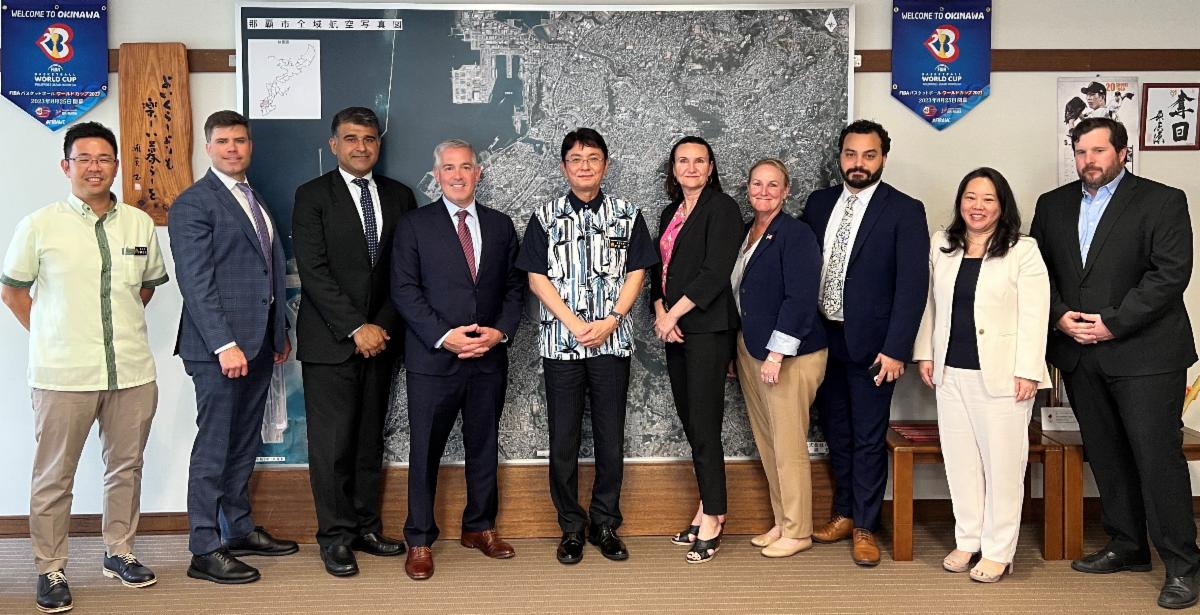
From May 27 to June 3, a bipartisan delegation of eight Congressional Chiefs of Staff traveled to Okinawa and Tokyo, Japan as part of the Congressional Study Group on Japan, a program of the U.S. Association of Former Members of Congress (FMC), which is supported by Sasakawa USA. The delegation met with political leaders such as the mayors of Naha and Urasoe in Okinawa, members of the Diet, officials from the Ministry of Foreign Affairs, and the U.S. Embassy to discuss geopolitical issues of mutual interest between the U.S. and Japan. The delegation members enjoyed opportunities to deepen their political, economic, historical, and cultural knowledge of Japan through meetings with government officials, professors, business leaders, journalists, students, and cultural experts in Tokyo and Okinawa.
Photo (L-R): Mr. Genta Koja, Vice-Mayor of Naha; Mr. Micah Ketchel, Office of Rep. Mike Waltz (R-FL); Mr. Robin Chand, Office of Rep. Rick Larsen (D-WA); Mr. James Langenderfer, Office of Rep. Brian Mast (R-FL); Mr. Satoru Chinen Mayor of Naha; Ms. Jess Carter, Office of Rep. Dan Newhouse (R-WA); Ms. Mary Rosado, Office of Rep. Andy Barr (R-KY); Mr. Patrick Mocete, Office of Rep. Young Kim (R-CA); Ms. Wendy Clerinx, Office of Rep. Jill Tokuda (D-HI); Mr. Jesse Connolly, Office of Rep. Chellie Pingree (D-ME)
| |
US-Japan NEXT Alliance Initiative: Mapping the Future of U.S.-Japan Cybersecurity Cooperation | |
|
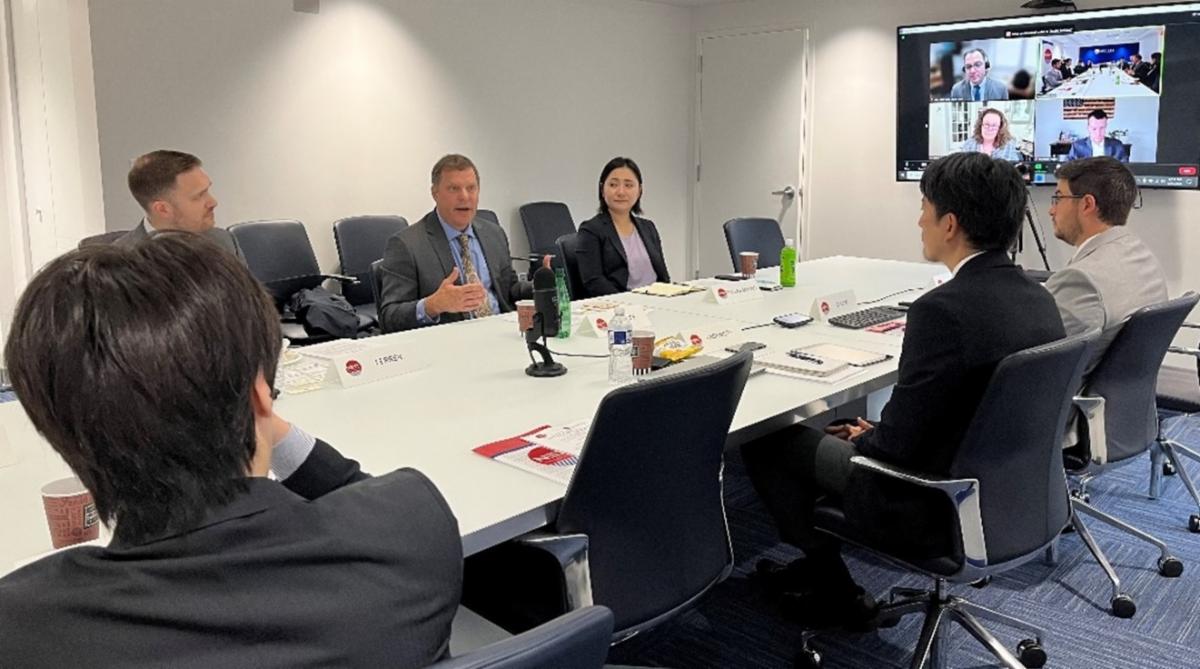
On June 21, the US-Japan NEXT Alliance Initiative hosted a hybrid roundtable dialogue on Japan’s pending cybersecurity reforms, featuring Mr. Taro Hashimoto of CSIS and NTT. After Mr. Hashimoto’s opening remarks, both government and industry stakeholders from the U.S. and Japan discussed Japan’s evolving cybersecurity infrastructure and implications for bilateral cooperation. Topics included recent developments in national strategies, interagency coordination, active cyber defense, and information sharing. The dialogue will support our Initiative’s efforts in producing a web-based interactive mapping tool to enhance mutual understanding of cybersecurity processes.
Photo: Mr. James Schoff (center) and discussion participants
| |
Washington Kenkyu Group: Discussion with Mr. Saburo Takizawa | |
|
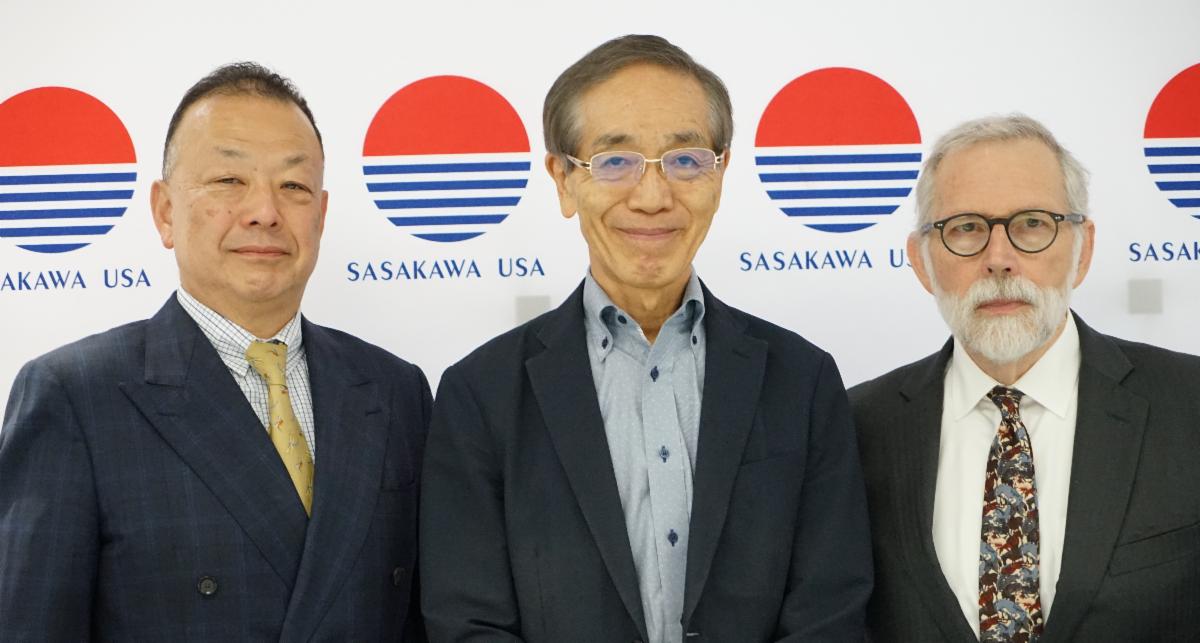
On June 20, Sasakawa USA welcomed Mr. Saburo Takizawa, professor emeritus at Toyo Eiwa University and former UNHCR Representative in Japan, and Dr. Peter Skerry, professor of political science at Boston College, to speak with the Washington Kenkyu Group on current responses to refugees and immigration in Japan and the U.S. respectively. The event was moderated by Dr. Akimoto, president and chairman of Sasakawa USA. Mr. Takizawa started the discussion with Japanese perspectives of immigrants and refugees, Japanese government management of migrants, and how the war in Ukraine has affected migrant policy in Japan. Prof. Skerry followed by contrasting similarities and differences between immigrants and refugees, as well as by addressing migrant related concerns and politics. The Q&A portion was informative for the largely media-based audience, as the session overall helped to bring some clarity to these important topics.
Photo: Dr. Satohiro Akimoto, Mr. Saburo Takizawa, and Prof. Peter Skerry
| |
|
Sasakawa USA Emerging Experts Delegation (SEED):
Pre-Departure Briefing with Ambassador Melanne Verveer
| |
 | 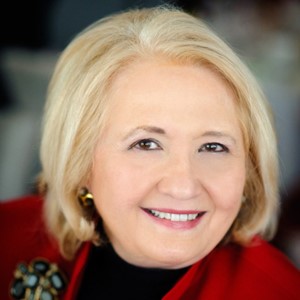 | On June 29, Sasakawa USA hosted the first virtual pre-departure briefing for participants of the 2023 Sasakawa USA Emerging Experts Delegation on Women, Peace and Security (WPS). The session featured Ambassador Melanne Verveer, former U.S. Ambassador-at-Large for Global Women’s Issues and Sasakawa USA Advisory Committee Member, who shared her perspective on the challenges and opportunities for the continued integration of WPS into Japan’s domestic and foreign policies. The delegates—whose expertise ranges from supporting WPS curriculum development, to spearheading the development of the U.S. Congressional caucus on WPS, to advising the State Department and Department of Defense on strengthening the link between gender and national security—participated in an engaging Q&A discussion with AMB Verveer moderated by Shanti Shoji, Director of Programs at Sasakawa USA. The delegation will continue to meet for virtual pre-departure briefings in the leadup to their trip to Tokyo, which will take place from July 24-29.
Photo: Ambassador Melanne Verveer
| |
Mr. James Schoff Participates in War Games at MIT | |
|
US-Japan NEXT Alliance Initiative Senior Director James Schoff participated in a U.S.-China economic conflict game organized by the new Wargaming Lab of MIT’s Security Studies Program from June 8-10. Mr. Schoff was part of a team that played the role of Japan, alongside teams for the U.S., China, South Korea, Taiwan, the E.U., United Kingdom, and India, all navigating an escalating crisis involving Taiwan. The game design kept military options mostly off the table, so players used diplomacy and economic measures to achieve desired outcomes and minimize the resulting economic pain and supply chain disruptions. The war game organizers will issue a report of their findings later this year.
Photo: Mr. James Schoff
| |
|
Commentary & Analysis: New Book Publication on
Europe's Evolving Strategic Vision for the Indo-Pacific: Nine Perspectives
| |
|
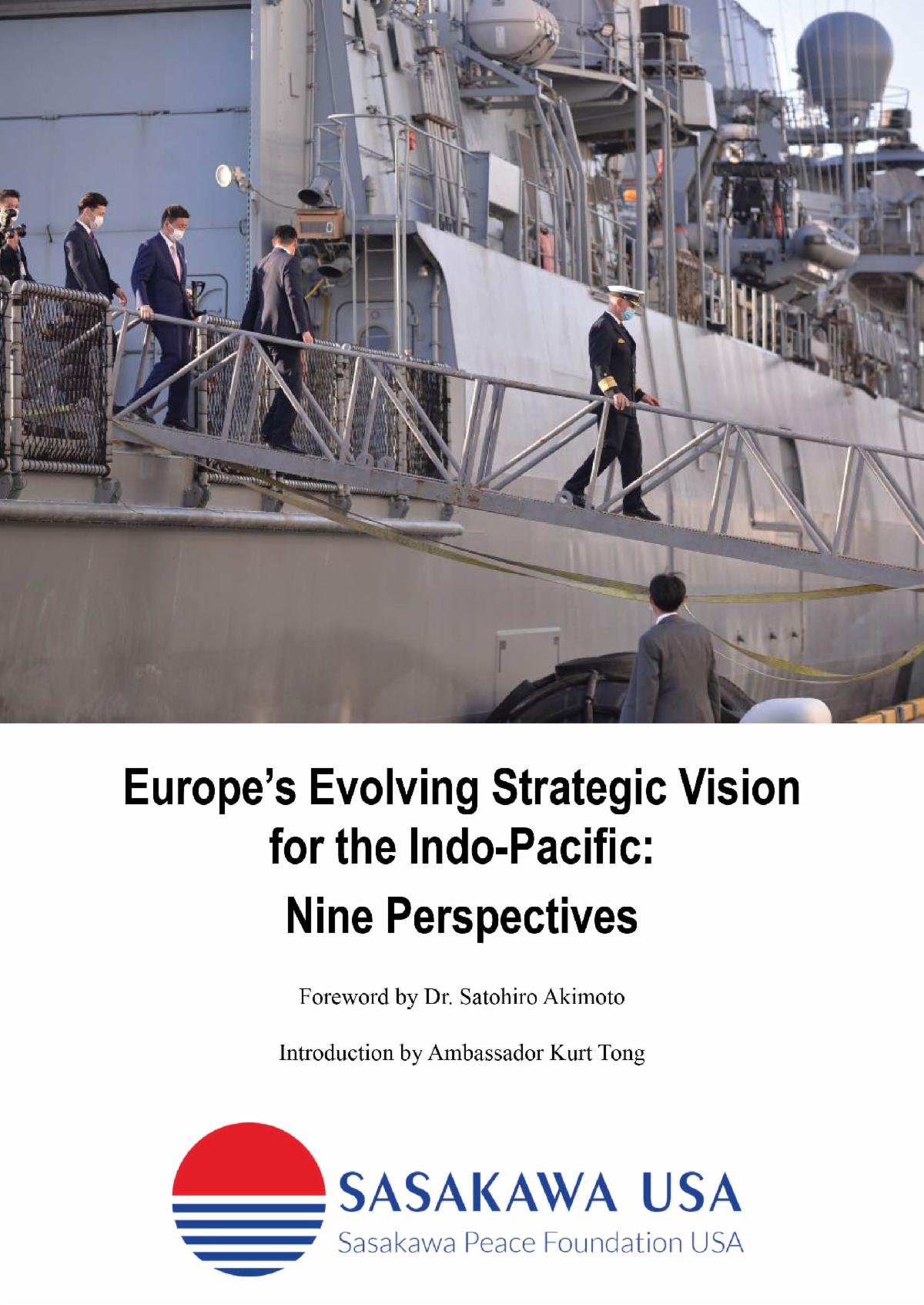
Sasakawa USA published a new book this month on Europe’s Evolving Strategic Vision for the Indo-Pacific: Nine Perspectives. This book is a compilation of nine chapters by scholars and experts who examined Europe’s current and future role in the vital Indo-Pacific region.
In Europe’s Evolving Strategic Vision for the Indo-Pacific: Nine Perspectives, the authors analyze Europe’s engagement in the Indo-Pacific and provide recommendations for Europe’s deeper involvement in Asia via the economy, diplomatic affairs, and security contributions. Key topics in the book include sustainable prosperity, the Green Transition, ocean governance, digital governance, connectivity, as well as defense. Europe’s Evolving Strategic Vision for the Indo-Pacific: Nine Perspectives features viewpoints from the European Union, France, Germany, the United Kingdom, India, ASEAN, Australia, Japan, and the United States.
Contributing authors to the book include:
-
Mr. Max Bergmann; Director of the Europe, Russia, and Eurasia Program and Stuart Center; Center for Strategic and International Studies (CSIS)
-
Mr. George Cunningham; Strategic Adviser on Asia-Pacific Affairs; European External Action Service (Retired)
-
Ms. Dini Sari Djalal; Associate Director of Editorial; Hinrich Foundation
-
Dr. Mathieu Duchâtel; Resident Senior Fellow and Director of International Studies; Institut Montaigne
-
Dr. Garima Mohan; Senior Fellow, Asia Program; German Marshall Fund
-
Ms. Susannah Patton; Director of the Southeast Asia Program and Asia Power Index Project Lead; Lowy Institute
-
Dr. Samir Puri; Visiting Lecturer in War Studies; King's College London
-
Dr. Angela Stanzel; Associate in the Asia Research Division; German Institute for International and Security Affairs (SWP)
-
Mr. Ryosuke Tanaka; Research Fellow in the U.S.-Europe-Russia Division, Regional Studies Department; National Institute for Defense Studies (NIDS)
Europe’s Evolving Strategic Vision for the Indo-Pacific: Nine Perspectives is a comprehensive and insightful look at practical steps Europe can take for meaningful contributions to the Indo-Pacific region, in addition to building an integrated Atlantic-Pacific future.
This book is available now on Sasakawa USA and will be available soon on Amazon Kindle. To request a printed copy of Europe’s Evolving Strategic Vision for the Indo-Pacific: Nine Perspectives, please email Sasakawa USA.
| |
|
Sasakawa USA Emerging Experts Delegation (SEED):
2023 SEED Women, Peace, and Security (WPS) Study Tour to Japan
| |
| |  | Sasakawa USA is pleased to announce the selection of eight delegates to participate in the 2023 Sasakawa USA Emerging Experts Delegation (SEED) program, which seeks to engage U.S. policy experts and opinion leaders to improve their understanding of Japan and U.S.-Japan relations within their area of expertise. This year’s program will focus on the theme of Women, Peace and Security (WPS) within the framework of the U.S.-Japan alliance. The theme was selected to build off of recent developments occurring in both the U.S. and Japan to advance the WPS agenda, which proposes a gendered perspective and advocates for women’s equal and meaningful participation in peacebuilding and national security contexts. The SEED program will bring a delegation of American WPS experts to Tokyo from July 24-29 for engagements with Japanese politicians, government officials, academics, civil society leaders, and media to exchange insights on how the United States and Japan can work together to mutually advance WPS in the alliance. Following their trip, delegates will produce individual reports synthesizing their trip findings and sharing recommendations for future U.S.-Japan collaboration on WPS. The full list of delegates can be found on Sasakawa USA’s website.
| |
US-Japan NEXT Alliance Initiative: Welcoming New Non-Resident Scholar Mr. Erik Jacobs | |
|
Mr. Erik Jacobs joined Sasakawa USA as a non-resident scholar for the US-Japan NEXT Alliance Initiative in June. He will provide research and analysis on technology, foreign policy, and national security challenges facing the U.S. and Japan, as well as policy coordination across the private and public sectors on issues such as supply chain security. Alongside his contributions to the NEXT Alliance Initiative, Erik is currently a non-resident fellow with the Global Taiwan Institute. He holds a master's in Asian Studies from Georgetown University, is an alumnus of the JET Program, and his professional experience includes work at the White House Office of Science and Technology Policy (OSTP) and the U.S. Department of Energy (DOE). The NEXT Alliance non-resident scholars and visiting fellows represent a select group of high-quality specialists who contribute regularly to Sasakawa USA's research and mission, with their writings featured on our website.
Photo: Mr. Erik Jacobs
| |
US-Japan NEXT Alliance Initiative: Summer 2023 Intern Hanah Bloom | |
| |  | Sasakawa USA welcomes Ms. Hanah Bloom as the US-Japan NEXT Alliance's first summer intern. Hanah is a rising senior at Miami University, majoring in political science and philosophy with a minor in Japanese, hailing originally from Montgomery, Alabama. For this new intern program, Sasakawa USA solicited applications from current undergraduate students from around the country with a demonstrated interest in U.S.-Japan relations and East Asian studies. Hanah’s strong academic performance and her focus on humanitarian and security issues in the Asia-Pacific region made her a top candidate. Reporting directly to Senior Director James Schoff, Hanah supports the NEXT Alliance Initiative projects related to mapping bilateral opportunities in cybersecurity, compiling a history of the alliance’s command and control arrangements, and assisting with the bimonthly Alliance Digest. Her 10-week internship is designed to both enhance the work of the NEXT Alliance Initiative and enrich Hanah’s academic and professional development so that she can further contribute to the alliance in her future career endeavors.
Photo: Ms. Hanah Bloom
| |
|
Hajimemashite! My name is Chie Zuniga, administrative assistant at Sasakawa USA. In January 2022, I joined Sasakawa USA and feel honored to work here because I am enthusiastic about strengthening the U.S.-Japan relationship.
Born and raised in Tokyo, since childhood I have been fascinated by American culture, especially music and movies. After studying English in college and abroad, I worked at the U.S. Embassy in Tokyo and with the U.S. Army Japan where I met my husband who is an active-duty service member. Now, we live in Washington, and I am thrilled to contribute to the Sasakawa USA team.
Sasakawa USA holds numerous events and conferences throughout the year, my favorite of which is the Japan-U.S. Military Program (JUMP) Annual Dinner. My husband and I have been honored to attend this annual JUMP event, where we have enjoyed connecting with Japanese and American service members and families with whom we share the experience of serving in Japan and working to strengthen the U.S.-Japan alliance. In addition, the annual JUMP event's guest speakers always captivate our attention as they share their perspectives as senior leaders.
There is an instant connection with my colleagues and leadership because we all believe in Sasakwa USA's mission. For instance, even during lunch, we have lively discussions about Japan and the United States, and sometimes we speak in Japanese so my colleagues can practice their Japanese language skills. I feel fortunate to be on the Sasakawa USA team and to contribute to the important work we do.
Photo: Ms. Chie Zuniga
| |
|
Sasakawa Peace Foundation USA
1819 L Street, NW
Suite 300
Washington DC 20036
202.296.6694
www.spfusa.org
| | | | |