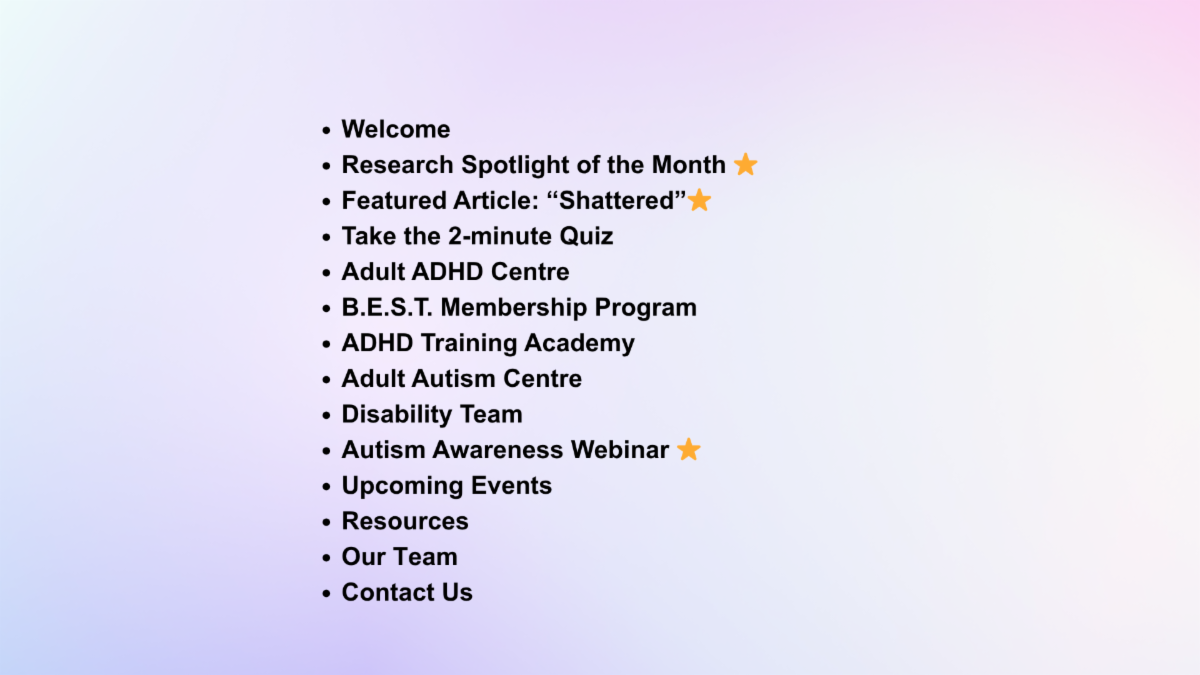
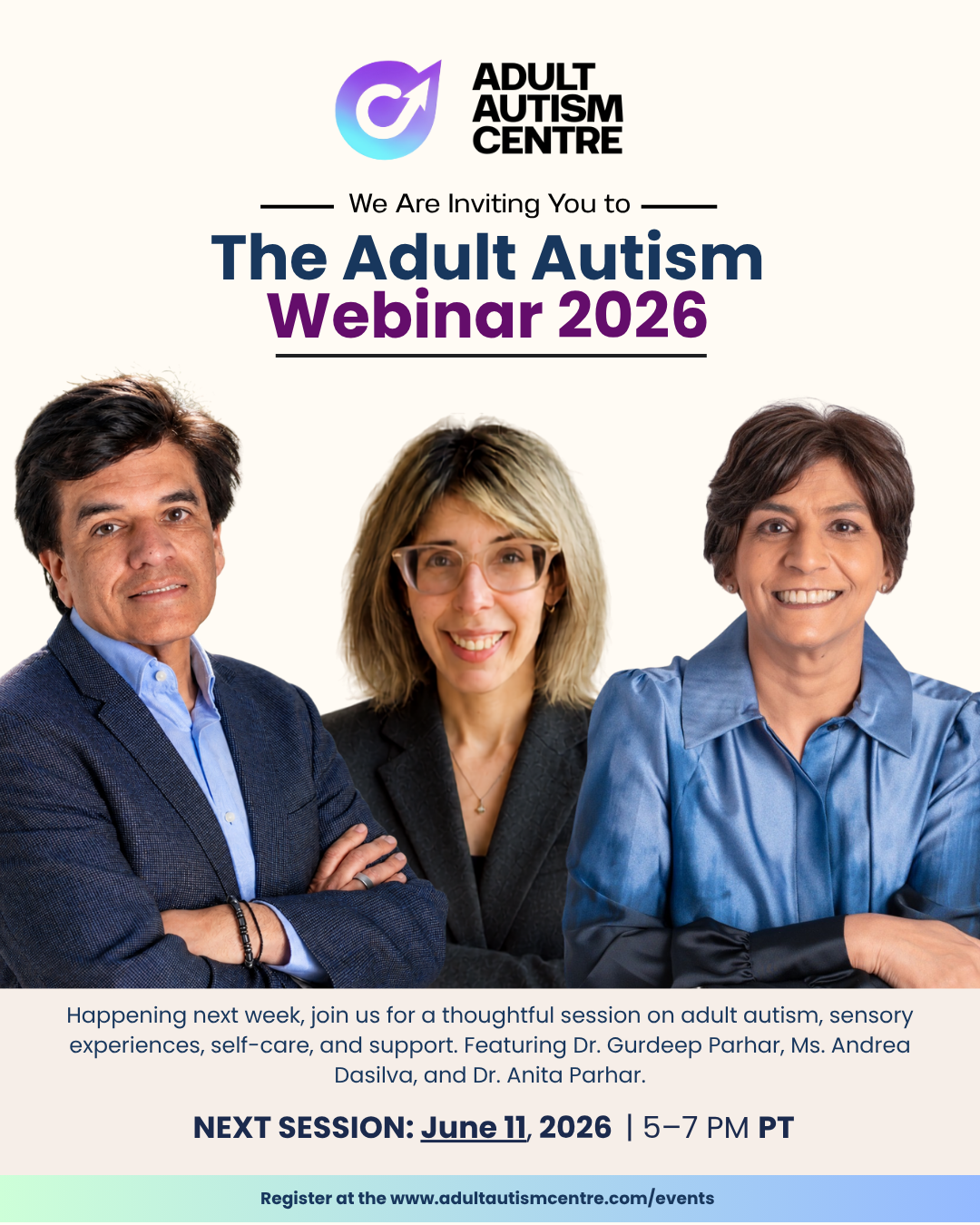
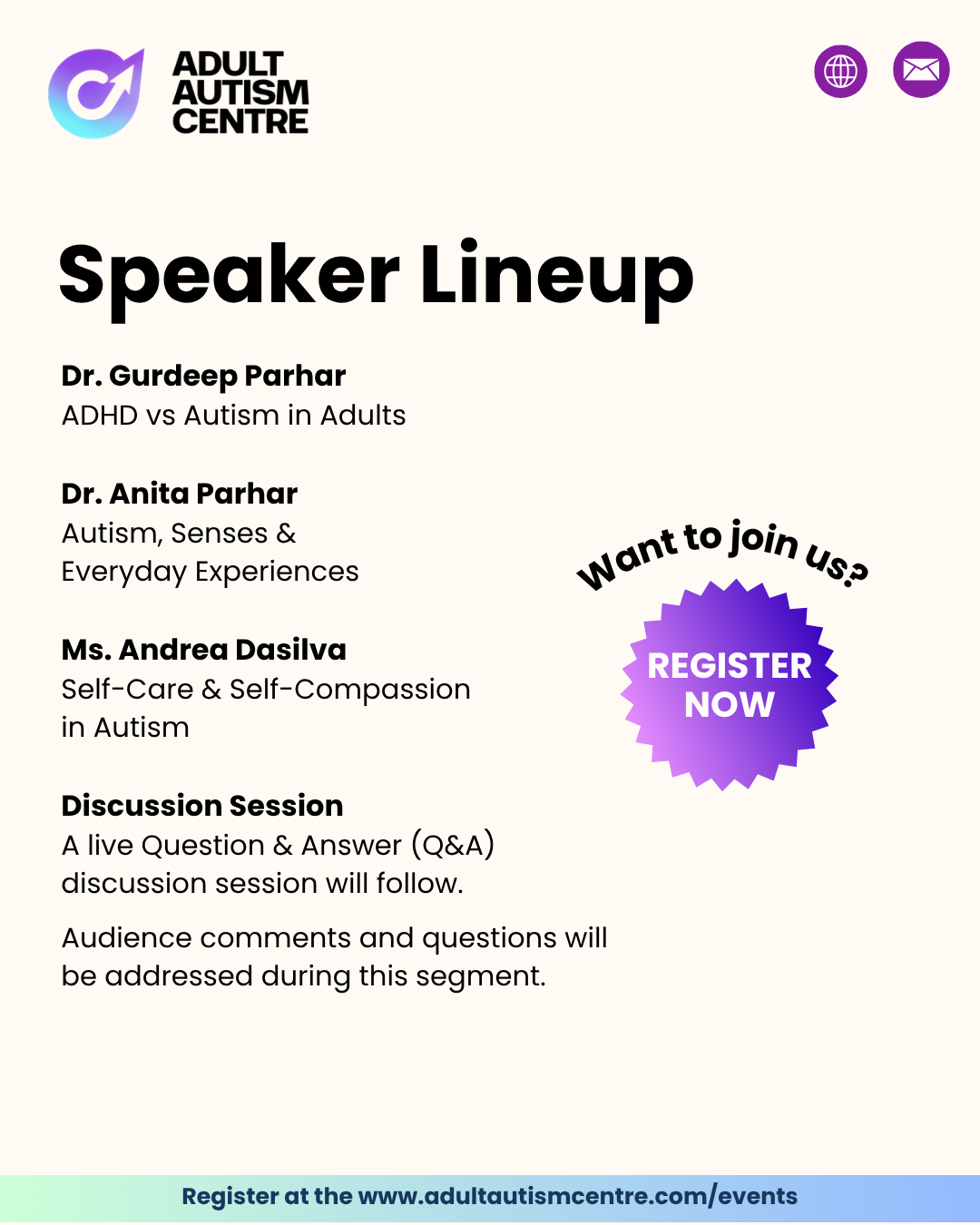
This edition of Neurodiversity News highlights the importance of understanding, acceptance, and meaningful support for neurodivergent individuals. This month, our purple theme reflects creativity, compassion, and the individuality within the neurodiverse community. Our goal remains to inform, support, and strengthen understanding across the communities we serve. | | RESEARCH SPOTLIGHT OF THE MONTH | | |
Body Doubling and ADHD: Why Working Beside Someone Can Help
For many people with ADHD, starting a task can feel harder than the task itself. Body doubling is a strategy where someone works alongside another person, either in person or virtually, to create a sense of structure, presence, and accountability.
Body doubling is not about someone watching, judging, or correcting you. It is about creating a supportive environment where getting started feels easier.
For people with ADHD, tasks can become overwhelming when there is no structure, deadline, or external cue to begin. Having another person present can provide a gentle anchor, helping with focus, motivation, and follow-through.
This can be especially helpful during June, when routines often shift because of summer schedules, school-year transitions, travel, caregiving changes, or workplace adjustments.
READ MORE
WHAT HELPS?
Body doubling does not need to be complicated. Small changes can make it easier to try.
Choose one clear task: Pick something specific, such as replying to emails, folding laundry, studying, or organizing paperwork.
-
Set a short time limit: Try 20 to 30 minutes instead of planning a long work session.
-
Use quiet presence: The other person does not need to help. They can simply work nearby.
-
Try virtual body doubling: A video call, study room, or online coworking session can work if in-person support is not available.
Reduce distractions: Agree ahead of time whether the session is for quiet work or light check-ins.
-
Reflect after: Notice whether it helped with starting, staying focused, or finishing.
WHY THIS MATTERS
ADHD support is not only about willpower or motivation. It is about building systems that support how the ADHD brain works.
Body doubling can help externalize structure in a simple, practical way. For some people, working beside someone else can make a task feel less isolating and easier to begin.
As summer routines shift, body doubling may offer a helpful reset: less pressure, more support, and a clearer path to getting started.
| | FEATURED ARTICLE: "SHATTERED" | | |
Author: Andrea Dasilva, Registered Clinical Counsellor
Following a traumatic event, the nervous system gets overwhelmed and disrupted which has lasting effects. Although there are no discernable changes to brain structures in a physical sense, traumas do disrupt the communication between different brain regions, which often leads to incomplete processing of memories, emotions, and even the sense of self. Said another way, the traumatized mind is fragmented; emotionally, we might feel that way too. Shattered.
Beyond a Regular Response
Although one word is used to define it, trauma carries two different categories of experiences: Trauma (capital T) refers to natural disasters and other life altering accidents, whereas trauma (lower case t) refers to highly distressing events which exceed a person’s ability to cope, such as a relationship breakup or unexpected losses. Whether one experiences the distressing event personally or witnesses another person experiencing it (vicarious trauma), the body and the mind are impacted.
Both forms of trauma have effects on cognitive, emotional, and behavioural levels.
Symptoms can be classed in four groups:
-
Intrusive thoughts and reexperiencing: flashbacks (reliving the trauma), nightmares, triggers (reminders of the event)
-
Avoidance: keeping distance from persons or places that are somehow associated with the trauma
-
Impact on Mood: numbness, detachment/disassociation, grief, anger, isolation from family or friends
-
Arousal and Reactivity: hypervigilance (always feeling on edge), difficulty concentrating, engaging in risky or self harming behaviour
Traumatic memories are also manifest in the body; as one expert notes: “the body keeps the score”. Headaches, body aches, panic attacks, and pounding hearts – especially around triggering places, objects, or people are common.
When all of these symptoms flood your system, it is overwhelming, shocking, and exhausting. They can limit or have negative effects on your personal relationships, work or school functioning, self esteem and self worth. Should any one (or collection of) these symptoms transpire for approximately six months to one year following the occurrence of the trauma, this could be diagnosed as Acute Stress Disorder; if the symptoms persist for longer than one year, a diagnosis of Post Traumatic Stress Disorder (PTSD) could be warranted. Seeing a trained therapist for expert diagnosis and recovery suggestions is highly recommended.
The Way Out is Through
Although traumatic events lead to alterations in the activity of different brain regions, such changes need not be permanent: the plasticity of the brain permits new pathwsys and connections to be formed. Psychotherapies such as traums informed Cognitive Behaviour Therapy (CBT), Acceptance and Commitment Therapy (ACT), and Dialectical Behaviour Therapy offer assistance in “rewiring” the brain; as well, Eye Movement Desensitization and Reprocessing (EMDR) helps to reprocess traumatic memories without the use of words. Physicians might also prescribe medications to assist with mood imbalances.
When traumatic events occur, they leave a mark – literally. The threat detector (amygdala) goes into overdrive, the memory center (hippocampus) temporarily shuts down, various sensory experiences are fragmented, and the thinking brain (prefrontal cortex (PFC)) goes offline. Traumatic events are intense - no wonder that the body and the mind feel so depleted and defeated. With appropriate treatment, resuming functionality and thriving in life are very real outcomes.
While the events themselves cannot be undone or deleted from memory, we can choose to reengage and restructure fragmented parts in the here and the now. To feel whole again.
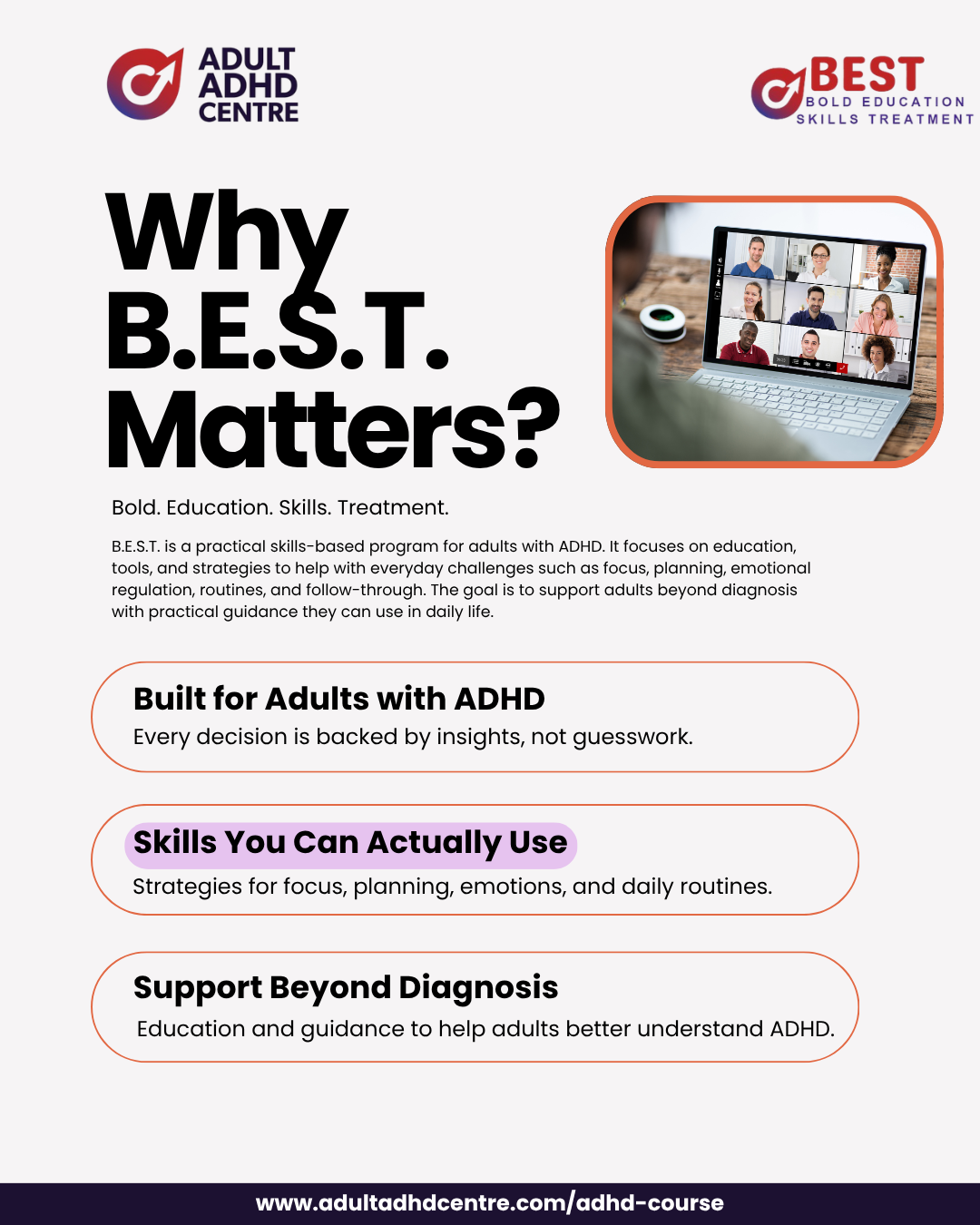
| | | B.E.S.T. MEMBERSHIP PROGRAM | | |
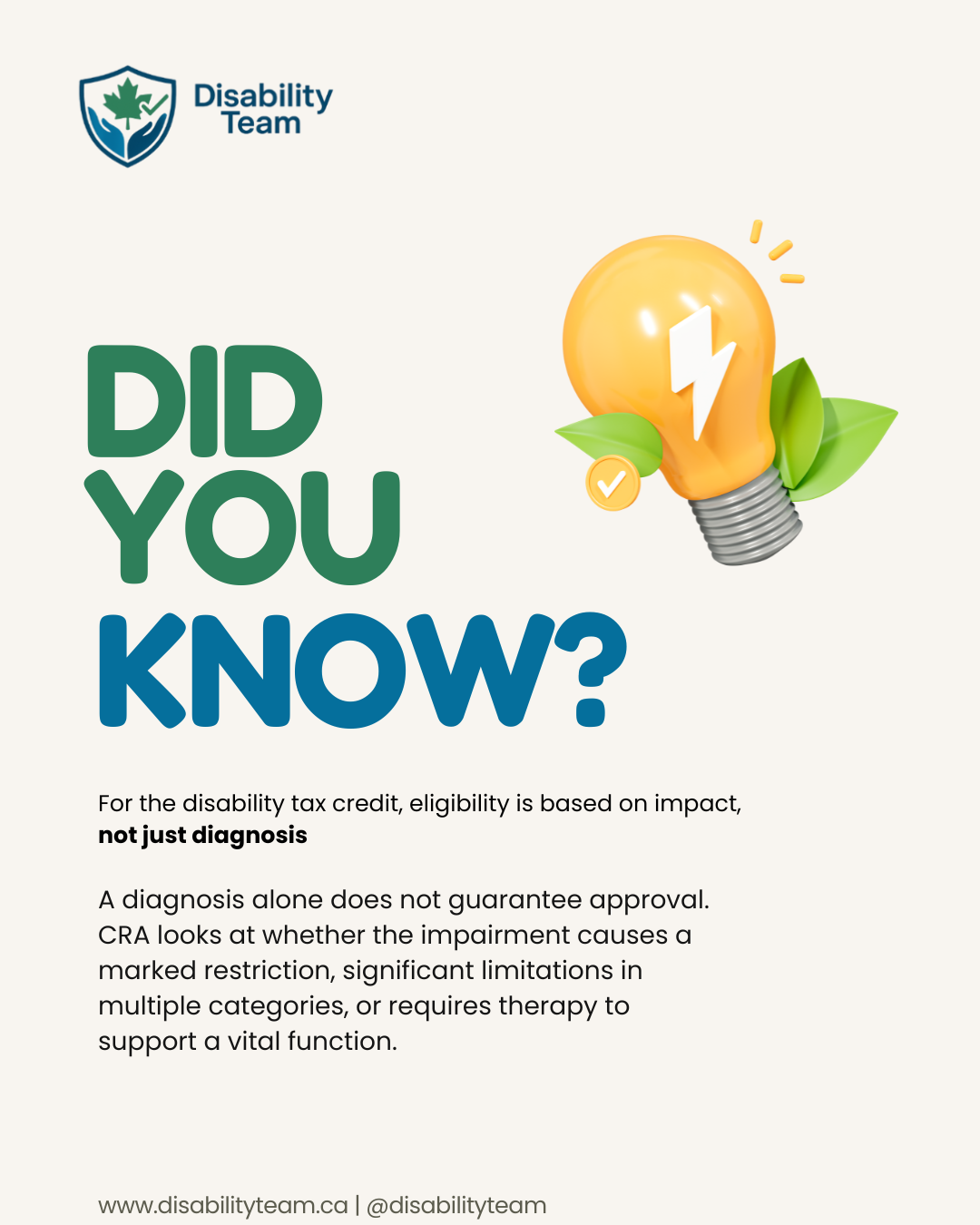
Did you know?
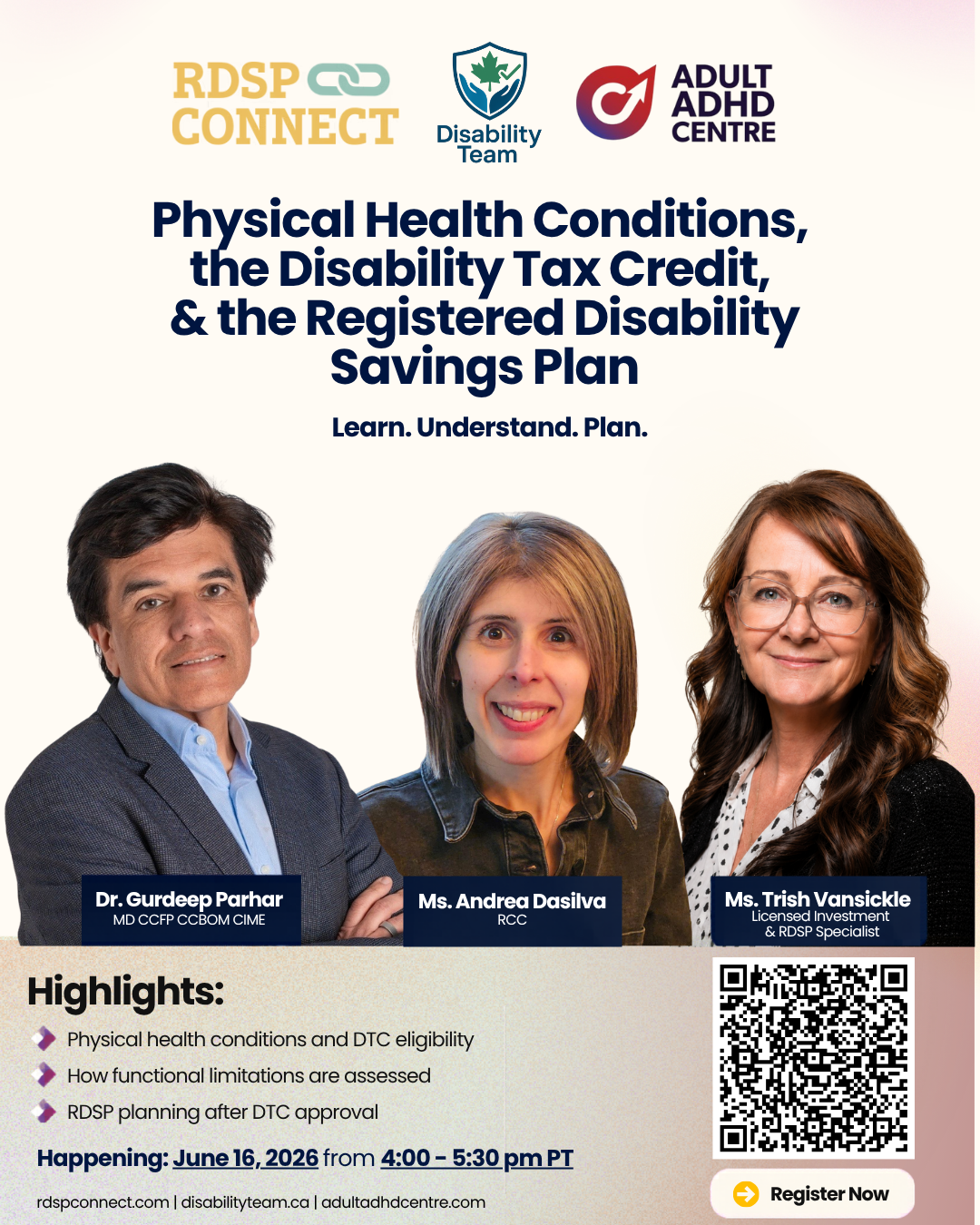
Individuals with ADHD may face unique challenges when it comes to managing physical health, daily functioning, and long-term financial planning.
Join us to learn about physical health conditions, the Disability Tax Credit, RDSP planning, and practical steps that may help individuals and families better understand available supports.
WEBINAR DETAILS:
Tuesday, June 16, 2026
4:00–5:30 PM PT
| |
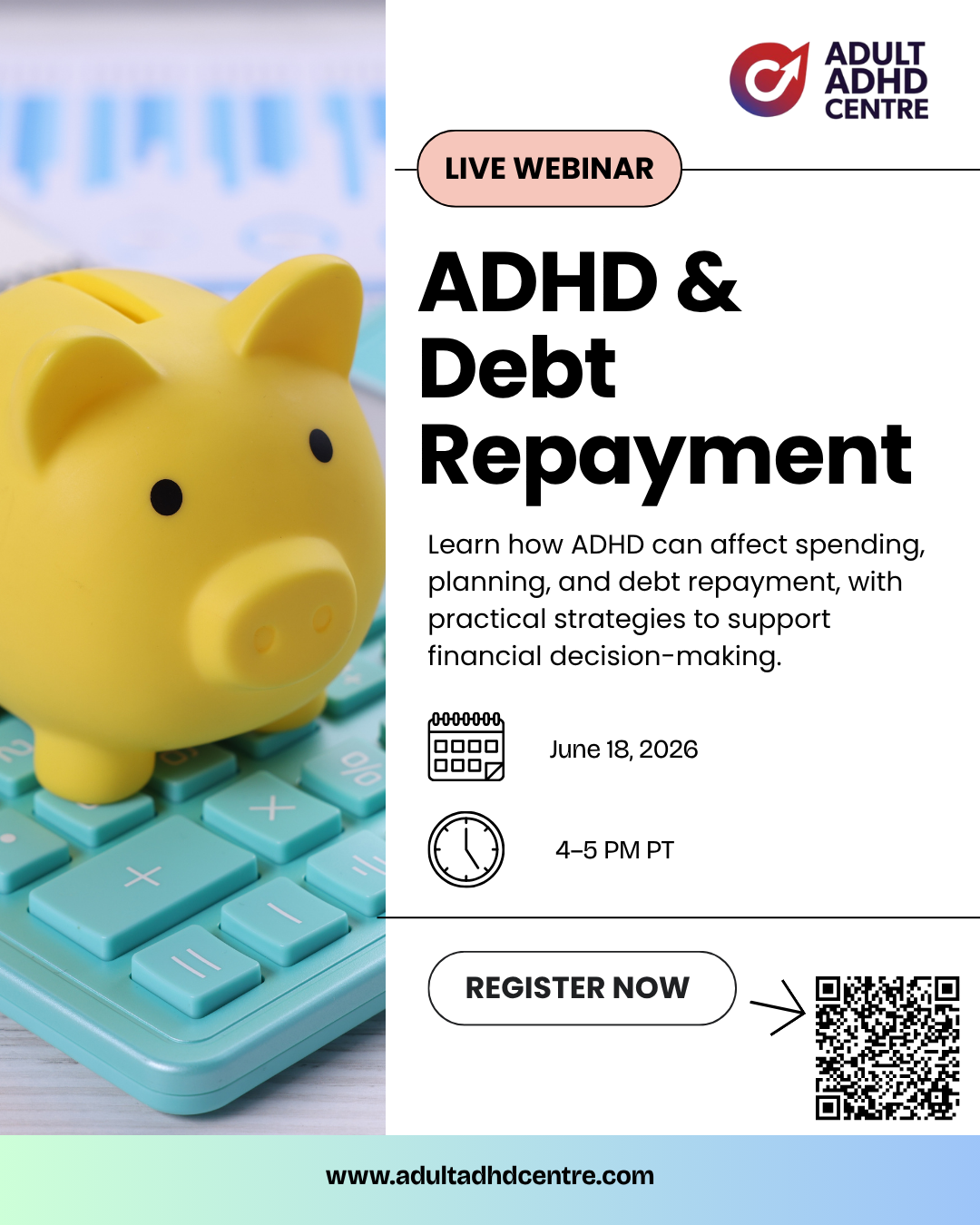
ADHD can affect financial planning, budgeting, debt repayment, and everyday money decisions. Join us as we explore why smart people can feel stuck financially and learn practical strategies to better understand spending, debt, and financial decision-making.
WEBINAR DETAILS:
Thursday, June 18, 2026
4:00–5:00 PM PT
| |
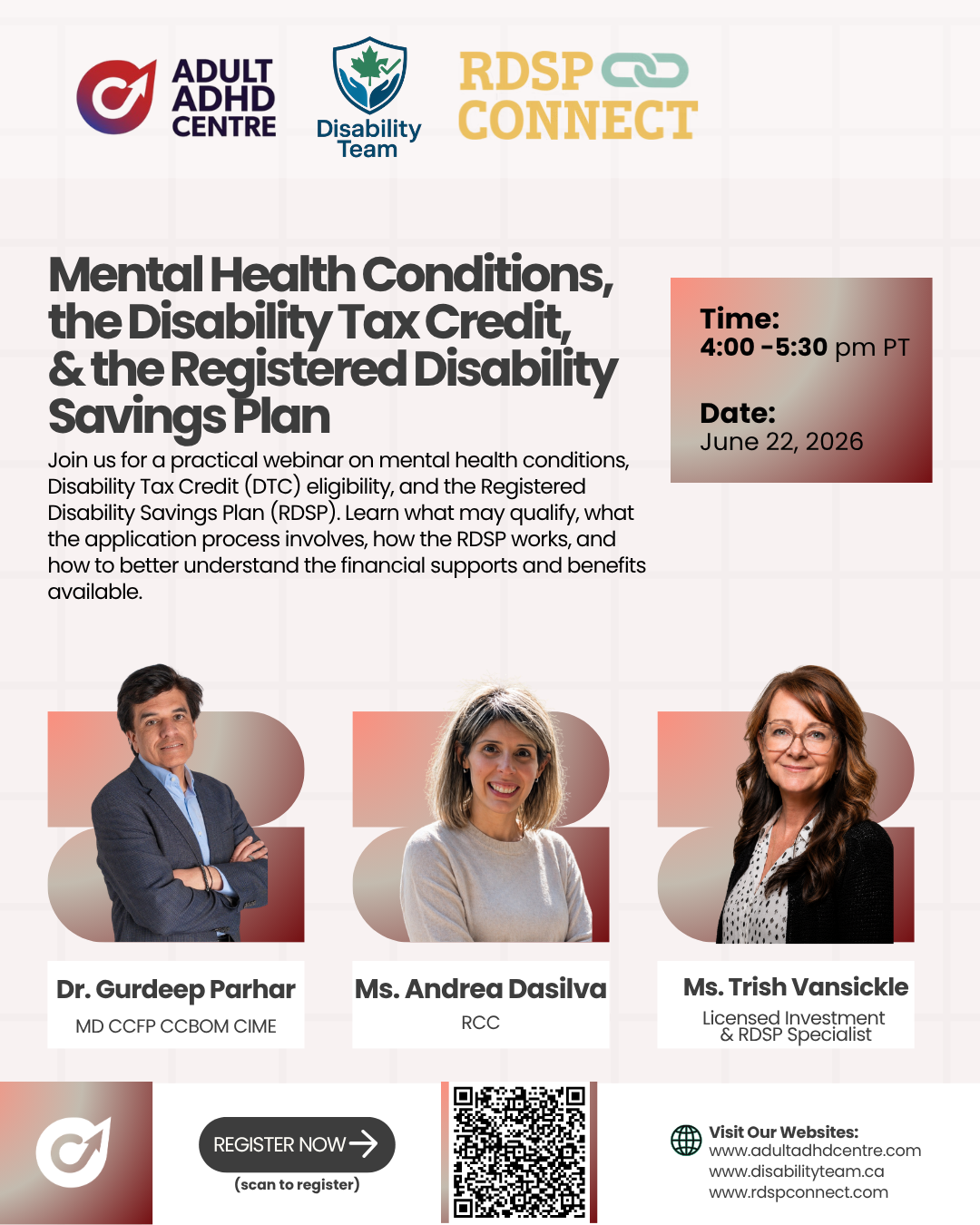
Mental health conditions can affect daily functioning, planning, work, relationships, and long-term support needs. Join us to learn about the Disability Tax Credit, RDSP planning, and practical steps that may help individuals and families better understand available supports.
WEBINAR DETAILS:
Monday, June 22, 2026
4:00–5:30 PM PT
| | |
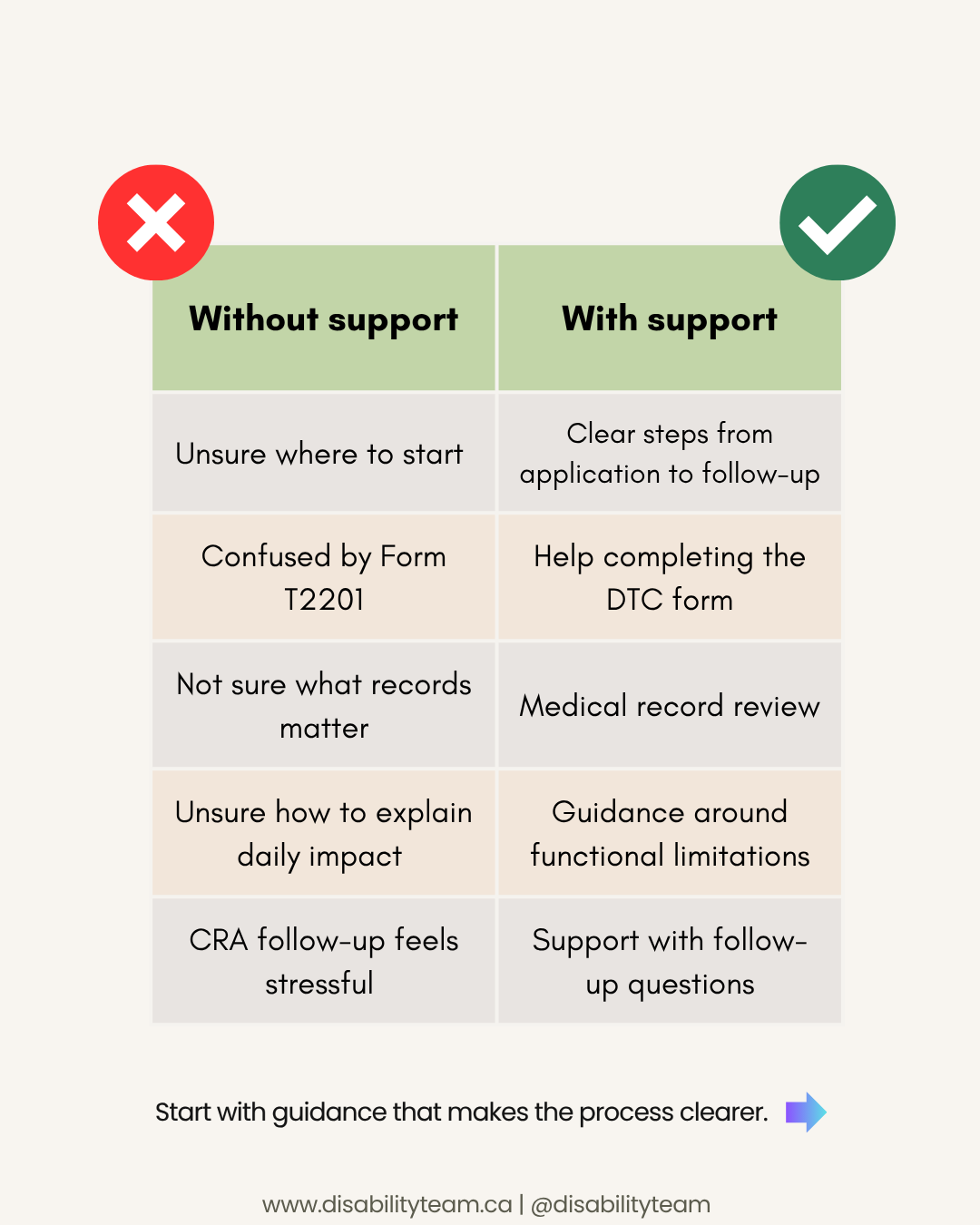
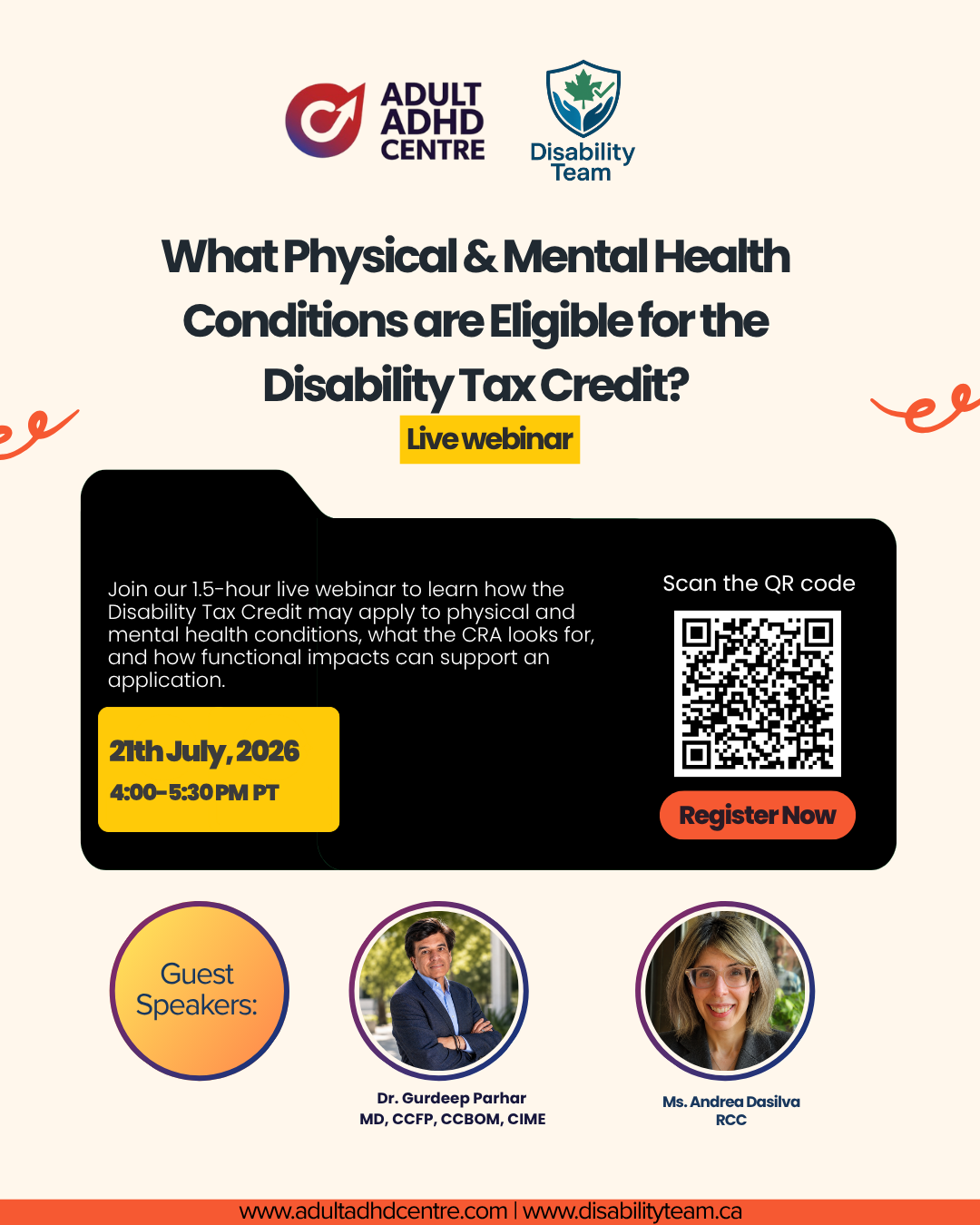
Join our 1.5-hour live webinar to learn how the Disability Tax Credit may apply to physical and mental health conditions, what the CRA looks for, and how functional impacts can support an application.
Scan the QR code or click the button below to register.
WEBINAR DETAILS:
Tuesday, July 21, 2026
4:00–5:30 PM PT
| | | | |