OCTOBER 26, 2026

KEEP THIS NEWSLETTER COMING TO YOUR INBOX

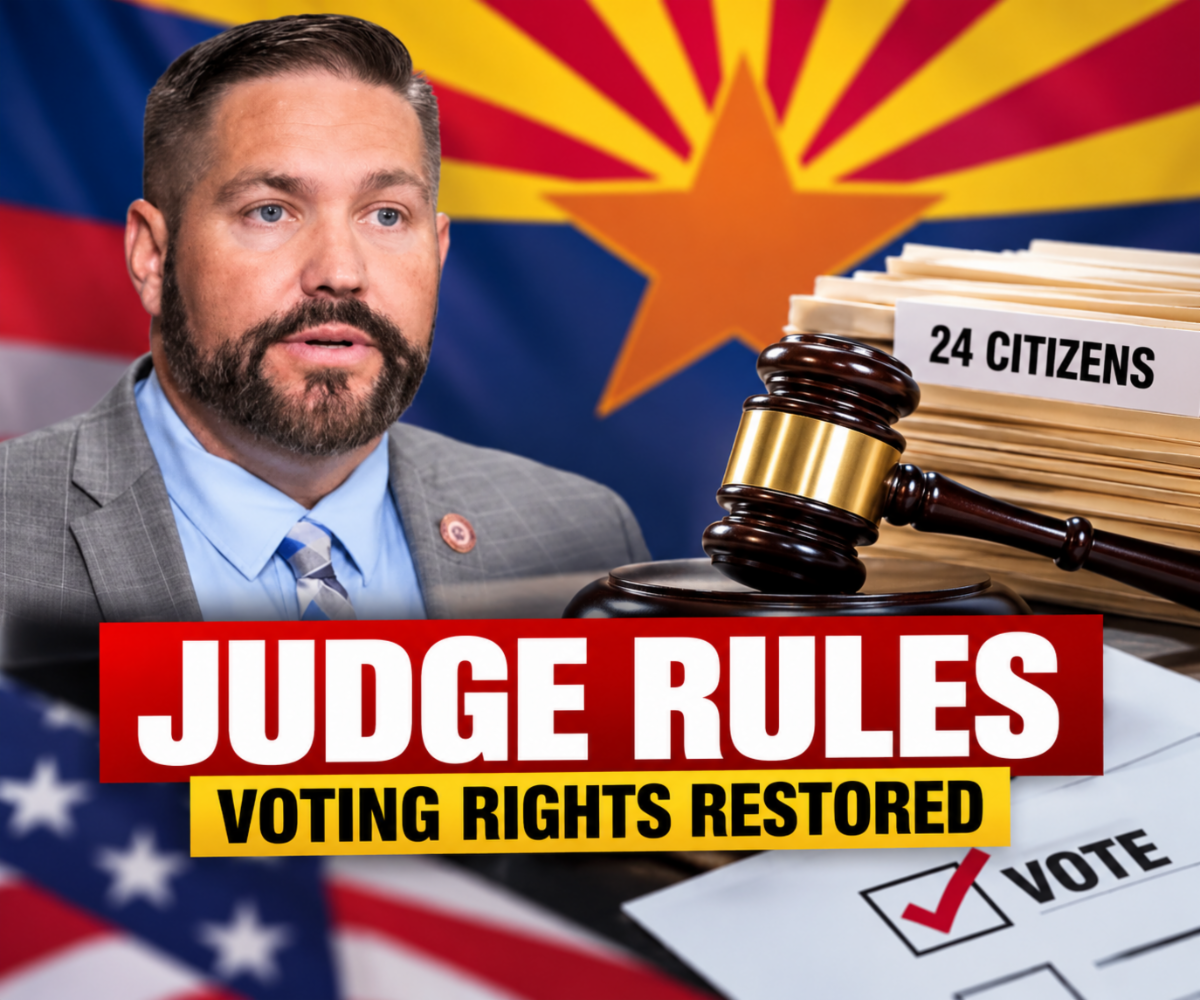
Judge Rules in Voting Rights Dispute Between Heap, Mayes and Fontes


The dispute over voter citizenship records raises questions about the correct process to follow when registered voters" citizenship is drawn into question.


Last Friday, October 23, Arizona Attorney General Kris Mayes and Secretary of State Adrian Fontes faced off in court with Maricopa County Recorder Justin Heap over the voter registration status of American citizens whose eligibility had been questioned by Heap's office.


To understand how this dispute reached a courtroom just days before the November 3 election, we need to go back several months and examine Arizona Revised Statute § 16-165, which establishes procedures for maintaining voter registration records.

It Started With 207 Names

As you may recall, in April, Recorder Heap referred 207 names to Maricopa County Attorney Rachel Mitchell's office over concerns about their citizenship status.


Of those 207 individuals, only 60 had cast a ballot in Maricopa County at some point.

Mitchell's office investigated those 60 individuals and eventually determined that 52 were American citizens and eight were noncitizens.


Of the eight noncitizens, seven had registered through the Arizona Motor Vehicle Division. The remaining individual had completed a paper voter registration form and checked the box indicating that they were not a citizen.


Investigators identified 16 ballots cast by the eight noncitizens dating back to 2012. At no time did more than three vote in the same election. Mitchell made clear that the findings would not have changed the outcome of any election.

What Does Arizona Law Require?

Arizona Revised Statute § 16-165 establishes procedures for removing voters from registration rolls, including circumstances involving questions about citizenship status.


The central legal question is whether Heap followed the required process before changing the status of voters whose citizenship was in question. Under the citizenship-verification provisions, a county recorder must follow the applicable notice and verification requirements. The statute requires the recorder to notify voters in question of the issue and to give them 35 days to prove citizenship. Only if they fail to do so can their voting status be changed. The statute requires the voter’s registration to be cancelled. This is important because cancelling a vote’s registration is not the same as preventing someone to register in the first place. When a registered voter’s citizenship is questioned, the law establishes procedures designed to protect both election integrity and the rights of the already-registered voter.

Why Were 24 Citizens Still Listed as Ineligible?


Despite Mitchell's investigation confirming that 52 of the 60 individuals were citizens, the recorder kept 24 in a suspended status that prevented them from voting—a category not recognized by the law. The lawsuit originally identified 25 voters, but one had already provided additional documentation and been restored before Friday's hearing.


Heap maintained that his office needed legally sufficient citizenship documentation before restoring the remaining voters. His attorneys argued that Mitchell's office had verified citizenship without providing the underlying evidence to the Recorder's Office.


The disagreement raises the importance of following the process set forth in the law: the recorder should have given the voters notice months earlier, the voters should have been given 35 days to prove citizenship, and only if they failed to do so should they have been cancelled, not suspended.


What Happened in Court Friday?

The October 23 hearing did not end with a contested judicial ruling declaring one side the winner. Instead, Superior Court Judge Adele Ponce directed the parties toward mediation.


During that process, citizenship documentation was presented for judicial review. Heap's office subsequently restored the 24 remaining voters to active status and reported that early ballots

had been issued to those on the Active Early Voting List.


Mayes agreed to dismiss the lawsuit.


Both sides offered different interpretations of the resolution.Mayes argued that litigation should have been necessary to restore the voters' rights. Heap maintained that his office had been waiting for sufficient citizenship verification and acted promptly once it received it.

What About the Cost to Taxpayers?

There is another issue worth examining: the public resources devoted to this dispute.


Mitchell's office spent months investigating the original referrals. The subsequent disagreement involved the Recorder's Office, Attorney General's Office, Secretary of State's Office, attorneys, and the Superior Court.


These investigations and legal proceedings require staff time and public resources.


The total taxpayer cost has not been established publicly, but it is a reasonable question to ask.

How much did the original investigation cost? How much additional time was spent resolving the dispute over these 24 voters? Could better communication between the agencies have prevented the lawsuit?

Election Integrity Includes Protecting Eligible Voters

Arizona has a legitimate responsibility to ensure that noncitizens do not vote. That responsibility is established in law.


But election officials also have an obligation to protect the voting rights of American citizens.

A.R.S. § 16-165(A)(10) provides a notice process, including 35 days to submit satisfactory evidence of citizenship before cancellation under that provision. It also directs notification to the county attorney and attorney general after cancellation when the required evidence is not provided.


Causes for cancellation; report


Whether Heap's use of a pending eligibility status complied with all applicable legal requirements was central to the dispute. The settlement resolved the immediate voting-access problem without a final contested ruling on every legal argument.


Ultimately, the affected citizens regained their active voting status before Election Day.


The procedures outlined in Arizona law were not followed by Heap's office. This raises a much larger question: How many times must Recorder Justin Heap's office fail to follow statutory requirements before his supporters begin demanding accountability? Election laws are not suggestions, and they do not change depending on who holds office. They exist to protect the integrity of our elections and the constitutional rights of every eligible voter. Supporting an elected official should never mean excusing mistakes or overlooking failures to follow the law. At some point, accountability must matter more than political loyalty.


Election integrity requires both accurate voter rolls and protection of every eligible citizen's right to vote. Neither responsibility should be overlooked.

Every Vote Counts — Is Your Ballot Still Sitting on the Counter?


Election Day is Tuesday, November 3, and time is running out to make your voice heard.

Let me ask you a simple question: Is your early ballot still sitting on your kitchen counter, your desk or perhaps buried under a pile of mail?


If so, you are not alone. Life gets busy. Between work, family and everything else going on, it is easy to set that ballot aside and tell yourself you will get to it tomorrow.


Well, tomorrow is almost here!


If you plan to return your ballot through the U.S. Postal Service, Tuesday, October 27, is the recommended deadline to get it in the mail. Arizona requires your completed ballot to be received by election officials no later than 7 p.m. on Election Day, November 3. A postmark alone does not count.


If you miss the recommended mailing deadline, don't worry. You still have options.

You can take your completed, signed and sealed ballot to an authorized ballot drop box or voting location. You can even return it on Election Day.

Want to Help Arizona Get Election Results Faster?

Maricopa County has implemented a procedure that can help speed up election results.


If you bring your mail-in ballot and its return envelope to a participating voting location on Election Day, you can present your identification and ask to have your ballot processed on-site rather than simply dropping it off.


Under the new procedure, eligible voters can have their ballots tabulated at the voting location, helping eliminate some of the additional processing associated with ballots dropped off on Election Day. That matters because one of the biggest reasons Arizona election results take days to finalize is the enormous number of early ballots returned at the last minute.


During the primary election, Maricopa County reported results relatively quickly. I do not expect the general election to move quite as fast because the ballot is longer, double-sided and voter turnout will likely be significantly higher.


However, every voter who returns a ballot early or uses available on-site tabulation procedures can help make the process more efficient.

Don't Assume Your Vote Doesn't Matter

I frequently hear people say, "My one vote isn't going to make a difference." I strongly disagree. We have seen elections decided by incredibly small margins. Sometimes a handful of votes can determine who represents us on a school board, city council or in the state Legislature. These are the people making decisions about our schools, public safety, taxes, infrastructure and the future of our communities.


Your vote is your voice.


You do not have to agree with every candidate or love every choice on the ballot. But you should take the time to research the candidates and issues and participate in the process. And please, remind your friends, neighbors and family members to vote. If someone needs a ride to a voting location, offer to help.

Let's Finish Strong

We spend months discussing candidates, debating issues, watching political advertisements and complaining about the direction of our government. But none of that matters if we fail to cast our ballots.

So please, look around your house. Find that ballot. Complete it, sign the envelope and return it. Don't let your ballot become another piece of forgotten mail sitting on the kitchen counter.

Election Day is November 3.


Every election matters. Every voter matters. And every vote counts.


Make sure yours is one of them.

Another Election Security Incident in Maricopa County — But Let's Stick to the Facts


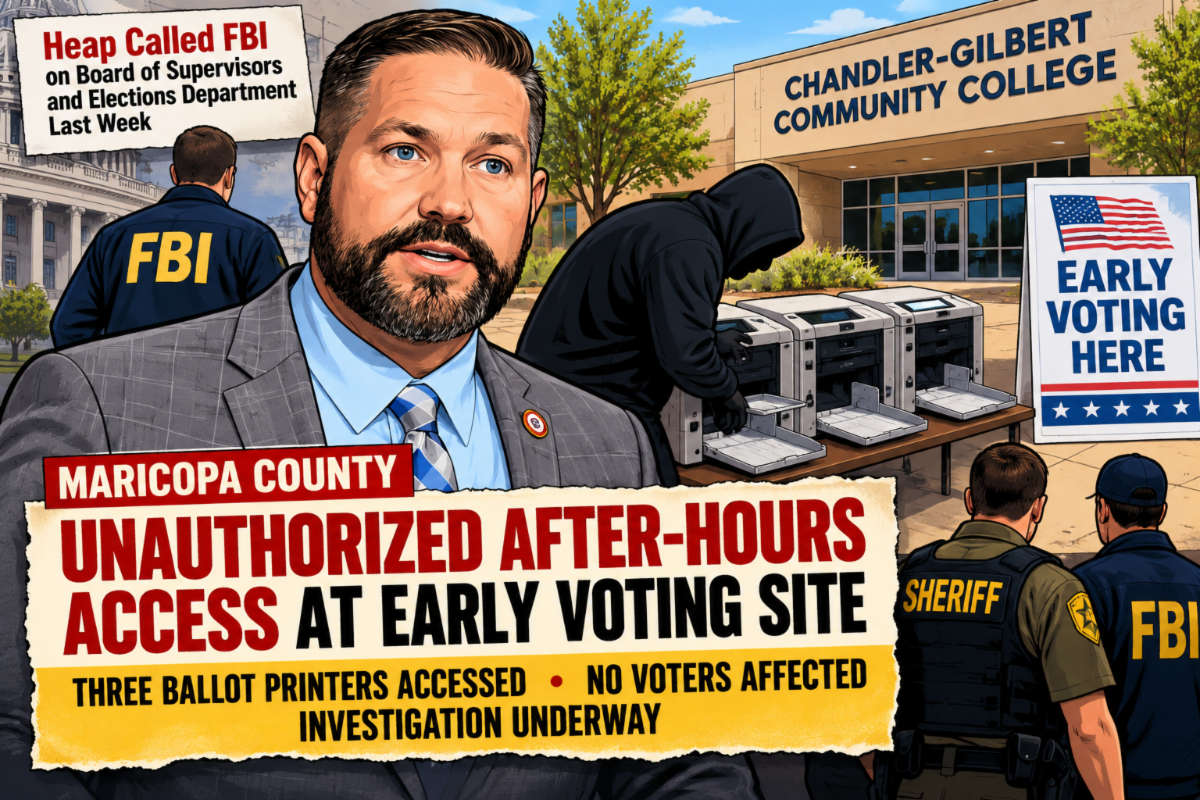
Just days after the FBI was called, and they basically laughed at Heap's assertion regarding election tampering allegation involving the Maricopa County Board of Supervisors and Elections Department, Recorder Justin Heap is now reporting a security incident at an early voting location in Chandler.


On Friday, October 16, the Maricopa County Recorder's Office (MCRO) announced that an election inspector discovered what appeared to be unauthorized after-hours access to three Ballot-on-Demand printers at the Chandler-Gilbert Community College early voting location. According to the Recorder's Office, the paper trays on three printers appeared to have been opened sometime after voting ended Thursday evening and before election workers arrived Friday morning.


Before anyone jumps to conclusions, there is one very important fact that deserves emphasis:

No voters were affected, no ballots were reported compromised, and early voting continued without interruption.


The Recorder's Office explained that its standard procedure requires all ballot paper to be removed from the printers and secured each night. This means the paper trays were empty when the alleged incident occurred.


Once the inspector reported the discovery, MCRO immediately replaced the three printers and sent the original equipment for a forensic examination.


The Maricopa County Sheriff's Office was notified and is working with Chandler-Gilbert Community College campus security to determine what happened.


Interestingly, the Recorder's Office acknowledged that the incident could simply be the result of human error.

Just Last Week, the FBI Was Called Over Another Election Allegation

The timing of this announcement is particularly interesting.


Just last week, an investigation became public involving an allegation of election tampering against the Maricopa County Board of Supervisors and Elections Department. The allegation originated from claims circulating on social media that county election workers were improperly accessing equipment at the Ballot Tabulation Center.


Rather than simply contacting the Board of Supervisors or Elections Department to determine what employees were doing, Heap's office escalated the matter to federal authorities.

It was Sam Stone, a senior official in Heap's office, who made the call to the FBI.


The resulting investigation found no wrongdoing.


Board of Supervisors Chair Kate Brophy McGee pointed out that a simple telephone call could have resolved the questions without involving federal investigators. Even Republican Supervisor Thomas Galvin defended the county's election employees and rejected the suggestion that improper activity had occurred.


Yet another allegation of election tampering had already circulated widely, generating unnecessary suspicion about our election system.

Transparency Is Important, but So Is Perspective

In announcing the Chandler incident, Recorder Heap stated:


"Transparency and accountability are essential to ensuring public trust. Voters deserve to know when concerns arise and have confidence that we will respond promptly, investigate thoroughly, and share our findings."


I agree with that statement.


Election officials absolutely should disclose security concerns, investigate potential problems and inform the public of their findings. But transparency must also include perspective. There is a significant difference between discovering that someone may have opened empty printer trays and discovering evidence that ballots were altered, equipment was compromised or votes were affected.


At this point, there is no publicly reported evidence that any of those things occurred. The Sheriff's Office should complete its investigation, determine who accessed the equipment and explain whether this was an innocent mistake or an actual security violation. If wrongdoing occurred, those responsible should be held accountable. But until the facts are established, we should not turn every unusual occurrence into another election conspiracy.

We Cannot Keep Crying Wolf

I have said this before, and I will continue saying it.


When we repeatedly sound the alarm over situations that turn out to be harmless mistakes or misunderstandings, we risk losing credibility.


Remember the story of the boy who cried wolf? Eventually, when a real wolf appeared, nobody believed him. The same principle applies to election security.


If every procedural error, equipment concern or misunderstanding becomes another headline suggesting election tampering, what happens if we someday uncover actual fraud? Will the public take it seriously? Will investigators respond with the same urgency? Or will people simply assume it is another false alarm?


We should demand secure elections. We should expect transparency. And we should absolutely investigate legitimate concerns. But we should also be responsible enough to distinguish between a security concern, a procedural mistake and actual election fraud.


Maricopa County election workers have an enormous responsibility, particularly during a general election involving millions of registered voters. They deserve scrutiny, but they also deserve fairness.


For now, the facts are straightforward: Three printer trays appeared to have been opened after hours. The ballot paper had been secured. The equipment was replaced. Law enforcement is investigating. Voting continued without interruption.


And most importantly, no voters were affected.


Let's allow the investigation to determine what actually happened before anyone decides what the story means.


Public confidence in our elections is built on facts, not fear.

A Simple App Could Help Increase Voter Turnout on November 3


Last week, I ran into Arizona Senate President Warren Petersen at a function, and he shared information with me about a free app designed to help people encourage voter participation.

I found the concept interesting and wanted to pass the information along to my readers.

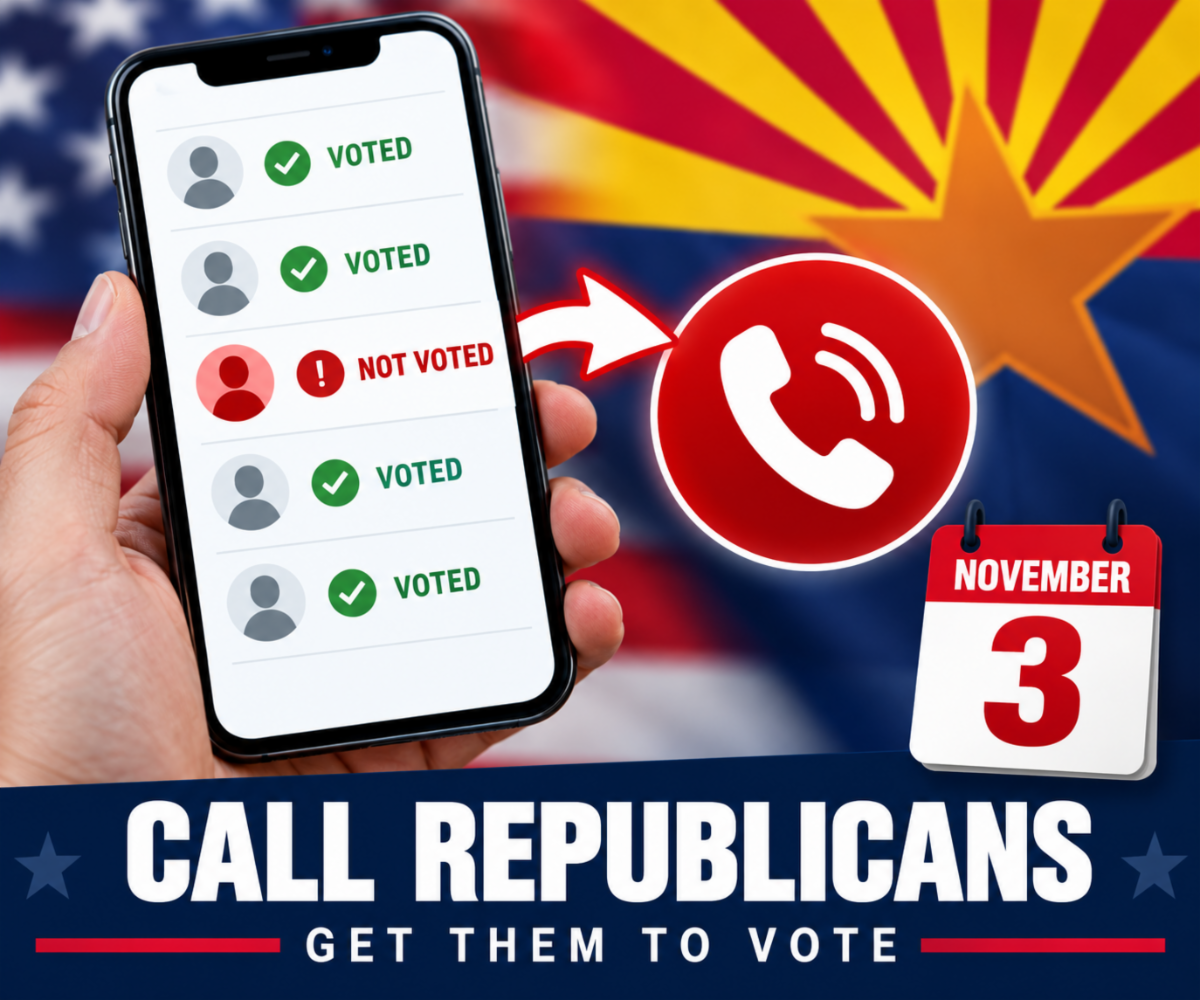
The app can be downloaded to your phone and, with your permission, access your contact list to help identify which contacts have already voted and which have not, using available voter participation records.


One important distinction: Voter records can indicate whether someone has cast a ballot, but they do not reveal whom that person voted for.


The idea is simple. Rather than relying entirely on television commercials, political advertisements, and social media, people can reach out personally to friends and acquaintances to remind them about the upcoming election.


A personal phone call can be a meaningful way to encourage participation. It also gives people an opportunity to ask questions about voting locations, deadlines, and returning their ballots.

Election Day is Tuesday, November 3, and every eligible voter deserves the opportunity to make their voice heard.


If you are interested in using the app, it is available at no cost through the registration link below.


Elections are an opportunity for citizens to participate directly in their government. Whether you have already returned your ballot or plan to vote on Election Day, make sure your voice is heard.

Every vote matters, and participation is essential to our representative form of government.

Think you don’t use data centers? Think again.


Web searches. Telehealth visits. Social media. Online shopping. Streaming video. Virtual meetings. The average household has 20 connected devices, and people check their phone up to 200 times a day.


Our modern world is increasingly digital, and it relies on a complex network of critical infrastructure: data centers.


Arizona has had these facilities for two decades, largely unnoticed in our communities. As digital demand for computing power has quickly grown, the need for more and larger data centers has followed suit. Community concern is understandable.


As a mother and grandmother, I initially had worries of my own – especially about how much of Arizona’s scarce water supply is consumed by data centers. What I learned is these facilities use far less water than you probably assume.


A lot of media continue to use outdated numbers, as do politicians. I recently attended a town hall hosted by Attorney General Kris Mayes. She told the audience that data centers use tens of millions - even hundreds of millions – of gallons of water each year.


While that aggregate figure sounds alarming out of context, it obscures how rapidly the technology is evolving, with Arizona leading the way. Modern, closed-loop cooling systems typically operate with only 120,000 gallons of water and can go decades without needing to be flushed and refilled.


According to the Director of ASU’s Kyl Center for Water Policy, data centers exceeding their proposed water use has not been an issue in Arizona. Most operate in areas where the state regulates groundwater pumping and requires annual reporting of withdrawals. Arizonans should know this demand is being actively monitored and responsibly managed under existing regional frameworks.


Ultimately, data centers account for just 0.12% of daily water consumption in Maricopa County and 0.15% of all water use statewide. That’s a fraction of a percent. For comparison, Arizona data centers use 1/33 as much water as golf courses and generate 50X more tax revenue per unit of water.


Even more efficient data centers are coming online with waterless cooling technology that will use even less of this precious resource.


While so much of the public debate has focused on what data centers need to operate, not nearly as much has been said about the jobs and economic activity they produce. During the past decade, the industry has generated 108,000 Arizona jobs and $11 billion in economic output, according to the Greater Phoenix Economic Council. The economic windfall is accelerating; Arizona data centers created over $1 billion in state and local tax revenue in 2024 alone. Those dollars fund police and 1st responders, education, transportation and other vital services. Currently, over 20,000 Arizona jobs are directly attributed to data centers – and for every one of these jobs, an estimated six others are supported by the industry.


The construction of each new data center employs as many as 1,000 construction workers and tradesmen and women. Once a data center opens, entry-level engineers working there can reportedly earn more than $65,000 – with average pay topping $120,000, depending on experience. These are stable, good jobs at a time when many other industries aren’t hiring.


Now, not every data center is a good fit in every location. These decisions should be made by local officials and with community input.


But, we also shouldn’t demonize an entire industry based on outdated information.

Data centers are essential. Need more proof? How many times did you check your phone while reading this column?

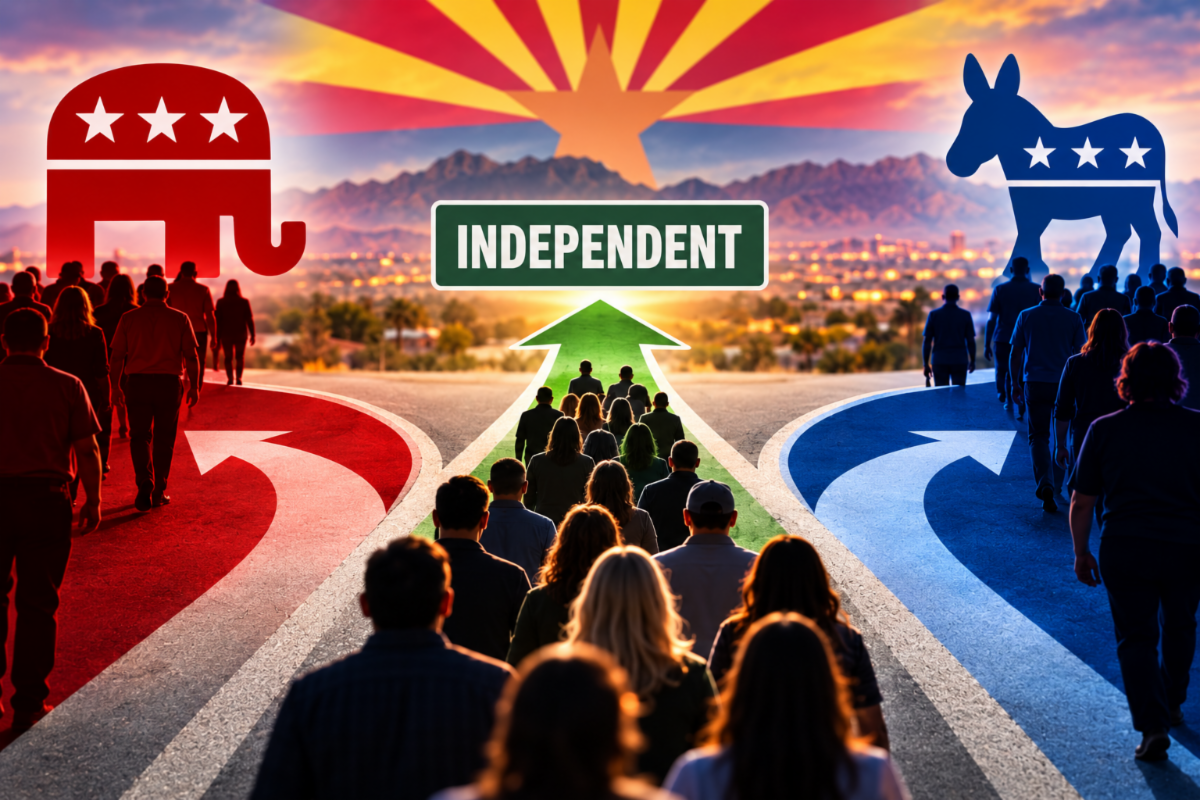
Arizona's Independent Voters Are Sending Both Political Parties a Message


Arizona's final voter registration numbers are in for the November 3 General Election, and there is a message in these numbers that Republicans and Democrats should be paying attention to. Voters are increasingly distancing themselves from the two major political parties.

According to the Arizona Secretary of State's Office, 4,374,827 Arizonans are registered and eligible to vote in the upcoming election. That represents an increase of just 7,234 voters compared with the November 2024 General Election.


But the real story isn't the total number of registered voters. It is how those voters are choosing to identify politically.

Independents Are Now Arizona's Largest Voter Group

For years, Republicans held the largest voter registration advantage in Arizona. That is no longer the case.


Here is how Arizona's voter registration numbers compare between the 2024 and 2026 general elections:


Party 2024 2026 Change


Other / Independent 1,471,309 1,527,483 +56,174


Republican 1,562,091 1,522,925 -39,166


No Labels 32,338 49,203 +16,865


Green 4,187 5,577 +1,390


Libertarian 31,132 30,150 -982


That means Arizona now has more voters registered outside the recognized political parties than registered with either major party individually. Both Republicans and Democrats have lost registered voters since 2024, while the unaffiliated category has grown substantially.


That should be a wake-up call.

Are Voters Tired of Political Extremes?

I believe these numbers reflect something I have been writing about for quite some time.

People are tired of the extremes coming from both political parties. Republicans are losing voters. Democrats are losing voters. Meanwhile, more Arizonans are choosing not to identify with either party.


I do not believe that is a coincidence.


The majority of voters are not living on the far right or far left. They are somewhere in the middle. They want safe communities, good schools, affordable housing, economic opportunity, responsible government and elected officials who are willing to work together.They want solutions, not constant political warfare.


Yet too often, the loudest voices in politics are the most extreme. Conspiracy theories, radical rhetoric, personal attacks and the constant suggestion that anyone who disagrees with you is somehow the enemy are driving reasonable people away.


I am a Republican, and I believe in conservative principles. But I also believe there is a tremendous difference between standing firm on your principles and refusing to listen to anyone who sees an issue differently.


Compromise is not always surrender. Sometimes it is simply good government.


Of course, not every voter registering as Independent is politically moderate. Some may be dissatisfied with their party for entirely different reasons. But I believe the overall trend should concern leaders of both major parties.

Voter Fatigue Is Becoming a Serious Problem

Another issue that concerns me is voter turnout.


We have seen troubling signs of voter fatigue, including substantially lower participation in this year's primary election compared with previous election cycles. When people become convinced that their vote doesn't matter, that every candidate is corrupt or that every election is somehow compromised, why would they bother participating?


I have written repeatedly about the damage caused by constantly questioning election integrity without credible evidence.


We should absolutely investigate legitimate concerns and hold people accountable when wrongdoing occurs. But constantly crying wolf only creates more distrust.


And that distrust has consequences.


People stop listening. They stop participating. Some stop voting altogether. We cannot continue down that path and expect our representative government to function as it should.

When Did Campaigning Become More About Destroying Your Opponent?

One of my greatest frustrations with modern political campaigns is how little time some candidates spend explaining why they deserve our votes.


Instead, we are bombarded with negative advertisements, personal attacks, misleading websites, accusations and increasingly vicious political messaging. Rather than telling voters, "Here is my experience, here is what I believe, and here is what I plan to accomplish," candidates spend enormous amounts of money telling us why their opponent is terrible.

I would much rather hear a candidate explain what qualifies them for the position than listen to another attack on their opponent.


And then there is the money.


It often feels as though elections have become less about who is most qualified and more about who can raise or spend the most money. Candidates with substantial financial backing can flood mailboxes, television screens, social media and text messages with advertising. Meanwhile, qualified candidates with limited resources struggle to get their messages heard. Money certainly does not guarantee victory, but it can provide an enormous advantage.


Is that really how we want to select our elected officials?

Both Parties Need to Pay Attention

Republicans should not dismiss these registration numbers simply because they still maintain a significant advantage over Democrats. Democrats should not assume that voters leaving the Republican Party are automatically moving toward them.


The numbers show that both major parties have work to do.


And the growing number of voters registered outside the major parties represents an electorate that cannot simply be taken for granted. If Republicans want to win statewide elections, they must appeal beyond their most loyal base. The same is true for Democrats. That does not mean abandoning core principles. It means understanding that voters can disagree on individual issues while still finding common ground.


We need candidates who can communicate with people who do not agree with them 100% of the time. We need less name-calling, fewer conspiracy theories and more serious discussions about the challenges facing Arizona. And we need to remember that the person who disagrees with us politically is not necessarily our enemy.

November 3 Is Almost Here

The voter registration deadline for this election has passed. Arizona requires voters to be registered at least 29 days before Election Day to participate.


If you are already registered, please vote.


Whether you are a Republican, Democrat, Independent or affiliated with another party, your voice matters. But when the election is over, I hope the leaders of both major political parties take a serious look at these numbers.


Arizona voters are changing. The question is whether our political parties are willing to listen.

I believe most Arizonans are tired of the political fighting. They want leaders who can disagree respectfully, work across party lines when appropriate and put the people they represent ahead of political gamesmanship. Maybe instead of asking how to energize the extremes, both parties should start asking how to earn the trust of the reasonable voters in the middle.


Because those voters may very well decide Arizona's political future.

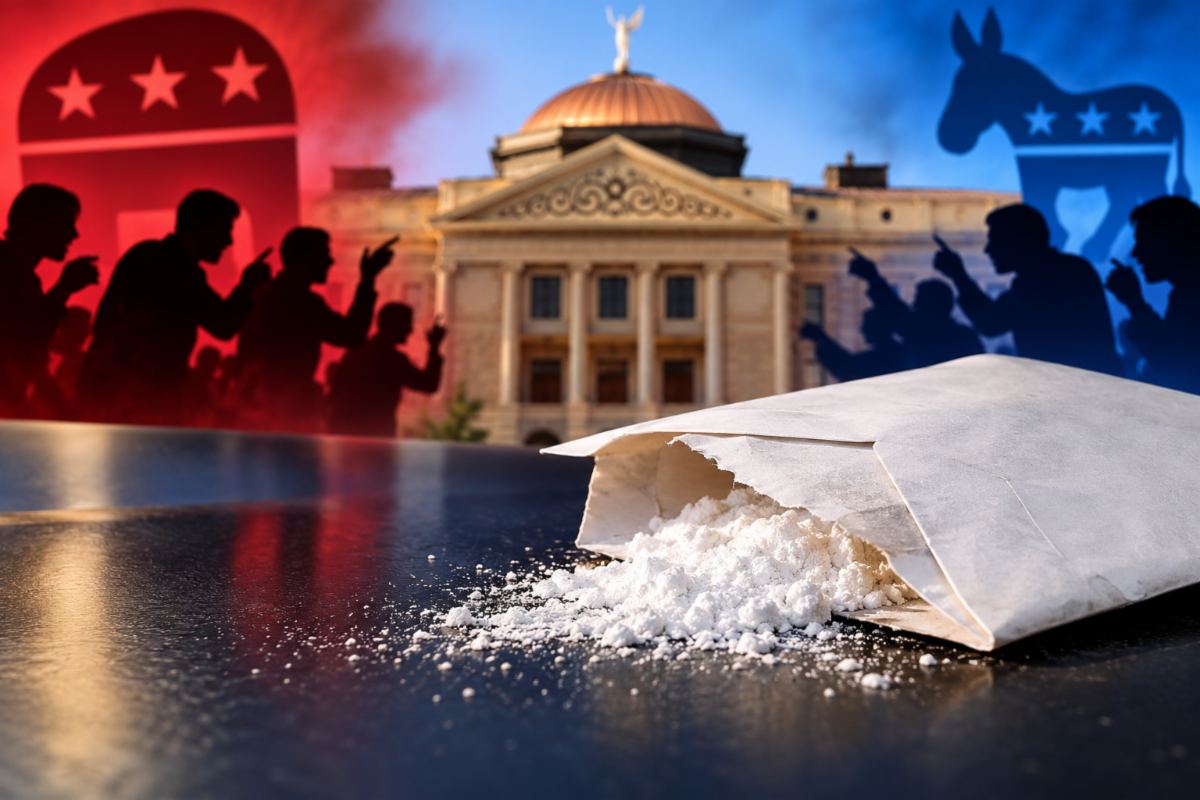
Political Threats Continue in Arizona — We Must Turn Down the Temperature


When did political disagreements become so toxic that elected officials and their staff must worry about opening their mail?


Over the weekend, three Arizona Democratic members of Congress — Greg Stanton, Yassamin Ansari and Adelita Grijalva — were targeted with suspicious letters containing white powder. The FBI Phoenix Field Office and the Arizona Department of Homeland Security notified the lawmakers of the threats.


According to reports, the letter addressed to Stanton's office was intercepted before delivery, while the letters intended for Ansari and Grijalva were sent to outdated office addresses.

Congresswoman Ansari confirmed during an interview with KTAR News that all three letters contained white powder. At the time of her interview, authorities had not determined whether the substance was toxic.


Ansari also spoke about the increasingly hostile political environment, explaining that threats against elected officials have become disturbingly common. She said it would be difficult to find a colleague who had not received some type of death threat.


Unfortunately, this is not an isolated incident.


Just last Thursday, October 15, the Arizona Executive Tower at the State Capitol was evacuated after an employee in Secretary of State Adrian Fontes' office opened an envelope containing white powder. Thankfully, that substance was determined to be nontoxic, and authorities eventually gave the all-clear.


The FBI has confirmed that suspicious letters have been mailed to congressional offices and secretary of state offices across the country. Some contained unknown substances, while others did not. Federal authorities are working with law enforcement agencies to identify those responsible.


Following the latest incidents, the three Arizona lawmakers issued a joint message stating, "We will not be intimidated and we'll keep doing the work that Arizonans elected us to do."

Who Is Responsible?


In my opinion, we should not automatically assume these threats are coming from one political party or the other.


Could it be a Republican who simply dislikes Democrats? Absolutely. Could it be a Democrat attempting to generate outrage and motivate voters to get to the polls? That is also a possibility worth considering, although there is currently no evidence establishing either motive.

Until law enforcement identifies those responsible, pointing fingers at either political party accomplishes absolutely nothing.


What we do know is that mailing threatening letters containing suspicious substances is a serious matter and potentially a federal crime. It wastes valuable law enforcement resources, frightens innocent employees and creates unnecessary fear. We Have Got to Turn Down the Political Temperature.


I have written several times recently about just how toxic this election cycle has become. We have witnessed vicious attack ads, personal insults, misleading political signs, manipulated AI images, lawsuits, investigations and threats directed at candidates and their families.

Now we have elected officials receiving suspicious packages in the mail.


Where does it end?


We can disagree about policies, candidates and the direction of our country without treating those who disagree with us as enemies.


I am a Republican, and I have strong opinions about many issues. But I would never condone threatening a Democrat, Republican or Independent simply because of their political beliefs.

Political violence and intimidation are wrong, regardless of which side is responsible. Period.

There is another consequence of this increasingly hostile environment that concerns me greatly.

Think about the good, decent people who may be considering running for public office in the future. These are individuals who genuinely want to serve their communities, improve their schools, protect their neighborhoods or make government more accountable.


What are future candidates thinking when they see stories like these?


Why would someone want to subject themselves, their spouse or their children to threats, harassment and intimidation simply because they want to serve? We are creating an environment in which qualified, thoughtful people may decide that public service simply is not worth the personal risk. And when good people refuse to run, who does that leave us with?


We should be encouraging more people to participate in government, not frightening them away.

Disagreement Is Healthy. Intimidation Is Not. With Election Day just two weeks away, emotions are running high. But there is a tremendous difference between passionately supporting your candidate and allowing political hatred to consume you. Our elected officials, political organizations, commentators and voters all have a responsibility to lower the temperature.

Words matter. Actions matter. And constantly portraying political opponents as evil or dangerous only makes an already divided country more hostile.


I hope the FBI identifies whoever is responsible for these letters and that those individuals are prosecuted to the fullest extent of the law.


I do not care whether they are Republicans, Democrats or have no political affiliation whatsoever. Hold them accountable.


This is not helping Republicans. It is not helping Democrats. And it certainly is not helping Arizona.


We can fight hard for our beliefs without threatening one another. We can disagree without being disagreeable. And we can win elections without destroying the very people who make our democracy work.


It is time for everyone to turn down the political temperature before someone gets seriously hurt.

Thank you,

Lisa Everett


www.patriotnheels.com


Follow me on:

X - @patriotnheels

Facebook - @patriotnheels

Instagram - @patriotnheels