Volume 24 Number 15, August 27, 2026

For years, I have advocated on behalf of handwritten thank-you notes, both in my blog and newsletter or during programs related to staff recognition. The dawn of the age of artificial intelligence prompts me to repeat and amplify my message.


AI has made handwritten thank-you notes more important than ever. It is tempting to turn to technology to craft emails and letters expressing gratitude. 


Don’t!


When it’s time to express your Genuine appreciation to staff members for how they contribute or for what they have achieved, that message needs to be from your heart and not from some heartless machine, no matter how carefully you have coached it to write messages expressing gratitude. 

More about why your words are more powerful than anything AI can generate >>>

“I think she’s our killer,” Suzie said, matter-of-factly. “The murder weapon was aconite, she grows aconite, case closed as far as I’m concerned.” 

— Robert Thorogood, The Queen of Poisons 


*****

On page 39 of the third book in the Marlowe Murder Club series, dog walker Suzie Harris confidently names who she believes is responsible for the death of Marlowe’s beloved mayor Geoffrey Lushington. Suzie and two other women—the Marlowe Murder Club—are so effective at solving homicides that they have become civilian advisors to the local police department. 


The mayor collapsed and died during a public town council meeting after taking a sip of coffee laced with aconite, a highly toxic plant also known as monkshood, wolfsbane and “the queen of poisons.”


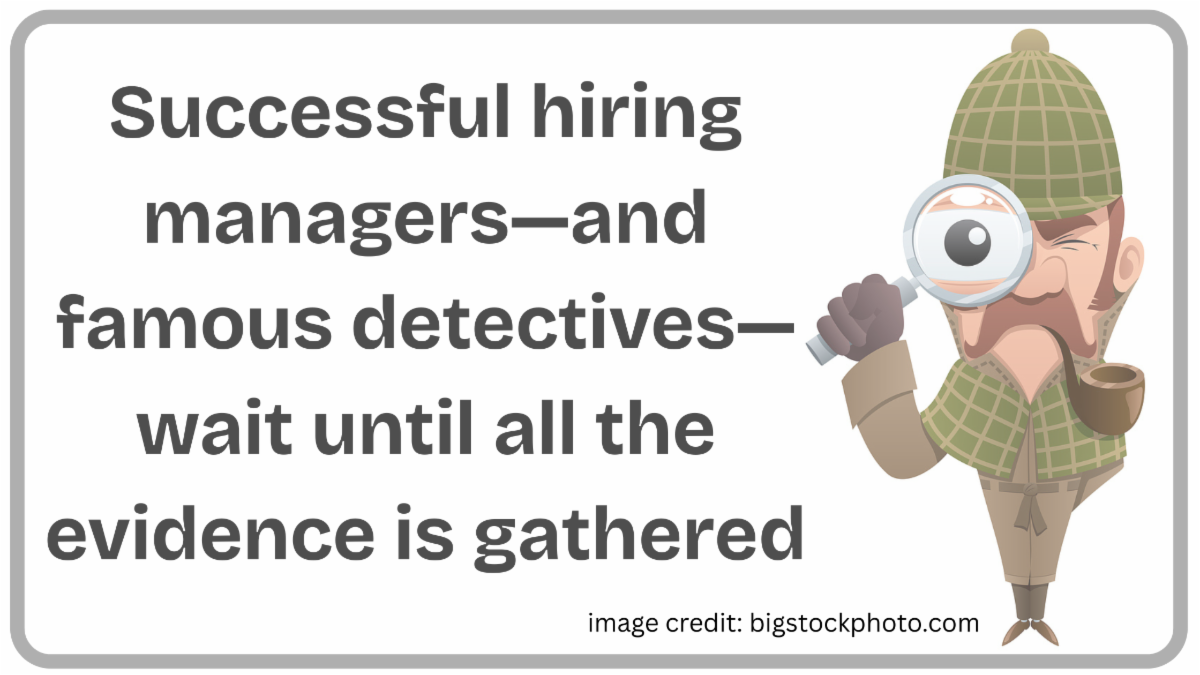
More comparing how detectives solve murders and how managers hire >>>

Describe a time when you collaborated with others to make a decision.


Why ask about this? Responses to this inquiry may help identify candidates who believe in the power of collaborative decision making; decisions based on the input of others are better decisions. 


Possible Followup Questions:


  • What was the decision that needed to be made?
  • Why did you feel it was appropriate to involve others?
  • Who did you ask to be involved?
  • Why did you select those individuals to participate?
  • How was their input used?
  • How do you decide when to involve others in decisions and when to make a decision yourself?


How candidates may respond and how to score those responses:


Unsatisfactory response (worth a score of 1) – These candidates provide little evidence of having involved others in decision making. “I was the boss. It was my job to make decisions. I understood the issues better than anyone else did.”


Acceptable response (score as 3) – These candidates describe how others were involved in decisions, but this involvement was limited in terms of frequency, the importance of the decisions to be made and the impact of the input on the final decision.


Outstanding “top-performer” response (worth a 5) – These candidates demonstrate a belief in the wisdom of those on their team. They also understand that not all decisions need to be made collaboratively, such as those that relate to trivial matters, or those that require information to which staff members do not have access to information that cannot be shared with them. When collaborative decisions are appropriate, the candidate carefully defines the parameters of involvement and how their input will be used (e.g., consensus building, majority decision, or as an “administrative” decision after considering the input received and other factors).


Reference Check Question: Describe a time when [candidate’s name) involved others when making a decision.


Caution: Each workplace and every manager is unique. Workplace cultures and values are different. There is no such thing as a perfect interview question. Questions that work for one manager may not work for another. Before choosing to use this, or any question, consider whether it fits your unique set of circumstances. Is the question right for you and your work environment? The same is true for the suggested rating scale, which may or may not reflect the culture of your organization or your observations of how your top performers respond to circumstances similar to those described. You should adapt both the question and rating guide to fit your circumstances and leadership style.


During my Interview Right to Hire Right workshops, participants learn to write behaviour description interview (BDI) questions based on their understanding of what makes top performers successful.

Recognition with a “Back-to-School” theme:


Fall is when students head back to school, which makes it an apropos time to focus on the learning needs of staff. Is there specific training or a course that would help staff members grow in their jobs or prepare them for their next career move (hopefully, within your organization)? Offering training that will help staff grow demonstrates that you value staff members and are pleased with their performance.


*****


Keeping with the back-to-school theme, you can acknowledge the team’s contributions and achievements with a special training event or a team-building activity.


*****


Fall is when parents stock up on school supplies—pencils, pens, notebooks, etc.—before children return to school. Prepare your staff for the next few months with the tools they need to recognize their peers—thank-you cards, sticky notes, peer recognition tips, etc. Check out Theme #20: Recognition for Everyone: Unleashing the Power of Peer Recognition: Part B How Staff Members Can Recognize Their Peers (p. 118).


*****

When staff return to work do more than ask, “How was your vacation?” Hold a fun contest and give awards to the staff member who travelled the furthest (both in a straight line from home and the total number of kilometres travelled), had the most unexpected vacation experience, provides the best reason for a staycation, offers the best reason to return to a destination visited previously and, for those who didn’t take a summer vacation, has the best reason to delay their vacation until later in the year.


*****


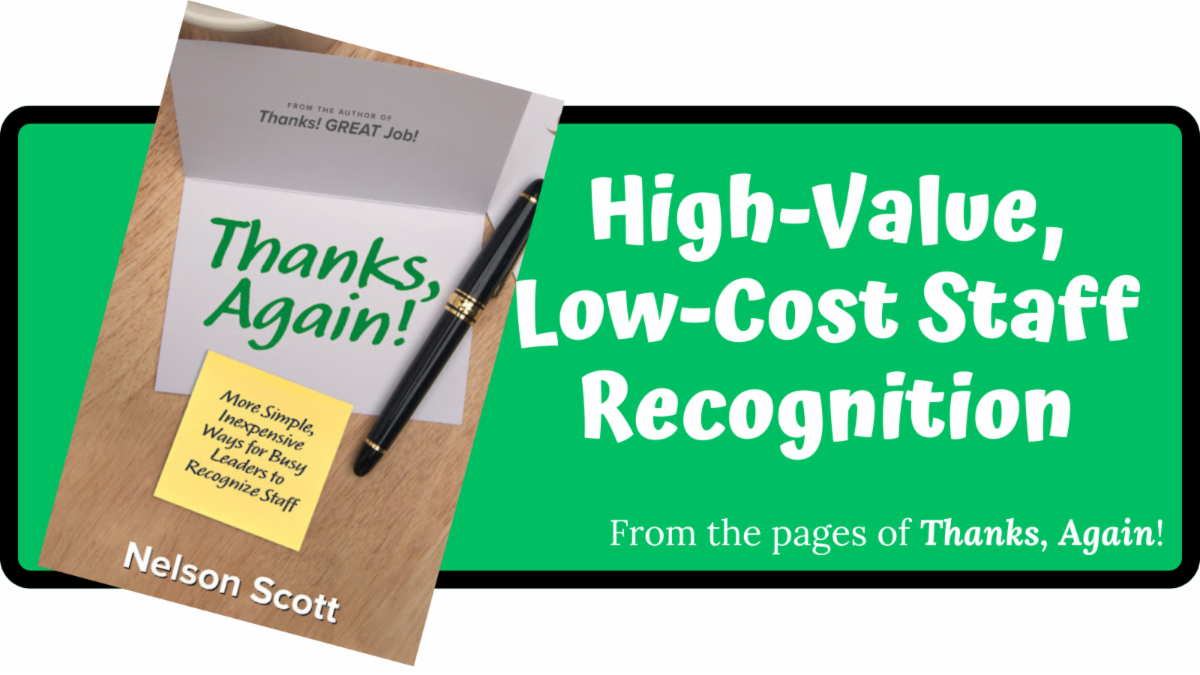
Thanks, Again! More Simple, Inexpensive Ways for Busy Leaders to Recognize Staff is available at Audreys Books, 10702 Jasper Ave., Edmonton (and on its website) and online from Amazon, Indigo, FriesenPress Bookstore, Barnes & Noble and on the Apple Books app.

CONTACT NELSON SCOTT:
Telephone: 780-232-3828 • Email: nelson@GREATstaffrecognition.com