| |
|
| |
In an age where Internet pages are being rewritten or simply x-ed out of the equation, we salute the Internet Archive once again. To date, it’s saved more than 835 billion web pages and 44 million books and texts, likening it to a Library of Alexandria for the digital age. |
|
|
| |
|
|
| |
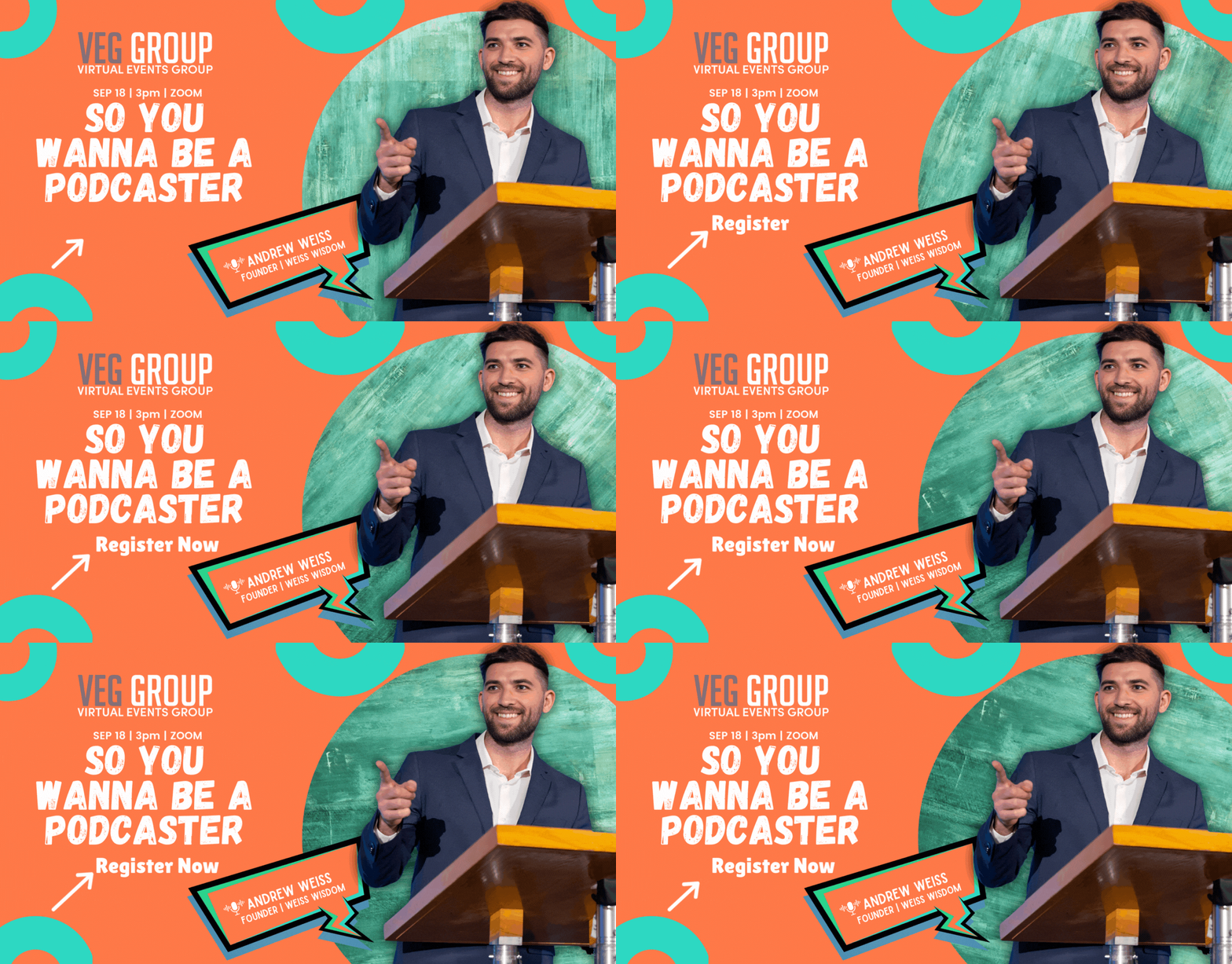
| September 18 | 3PM | Zoom |
| |
|
|
|
| |
Podcast Explosion: Do you like to listen? Do you have something to say? Find out why the global podcasting market was valued at around $25–30 billion in 2023, and is projected to reach $35–40+ billion by 2025. Learn how to tap into this explosive market with Andrew
Weiss, Partnership Director at Podfest. Register today for our Sept 18th meeting “So You Wanna Be a Podcaster.”
|
| |
|
|
| |
|
| |
| Why Some Immersive Experiences Fail Us |
|
| |
|
| |
|
| |
I’m just back from an African Safari trip that I won at a charity auction. 5 days in the bush, driving around in a jeep stalking the Big Five. My husband, a card-carrying member of the long-lens club, loved bumping around (I called it an African massage) in our jeep, photographing wild animals in their natural habitat. Part of me wished they’d just tag the animals
with a GPS and save us the gas money and the endless hours of peering through binocs. An old-fashioned immersive experience, it made me think about immersive experiences and why they work for some people and fall flat for others.
In London this summer, the Elvis Evolution was meant to immerse visitors in everything Elvis. With live musicians and actors, three bars and lots of multimedia, it was built to get your hips gyrating and feel the spirit of The King of Rock and Roll. One of the highlights was a
holographic performance. But the reviews were meh, and the entrance price was high. Most felt that it was more like a projection slide show/museum and not immersive at all.
Sphere in Las Vegas just recreated the 86-year-old Wizard of Oz movie in its immersive theatre that includes a huge projection screen, haptic seats, olfactory mechanics and the ability to launch things into the audience. |
| |
|
 |
| |
| Image credit: Sphere Entertainment |
| |
|
| |
Imagine that when the tornado hits Kansas, you can hear and feel the wind rattling, feel debris and leaves blow across your face. As snow falls on the poppies, you feel that you’re in the snow. Inflatable monkeys fly around the witch's castle and over your head. Effects will only take you so far.
The emotional magic of Oz is when Toto is reunited, when Dorothy bids farewell to the Emerald City and of course, when there’s no place like home. According to the NY Times review, the original movie ran 102 minutes, the immersive
remake for a new generation runs 77 minutes. AI magic and special effects trumped character development. Critics also blame AI for giving the characters a waxy, super-polished avatar-ish look, including Dorothy. For a deeper tech dive into how the original was transformed, read this behind-the-scenes article from Google.
One of the most popular and earliest immersive experiences, now recreated all over the world, is Immersive Van Gogh. It suffered similar flaws. Audiences appreciated vivid projections. Critics felt it lacked depth, especially in helping us to understand how Van Gogh suffered for his
art. Meow Wolf, also a multi-location phenomenon, does a much better job of combining plot line with immersion as a tale unfolds through whimsical artistry in each room.
|
| |
|
 |
| |
| Image credit: Beat the Bomb |
| |
|
| |
In Tokyo, teamLab Borderless earned fame as a completely immersive art museum where wandering through projections in various landscape-themed rooms is the experience. Beautiful, but critics complain about the repetitions vs. a traditional museum that has a variety of
art.
Immersive experiences are popping up in every nook and cranny, and with Halloween around the corner, haunted houses with various levels of immersivity, from live actors to tactile slime experiences, will abound. Some will succeed, others will leave you unmoved or only briefly entertained before tedium overtakes.
Immersive experiences are expensive to build and require a staff of creators, storytellers, and technicians. Emotional experience is the secret sauce. Razzle-dazzle will only get you so far. Content and context need to prevail. Here are a few thoughts.
The Take Home
A personalized souvenir, Instagrammable moment, or other memory that visitors can keep ensures lasting value.
Surprise
Room after room of special effects can get tedious without an element of the unexpected.
The Story Arc
It’s the story that grips you, making your immersive journey more contextual.
Interactivity
The worlds you interact with, not just look at, leave a more indelible impression. Touch-sensitive screens and the ability to interact with others add a layer of unforgettability.
Randomization
No two visits to the space should feel identical, or you’ve got a one-trick pony with few repeat visitors. |
| |
|
| |
| Humanoids Are Our Future Collaborators |
|
| |
 |
| |
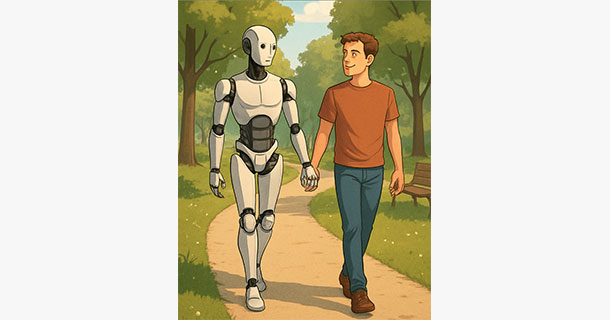
| Image credit: Robin using ChatGPT |
| |
|
| |
Hats off to Joanna Stern, a long-time colleague and one of our favorite Wall Street Journal tech reporters. She’s dedicated herself to a year of living with AI and robots as her collaborators in life. (Soon to be a book.) Laundry folding and lawn mowing robots have their
triumphs and failures, as you’ll see when you follow along.
Analysts at Goldman Sachs predict that by 2030, as many as one million humanoids could be part of the global workforce, primarily in logistics, manufacturing, and service roles. The growth can be attributed to a couple of things:
The Convergence of AI and Robotics
Robots were, until recently, mechanical marvels with limited “brains.” They were trained on simple repetitive tasks. Now, when combined with artificial intelligence capabilities, they can listen and act on multiple, complex instructions and have a conversational relationship with humans. Humanoids powered by advanced AI go beyond following pre-programmed instructions
by adapting to their environment, learning new skills, and responding to humans in natural ways.
Better Bodies: Articulation, Dexterity, and Computer Vision
At the same time, robots have been given AI-powered brains, and they’re also benefiting from improved engineering. A decade ago, most robots walked like toddlers on ice, had hands about as useful as salad tongs, and had limited vision recognition. Advances in motors, actuators, and sensors mean humanoids can now balance, bend, and grip with surprising finesse. They
can recognize many more objects in the real world, and are good at identifying and wayfinding complex paths. They’re not Olympic athletes or professional surgeons yet, though
they took part in a recent Robot Conference displaying their prowess climbing stairs, playing music, carrying objects, jumping, and dancing with a newfound smoothness.
Expanding Task Repertoire
For now, most robots are being tested in warehouses, focused mainly on lifting, carrying, and moving packages. Agility Robotics’ Digit is a good example. Digit doesn’t need to do everything a human can do—just a handful of useful, repetitive tasks. But we’re quickly moving
toward general-purpose robots that can learn new skills as required. Companies like Figure AI and Tesla (Optimus) are building general-purpose robots. We’ve seen everything from laundry-folding
robots to massage robots (already on the market) to robots as baristas and delivery messengers. Humanoid robots will also be able to do some of the more dangerous tasks that humans handle today, from working with explosives to carrying extremely heavy or highly toxic loads. Shortages in personnel in areas like elder care, housecleaning, agricultural work, and other
verticals will also be able to make use of robots. And for entertainment, watch the recent Human Robot Games held in Beijing, designed to show off humanoids’ newfound prowess.
For more on the promises and perils of living with our robot friends (frenemies?), read my article that will appear in the International Federation for Information Processing (IFIP) newsletter this month. |
| |
|
| |
Nano Banana’s Bag of Tricks
Nano Banana, a new Google project, has arrived. It’s Google’s latest AI model for generating and editing images with simple text prompts. Watch this magic trick that Chona Freedman, our Creative Director extraordinaire, concocted. |
| |
|
| |
|
| |
| |
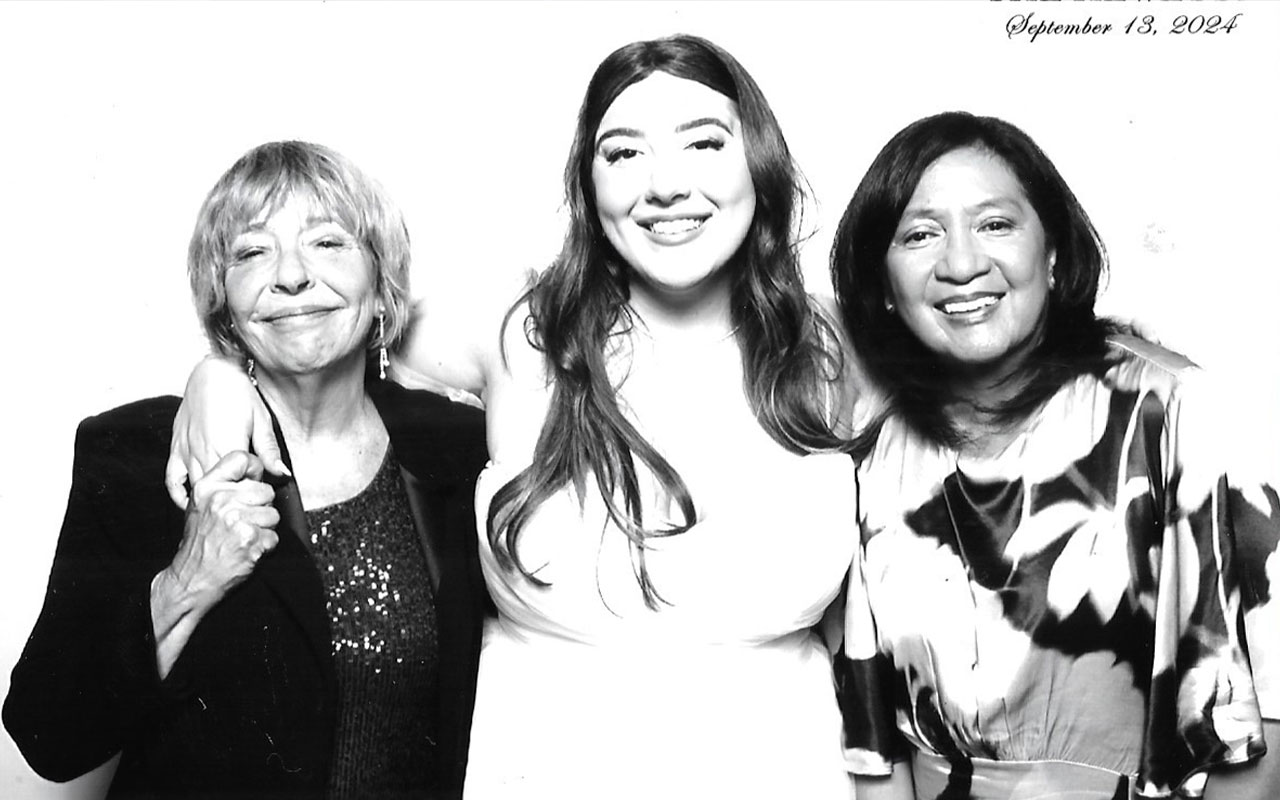
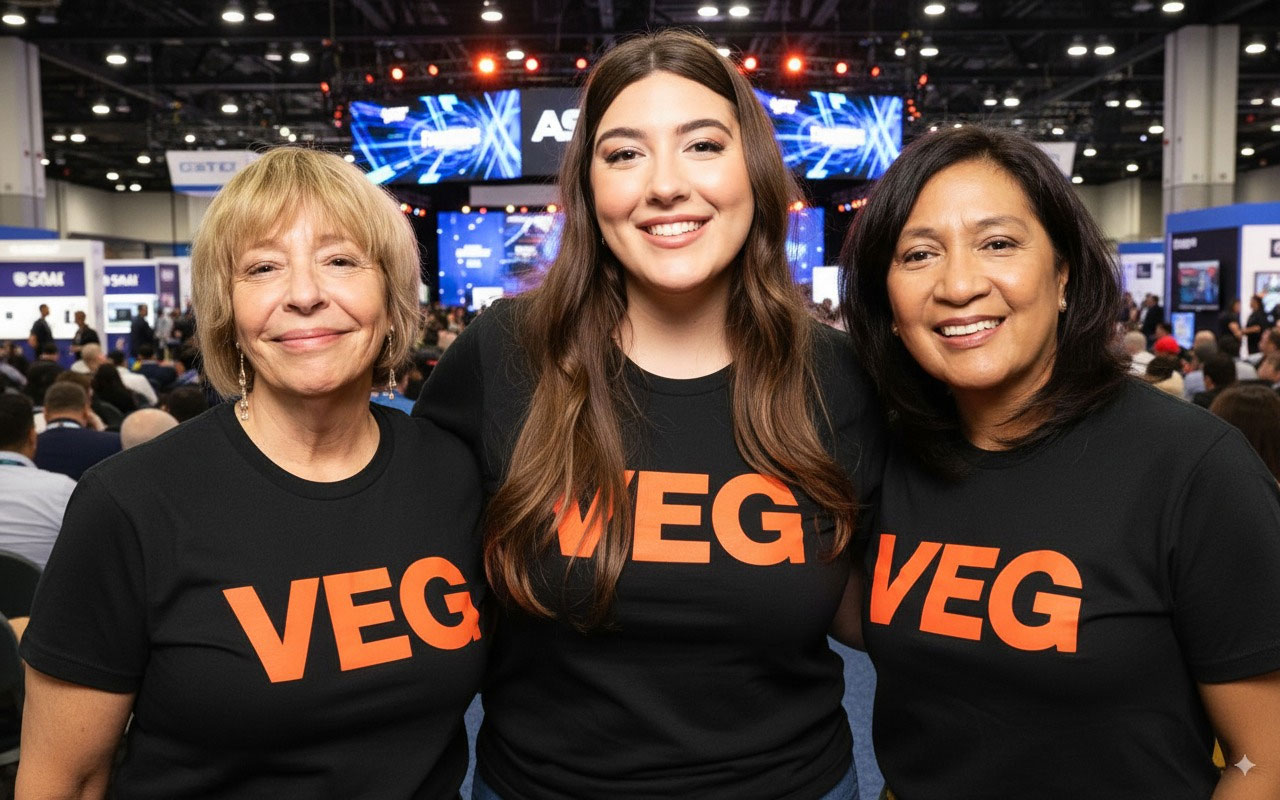
| She started with this original image of our team taken at Gigi Raskin’s wedding, But she wanted to strip us of our party clothes and put us into something more VEG appropriate. She opened Nano Banana and gave it the following prompt: Change outfit to black round-neck T-shirt with bold orange VEG text on front. Change background to a convention floor. |
| |
|
| |
|
|
| |
| |
| Next she uploaded the VEG Logo into the system. In a few clicks the wedding picture was transformed into a corporate image. |
| |
|
| |
|
|
| |
| |
| When it changed the photo to have a new background and imaginary logo-wear, the AI also messed with some of our facial features. I don’t smile like that, and Gigi (in the middle) looks very different. As usual, AI is impressive but flawed. |
| |
|
| |
|
|
| |
|
| |
AI Has Already Come for Our Jobs
We’ve been predicting this for a while. Now we have some supporting data. Stanford University has been studying the effects of AI on the Labor Market. In a study called Canaries in the Coal Mine, they’ve corroborated what we’ve seen anecdotally. The AI revolution is already having
a “significant and disproportionate impact on entry-level workers in the U.S. labor market,” especially those ages 22 to 25, in highly AI-exposed professions, such as software engineering and customer service. What to do? Last week’s newsletter looked at passive income as the new shiny shiny, but that’s for the lucky few, not for everyone. |
| |
|
 |
| |
|
|
|
| |
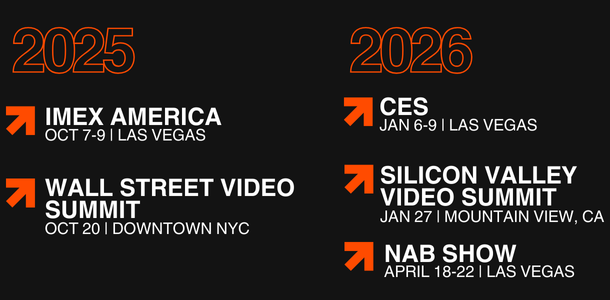
Watch our Instagram page to see how the IFA Berlin Creator Hub is going. We’re in Berlin all week helping whip up some creator magic. If you’re in the financial industry as the techie behind the camera ask for an invite to Wall Street Video Summit, where we’re programming a day that looks at the intersection of broadcast AV and the world of finance. Catch us at IMEX US in October, where we’ve teamed up with The Famous Group to create an AI-powered experiential activation. And remember, it’s never too early to think about CES, where we program content areas on Wearables,
Retail, Finance and a big Creator Space. |
| |
 |
| |
|
| |
 |
| |
| Sign up to get us in your inbox. |
| |
|
|
|
| |
|
|
| |
|
|
|
|
|