IDEAS, NEWS AND RESOURCES | September 2020
The Taos Institute's mission is to bring together scholars and practitioners concerned with the social processes essential for the construction of reason, knowledge, and human value, and their application in relational, collaborative and appreciative practices around the world.
|
|
The Many Ways to Get Involved! |
|
Brief Encounter with The Taos Institute |
|
"Building on appreciative inquiry and social constructionism, we discussed how individually and collectively we can construct new ways and possibilities of being."
|
"The focus of lectures and discussions were on strengths and resilience, and examining the intersection of science/policy/politics and personal values." |
|
A Story of Teaching, Knowledge and Emotions in the Times of Covid: In Three Acts
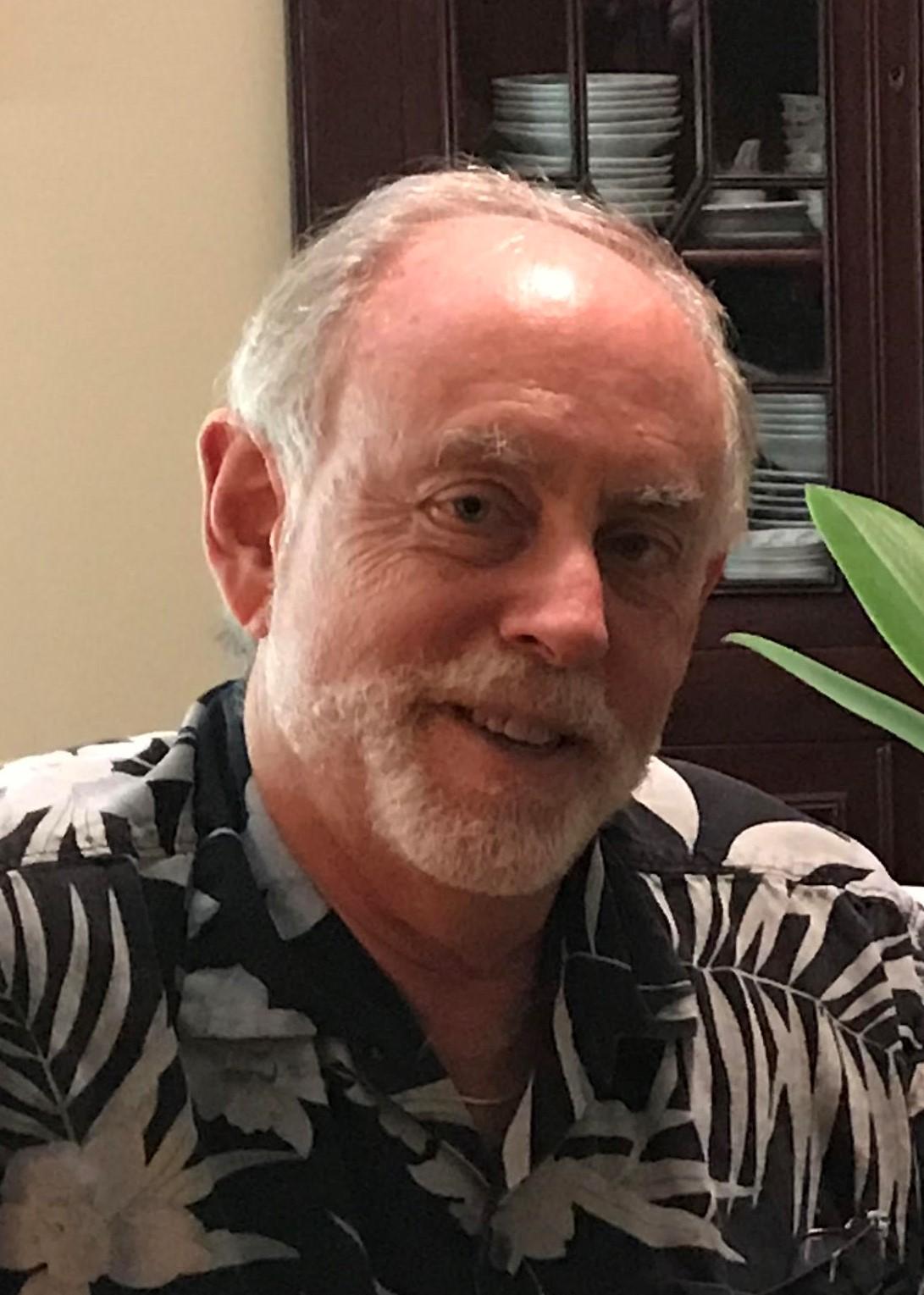
By Jerry Gale, Ph.D., Professor, Department of Human Development and Family Science, The University of Georgia, Taos Associate and member of the Associate’s Council
|
Act I: Preparing the classroom and students for the coming (pandemic) storm
Covid-19 is ‘noticed’ in the U.S. (March 2020):
When Covid-19 came to be noticed in the United States, my university shifted frequently on their plans and messaging to the campus community. Between March 2 and March 16, emails to the campus community went from “no reports of Covid-19 on campus” to “enjoy spring break and be ready for the semester when you return on Monday, 3/16” to “instruction is temporarily suspended for two weeks—effective on Monday, 3/16 to allow time to test our business continuity plans and online instruction modules and for state officials to continue to assess the current situation regarding coronavirus” and later that same day, “classes, when they resume, may be online” and 3 days later, “ignore the many rumors or unsubstantiated information that you might receive from other sources and classes will be online.” These communications were leading to confusion and a range of reactive emotions. Faculty were feeling burdened, overwhelmed and confused. Students were on a pendulum swinging from elation to fear, anxiety and uncertainty.
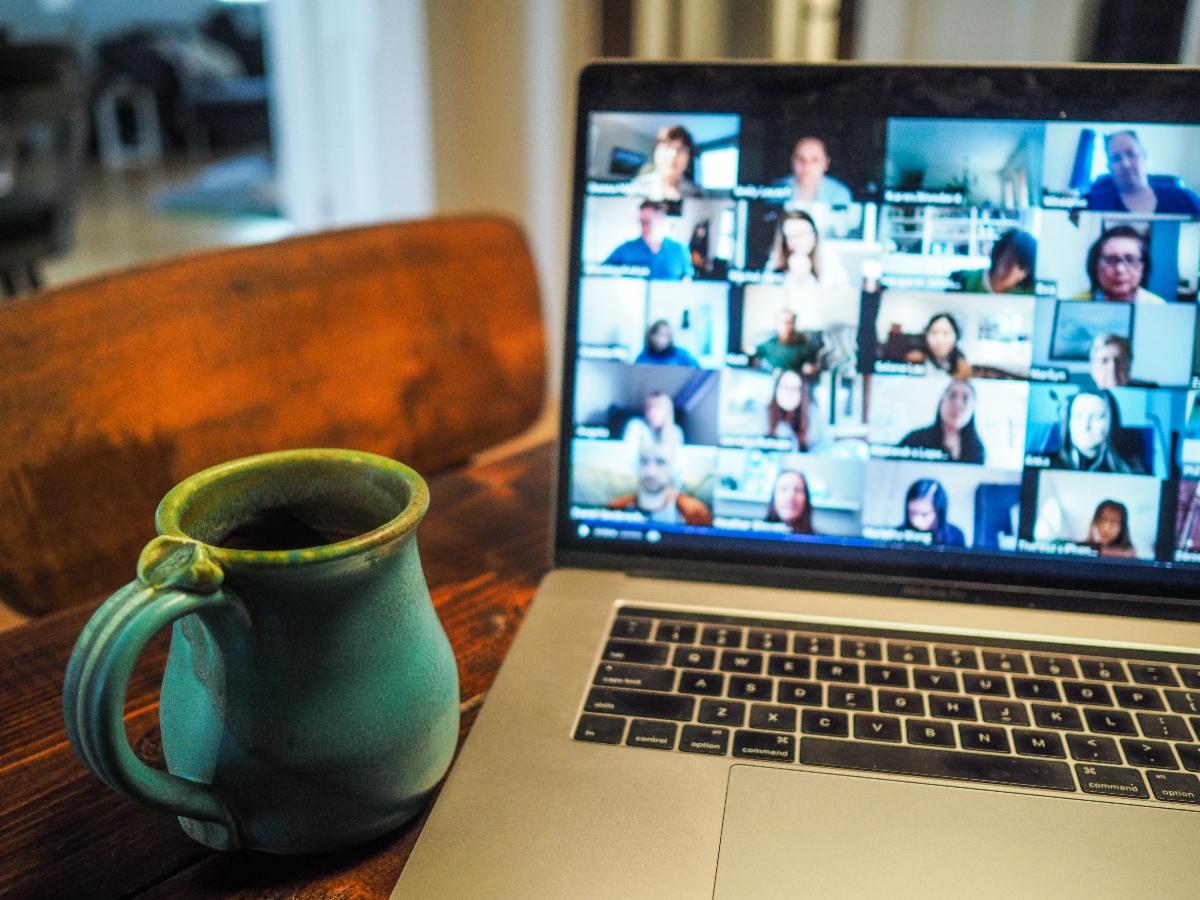
Act II (behind the zoom screen: constructing new realities)
Social constructionism and appreciative inquiry
The course I was teaching on civil discourse was built on the frameworks of social constructionism and appreciative inquiry. Social constructionism is how our intra and inter talk and actions provide the scaffolding of meaning making and our experiential worlds. Appreciate inquiry is a profound shift for viewing change processes, and considers ecological attunement of human systems in their environment to inquire into that system’s strengths, resiliencies, possibilities and successes. Taken together the two frameworks offers skills, practices and perspectives in achieving relational agency for addressing conflict, emotional reactivity and possibilities of personal and social beingness. Emotions and ideological values come into play as they become gravitational horizons influencing meaning construction. For example, emotions such as fear, anxiety and anger are mutually amplified by epistemologies of dualities (self/other), control, oppression, commodification and pathologies.
Teaching with a little help from my Taos friends
Social constructionism and appreciative inquiry shaped my teaching of all my courses. The civil discourse course, in particular was also shaped by my involvement with the Taos Institute. In the beginning of the semester I had already invited three other Taos Associates to participate in my class and they helped encourage and shape the reflecting process. Cees Hoogendijk, Peter Whitehouse, and Paul Leslie were involved. They participated through responding to prompts generated from the students in class. The students had bios of each person. Questions from the students centered around how each associate was addressing the pandemic personally and professionally as well as in their own location. Through recorded zoom conversations the four associates (myself included) shared and talked with each other about how appreciate inquiry and social constructionism were providing us the skills to navigate the changing global landscape. Cees, Peter and Paul were open and generous in sharing of their lives and responding to the students’ questions.
Act III: The experiences of teaching reverberated in my other classes
The fundamentals of social constructionism and appreciative inquiry guided my other courses. Hearing many students reporting some aspects of anxiety, uncertainty, fear, grief and loss of focus I began each zoom class with a guided meditation. I incorporated a variety of practices, but generally attended to breathing, awareness and scans of body, mind, emotions, energy and sense of purpose/value, as well as skills for releasing stress, enhancing concentration and opening up compassion for self and others. I shared local, national and international news reports about Covid-19 and how local and national establishments were responding to diverse populations including non-citizens, the elderly, people in prison, people of color, people of low SES, people identifying as LGBTQI, and people with disabilities, and more. We discussed how implicit bias and historic systemic racism/oppression effects institutions and policy with consequential effects. Acknowledging the science and impact of social determinants of health, the focus of lectures and discussions were on strengths and resilience, and examining the intersection of science/policy/politics and personal values. There was attention on the tension between individual agency and social/cultural constraints, and discussions on responsibilities and accountability including how the social media platforms can influence our thinking.
Coda
In all of three courses there were discussions on how the pandemic was disrupting or extinguishing many of our explicit and implicit traditions, ceremonies and rites of passage. Building on appreciative inquiry and social constructionism, we discussed how individually and collectively we can construct new ways and possibilities of being. We shared examples of how people and communities were creating novel ceremonies of celebration, transitions and loss.
|
|
A beautiful collaboration between the Taos Institute and Positivity Strategist has emerged to create this podcast series – a first for the Taos Institute! We invite you to listen to authors of the forthcoming Sage Handbook of Social Constructionist Practice as they share stories of innovation in their respective fields across the world: education, healthcare, therapy and more. To receive notifications of these shows as they go live every two weeks and to listen to past episodes, please visit Season 5 Podcast.
|
|
|
|
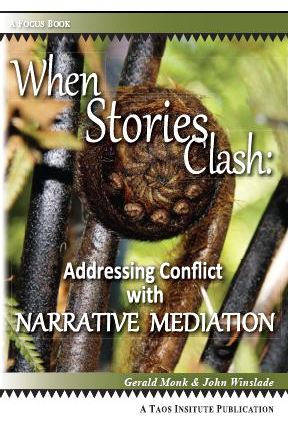
Helping people move further away from what produces conflict and closer to the relationships they prefer is what narrative mediation seeks to produce. Conflict resolution through the lens of social construction, and framed as narrative mediation, offers that conflict between individuals is usually constructed and exists within a larger community context.
John Winslade Ph.D. is a counselor educator who has specialized in the application of narrative ideas in conflict resolution. His academic career was split between New Zealand and the United States. He has co-written 12 books and many book chapters and articles on narrative therapy, narrative mediation and conflict resolution, grief therapy, multicultural counseling and education.
|
|
FREE WEBINAR
Sept 24, 2020 - 10:00-11:30am New York time, New York time
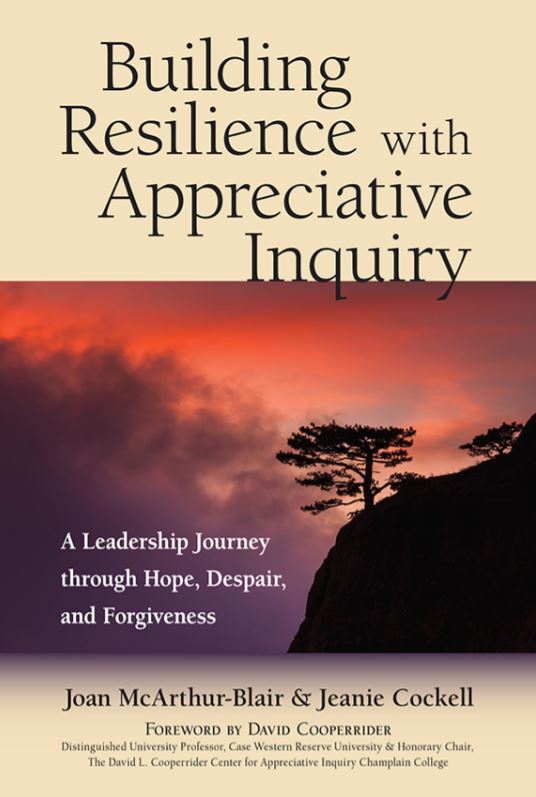
with Joan McArthur-Blair and Jeanie Cockell
|
|
About the book
Leaders cannot predict the complex challenges they are called on to face. Veteran consultants Joan McArthur-Blair and Jeanie Cockell show that Appreciative Inquiry (AI) is an invaluable tool to build resilience in the midst of despair. Leaders can use AI to increase their ability to weather the storms they’ll inevitably encounter and come out stronger. A profound guide, this book features personal accounts from leaders across a variety of settings describing how they’ve used appreciative resilience to endure the ongoing cycle of hope, despair and forgiveness.
About the Dialogue
Join Joan and Jeanie in an interactive conversation about honing the practice of appreciative resilience in our daily lives.
Questions to explore:
- How are you practicing hope and a hopeful view?
- How are you maximizing your strengths in times of despair?
- How are you undertaking the will to forgive?
- How are these practices honing appreciative resilience for you?
About the Authors
|
|
Professional Development Opportunities |
|
Hosted by
Sept 19-12, 2020
A Weekend Practicum with
Lois Holzman & Faculty
Learn the conceptions and develop the practical tools of social therapeutics. See how these discoveries can work for you, your teams, communities and projects. For experienced organizers and newly becoming activists. Register here. |
|
Oct 19 - Dec 7, 2020
A 6-Week Online Course
Relational theory now provides cutting edge ideas relevant to practices across the professions. The major theoretical shift is from the traditional focus on individuals to the relational processes that are co-produced. This 6-week online course introduces common premises and orienting ideas central to relational theory. The course consists of six modules with online conference meetings, readings, videos and online dialogues. For more information click here.
|
|
Join in this educational series of webinars, Sept-Nov, to activate antiracist practices in your personal and professional lives. Click here for more information. |
|
Social Construction and Transformational Change Practices
January 28-30, 2021 - Save the Date.
This seminar will consist of virtual meetings on zoom for three hours each day with readings and activities for offline participation.
Details available soon.
|
|
Oct 15-17, 2020
The fourth annual gathering where AI practitioners, and anyone interested in strength-based approaches, can come to renew their energies, revitalize their practice, and reflect with each other on what the world is calling for from this community. The event includes inspiration from industry thought catalysts, peer-to-peer learning, and large and small-group interactive dialogues. More details here. |
|
Feb 5-26, 2021 (Fridays)
This workshop consists of four 2-hour conversations using a social constructionist positioning to unpack and exchange ideas from readings and daily understandings of familiar concepts in order to reconsider the merits, utility, necessity, and potentials for continuation and/or change of those concepts. We refer to this deeper and wider examination with the verb, “troubling.” We have found that when we engage in such examinations or what we call, Research As Daily Practice with a team or group, we are able to create new possibilities, effective changes, and understandings for going forward.
There will be live group calls on Fridays, 10:00 am - 12:00 noon New York time/US Eastern time.
|
|
April 19 - June 6, 2021
This course introduces common premises and orienting ideas central to dialogues on social construction. The ways in which constructionist ideas differ from traditional, realist understandings of the world are explored. This course features videos and writings of Ken Gergen, Mary Gergen, Sheila McNamee, Harlene Anderson, Barnett Pearce, John Shotter, Saliha Bava and more. It consists of: weekly live calls, readings, videos, assignments, activities, learning partner conversations, online commenting, and writing. There will be live conference calls on Mondays from 11:00 AM - 12:30 PM New York time/Eastern US time. A mandatory orientation is scheduled for April 20, 2021.
|
|
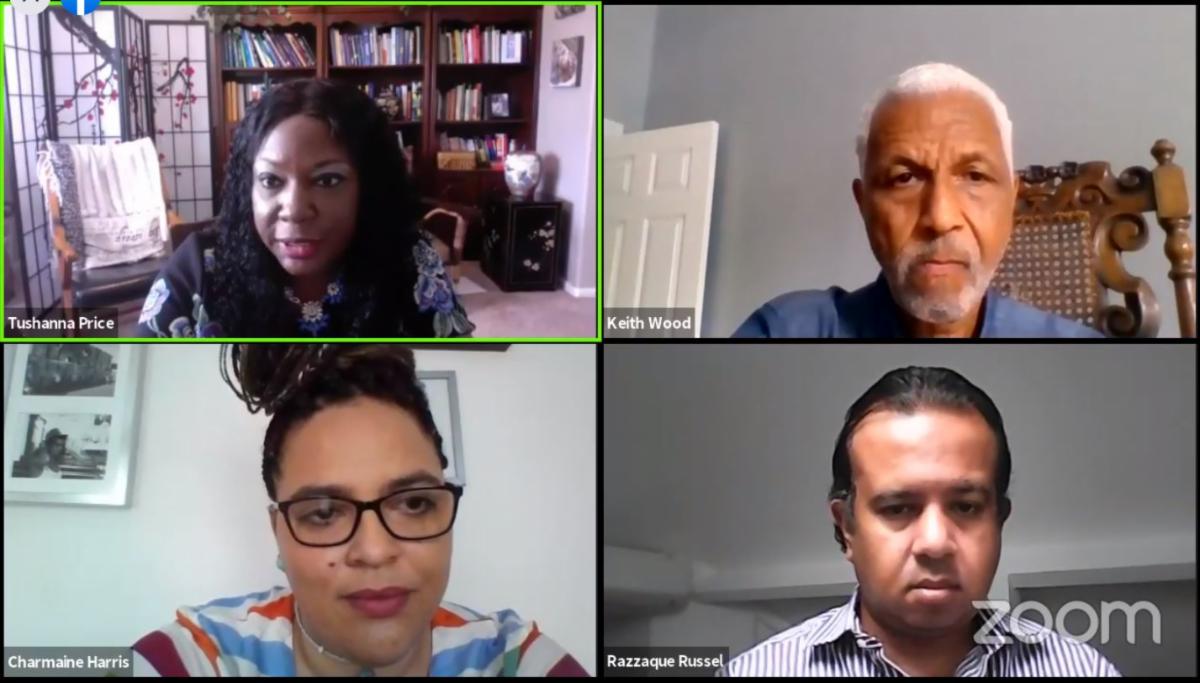
The HOPEnDialogue project, Open Excellence and Mad in America is an ongoing series of ‘Town Hall’ discussions exploring the challenges, learnings, and opportunities for personal and societal growth found through dialogical practices.
This video is a must-see video featuring five Black psychotherapists sharing their stories and their practice of Open Dialogue.
|
|
Featured Article
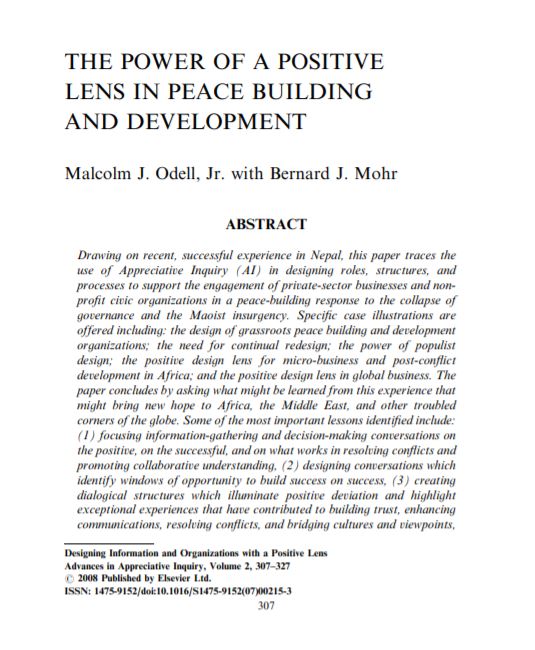
by Malcolm J. Odell, Jr. with Bernard J. Mohr
Drawing on successful experiences in Nepal, this paper traces the use of Appreciative Inquiry (AI) in designing roles, structures, and processes to support the engagement of private-sector businesses and nonprofit civic organizations in a peace-building response to the collapse of governance and the Maoist insurgency. What might we learn about peace building and community development for our times in the stories shared in this paper?
|
|
 |
International Journal of Collaborative-Dialogic Practices
This free journal brings together members of a growing international community of practitioners, scholars, educators, researchers, and consultants interested in postmodern collaborative practices. Issue 8 is now available..
|
|
|
|
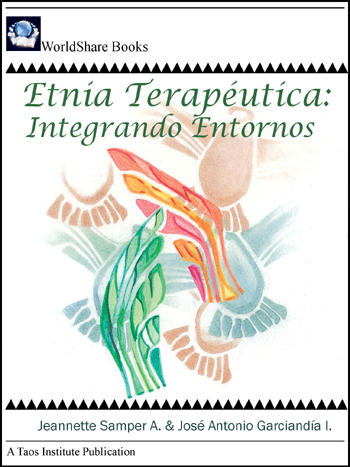
WorldShare Books
FREE downloadable books in 12 different languages.
With over 30 books in English and many more from around the world, you will enjoy reading about education, spirituality, organizational life, community building, group dynamics, leadership and more.
Order your free book today!
|
|
|
|
|
Positive Aging Newsletter
By focusing on the positive aspects of aging, and the availability of resources, skills, and resiliencies, research not only brings useful insights into the realm of practice but creates hope and empowers action among older people. By moving beyond practices of repair and prevention, to emphasize growth-enhancing activities, practitioners also contribute more effectively to the societal reconstruction of aging.
|
|
|
|
Manuscripts for Downloading
Access hundreds of articles and papers on topics such as:
- Appreciative Inquiry
- Collaborative Practices
- Dialogue
- Appreciative Cultures
- Creativity and Improve
- Narrative Practices
- Relational Learning
- Relational Research
- Qualitative Research
- and so much more!
|
|
|
|
|
Donate to the Taos Institute
Given the current global context into which we are moving, the work in which we are engaged is more important than ever. We invite you support the work of institute. Read more
|
|
|
|
John Shotter Memorial Fund
John Shotter's death on December 8, 2016, was a profound loss for the scholarly world, for the Taos Institute, and for many of us personally. Read more
|
|
|
|
|
Jane Magruder Watkins Memorial Fund
We remember Jane as an avid educator. This fund will support students who apply for a need-based scholarship to attend the various Taos programs. Read more
|
|
|
|
Peggy Penn WorldShare Fund
Supports the publication of new WorldShare Books on topics related to the work and interests of Peggy Penn, Ph.D. Read more
|
|
|
|
|
|
|
|
|