| |
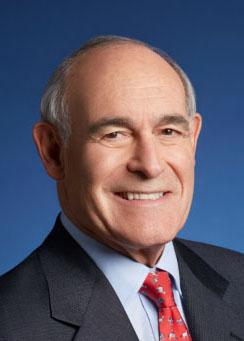
A Message from Dr. Desnick
It is with deep gratitude that I welcome you to the inaugural edition of the APEX Quarterly Update. This has been a defining year for our collaborative. In March and May 2026, our Basic and Clinical Research Summits brought together the foremost porphyria experts from the United States and Europe to identify critical gaps and commit funded research to closing them.
APEX is stronger and more connected than ever. I am deeply grateful to our board, our scientific community, our donors, and our patient advocates for making this work possible.
With gratitude and optimism,
Robert J. Desnick, MD, PhD
President, American Porphyrias Expert Collaborative
| | | | |
From the Desk of the Research & Operations Lead
Since joining APEX, my focus has been on strengthening the collaborative from the inside out. That means deepening our relationships with the Porphyria Centers of Expertise, advancing the APEX Longitudinal Study, cultivating and expanding our industry partnerships, and working alongside Dr. Desnick and our board to bring key initiatives from concept to action.
The work ahead is ambitious and the partnerships that have defined APEX are being built upon with renewed purpose and intentionality. It is an honor to help lead it.
With commitment and purpose,
Nofisat Bakare, MBA, PMP
| | | |
Advancing Porphyria Research: APEX 2026 Summit Recap
In 2026, APEX convened two landmark scientific gatherings in Bethesda, Maryland: the International Heme Biosynthesis Basic Science Research Summit, held March 13–15, and the Clinical Research Summit, held May 15–17.
The Summits brought together leading porphyria researchers and clinicians from the United States and Europe. Participants worked in internationally co-led teams to assess current knowledge, identify critical gaps, and develop actionable research proposals centered on the needs of people living with porphyria.
The proposed research spans important areas across the porphyrias, including heme biosynthesis, unanswered questions in acute intermittent porphyria, EPP liver complications and disease modifiers, the causes of acute hepatic porphyria attacks, neurological and liver complications, and long-term treatment outcomes.
More information about the research projects selected for support and APEX’s funding commitments will be shared soon.
We are deeply grateful to every researcher, clinician, patient representative, partner, and supporter who contributed to these Summits. Together, we are transforming critical research gaps into focused plans for progress and creating forward motion for people and families living with porphyria worldwide.
| |
|
Porphyria Centers of Expertise (PCE)
APEX coordinates a national network of 13 currently listed Porphyria Centers of Expertise (PCEs) at leading academic medical institutions across the United States. The PCEs form the clinical and research backbone of APEX. Together, they expand access to expert care, support collaborative research, advance best practices, and help train the next generation of porphyria specialists.
View our full network of Porphyria Centers of Expertise at:
https://www.apexcollaborative.com/centers-of-expertise
Institutions formally designated as APEX Porphyria Centers of Expertise are recognized by the official APEX PCE emblem, signifying their participation in the national PCE network and commitment to excellence in porphyria care and research.
Healthcare institutions interested in becoming an APEX Porphyria Center of Expertise are invited to contact us at info@apexcollaborative.com.
New Porphyria Center of Expertise
APEX is pleased to welcome UTHealth Houston as the newest addition to its national network of Porphyria Centers of Expertise. Led by Dr. Akshata Moghe, the center is now open as a participating site for the Longitudinal Study of the Porphyrias.
Dr. Moghe is also working closely with Dr. Karl Anderson at the University of Texas Medical Branch to transition the porphyria diagnostic laboratory to its new home at UTHealth Houston. Additional information about the laboratory transition, clinical services, and research activities will be shared as plans are finalized.
The addition of UTHealth Houston expands the geographic reach of the APEX network and creates another opportunity for people living with porphyria to participate in research that will strengthen our understanding of these rare diseases over time.
|
Longitudinal Study Update
PULSE: Advancing Our Understanding of Porphyria Over Time
For more than 15 years, the Longitudinal Study of the Porphyrias has helped researchers understand the natural history, clinical outcomes, and lived experiences of people across the porphyrias.
Launched in 2003 by the Porphyrias Consortium with support from the National Institutes of Health through NCATS and NIDDK, the study is now continuing as an APEX program.
The study has been rebranded as PULSE: the Porphyria U.S. Longitudinal Study and Evaluation, reflecting a renewed commitment to building upon this important body of research. With more than 1,200 participants and over 50 resulting publications, PULSE provides a critical foundation for improving diagnosis, guiding care, identifying unmet needs, and advancing future treatments for the porphyrias.
As APEX prepares for the next phase of PULSE, participating Porphyria Centers of Expertise will play a central role in expanding enrollment and strengthening long-term data collection across the porphyrias.
|
| | |
Board Member Spotlight
Each quarter, the APEX Quarterly Newsletter highlights one of the extraordinary clinicians and scientists who make up our Board of Directors. For our inaugural edition, we are pleased to feature Dr. Herbert L. Bonkovsky.
Dr. Bonkovsky is Professor of Medicine at Wake Forest University School of Medicine in Winston-Salem, North Carolina, where he has dedicated his career to advancing the understanding and treatment of porphyria and liver disease.
His connection to porphyria spans more than five decades. He was the first physician to administer intravenous heme to a patient with acute porphyria in 1970, a treatment that remains the standard of care for acute attacks to this day. He was also the first to demonstrate that a deficiency in the enzyme ferrochelatase is responsible for Erythropoietic Protoporphyria (EPP).
"With rare diseases, every patient represents a clinical trial of n=1 because each is unique. It is important to listen to each patient and to try our best to address questions, symptoms, and concerns."
Herbert L. Bonkovsky, MD
Professor of Medicine, Wake Forest University School of Medicine
| | | |
On the Horizon: Speaking Engagements and Scientific Presentations
APEX board members and Porphyria Center of Expertise Principal Investigators are active voices in the rare disease and heme biosynthesis scientific community. Below is a selection of upcoming speaking engagements and conference presentations by our experts.
Recent Speaking Engagement:
Akshata Moghe, MD, PhD
2026 American Neurogastroenterology and Motility Society Clinical Course
Denver, Colorado | August 8, 2026
Presentation: Mystery Diagnosis: A Rare Cause of Abdominal Pain
Co-presented with Darren Brenner, MD, Northwestern University
Upcoming Abstract Presentations:
Pediatric Dermatology Research Alliance (PeDRA) Congress
Alexandria, Virginia | October 15–17, 2026
Additional Safety and Efficacy Results from the HELIOS Study: A Phase 2, Open-Label, Long-Term Extension Study of Bitopertin in Erythropoietic Protoporphyria
APEX investigators: A. Yeung, S. Keel, H.L. Bonkovsky, K. Anderson, M. Balwani, C. Levy, M. Thapar, B. Wang, and B. McGuire, with additional collaborators.
Previously presented at the European Hematology Association Annual Meeting in June 2026, this research will also be presented at the 2026 PeDRA Congress.
American Society of Hematology (ASH) Annual Meeting
New Orleans, Louisiana | December 12–14, 2026
APOLLO: Baseline Characteristics of a Phase 3, Randomized, Double-Blind, Placebo-Controlled Confirmatory Study of Bitopertin in Adults and Adolescents with Erythropoietic Protoporphyria or X-Linked Protoporphyria
APEX investigators: A. Yeung, K. Anderson, M. Balwani, H.L. Bonkovsky, S. Keel, C. Levy, and B. Wang, with additional collaborators.
Submitted for presentation at the 2026 ASH Annual Meeting.
Research & Publications
APEX investigators continue to advance porphyria research through publications and collaborative scientific studies. Recent scholarly activity across the APEX network includes:
Recent Publication
Accessibility and Harmonization of Biochemical Tests for Diagnosis and Monitoring of Porphyrias in the United States: Recommendations by Members of the American Porphyrias Expert Collaborative (APEX)
Published in Molecular Genetics and Metabolism in 2026, this collaborative work provides recommendations from APEX members focused on improving the accessibility and harmonization of biochemical testing for the diagnosis and monitoring of porphyrias in the United States.
Research in Progress
Additional manuscripts from APEX investigators are currently submitted or under review, including research examining acute intermittent porphyria, erythropoietic protoporphyria, the APOLLO Phase 3 study, and clinical and molecular findings across the porphyrias. Future issues will highlight these studies as they are published.
Share Your Updates
APEX investigators and PCE teams are encouraged to share upcoming presentations, publications, research milestones, and speaking engagements with the APEX team at info@apexcollaborative.com for consideration in future issues.
| | |
What is Happening at APEX?
APEX Committee Structure
APEX’s committee structure has been carefully developed to strengthen organizational leadership, support effective operations, and advance its scientific and educational priorities. Each committee is guided by a formal charter and has defined aims, responsibilities, and priorities.
The established committees include:
- Education Committee: Oversees educational content, career-development opportunities, professional training, and planning for the biennial International Porphyrias Symposium.
- Operations Committee: Supports communications, membership, publications, and administrative functions.
- Research Committee: Advances translational and clinical research, research funding, and scientific publications. The committee also steers the Longitudinal Study workstream.
- Western Hemisphere Committee: Builds relationships with porphyria physicians, centers, and partners across Latin America and the broader Western Hemisphere.
A call for APEX members interested in serving on these committees will be shared in the near future.
| | |
Research Grants Update
APEX is committed to supporting innovative basic, translational, and clinical research that advances the understanding of human heme biosynthesis and the porphyrias, develops the next generation of investigators, and improves outcomes for patients and families.
2024 Research Awards - $500,00 Total
In 2024, APEX supported research through its NextGen and pilot grant initiatives, including:
APEX R01 Supporting Grant - $150,000
PI: Makiko Yasuda, MD, PhD, Icahn School of Medicine at Mount Sinai
“Enhancing RNAi Therapeutics by Suppression of 5-Aminolevulinic Acid Synthase 1”
APEX Basic/Translational Research Grant - $150,000
PI: Bruce Wang, MD, University of California, San Francisco
Characterizing heme production and molecular regulation in the liver and the hepatic response to abnormal accumulation of heme intermediates
APEX Mentored Young Investigator Research Grant - $100,000
PI: Ibrahim Elsharkawi, MD, Icahn School of Medicine at Mount Sinai
Mentor: Makiko Yasuda, MD PhD (Expert APEX Member)
The Role of Mitochondrial Copy Number in Modulating Disease Severity and Penetrance of Acute Intermittent Porphyria
APEX Pilot Grants - $100,000 ($50,000 each)
PI: Rebecca Karp Leaf, MD, Massachusetts General Hospital
Evaluation of the risks and benefits of sex hormones in women with acute hepatic porphyria
PI: Hetanshi Naik, PhD, MS, CGC, Stanford University
Characterizing the Psychosocial Effects and Developing a Patient Reported Outcome Measure for Congenital Erythropoietic Porphyria
2025 International Research Prize - $250,000
Yvette Yien, PhD, of the University of Pittsburgh, was awarded the International Human Heme Biosynthesis & Porphyrias Prize for her project, “Iron Status and CLPX Mutations as Modulators of Porphyria.”
2026 International Postdoctoral Fellow Grants -$500,000
In 2026, APEX awarded five $100,000 International Postdoctoral Fellow Grants:
- Cindy Ament, PhD, University of California, San Francisco: Investigating chronic heme precursor accumulation and non-cirrhotic primary liver cancer in hepatic porphyrias
- Lenore Yalom, PhD, Massachusetts General Hospital: Defining cutaneous signaling networks in erythropoietic protoporphyria
- Rory Tinker, MD, Icahn School of Medicine at Mount Sinai: Using electronic health records to map diagnostic delays in porphyria
- Shahriar Sohel, MD, Icahn School of Medicine at Mount Sinai: Developing a human stem cell-derived hepatocyte model for acute intermittent porphyria
- Sonali M. Vaidya, MSc, University of Bonn: Applying biochemical and bioinformatics tools to advance the understanding of porphyrias and related diseases
2026 Research Summits - ~$3M
The March Basic Science Research Summit and May Clinical Research Summit brought international experts together to identify critical research gaps and develop actionable proposals. Additional information about the projects moving forward will be shared as proposals and next steps are finalized.
| | |
A Message from Kristen Wheeden, President, United Porphyrias Association
At United Porphyrias Association, our mission and vision depend on partnership and collaboration with APEX. APEX's network of experts, centers, and research gives patients a direct line from the laboratory to the exam room, and UPA is proud to make sure the patient voice is part of that work.
This section highlights the events, resources, and research opportunities available to our community right now. We're grateful for the dedication of our extended expert community and industry partners for advancing the science and care for our patient community!
With care,
Kristen
UPA Update: Advancing Community, Education, Research, and Advocacy
As APEX’s patient advocacy partner, the United Porphyrias Association continues to expand programs that connect the porphyria community with expert information, research opportunities, practical support, and one another.
Bringing the community together: More than 140 patients, caregivers, and family members are expected at Porphyria Palooza, October 9–11 in Kansas City. The weekend will include educational sessions with leading porphyria experts, complimentary one-on-one expert appointments, youth programming, and opportunities for patients and families to build lasting connections.
Expanding education and resources: UPA recently released webinar recordings on liver surveillance and care in the acute hepatic porphyrias with Dr. Bruce Wang and on porphyria and mental health with Julie Wells of Give an Hour. Dr. Wang also joined the community for a live question-and-answer session on September 26.
Supporting research participation and treatment access: UPA is gathering patient experiences with health insurance to strengthen future support and access initiatives; has recently supported a Stanford University project on Pain in EPP/XLP; is also connecting eligible patients with the PATHWAY clinical study of PORT-77 for EPP and XLP; and helping interested families navigate Disc Medicine’s bitopertin Expanded Access Program, which currently has five open sites in the United States.
Increasing awareness and visibility: UPA and the EPP/XLP community were recently featured in a two-part Behind the Mystery segment on Lifetime’s The Balancing Act. Ryan and Nichole Beier shared their family’s experience with EPP, while Dr. Angelika Erwin provided medical perspective and UPA highlighted available support and resources. UPA also represented the porphyria community at the Global Genes Rare Drug Development Symposium, strengthening connections across patient advocacy, research, clinical care, and industry.
International connections: UPA Latin America is expanding Spanish-language Connect UP meetings and launching “Find Your Community,” a series introducing patients to porphyria organizations and resources throughout the region. Recent activities included an art therapy session with Alas Púrpuras in Colombia and support for professional porphyria education led by CIPYP in Argentina.
Strengthening advocacy and patient voice: UPA is helping the community understand the FDA’s 2025–2030 Accelerating Rare Disease Cures Strategic Plan and the opportunities it creates for innovative study designs, natural history data, biomarkers, and stronger patient engagement. Junior Ambassadors are also contributing their voices through new articles about attending school with porphyria, managing accommodations, and navigating the emotional impact of living with a rare disease.
Through Connect UP groups, the Porphyria Together Facebook community, the new WhatsApp Community, patient storytelling, education, advocacy, and research engagement, UPA continues to ensure that the experiences and priorities of patients and caregivers remain at the center of progress across the porphyrias.
| | |
Upcoming Events
International Conference on Porphyrins and Porphyrias-Istanbul, Turkey-March 14 to 17, 2027
Early bird registration deadline: December 31, 2026
This internationally recognized conference brings together the world's leading porphyria researchers, clinicians, and patient advocates. APEX members are encouraged to register early.
The International Porphyrias Symposium 2027 will be held Fall 2027 – date and venue to be announced soon.
| | | | |