ELC and Coalition Partners
Advocate for Increased School Funding | | |
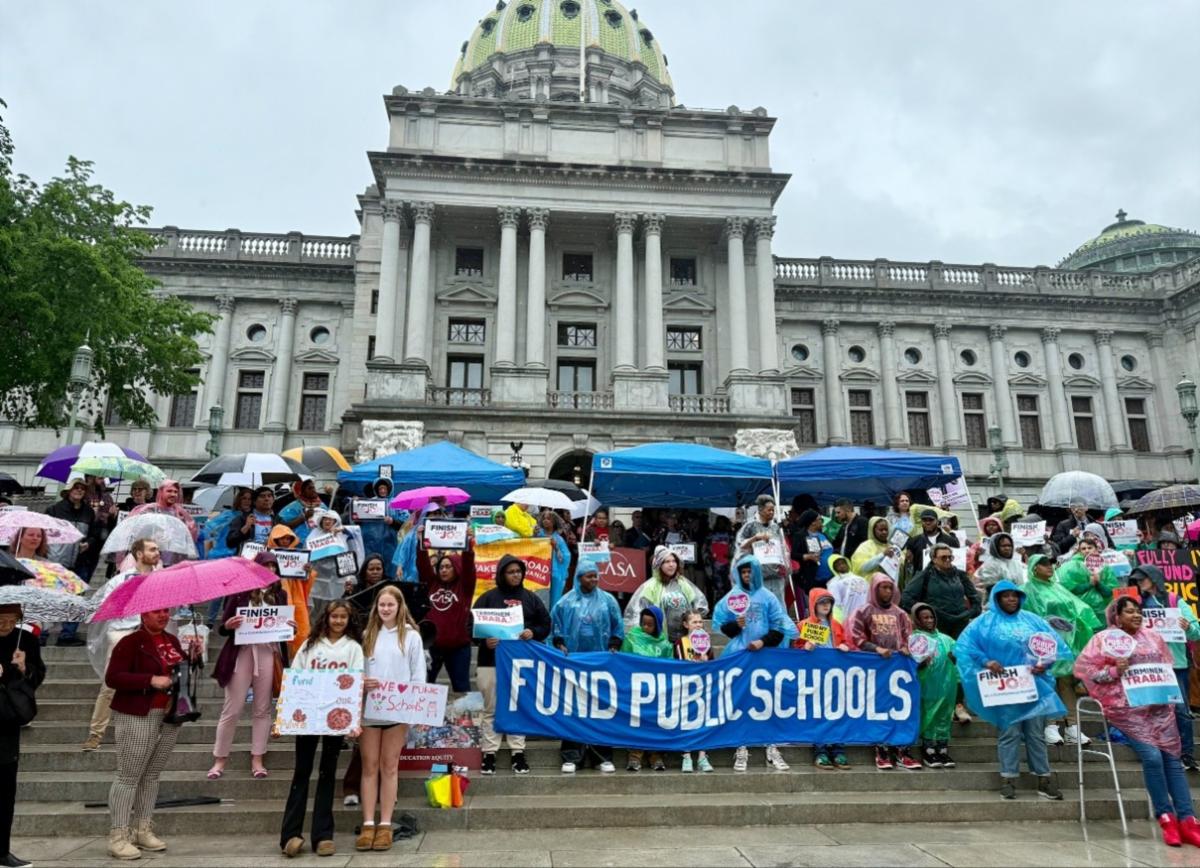
For months, the Education Law Center and our PA Schools Work coalition allies have urged state legislators to accelerate the timeline to get all school districts the resources they need. On May 13, we took our message to Harrisburg for a Public Education Advocacy Day, which included a rally and meetings with legislators.
Pennsylvania officials have acknowledged that 348 school districts are being shortchanged on state funding by $4.5 billion annually. Gov. Shapiro’s 2025-26 budget proposal includes a second installment of a half-billion dollars in increases for these underfunded districts — a positive starting point. Read more about the funding we need our state elected officials to allocate to bring PA closer to constitutional compliance.
Please keep contacting your state legislators to let them know that increased state funding to our schools is making a difference already. Urge them to support the governor’s proposal. These district fact sheets from our PA Schools Work coalition provide data on how each district would benefit.
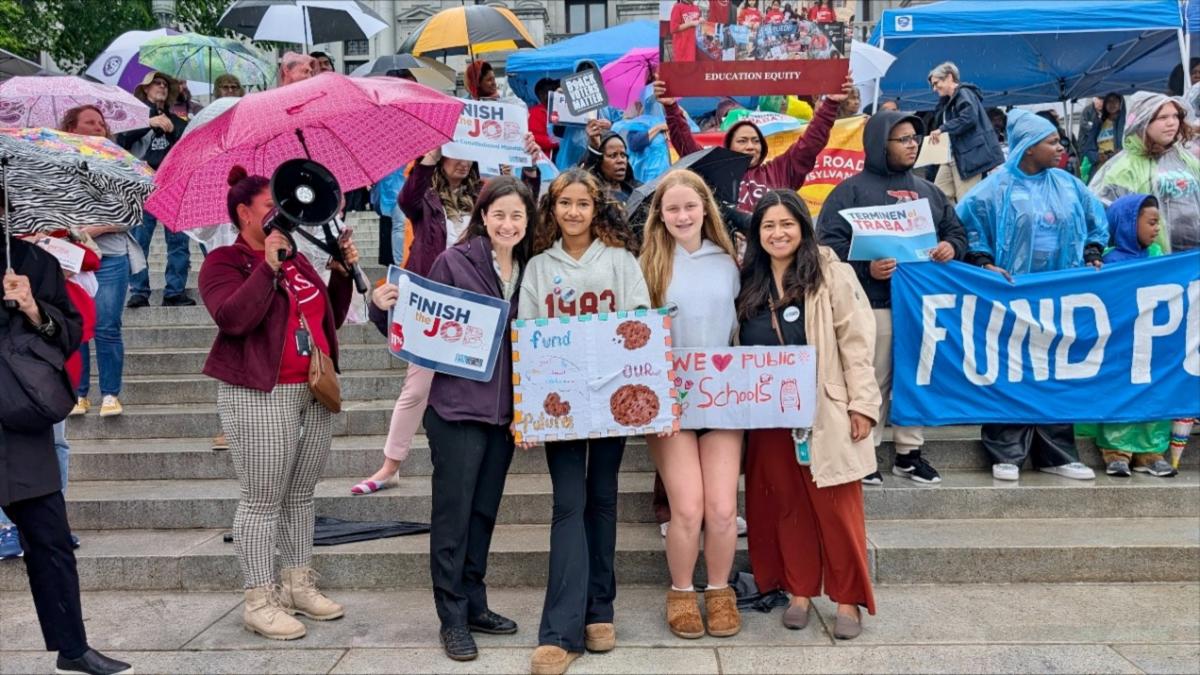
| | Executive director Deborah Gordon Klehr and program associate Jhoselyn Contreras flank youth advocates, including Jhoselyn’s daughter Aliya, at the PA Schools Work rally for fair funding. | | ELC Issues New Report to Improve Educational Outcomes for Students in Foster Care | | |
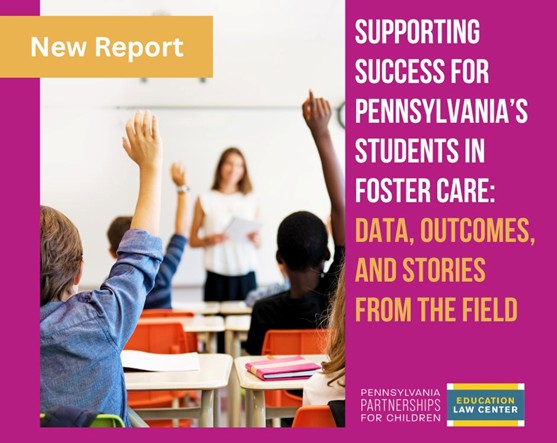
As part of National Foster Care Month, ELC and Pennsylvania Partnerships for Children released a report analyzing statewide data and identifying education barriers impacting children and youth in foster care based on ELC’s representation. The report, Supporting Success for Pennsylvania’s Students in Foster Care: Data, Outcomes, and Stories from the Field, relies on statewide data not previously disclosed and breaks new ground by detailing the educational outcomes and glaring inequities for students in care.
This report highlights systemic inequities impacting children in foster care, including high rates of school mobility, unmet special education needs, and inappropriate virtual learning placements. It offers six key policy recommendations to address these systemic failures. We intend to work with policymakers to undertake much-needed state policy reforms outlined in the report. Read news coverage here.
ELC also presented information about Pennsylvania’s Act 1 on a national webinar hosted by the National Working Group on Foster Care and Education. Act 1 provides comprehensive protections to Pennsylvania students in foster care to ensure that they can fully participate in school and graduate on time.
| | |
Advocates Urge Legislators to Adopt
Juvenile Justice Reforms
| | |
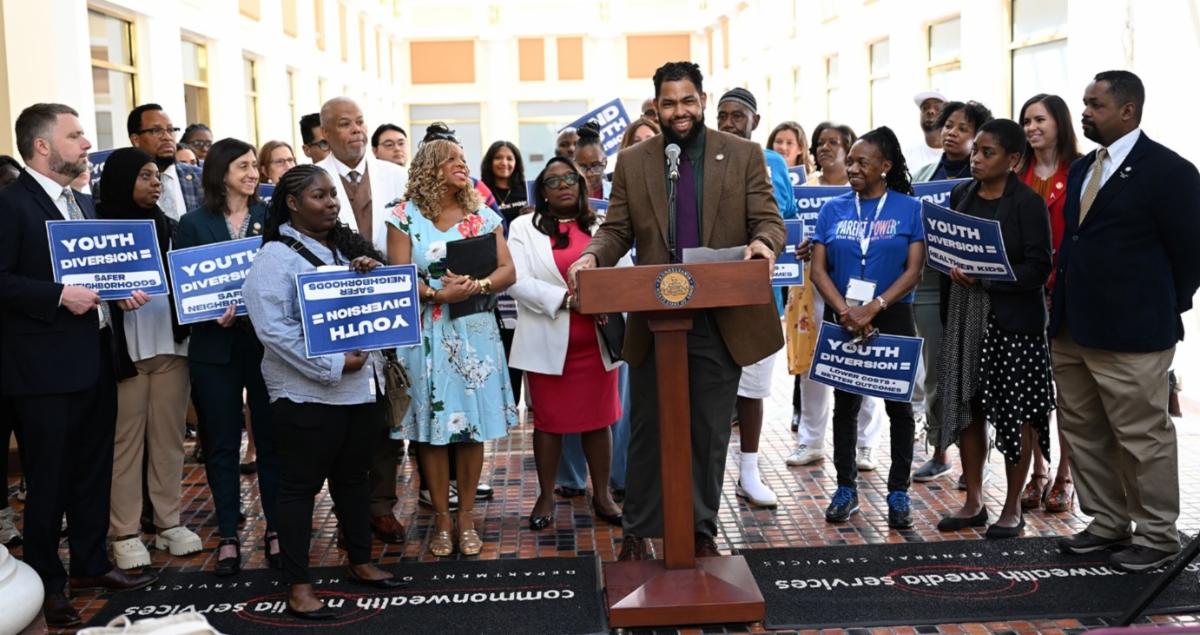
Education Law Center joined youth-centered community organizations, coalition partners, Philadelphia City Council members, and legislative allies for Youth Advocacy Day on May 12 in Harrisburg. The day focused on efforts to expand diversion programs across the state through a $50 million investment and highlighted other legislative initiatives to credit youth for time served in juvenile detention, limit fines and court costs, and support school stability for youth in the juvenile justice system.
Diversion programs effectively avoid the significant trauma and harm caused when youth are placed in juvenile justice placements, and they also build important skills. Studies show that due to systemic and well-documented racial bias, Black and Brown youth are five times more likely to be held in juvenile facilities and far less likely to receive diversion than their white peers for the same conduct.
Legislators are offering 10 proposals this session to reform the juvenile system, calling it the #CarePackage. ELC strongly supports expanding diversion and the other key reforms.
| | Catherine E. Lhamon Envisions New Civil Rights Strategies to Protect Students | | |
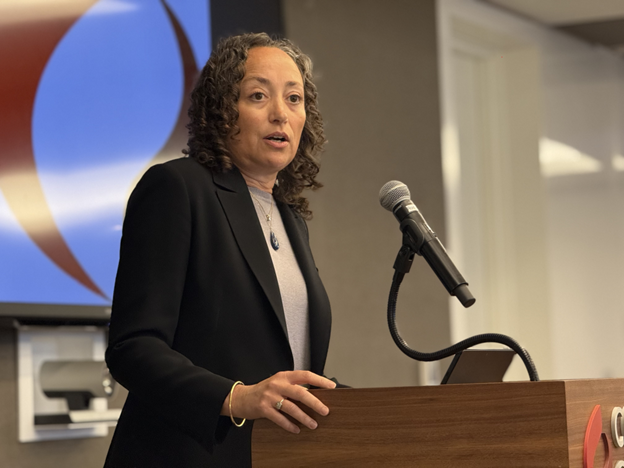
As part of Education Law Center’s yearlong 50th anniversary celebration, Catherine E. Lhamon, who served as Assistant Secretary for Civil Rights at the U.S. Department of Education under both President Biden and President Obama, spoke in Philadelphia on May 21. This event, hosted by Cozen O’Conner, helped us reflect on important milestones that have shaped civil rights education law and envision new strategies to achieve education equity and justice.
In connection with this program, ELC has compiled resources and materials, available here. A recording of Lhamon’s talk, titled “Civil Rights, the Department of Education, and the Role of Advocacy,” can also be found at that link.
Lhamon suggested strategies to protect students’ civil rights, now that the federal government is not reliably enforcing these protections. She encouraged the attendees, including lawyers and child-serving professionals who were present, to help with these efforts. Other possible actions she put forward included building wider community awareness of students’ rights and showing students that their community respects and values them.
| | Case Spotlight: Students Face
Illegal Disenrollment | | |
Two brothers, “Bobby” and “Tim,” recently came into the care of their grandmother. After just a few months, she was forced to relocate due to uninhabitable living conditions. The family found shelter with a family friend in the same school district and the boys walked to school each day, a trip that was more than an hour long each way.
In February, the school principal told Bobby, a 12th grader, that he and his brother could not continue to come to school due to “residency concerns.” They were subsequently disenrolled without any hearing or notice of their rights, in violation of Act 67, which requires students to remain in school during a residency dispute and to inquire as to whether students are experiencing homelessness, in which case residency is not required. Bobby and Tim — students with disabilities who were experiencing homelessness — received no education at all from February to May.
When the boys’ grandmother called ELC in May, we supported her to file a McKinney-Vento Complaint, immediately challenging the school’s actions as violating the students’ rights to school stability as children experiencing homelessness. The boys were successfully re-enrolled after asserting their rights, and ELC is continuing to support this family, including Bobby’s plan to graduate and an effort to obtain appropriate compensatory education services for the many weeks the children were out of school. Learn about students experiencing homelessness in our fact sheet.
| | ELC Calls for Cyber Charter Reform in Testimony to House Education Committee | | |
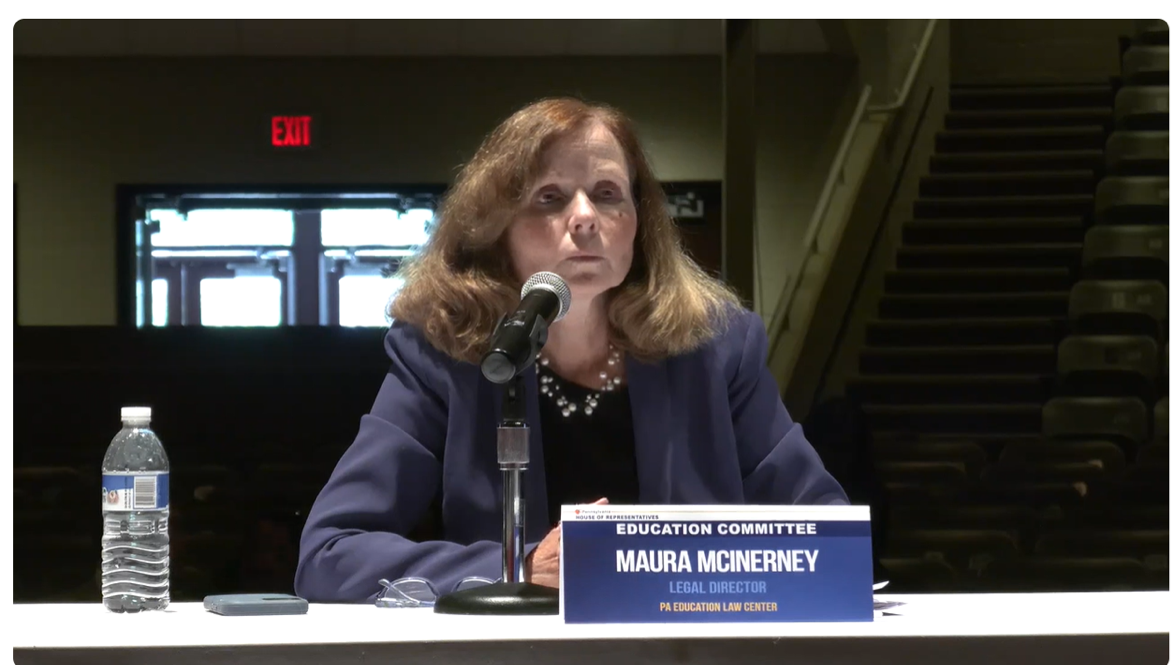
ELC legal director Maura McInerney testified before Pennsylvania’s House Education Committee at a May 8 hearing on governance of cyber charter schools. ELC’s testimony outlined significant concerns regarding the funding and oversight of cyber charters. These schools don’t have the same expenses of operating school buildings, etc., and yet receive the same per-student payment from school districts as brick-and-mortar charter schools.
McInerney emphasized the urgent need to reform how cyber charters are funded, ensure transparency in their spending, and increase accountability and oversight by the Pennsylvania Department of Education.
You can read the testimony here, watch it here, and read a news report here.
| | ELC Protects Transgender Students’ Rights | | |
Concerned parents and community members contacted ELC when some board members at Delaware Valley School District suggested that they should abandon their commitment to transgender students’ rights because of federal executive orders seeking to deny the existence and rights of transgender people.
Delaware Valley School District was subject to a 2016 resolution agreement with the U.S. Department of Education Office for Civil Rights (OCR), after an investigation, which found the district violated Title IX. OCR required the district to revise its policies to make clear that sex discrimination includes discrimination based on a student’s gender identity or transgender status.
Some board members suggested they could now abandon the district’s commitment. In response to public pressure, the school board has said it is not planning to change its policies but is exploring whether OCR will still enforce the agreement.
ELC-PA responded to community members requests for support with a public letter explaining to the board the limitations of an executive order and the district’s continuing obligations under state and federal law to protect the rights of transgender students, regardless of a specific OCR resolution.
| | |
ELC Applauds U.S. Supreme Court Ruling
Rejecting Religious Public Charter School
| | |
In a 4-4 split decision, the U.S. Supreme Court issued a one-page per curiam opinion affirming an Oklahoma Supreme Court ruling that a plan for a religious public charter school, approved by a state board, violated state law and the Oklahoma and U.S. Constitutions.
The school incorporated religion into its curriculum and all aspects of its activities. Although the U.S. Supreme Court’s May 22 decision affirmed the judgment without explanation, the ruling sends an important two-part message: Charter schools are public schools and must be open to all students, and forcing public-school students into religious instruction and activities violates the religious freedom of the students and their families. Public funds must be reserved for public schools that cannot discriminate.
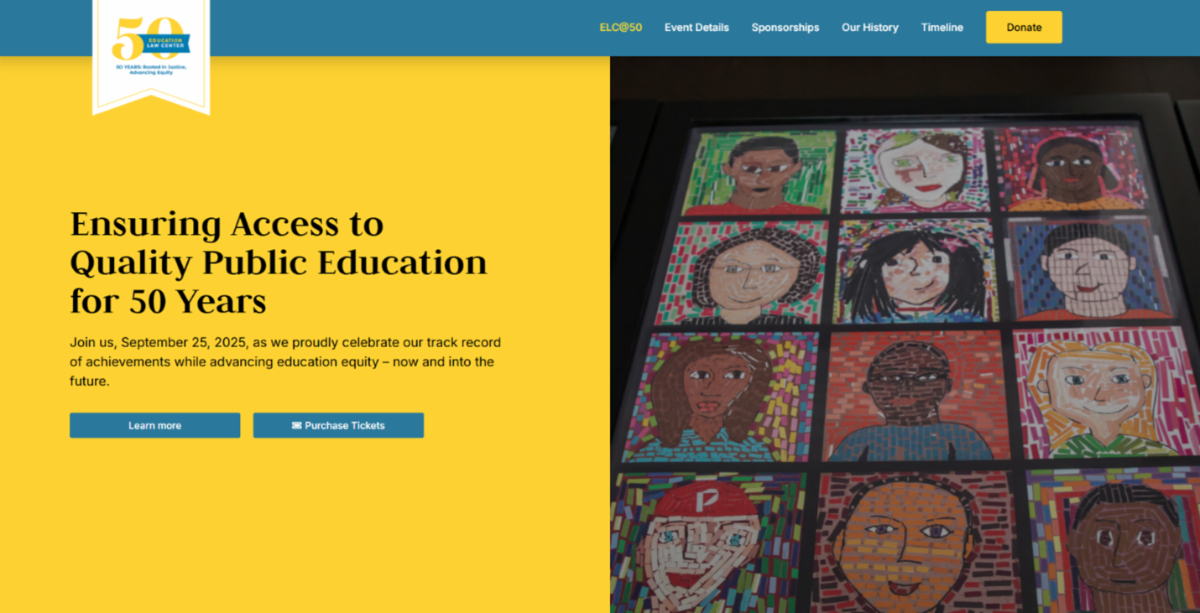
| | All the Info in One Place: Our New 50th Anniversary Website! | | We are live! ELC is excited to launch our 50th Anniversary website as we continue to celebrate our work in advancing education equity. Explore our interactive timeline, become an event sponsor, discover our historical impact — all in one convenient place. Click here to learn more about ELC’s achievements over the last five decades and how you can help ensure that future generations will benefit from our work. Many thanks to ELC Board member Al Motley and Techademics for their invaluable support in bringing this project to fruition! | | |
We invite you to join us on Sept. 25 for the Education Law Center’s 50th anniversary celebration at the Switch House in Philadelphia.
Sponsorships are available now! ELC’s premier fundraiser serves as a unique opportunity to connect with key stakeholders in education advocacy. Please contact Ariella Gregson to learn more about partnership benefits.
We hope you will celebrate this special milestone with us!
Honoree Spotlight
| | |
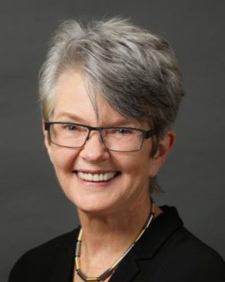
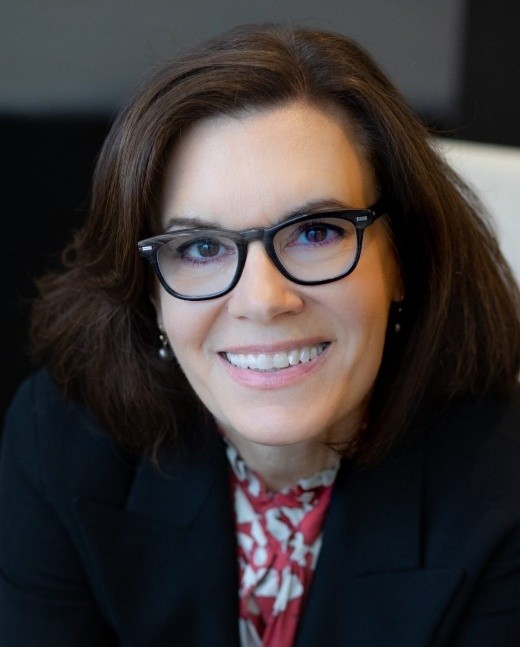
We are thrilled to honor two distinguished civic leaders dedicated to education justice through their exceptional service, tireless advocacy, and generous philanthropic initiatives: Jolley Bruce Christman and Jennifer Rice. We will also proudly recognize the William Penn Foundation, whose transformative and long-term investments in our work have directly resulted in more just educational opportunities.
They will be honored Sept. 25 at our anniversary celebration.
| | 2004: ELC Challenges Racial Inequities
in Qualified-Teacher Placement | | |
Each month in 2025, we are highlighting an ELC milestone or success as we mark our 50th anniversary. See our timeline of ELC milestones here.
Two decades ago, Education Law Center turned its attention to the issue of racial inequities in students’ access to qualified teachers in Philadelphia schools – initially by filing a federal civil rights complaint.
Citing relevant data, ELC lawyers alleged that the schools serving the highest percentages of students of color were more likely to have uncertified or inexperienced teachers than schools serving larger percentages of white students. Teacher turnover also was shown to be higher in schools serving more students of color. ELC filed the complaint in 2004 with the U.S. Department of Education’s Office for Civil Rights.
“We have a two-tier [education] system along racial lines,” Len Rieser, then ELC’s co-director, told Education Week in an article about the complaint.
Though the complaint was eventually dismissed, it effectively brought attention to the glaring inequities in access to qualified teachers. This led to the formation of a coalition of more than two dozen advocacy and student groups, including ELC, known as the Teacher Equity Campaign. Our immediate aim was to influence ongoing teacher contract negotiations. Issues included the district’s practices in school assignment, hiring, and placement of teachers.
The contract signed that year included school-based selection of teachers rather than teachers self-selecting their schools and new limits on seniority-based transfer rights. ELC and our coalition partners continued to advocate for further reforms.
Over the years, the School District of Philadelphia has used additional strategies to strengthen teacher recruitment and retention. The 2024-25 contract, for example, includes financial incentives. ELC continues to advocate for racial equity in teacher quality, and this was an important issue in our school funding case.
Read more about the Teacher Equity Campaign here.
From Our Video Library:
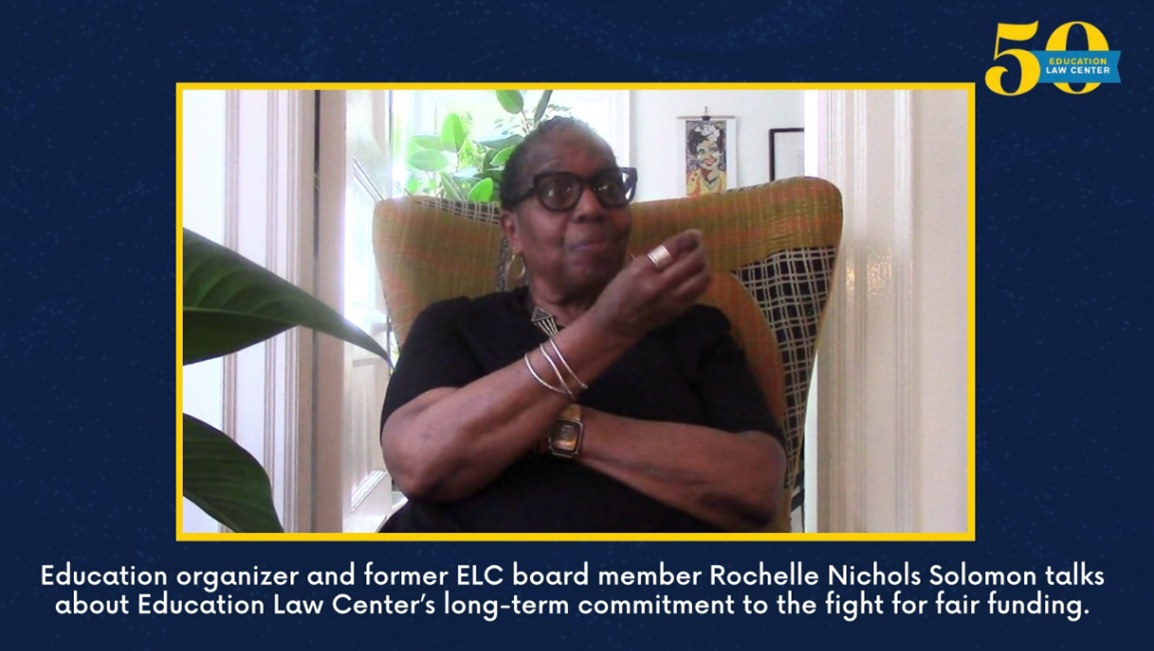
| | Rochelle Nichols Solomon describes how ELC has taken on the really difficult issues: “The Ed Law Center — they were out there with others saying this is inequitable and this funding formula is something that is hurting all children and certainly hurting Black and Brown children. Nobody would want to hear that, right? … And they took that on.” | | |
Taylor Trimble (she/her) is a rising second-year law student at the Washington College of Law at American University. Taylor recently received her bachelor's degree in politics and public affairs at Denison University in Granville, Ohio. Throughout college and now law school, Taylor has focused on educational equity, particularly the need for restorative discipline in K-12 schools and systems of support and guidance for Black students in higher education.
Lia Rocchino (she/her) is a third-year student at the University of Pennsylvania Carey Law School. She received her undergraduate degree in history from the University of Notre Dame. Prior to law school, Lia worked as a researcher for a presidential campaign and several Democratic political committees.
Antoinette Williams (she/her) is a second-year student at Thurgood Marshall School of Law. Prior to law school, Antoinette taught English abroad in Thailand and worked as an education policy consultant in Washington, D.C. With a master’s degree in education policy and another in applied linguistics, Antoinette’s interests lie at the intersection of law, education, and language, with a particular focus on literacy and access.
Ethan Story (he/him) is a rising second-year student at Harvard Law School. Before law school, Ethan worked as a political consultant, supporting state- and local-level campaigns and policy advocacy efforts in Michigan. He received a bachelor’s degree in public policy from the University of Michigan.
Kyle Jacobson (he/him) is a third-year law student and Toll Public Interest Fellow at the University of Pennsylvania Carey Law School. Before law school, he was a high school special education teacher in Los Angeles and an art teacher at a West Philadelphia community arts nonprofit. Kyle received a bachelor of fine arts degree in digital filmmaking from Rutgers University Mason Gross School of the Arts.
Cam Lucas (he/him) is a rising third-year student at the University of Pittsburgh School of Law. Before law school, he received his bachelor’s degree in cognitive science and master’s degree in cognitive linguistics from Case Western Reserve University. He is a passionate advocate for the LGBTQ+ community, serving as an OutLaw executive board member and helping to coordinate local Pride events.
| | Check Out Our Job Postings! | | 50 YEARS: Rooted in Justice, Advancing Equity | |
Education Law Center | 215-238-6970 (Philadelphia) | 412-258-2120 (Pittsburgh)
| | A copy of the official registration and financial information of the Education Law Center may be obtained from the Department of State by calling toll-free, within Pennsylvania, 1-880-732-0999. Registration does not imply endorsement. | | | | |