REGULATORY:
NY WCB
ACUPUNCTURE/PT/OT
FEE SCHEDULE
ADOPTED AS PROPOSED
|
Assessment of Public Comment
The Board received approximately
77
total written comments on the proposed changes. Approximately
10
of these were copies of a form letter regarding acupuncture and approximately
8
were copies of a form letter regarding DME. The Board also received approximately six other form letters with 2-3 copies each, as well as approximately six postcards disagreeing with the proposal with no suggested changes.
Acupuncture
The Board received several copies of a form letter supporting the creation of a new fee schedule and including acupuncturists. The Board received one comment opining that the proposed acupuncture conversion factors are appropriate.
The form letter and several comments also requested the inclusion and removal of several CPT codes, as well as several comments requesting increased conversion factors and/or reimbursement rates
.
The Board believes that the codes in the proposal are adequate for services and consistent for Medical Treatment Guidelines.
Additionally, the conversion factor for acupuncture is the same as for chiropractors.
Accordingly no change has been made in response to these comments.
The Board received several comments requesting inclusion of moxibustion and cupping, as well as comments supporting not allowing these treatments.
As these treatments are not recommended in the Medical Treatment Guidelines, they continue to not have a fee associated to them in the fee schedules.
The Board received a number of comments objecting to the requirement that treatment by an acupuncturist may only be upon prescription or referral.
This requirement is statutory.
Acccordingly no change has been made in response to this comment.
|
|
Initial Review of Rule As a rule that requires a RFA, RAFA or JIS,
this rule will be initially reviewed in the calendar year 2022
, which is no later than the 3rd year after the year in which this rule is being adopted.
|
Due to Royalty and End User Licensing Agreements, ASNY cannot release the actual schedule without paying for each potential End User. The price of the e-book is $30 and can be purchased here:
Since there are no substantive changes to original draft with commentary provided by the department, our next efforts will be to gather information from our licensed practitioners regarding how participation in this program affects their practices and may include a legislative statutory challenge.
We do not know currently how this will affect “no-fault” cases as their regulatory entity is different, but the Advocacy Committee will be reaching out to the Department of Financial Services to ask any questions our members have.
|
|
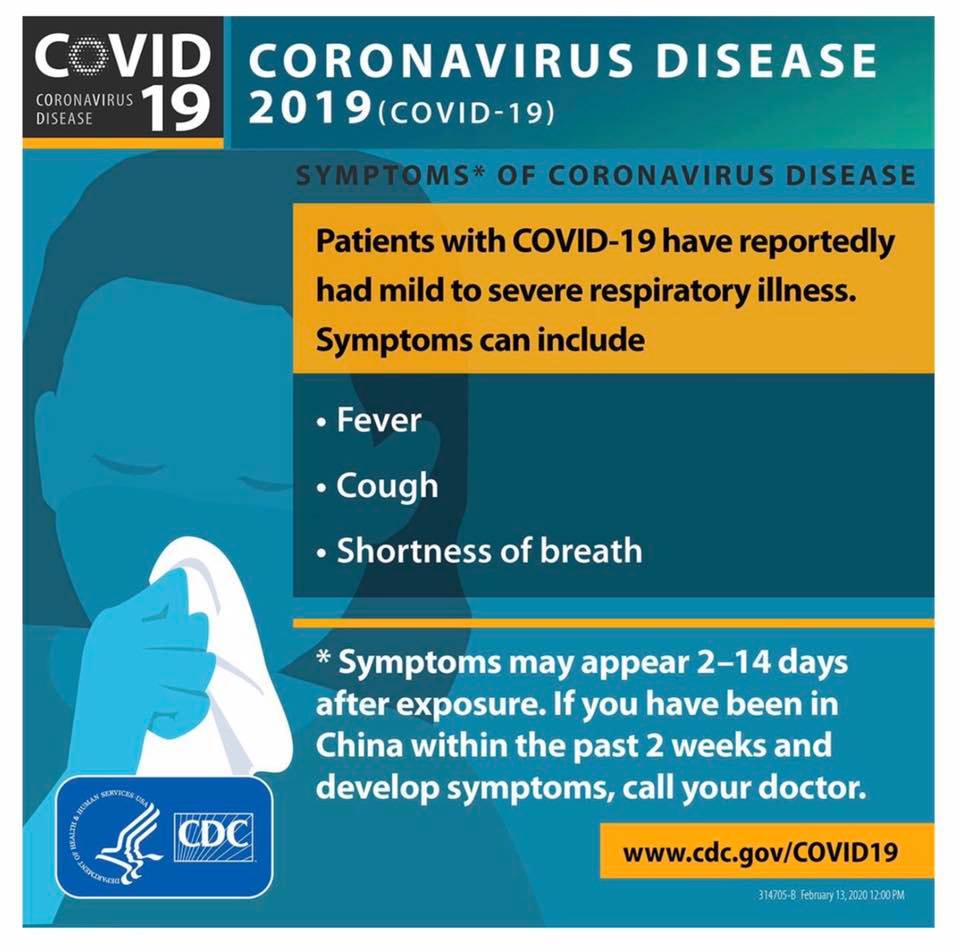
The American Society of Acupuncturists would like to make sure that you are informed about the outbreak of COVID-19 (2019 novel Coronavirus). The World Health Organization and the United States Department of Health and Human Services have both declared COVID-19 as a public health emergency. Here are some up to date resources about COVID-19 that are important for acupuncturists and other healthcare workers, as of Feb 29, 2020.
|
|
|
LOCATION
New York Assembly & Senate
DATE AND TIME
04/22/20
11:00am -
04/22/20
4:00pm
Join Your ASNY Colleagues as we advocate for the profession! Create account at http://y-v.us?askgny7oh8clawy2dh3x7h7qudc8a6ar2m
|
|
|
|
|
|
|
|
ASNY polled its members at the end of 2019 to help guide setting its legislative agenda. What is of most importance to ASNY members is listed below. For the full survey responses, please click on the link above. Based on these responses, the ASNY Advocacy Committee has listed our bills that will be the focus for Albany Day 2020, being held Wednesday, April 22, 2020. There are bill explanations and links for the legislation listed below. For information on the sponsors of the bills, please click on their pictures.
I. Insurance Coverage
When asked about Medicare, Major Medical Insurance, No Fault Insurance, and Workers Compensation:
•
Ensure adequate insurance coverage for acupuncture via Major Medical Insurance.
72% see this as high priority, becoming nearly 94% of members when we include Medium, Medium/High, and High Priority.
•
Ensure adequate insurance coverage for acupuncture via Medicare.
80% of members ranked this as Medium, Medium/High, and High Priority (40% as high priority).
•
The concern over No Fault and Workers Compensation was much less: 30%
II. Scope of Practice Encroachments
When asked about scope of practice encroachments, there was near-unanimous agreement among members that this is a top concern.
•
74% see this as a high priority, which becomes 94% when we include Medium, Medium/High, and High Priority.
•
The remaining 6% ranked this as a low priority. Not one single member chose “Not a Priority”.
•
100% membership agreement is nearly unheard of—this is a clearly a top priority for ASNY members.
III. Pain & Substance Use Disorder
When asked which treatment issues matter most to members, there was strong agreement that ASNY should advocate for the use and coverage of acupuncture (1) as an alternative to opioid use in patients being treated for pain, and (2) as a key therapy for treating substance use disorder.
•
Pain:
Acupuncture as an alternative to opioids is a high priority for nearly 60%, and a medium/med-high/high priority for 100% of respondents.
•
SUD:
Acupuncture for SUD is a 100% membership agreement is nearly unheard of—this is a clearly a top priority for ASNY members.
•
28/32 (87.5%) of respondents advertise their practice as specializing in pain management.
IV. Awareness of Policymakers and the Public
When asked which data, evidence, and education issues most matter to your practice and/or to the success of ASNY, members supported:
•
Development of white papers (and/or other data) on the use of acupuncture that may be persuasive to policymakers.
The following two issues, which also had a lot of member support, could potentially be worked into the white papers:
•
Advocate for increased research funding related to comparative effectiveness studies.
•
Advocate for the use of pilot programs, demonstration waivers, and other unique opportunities that will improve availability of, and outcomes data related to, acupuncture.
•
Creation of public education campaigns related to acupuncture.
|
|
NY A00608
Establishes standards to advance the management and treatment of chronic pain; incorporates
continuing education programs for health care professionals who treat patients that have chronic pain.
|
This bill creates standards for treating patients with chronic pain. It creates a council made up of healthcare professionals and an opportunity to help with placement on the council and create educational materials that will be used moving forward.
2. state chronic pain management education and training council. (a) the state chronic pain management education and training council is hereby established in the department to be an expert panel to advise the commissioner and commissioner of education on: (i) advances in the opti- mum treatment, management and best practices related to mitigating or alleviating chronic pain, (ii) to promote better interdisciplinary and coordinated provision of care related to chronic pain management, (iii) to develop new public policies related to advancing the teaching of such new treatments, management regimens, or best practices on chronic pain management and care in chronic pain care certified medical schools and chronic pain care certified residency programs, and (iv) develop guide- lines to assist the education department in establishing materials and curricula to be used in providing professional continuing education programs for those health care professionals regulated by such depart- ment
.
7. continuing education requirements for health care professionals. the council, in consultation with the department, the education depart- ment and health care professional organizations, shall develop, compile and publish information and course materials on the advanced treatment and mitigation of chronic pain suffered by patients. in addition within two years of the effective date of this article, the council shall make recommendations to the education department for the course work, train-
1 ing and curriculum to be included in the continuing education on the
2 best practices, strategies, therapies and approaches for the mitigation
3 and treatment of chronic pain required to be completed by the various
4 health care professions pursuant to paragraph d of subdivision three of
5 section sixty-five hundred seven of the education law. such recommenda-
6 tions shall include components which address the increasing and neces-
7 sary interdisciplinary cooperation between health care professionals for
8 the coordinated reduction of chronic pain in patients and the reduction
9 of health care costs.
8. report. on or before march first of each odd numbered year, the council shall submit to the governor, the commissioner, the commissioner of education, the temporary president of the senate, the speaker of the assembly, and the chairs of the senate and assembly committees on health a report on its activities and accomplishments relating to the treatment and mitigation of chronic pain. such report may also include such legis- lative proposals as it deems necessary to more effectively implement the provisions of this article.
|
|
|
Requires that non-pharmaceutical alternative treatment options including but not limited to treatment provided by a
licensed acupuncturist
, licensed massage therapist, licensed chiropractor, and yoga instructor be
covered by the medical assistance program and by private health insurers.
|
|
|
|
NY A02925
Relates to
mandatory health insurance coverage for acupuncture services
.
Sponsors (4):
|
5 18031, shall provide coverage for acupuncture treatment as defined in
6 section eight thousand two hundred eleven of the education law provided
7 by an individual licensed, authorized, or certified pursuant to article
8 one hundred sixty of the education law. however, acupuncture treatment
9 and services may be subject to reasonable deductible, co-payment and co-insurance amount, reasonable fee or benefit limits, and reasonable utilization review, provided that any such amounts, limits or review shall be no greater than other essential health benefits covered by the policy and provided further that any such amounts, limits, or review shall not function to direct treatment in a manner discriminative against acupuncture treatment. nothing herein shall be construed as impending or preventing either the provision or coverage of acupuncture treatment and services by duly licensed or certified acupuncturist, within the lawful scope of the practice of acupuncture, in hospital facilities on a staff or employee basis.
§ 2. section 4303 of the insurance law is amended by adding a new subsection (ss) to read as follows:
(ss) every policy issued within the health benefit exchange estab- lished pursuant to section 1311 of the affordable care act, 42 u.s.c. § 18031, shall provide coverage for acupuncture treatment as defined in section eight thousand two hundred eleven of the education law provided
1 by an individual licensed, authorized, or certified pursuant to article
2 one hundred sixty of the education law. however, acupuncture treatment
3 and services may be subject to reasonable deductible, co-payment and
4 co-insurance amount, reasonable fee or benefit limits, and reasonable
5 utilization review, provided that any such amounts, limits or review
6 shall be no greater than other essential health benefits covered by the
7 policy and provided further that any such amounts, limits, or review
8 shall not function to direct treatment in a manner discriminative
9 against acupuncture treatment. nothing herein shall be construed as impeding or preventing either the provision or coverage of acupuncture treatment and services by duly licensed or certified acupuncturists, within the lawful scope of the practice of acupuncture, in hospital facilities on a staff or employees basis.
§ 3. this act shall take effect on the ninetieth day after it shall have become a law and shall apply to policies and contracts issued, renewed, modified, altered or amended on or after such effective date.
|
|
Relates to mandatory health insurance coverage for acupuncture services.
|
AN ACT to amend the insurance law, in relation to mandatory health insurance coverage for acupuncture services
Sponsors (1):
Last Action:
Referred to INSURANCE (on 1/8/2020)
(1 Companion Bill: A02925)
|
|
|
|
|
Requires a practitioner to consider and prescribe non-opioid treatment alternatives for treatment of neuromusculoskeletal conditions.
|
3 9. (a) when a patient seeks treatment for any neuromusculoskeletal
4 condition that causes pain, a practitioner shall consider, discuss with
5 the patient, and, as appropriate, refer or prescribe non-opioid treat-
6 ment alternatives, based on the practitioner's clinical judgment and
7 following generally accepted national professional or treatment guide-
8 lines, and consistent with patient preference and consent, before start-
9 ing a patient on opioid treatment. for the purposes of this subdivision, non-opioid treatment alternatives include, but are not limited to:
acupuncture
, chiropractic, massage therapy, physical therapy, occupa- tional therapy, cognitive behavioral therapy, non- opioid medications, and non-clinical activities such as exercise. the practitioner shall inform the patient that some treatments may not be covered by the patient's health coverage.
(b) the requirements of this subdivision shall not apply for patients being treated under any of the following circumstances: treatment of cancer; hospice or other end-of-life care; post-surgery treatment imme- diately following a surgical procedure; or in a medical emergency. for purposes of this subdivision, "medical emergency" means an acute injury or illness that poses an immediate risk to a person's life or health.
§ 2. this act shall take effect immediately.
|
|
|
|
|
|
|