|
The Crossing That Changed Everything
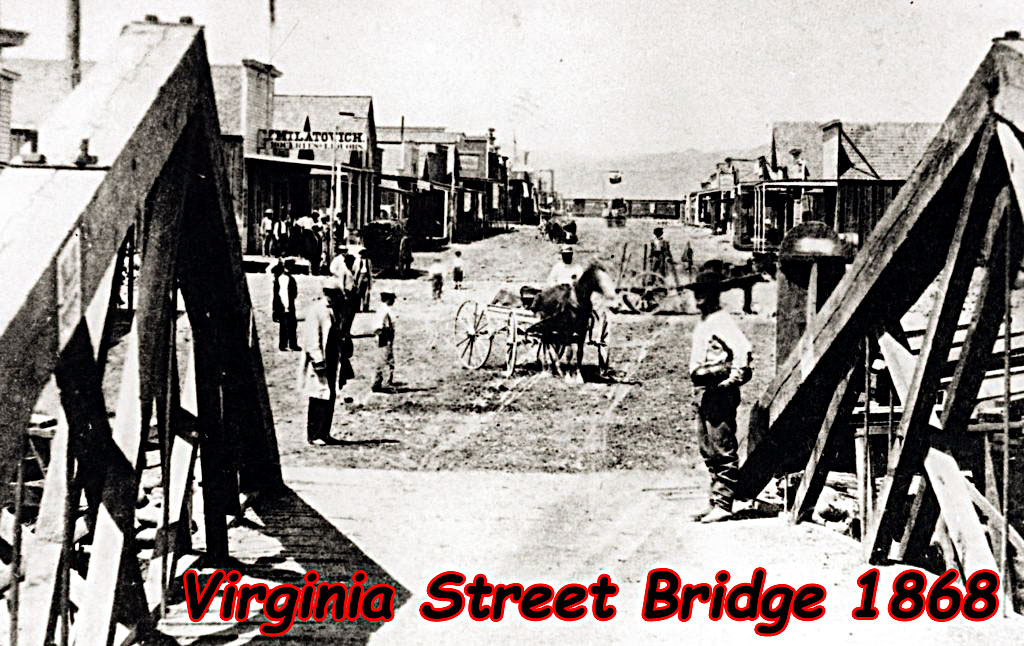
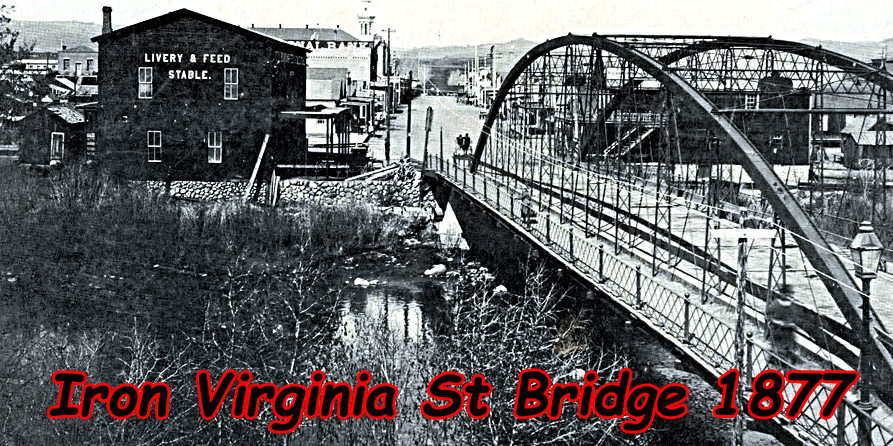
In the early months of 1861, the Truckee River was little more than an obstacle to be crossed by those chasing opportunity. Pack trains, emigrant wagons, and fortune seekers bound for the Comstock Lode all needed a reliable way across the cold, unpredictable water. The first man to provide such a crossing was Charles William Fuller, an enterprising settler who erected a modest bridge, built a trading post, and opened a crude lodging house near the river. Fuller had the right idea and even secured a franchise allowing him to collect tolls. Unfortunately for Fuller, the Truckee was not inclined to cooperate. Seasonal flooding repeatedly damaged or destroyed his bridge, eroding both his patience and his profits.
By June of that year, Fuller was ready to abandon the venture. He agreed to trade his struggling operation, known as Fullers Crossing, to a man named Myron Lake in exchange for a small ranch near Honey Lake in California. It was an even swap on paper, but history would show it to be anything but. Where Fuller had seen frustration, Lake saw potential. Where Fuller fought the river, Lake prepared to outlast it.
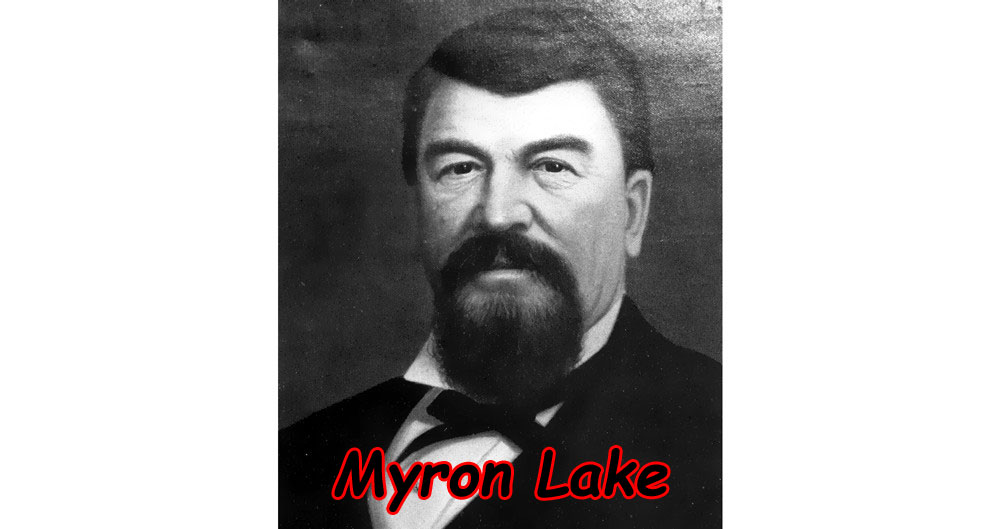
Myron Lake was not new to reinvention. Born in 1828, he had already abandoned farming, chased gold in California, and resettled near Susanville before arriving at the Truckee. In Honey Lake, he had acquired a cabin and a modest parcel of land for fifty dollars and a horse. It was there that he sharpened his instincts for opportunity and learned that location mattered more than comfort. When Fuller offered him a foothold on the Truckee, Lake understood immediately what Fuller had not. This was not merely a bridge. It was a choke point.
On July twentieth, 1861, Lake announced his arrival in the Territorial Enterprise newspaper. He declared that he had purchased the bridge and hotel at Fullers Crossing, renamed the enterprise Lake’s Crossing, and was open for business. The announcement was confident, almost celebratory, though the reality was less stable. The bridge again suffered damage during the winter of 1862 and had to be rebuilt. Yet Lake persisted. More importantly, he secured from the Nevada Territorial Legislature an exclusive ten year franchise to operate the only toll bridge and road at that location. With that single act, Lake transformed uncertainty into monopoly.
| |
A Man of Vision and Greed
Myron Lake is often called the father of Reno, though the title has always come with qualifications. He was a man of vision, but also of appetite. He recognized that control of movement meant control of money, and during the 1860s the flow of people and goods through the Truckee Meadows increased dramatically. Virginia City boomed. The Comstock demanded supplies. Every wagon, rider, and pedestrian who crossed Lake’s bridge paid for the privilege.
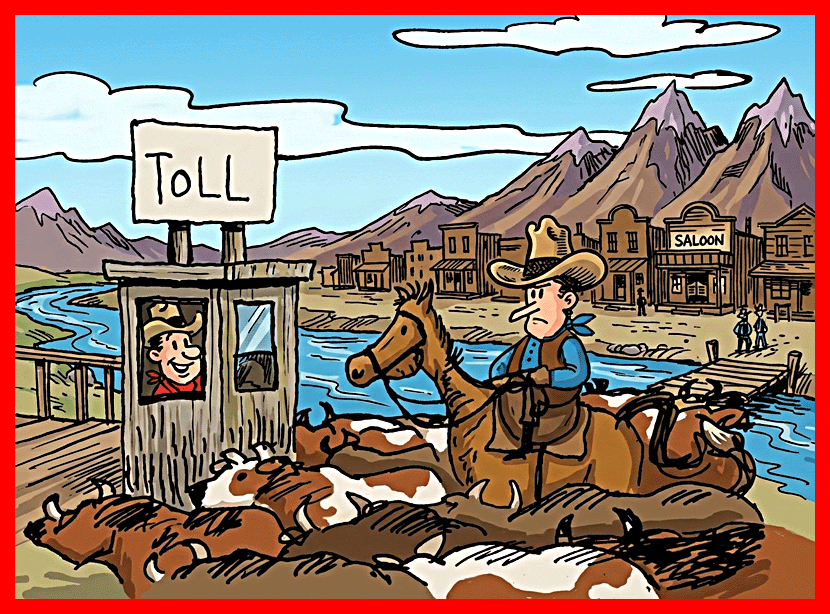
Between 1862 and 1868, Lake’s income from tolls grew steadily. His account books reveal daily receipts that averaged hundreds of dollars at a time when miners earned four dollars a day. On especially busy days, tolls could reach staggering amounts. Over a decade, Lake would earn one million dollars from the bridge alone, a sum that placed him among the wealthiest men in the region.
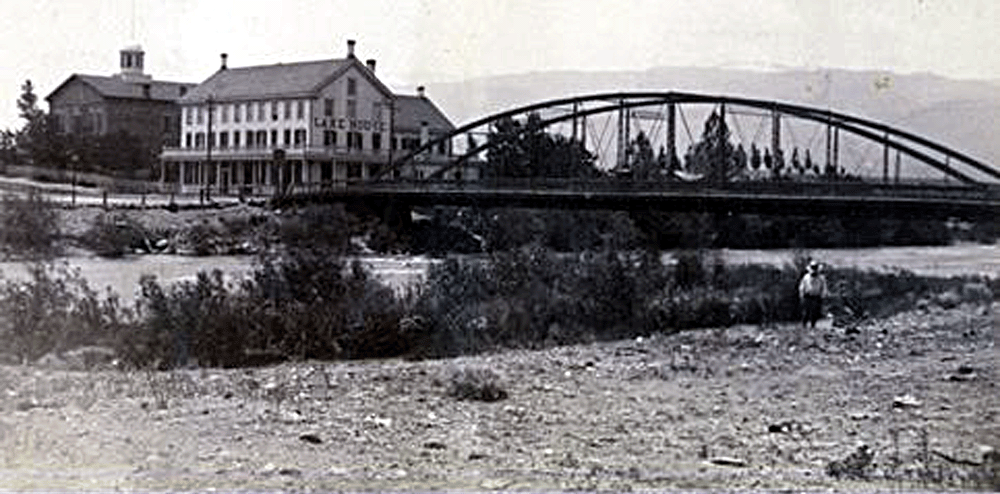
Lake did not hoard opportunity. He reinvested aggressively. He expanded his land holdings to approximately one hundred forty acres on both sides of the river. He purchased a gristmill and kiln on the north bank and improved his inn, renaming it the Lake House. Stables and a large barn were added to accommodate the endless traffic. The crossing became a hub, and Lake became indispensable.
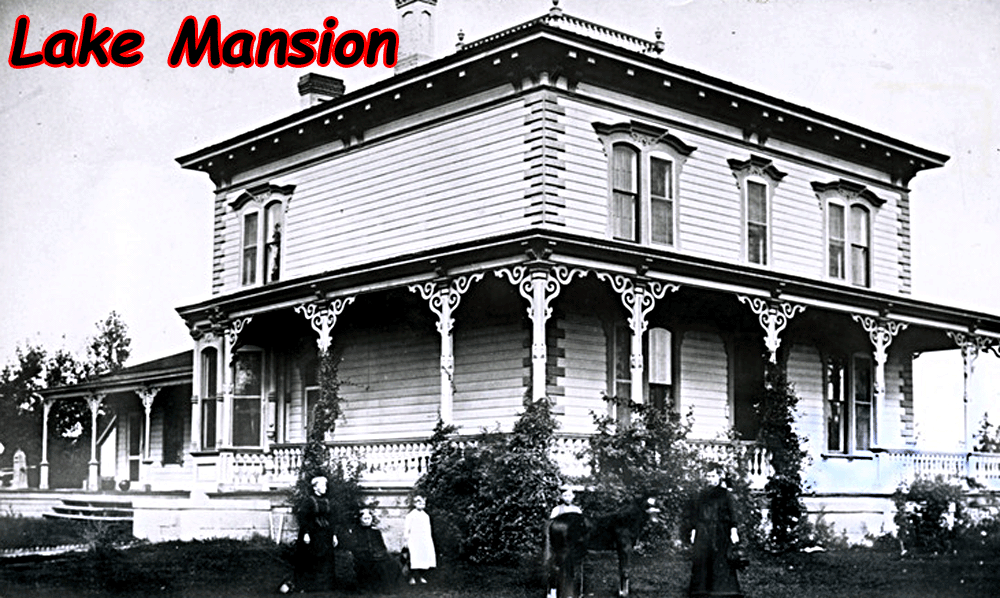
In September of 1864, Lake married Jane Conkey Bryant, whose family had once been his neighbors at Honey Lake. The marriage produced one child, but it was troubled from the start. Accounts from the time and later court records describe a household marked by cruelty rather than affection. Though the personal details remained largely private during Lake’s rise, they would eventually spill into public view.
By the late 1860s, Lake’s reputation was firmly established. He was wealthy, influential, and widely resented. Many locals acknowledged that Reno would not exist without him. Just as many believed he had created the town primarily to profit from it. Those opinions hardened as Lake’s control over daily life became more visible.
| |
The Railroad and the Birth of Reno
In 1868, a new force approached the Truckee Meadows, one that would eclipse wagons and pack trains entirely. The Central Pacific Railroad was pushing eastward, racing to complete the western portion of the transcontinental line. Construction superintendent Charles Crocker represented the power and urgency of the project. Lake recognized immediately that the railroad could either destroy his dominance or multiply it.
Lake reached out with an offer that was both generous and calculated. He would provide the railroad with a right of way through his property and sell approximately one hundred sixty acres, provided the company agreed to build a depot at his crossing. The railroad accepted. As part of the agreement, Lake received one hundred nine acres south of the river and later reacquired alternating lots north of it. By March of 1868, the deal was finalized.
Within weeks, surveyors laid out streets, divided land into parcels, and named the new town Reno, honoring Civil War General Jesse Lee Reno. The railroad’s arrival redirected traffic away from older mountain routes and concentrated commerce along the road connecting Reno to Virginia City and points south. As editor Allen Bragg later observed, Lake began making money hand over fist.
The railroad did not diminish Lake’s toll business. It supercharged it. Freight teams that once crossed the Sierra now funneled through Reno. Every crossing still paid. Lake charged one dollar per horse drawn vehicle, with additional fees for larger teams, riders, pedestrians, and livestock. Though the rates were widely considered excessive, Lake defended them fiercely.
Fire destroyed Fullers original hotel in 1869, but Lake rebuilt on a grander scale, spending twenty three thousand dollars on a new structure. He also constructed a brick kiln to supply the growing town. Each enterprise fed the other, and Lake’s influence expanded in every direction.
In 1871, Lake established the South Addition across the river from Reno. He offered the Washoe County Commissioners a parcel of land there as the site for a new courthouse, knowing full well that the relocation of the county seat from Washoe City would increase traffic across his bridge. Despite protests from Reno residents, the plan was approved. Anyone conducting official business would now pay Lake’s toll.
| |
The Bridge War
From its earliest days, Reno chafed under Lake’s control. Citizens called repeatedly for the purchase of the toll bridge, but Lake refused outright. In 1869, residents petitioned for reduced tolls. Lake protested, arguing that he and his bridge predated the town itself. Though the county eventually imposed a general reduction, the relief was temporary and resentment deepened.
By 1870, talk of a free bridge surfaced, but no action followed. The following year, opposition intensified. Business owners complained that deliveries to the south side were becoming unprofitable. Residents found themselves paying to cross simply to conduct daily life. Lake, critics said, had them coming and going.
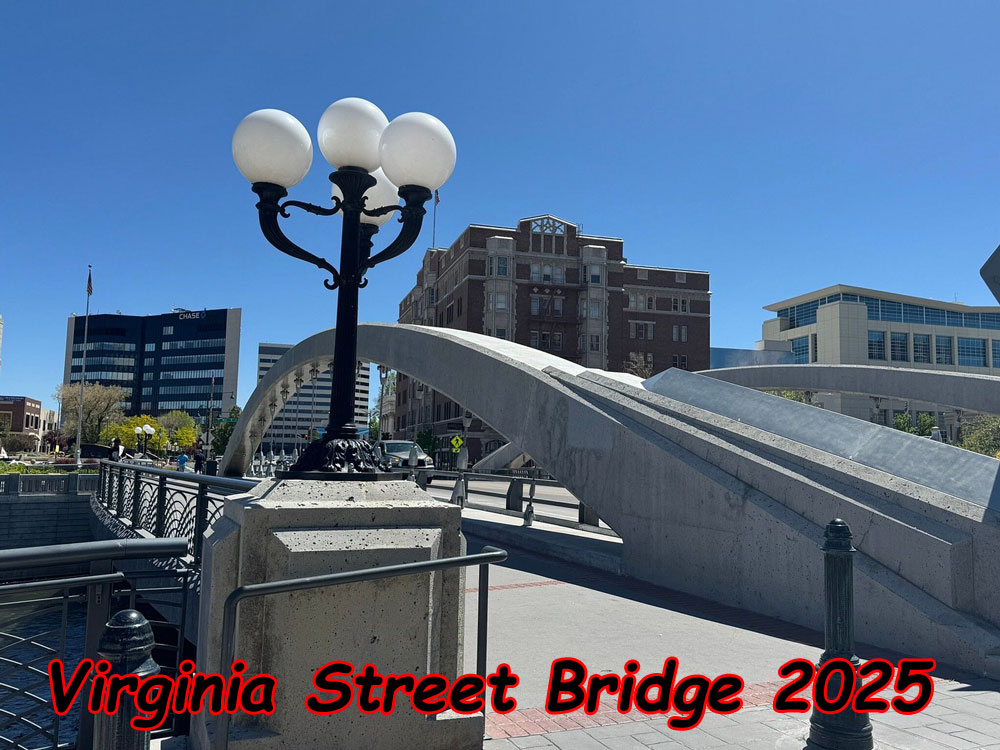
Matters escalated in 1872 when Lake attempted to block use of a newly built railroad bridge that allowed travelers to avoid his toll. Claiming the structure violated the terms of his franchise, Lake ran a fence across it. The courts and the railroad disagreed, and Lake was forced to retreat. The Washoe County Commission then declared the road south of the bridge a public thoroughfare and demanded that Lake repair sections of it. Threats to void his franchise followed but went unenforced. Finally, on January sixth, 1873, the commissioners refused to extend Lake’s toll rights and declared the bridge a public highway.
Lake responded with defiance. He locked the gate and stood guard with a pistol, demanding tolls from anyone who crossed. Only those who paid were allowed through. He also refused to deliver the deed and funds he had promised for the courthouse.
The confrontation became known as the bridge war. After an altercation with a teamster, Lake was arrested for obstructing a public thoroughfare and fined. Though he won an appeal, public sentiment had turned decisively against him. The county pursued further legal action, and in May of 1873, the Nevada Supreme Court ruled that the bridge would henceforth be free. The war was over. Lake had lost.
| |
Legacy of a Complicated Founder
Though an uneasy truce followed, controversy never left Myron Lake. In 1879, his wife Jane filed for divorce, accusing him of extreme mental and physical cruelty. The case dragged on for three years and was widely reported. Jane testified that Lake beat her, threatened her life, and accused her of infidelity. The final incident, she said, involved his demand that she leave the household forever, offering ten thousand dollars if she disappeared.
In 1882, the Nevada Supreme Court ruled in her favor. Jane received custody of their son, monthly alimony, and court costs. Lake retained his property but suffered public humiliation. He remarried a year later.
Myron Lake died in Reno on June twentieth, 1884, at the age of fifty six. Even in death, litigation followed. Jane contested his will, and after months of legal wrangling, the court validated an earlier version that favored her interests.
Time has softened some judgments but not erased the contradictions. Lake was essential to Reno’s founding, yet deeply resented by many who lived there. He guided commerce, attracted the railroad, and amassed extraordinary wealth. He also exploited monopoly, resisted public good, and alienated much of the community he created.
When we look back on the pioneers of the American West, we often romanticize them. The truth is more complicated. They were gamblers, visionaries, opportunists, and sometimes tyrants. Myron Charles Lake embodied all of those qualities. Whether remembered as the father of Reno or its first robber baron, his legacy remains inseparable from the bridge that once ruled the Truckee River.
| |