Welcome to the University of Oklahoma Carceral Studies Consortium Newsletter. The Carceral Studies Consortium strives to build a community for intellectual exploration that includes faculty, staff, graduate students, community members, practitioners, and organizers.
Carceral Studies is concerned with the independent function and nexus of the political and social systems that organize, shape, sustain, and entrench practices of punishment, surveillance, incarceration, and harm.
|
|
Funding Opportunity Announcement |
|
Fall 2021 Microgrants: Call for Proposals
This fall, the Carceral Studies Consortium is offering a small number of micro-grants of up to $500 to OU faculty, staff and students to support the development of research, pedagogy, and community engagement projects relating to carceral studies. The Consortium encourages applications for projects that engage the community and/or support social or policy outcomes. Applications are due Monday, October 18, 2021. To view a list of past recipients, click here. |
|
|
Joshua Lott / Washington Post |
|
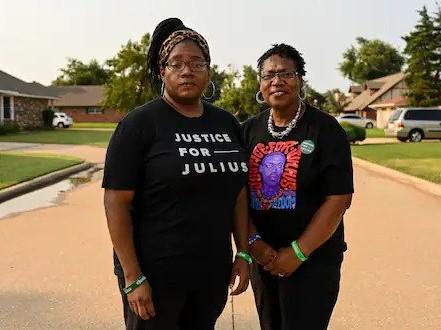
In 2002, the State of Oklahoma sentenced Julius Jones to the death penalty after being convicted for the murder of Paul Howell three years prior. However, multiple sources in the past two decades, including Connie Ellison, who was Howell’s girlfriend at the time of the murder, questioned the legitimacy of the evidence against Jones. Following a reexamination of the evidence by Jones’s post-conviction lawyers, they “allege his trial was tainted by racial bias and ineffective counsel who disastrously opted not to cross-examine witnesses, air key testimony or show crucial photo evidence.” The conviction also came “during a prolific era for capital prosecutions in Oklahoma County, where the District Attorney’s Office . . . sent 54 people, including Jones, to death row.” The Oklahoma Attorney General requested an execution date of October 28th, so Jones’ fate and his supporters' efforts depend on a final appeal for clemency.
|
|
Kamil Ahsan reviews Geo Maher’s book, A World Without Police, which provides an analysis of the historical failings of police, the dangers of modern policing, and implications for an abolitionist future. Maher examines not only the police but also those that contribute to the carceral state’s mechanisms of control such as “volunteer deputies…the judges, the courts, the juries, and the grand juries… the mayors and the district attorneys who demand ‘law and order’… the racist media apparatus that bends over backwards to turn victims into aggressors.” According to Ahsan, Maher’s scathing criticisms echo the remarks of notable “scholars and organizers including Beth Richie, Michelle Alexander, [and] Ruth Wilson Gilmore” as the book tackles concepts of racial capitalism, global capitalism, and American military interventionism. Although Ahsan remains critical of the text by pointing out that Maher’s of remaking a society world without police appears “unclear,” yet he believes Maher’s arguments are still “as convincing as any book can be that we must at least try.”
|
|
Steering Committee / Atlanta DSA |
|
On September 8th, the Atlanta City Council voted to adopt an ordinance to create "Cop City," an 85-acre police training center estimated to cost $90 million. The facility will "include state-of-the-art explosive testing areas, firing ranges and a mock city" and is slated to be constructed on city-owned land after deforesting part of the South River Forest. According to the Steering Committee at the Atlanta DSA, the vote passed in the face of the overwhelming public opposition evident by survey results finding that "98% of Atlanta residents" against the ordinance and "over 16 hours of public comment with 70% of resident callers against the proposal." The Steering Committee stated that the betrayal by the city council came "despite the rallying cries from the public over the last year to defund the police state, despite the human and environmental harms that will result from deforestation as we face the threat of climate change, this City Council once again sided with corporate Atlanta over their own constituents."
|
|
Matt McClain / Washington Post |
|
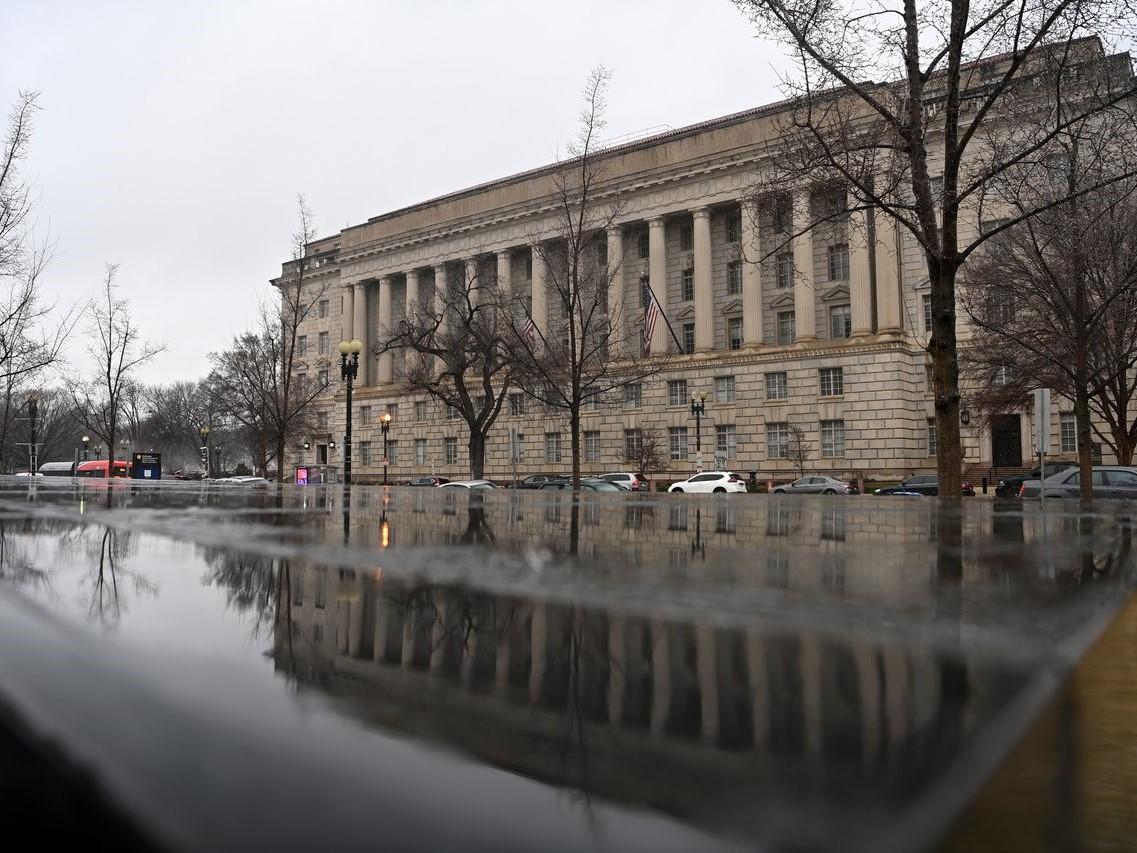
After a five-month internal review, the US Department of Commerce will be shuttering its unit for Investigations and Threat Management Service. The investigation found that “the obscure unit opened cases ranging from counterespionage to background searches on US residents who wrote innocuous letters to the department’s top official,” but were conducted without “adequate legal authority,” according to Commerce lawyers. The investigation conducted by the Washington Post, the original action that forced Commerce to launch an internal review, discovered that “the unit had covertly searched employees’ offices at night, run broad keyword searches on employee e-mails looking for signs of possible foreign influence, and scoured Americans’ social media accounts for critical comments about the Census, which falls under Commerce.” The Investigations and Threat Management Service was deemed a “rogue, unaccountable police force” which, according to a congressional investigation, “open[ed] frivolous investigations on a variety of employees without evidence suggesting wrongdoing.” After announcing the closure of the unit, Commerce Secretary Gina Raimondo stated, “we are committed to maintaining our security, but also equally committed to protecting the privacy and civil liberties of our employees and the public.”
|
|
Scott Olson / Getty Images |
|
The recent Texas abortion ban acts as another element of controlling or restricting the bodily autonomy of individuals by threatening physicians that “perform or induce an abortion” if they “detect a fetal heartbeat for the unborn child.” Selena Simmons-Duffin explores how the language utilized in the ban is designed to be a problematic and misleading oversimplification of prenatal development. The ban “hinges on [the detection of a] ‘fetal heartbeat,’” but Simmons-Duffin's survey of medical professionals challenges the accuracy of these medical terms and pregnancy markers. Jennifer Kerns, an OB-GYN, stated that the “fetal heartbeat” is actually “a grouping of cells that are initiating some electrical activity” and “in no way is this detecting a cardiovascular system or a functional heartbeat.” Further, the Texas ban places a deadline of six weeks pregnant as the point of no return due to a heartbeat signifying “the likelihood of her unborn child surviving to a full-term birth.” But, at six weeks, the embryo is not yet a fetus, does not have a heartbeat, and cannot be used to predict the likelihood of complete birth. Kerns concludes that the law is “clearly trying to move the needle back to almost to the point of detection of pregnancy with the goal of outlawing nearly all abortions.”
|
|
Valentin Tkach / The Guardian |
|
Spring Creek prison is the only maximum-security prison in Alaska, but it is vastly different from the typical experience of incarceration. Christopher Poulos, a formerly incarcerated individual, was invited to tour Spring Creek by then warden Bill Lapinskas. Although Poulos tempers the article by expressing a need for decarceration, he also stated that “so long as we do have prisons and jails, we must embrace the types of culture and practices that I witnessed that day at Spring Creek.” Cultures and practices that opposed the normative prison experience by focusing on helping incarcerated persons “lead a positive, healthy life on the outside [which] often hinges on what’s offered on the inside – whether incarcerated people can access educational opportunities, learn trade skills or address mental health concerns.” These factors were present in the peer-led addiction counseling groups, mentorship programs, accessibility to art, unlocked cells at all times, and a transitionary unit to help those with upcoming release dates. Lapinskas left the prison in 2020, but his reasoning towards reform is captured in his desire for trust when he stated, “if we can’t trust them (incarcerated residents) not to do anything bad to each other or the staff in the reentry unity, then we have failed so miserably that we don’t deserve to do this work.”
|
|
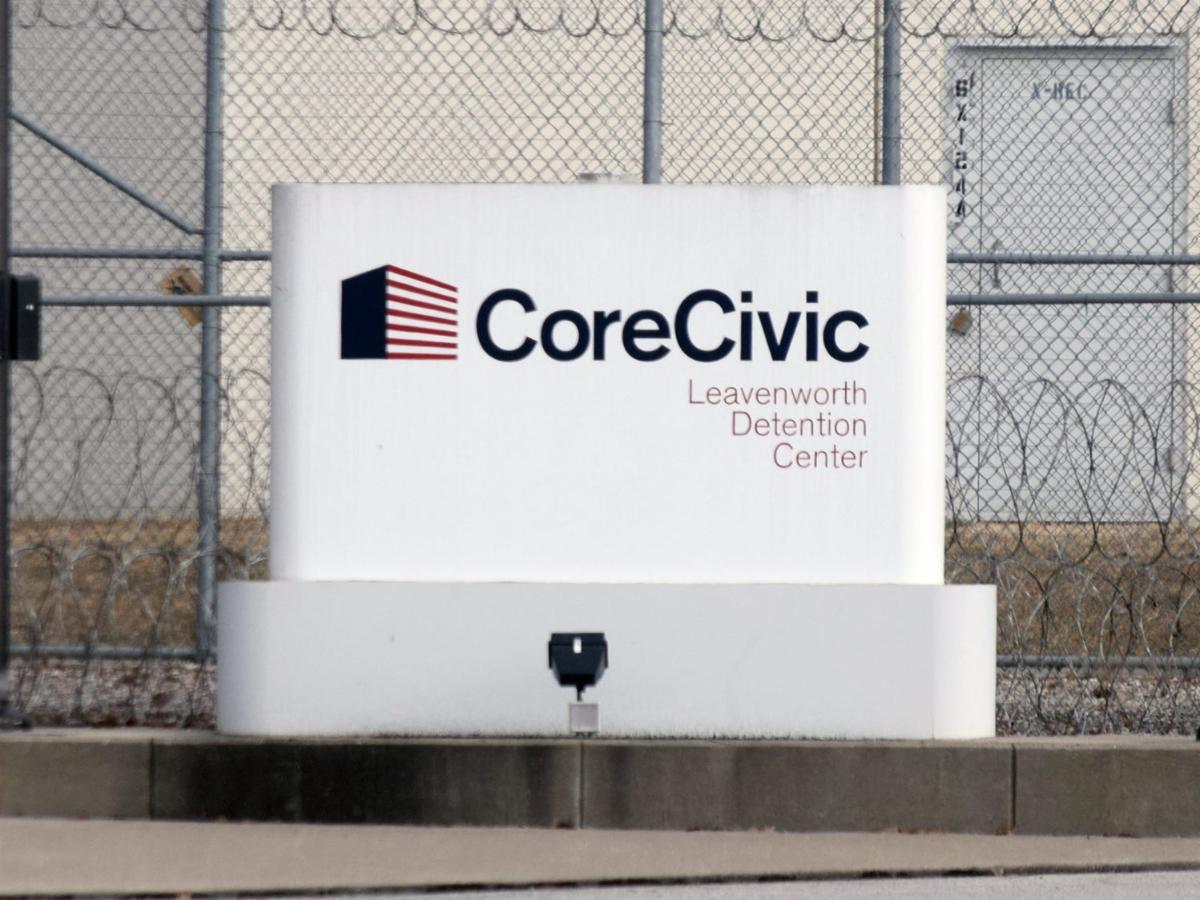
In response to the violent conditions within the Leavenworth Detention Center in Kansas, legal directors for the American Civil Liberties Union and the heads of local federal public defenders offices recently signed a ten-page letter to the White House arguing specific human rights violations within private detention centers. The letter detailed multiple incidents of “stabbings, suicides, a homicide and inmate rights violations that happened this year.” The letter also describes accounts of prisoners having to regularly “barricade” their cells for protection due to faulty locks as well as a recent month-long “lockdown.” The authors call for President Biden to “put meaning behind [the] executive order regarding the closure of private detention facilities,” such as Leavenworth. CoreCivic, the company operating Leavenworth, responded to their critics by stating that “these allegations are designed to exert political pressure rather than to serve as an objective assessment of the work our dedicated staff has done to serve the needs of the United States Marshal Service.” The authors of the letter believe there are “few places worthier of immediate action than this facility, which has proven itself to be increasingly dangerous and incapable upholding the constitutional [rights] of those imprisoned there.”
|
|
OU PolicyMap Trial
OU Libraries is currently offering a trial subscription to the program PolicyMap until November 23, 2021. PolicyMap enables users to interact with data and mapping tools with indicators that include demographics, jobs, housing, crime, quality of life, education, socioeconomic factors, and much more. Some data sources include the Census Bureau, Department of Homeland Security, and Center for Disease Control Behavioral Risk Factor Surveillance Survey. If you would like to see OU subscribe to this program, it is important to try it out and respond to the feedback survey as soon as possible.
|
|
|
ABOUT
The Consortium Newsletter will offer a roundup of a few selected articles that reflect today’s news, organizing, and thinking related to the carceral state. We understand that freedom work is built on education and engagement. Education requires an understanding of contemporary issues informed by their historical context. We hope that these curated articles will help you analyze the issues that we face and understand the community that we strive to construct.
Join the conversation!
We encourage feedback, suggestions, and article suggestions. Please reach out to carceralstudies@ou.edu with any ideas, thoughts, or recommendations.
If anyone you know is interested in receiving this newsletter and other information from the Carceral Studies Consortium, please forward them this email and they may click this link to subscribe.
|
|
Land Acknowledgment
The University of Oklahoma is on the traditional lands of the Caddo Nation and the Wichita & Affiliated Tribes. This land was also once part of the Muscogee Creek and Seminole nations. It also served as a hunting ground, trade exchange point, and migration route for the Apache, Cheyenne, Comanche, Kiowa, and Osage nations. Today, 39 federally-recognized Tribal nations dwell in what is now the State of Oklahoma as a result of settler colonial policies designed to confine and forcefully assimilate Indigenous peoples.
|
|
The University of Oklahoma is an equal opportunity institution. ou.edu/eoo |
|
|
|
|
|
|