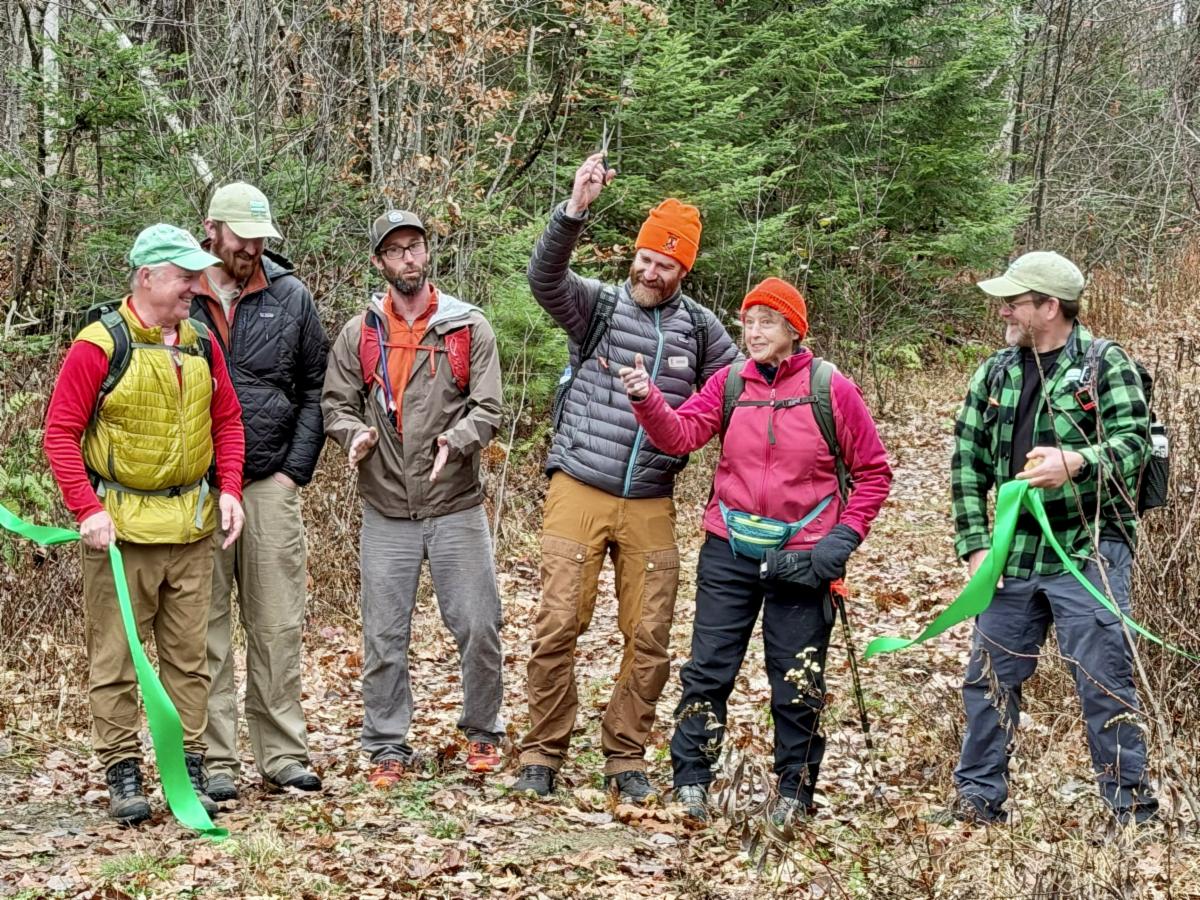
New Stonehouse Mountain Loop Connects UVLT Conservation Areas | | The trail is officially open! (L-R) Bob Hedges, chair, Orford Conservation Commission (OCC); Forest and Trails Steward Jesse Cutting; Chris Gothberg, OCC; Jon Leibowitz, president and CEO, Northeast Wilderness Trust; Emily Bryant, OCC; and Stewardship VP Jason Berard. | | |
Three extraordinary properties, three committed organizations, and a path to connect them all. A vision was realized this month with the completion of the new Stonehouse Connector trail in Orford, NH.
Each of Upper Valley Land Trust’s two Orford conservation areas—146-acre Mountain View Farm and 270-acre Stonehouse Mountain—feature public access trails. Both UVLT and the Orford Conservation Commission (OCC) had dreamed of connecting the areas, which is now a reality after an adjacent property recently purchased by Northeast Wilderness Trust (NEWT) allowed the three organizations to collaborate.
In 2025, NEWT purchased and created the Spruce Ridge Wilderness Preserve. The 2,000-acre property provides a wilderness buffer along a stretch of the Appalachian Trail around Mount Cube, and a future conservation easement to be held by the Upper Valley Land Trust will ensure it will be forever free of development or logging.
We approached NEWT with the idea of a loop trail connecting all three properties. After getting to know the already significant public usage and cultural resources of the Quinttown area of Orford, NEWT enthusiastically agreed.
| | Warren Property in Enfield, NH, Protects Water and Wildlife | | |
229-Acre UVLT Conservation Easement includes Mascoma River Frontage, “Gem” Habitat
Anita and Bill Warren both appreciate the natural world and feel strongly that certain parts of it should be preserved. They’ve acted on their beliefs in a highly tangible, permanent way by protecting the majority of their 240-acre property in Enfield, NH, with a conservation easement granted to the Upper Valley Land Trust.
“We have four ecosystems on the land,” says Anita. “There are fields, forest, wetlands, and river frontage.”
The Warren Property is along Shaker Hill Road and within five miles of more than 20,000 acres of lands protected by the town of Enfield, the New Hampshire Fish and Game Department, or UVLT, including for example the Smith Pond Shaker Forest Conservation Area.
The easement safeguards frontage on the Mascoma River across from the UVLT-protected 100-acre Hardy Wetlands Property. The Warren Property also features several intermittent and seasonal streams. Protecting the land is significant for the water supplies of both the town of Enfield and the city of Lebanon, which draw from this same watershed. Lying due south of Enfield’s “McConnell Well,” the Warren property is situated almost wholly within the wellhead protection zone for that water supply.
| | Bird-Friendly Sugarbush on the Old Town Farm | |
Species stewardship and productive farming need not be in conflict. A great example is the Bird-Friendly Maple Program, which now includes UVLT’s Old Town Farm property in Pomfret, VT.
The 112-acre property, owned by UVLT in perpetuity for conservation purposes, includes a working sugarbush with 800 taps on approximately 70 acres. UVLT has recently been recognized for its efforts to manage the Old Town Farm as a bird-friendly sugarbush. This endorsement follows a sugarbush inventory and assessment conducted by Audubon Vermont staff earlier this fall.
The majority of eastern forest-dependent birds—whose populations have dropped by more than 25 percent in the last 50 years—inhabit privately owned land. The Bird-Friendly Maple Program—a partnership among Audubon; the Vermont Department of Forests, Parks, and Recreation; and the Vermont Maple Sugar Maker’s Association, aims to stabilize declining bird populations by managing sugarbushes in ways that benefit nesting and migratory birds.
“Sugarbushes typically are in operation for only a few months each year, but birds need habitat year-round,” says Forest and Trails Steward Jesse Cutting. “The voluntary program recognizes producers who are willing to implement practices that work to maintain and enhance bird habitat in sugarbushes. We developed a Maple Sugarbush Habitat Management Plan for Old Town Farm that will guide work to continue producing maple sap while providing habitat for several bird species.”
A springtime event may be held on the property to highlight the program. Stay tuned for future eNewsletters for details!
| Event Report: Forest Management Walk | |
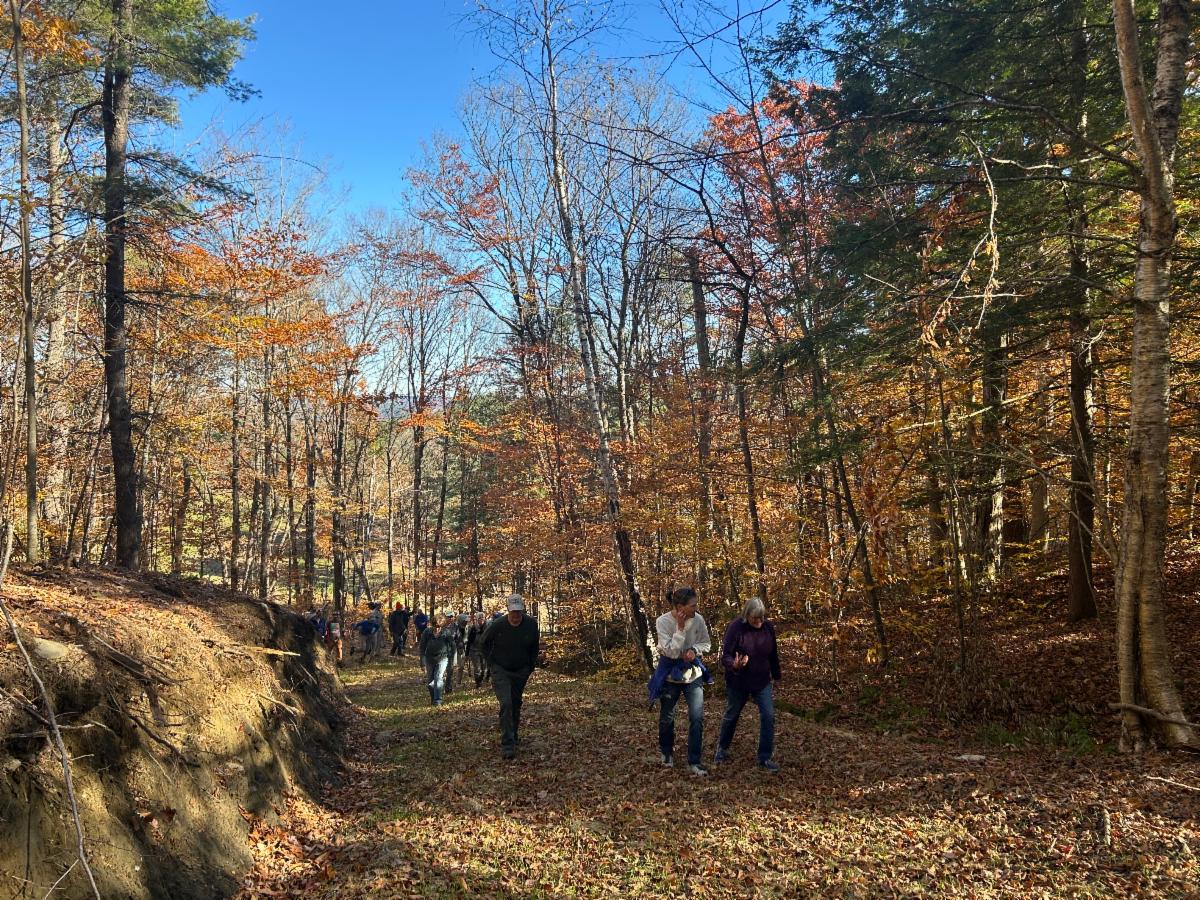
On September 25, over two dozen learned more about recent forest management on the Cossingham Road Farm trails in Norwich, VT. The trails are a beloved community resource, and the fields and forests are privately held and managed by the Strauss-Mihaly family. A UVLT conservation easement ensures that the property may continue to be managed for timbering or agriculture but will never be converted to development.
The last timber harvest took place in 2001, removing a fair portion of the white pine in this forest. White pine is a “pioneer” species that rapidly regenerates following pasture abandonment and, as a result, can dominate a forest for a few hundred years. The long-term natural species here are likely red oak and hemlock. The overarching goal of this harvest was to facilitate the transition of this forest to its more natural composition by creating openings that benefit forest regeneration and wildlife, increase biodiversity, and create greater complexity of age classes and structure. This should nudge the forest closer toward its inherent old-growth characteristics.
UVLT thanks forester Tii Mclane for planning and sharing her work with the public, Verse River Logging for conducting the recent harvest, and the Strauss-Mihaly family for inviting folks onto their property to learn more about this important work.
| Event Report: Introduction to Nature Journaling | |
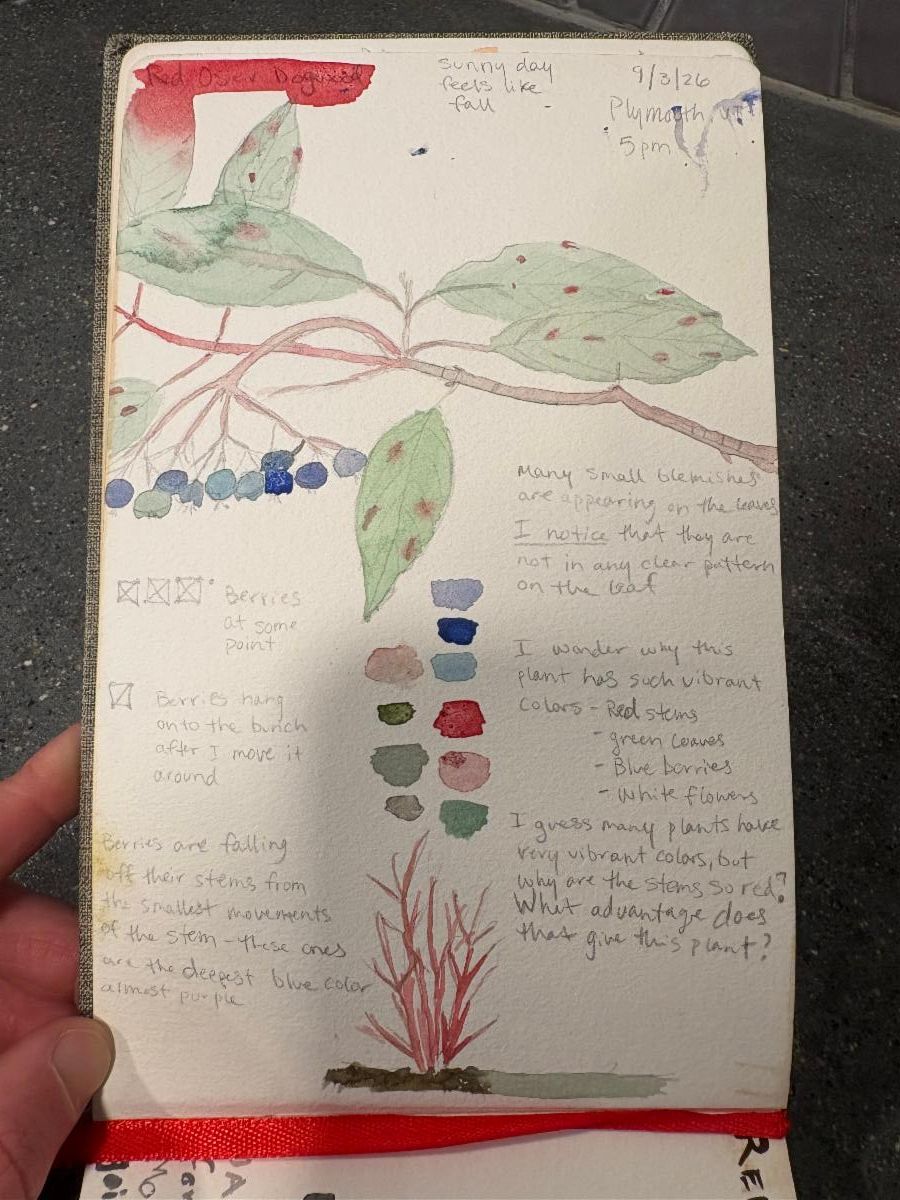
Eight women gathered at UVLT’s Pohl Conservation Area in Hartland, VT, earlier this month to learn and practice natural journaling. Southern Windsor County Forester Hannah Dallas and Naturalist and Outdoor Programs Leader Holly Henderson began the “Noticing Nature” workshop with a discussion about the forest, both what it would have looked like historically and why it looks the way it does today.
“After getting this unique perspective, we traversed to our first journal entry site in a mixed-age forest to hone our observational skills and capture what we saw and felt,” says Holly. Questions were encouraged and answered, followed by quiet reflection.
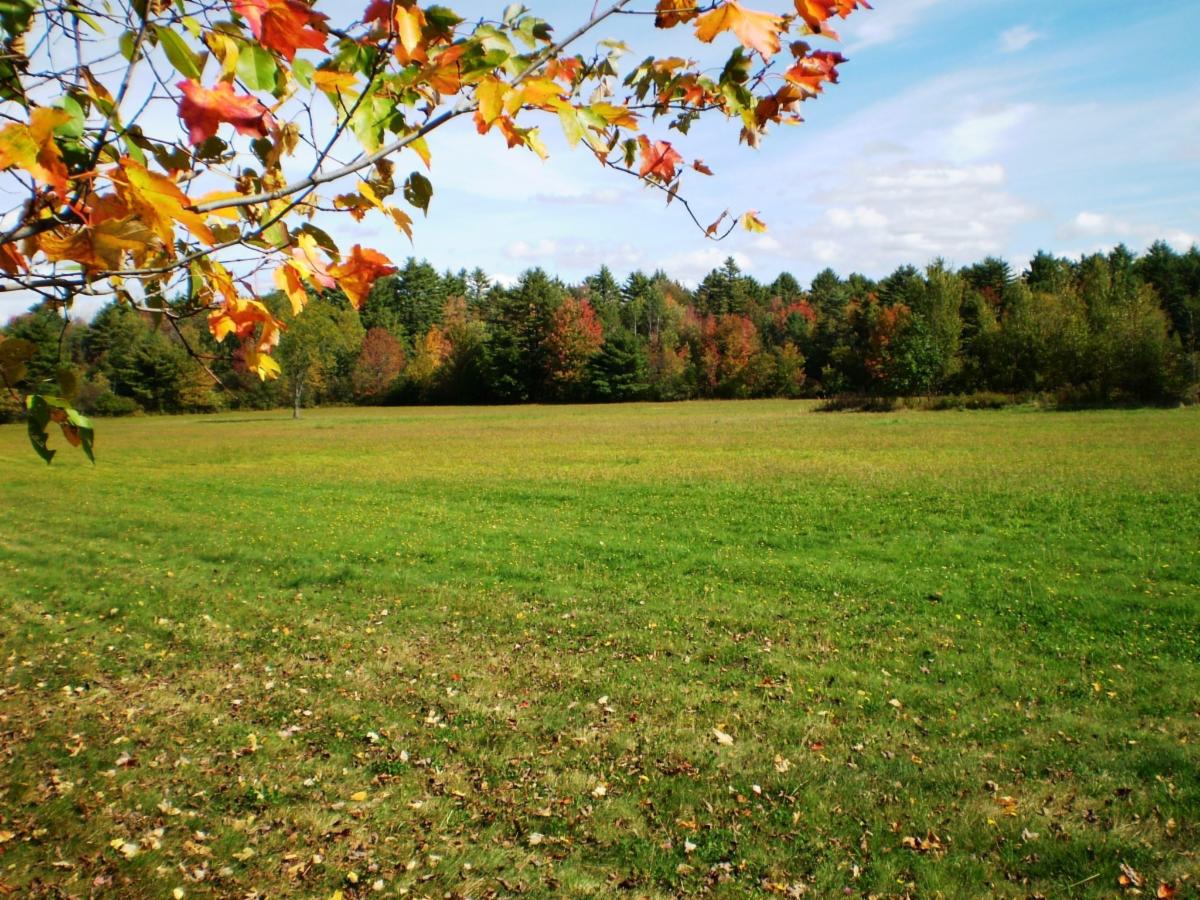
“After our first journaling spot, we moved to an open field for another entry. It was a warm, late autumn day, perfect for sitting in the sun and observing what was at our feet and above our heads. A special thanks to Hannah Dallas for inviting UVLT to share in her vision and make this event a reality.”
| | Event Report: Owling Walk | | |
While the almost full moon shone brightly on the evening of September 25, it was as black as night in the forest of Zebedee Wetland. As the last shreds of light vanished, Naturalist and Outdoor Programs Leader Holly Henderson led an intrepid group of night-time explorers on a search for owls and other nocturnal wildlife around the one-mile loop trail.
“As we went, we spoke in hushed voices and stopped regularly to stand together in stillness and silence and see what our senses could pick up,” reports Holly. “Two migrating wood ducks startled at our sound and took off over the pond, an unknown species of bat zipped over the wetland—likely looking for fuel to assist with its migration or hibernation—and we heard the almost inaudible squeaks of flying squirrels as they darted from tree to tree, alerting others in their family group of our presence.”
The group hoped to spot or hear barred owls—seen on this property before—but the owls were no-shows. Barred owls’ territories can range from 200 to 1,000 acres, so seeing one is always good luck!
“We ended the walk with a feeling of gratitude,” says Holly. “Owls or not, it was fun to see what the forest looks like through an animal’s eyes.”
| | |
Connecting Communities:
It's what we do!
| |
The Upper Valley Land Trust is all about connecting communities. We listen to and partner with landowners, townspeople, donors, and civic groups across the 45 distinct communities we serve in New Hampshire and Vermont to achieve conservation outcomes.
It also means collaborating with volunteers, employers, subject matter experts, and scientists, stewarding conserved properties and delivering engaging and impactful programming.
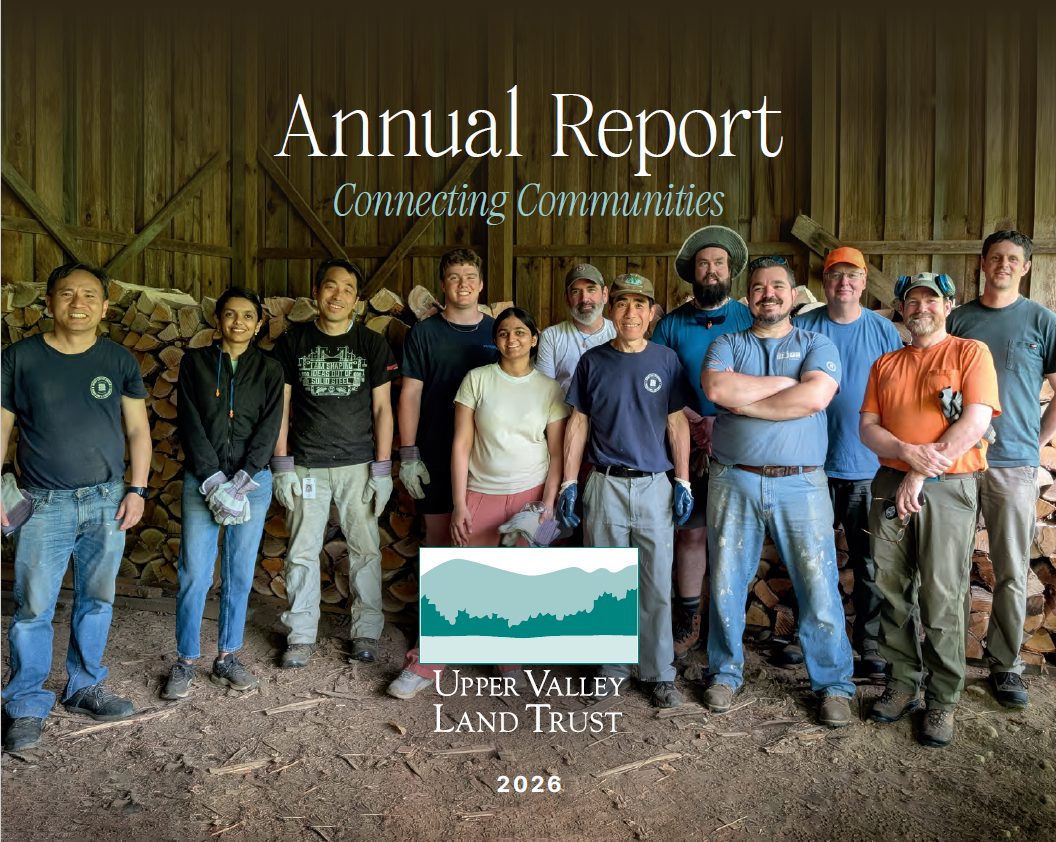
Together, we’re better. Download our 2026 Annual Report and discover the many ways UVLT connections make the Upper Valley a better place for us all, and please let us know if you’d like a hard copy.
| | |
Winter Birding Walk
Sunday, November 29, 3-4:30 p.m.
It’s sparrow season! The fall migrants have left and most of the winter residents are here. Join Naturalist and Outdoor Programs leader Holly Henderson for a wetland and forest bird walk at Lyme Hill Conservation Area.
| |
We know you love the Upper Valley. We do too!
| | Support what you love on #GivingTuesday, December 1. | | | | |