|
PRSAR STANDARDS & PRACTICE SERIES · NOVEMBER 2026
Ready Is Not a Certificate
What team readiness means for a volunteer search and rescue team, why it decays between callouts, and how to measure it before the phone rings
Michael Hadsell · President, Peace River K9 Search and Rescue Association, Inc.
The request comes in at 02:40 on a Saturday in August. An elderly man with dementia walked out of his daughter’s house some time after midnight. The sheriff’s office wants dogs, ground searchers and a drone, and the deputy on the phone asks one question: how soon, and how many?
That question is the whole of team readiness. It is not how many members are on the roster or how many certificates are framed in the training room. It is how many qualified people, animals and working pieces of equipment the team can put on scene, functioning, within a stated time — and how long it can keep them there safely.
Most volunteer teams cannot answer it with a number. They answer with a hope. This article is about why that is not good enough, what the evidence says wears readiness down between callouts, and how a team can measure its own readiness honestly — before an agency or a family measures it for them.
1. Qualified and ready are two different things
Qualification is a statement about the past: on a given date, a member met a standard in front of an evaluator. Readiness is a statement about right now: tonight, at this hour, that member can do that work again, at that standard, in these conditions.
The two drift apart quietly. A member certifies, takes a new job with weekend shifts, moves farther from the service area, has a knee operation, goes eleven months without touching a compass. On paper nothing has changed. In the field, nearly everything has.
Readiness has four layers, and a team is only as ready as its weakest one:
-
The searcher — available, current in the skills the task needs, fit for the conditions, and equipped.
-
The animal — for us, both dogs and scent horses: evaluated for the task, conditioned, healthy, and managed against heat.
-
The equipment — radios, navigation, lights, medical kits, vehicles, boat and aircraft that work when they are needed, not after they are fixed.
-
The organization — a callout system that reaches people, agreements and insurance that let the team be used, and records that show all of the above.
THE SHORT VERSION
Qualification is a photograph. Readiness is a pulse. You can frame a photograph; a pulse has to be checked.
2. The clock the family is already living on
Readiness matters because time is the variable that most strongly decides how a search ends. The best-known work on this is a study by Adams and colleagues at Oregon Health & Science University, who modeled seven years of Oregon search and rescue missions to find what predicted whether a subject would be found alive.[1] Time was the strongest predictor. Survival was high for subjects found within 17 hours of being reported missing, moderate between 17 and 51 hours, and low beyond that; 99 percent of the people found alive were found within the first 51 hours.
The authors were explicit that this is not a reason to call searches off at hour 51, and neither is it here. The point for a team is simpler. By the time a volunteer team is requested, the clock has usually been running for hours. Every hour between the request and the first qualified team stepping into the field comes straight out of the window in which the subject is most likely to be alive. A team that needs four hours to assemble has spent nearly a quarter of that 17-hour high-survival window before its first boot touches the ground.
A CAUTION ON THE DATA
The Oregon study reflects Pacific Northwest wilderness incidents. Southwest Florida searches skew toward the urban edge, water, wetlands, heat, and subjects with dementia or other cognitive impairment. The exact hours will differ here. The direction — that time is the variable we control least and matters most — is not in doubt.
3. The roster is not the team
Every volunteer team has two rosters. The first lists everyone who is a member in good standing. The second — the one that matters — lists the people who can actually be rolling within the team’s stated response time on a weekday at 03:00, on a holiday weekend, or during the third day of a hurricane response when many members are dealing with their own homes.
The gap between those two lists is the most common readiness failure, and it is invisible until it is tested. It is also widening across the volunteer emergency services. The National Volunteer Fire Council reports that the number of volunteer firefighters in the United States fell to 635,100 in 2023 — the lowest on record — while call volume has more than tripled over the last 40 years.[12] The NVFC has long identified the main reason as time: the hours it now takes to train, qualify and stay current. Volunteer search and rescue lives on the same economics. Standards rise, training hours rise, and the number of people with the time to meet them does not.
The honest response is not to hide the gap but to count it. A team should be able to tell an agency, by position, how many members it can realistically field and how fast — and it should know that number because it has tested it, not because it has estimated it.
4. Skills are perishable — and the important ones spoil first
The research on skill decay is large, consistent, and uncomfortable for volunteer organizations. A widely cited meta-analysis by Arthur and colleagues pooled decades of studies on what happens to trained skills when they go unused.[2] Loss was close to zero immediately after training and grew to an effect size of about −1.4 standard deviations after more than a year of non-use. Just as important was which skills decayed fastest: cognitive tasks, and tasks judged on accuracy, lost far more than physical tasks or tasks judged on speed.
A 2025 meta-analysis by Tatel and Ackerman, drawing on 1,344 effect sizes from 457 reports, put the decline on a timeline.[3] Without use, roughly half of the performance gained in initial training was lost after about 6.5 months for accuracy-based measures, about 13 months for speed-based measures, and about 11 months for mixed performance.
Look at what search and rescue actually asks of a member in the field. Plotting a coordinate correctly. Reading a map and holding a bearing at night. Using the radio by procedure. Filling in an assignment form so the next operational period can trust it. Recognizing a clue, protecting it and reporting it. Knowing when a scene must be left alone. Nearly all of these are cognitive and accuracy-based — exactly the category that decays fastest. Walking all night is a physical skill and holds up comparatively well. Walking all night in the right place, with a usable record of where you went, does not.
Real callouts do not fix this. They are irregular, a member may go a year without doing the same task twice, and nobody is grading accuracy in the dark. A team that relies on deployments to keep members sharp is relying on luck.
PRSAR POSITION (OUR JUDGMENT, DRAWN FROM THE EVIDENCE ABOVE)
Every accuracy-critical skill should be demonstrated under observation at least every six months, and more often for skills members rarely use for real.
Practice should look like the work. Arthur and colleagues found less decay when the conditions of practice matched the conditions of use. Train at night, in heat, in wet gear, with the radio and the forms — not only in the classroom.
5. Every callout is a first day
Heat is the hazard Florida teams live with, and the occupational safety literature has a finding that maps onto volunteers with uncomfortable precision.
In 2014, OSHA and NIOSH reviewed federal enforcement cases involving heat illness and death among workers in 2012–2013.[4] Thirteen of the cases were deaths. Four of those deaths occurred on the worker’s first day on a new job or the first day back after time away, three on the second day, and two on the third. The reviewers identified failure to acclimatize new and returning workers as the most common program deficiency and the factor most clearly associated with death.
NIOSH’s guidance follows from that.[5,6] New workers, and any worker returning after an absence of a week or more, should start with no more than 20 percent of a normal shift’s duration in the heat on the first day and increase by no more than 20 percent per day. Acclimatization is held for a few days away from the heat, begins to fade after about a week, and is largely gone after a month.
Now consider who our members are. Most of them work indoors, in air conditioning, and spend their days nowhere near the heat load of a search in August. By NIOSH’s own definition, a volunteer called out after weeks of indoor work is physiologically a returning worker. For a volunteer, every callout is a first day. And the first day is when the fatality data say people die — when they are asked to work a full shift at full effort in heat their bodies have not seen for weeks.
That changes how a team should plan the first operational period of any hot-weather search:
- Shorter work cycles and enforced rest in the first operational period, even for experienced members — perhaps especially for experienced members, who are least likely to stop on their own.
- A named person on every team who watches for heat illness, with the authority to pull a searcher out of the field without argument.
- Water, shade and a cooling plan at staging before the first assignment goes out, not after the first casualty.
- Members who want to be heat-ready during the season need to build it deliberately, with regular, progressive exertion outdoors. Acclimatization is earned only by exposure, and it is lost within weeks.
None of this is medical advice for any individual. Members with heart, blood pressure, diabetic or other conditions, and members on medications that affect heat tolerance, should talk to their own physicians about working in the heat.
6. The dog will not tell you
Everything in the previous section applies to our animals, with one dangerous difference: they will not stop on their own.
Dr. Cynthia Otto, who directs the Penn Vet Working Dog Center, has made the point plainly. Working dogs are selected for drive, and that drive can override the physiological signals that they are getting too hot. Field data bear this out. In a study of Border Patrol search and rescue dogs running one-mile tracks in the El Paso heat, the dogs reached a median core temperature of about 41 °C (106 °F) — while showing no outward signs of heat exhaustion or heat stroke.[7] A dog can be running dangerously hot and still look like it is having the best day of its life.
Two further findings from the same research group matter for handlers. First, core temperature can keep climbing after the dog stops working, so the risk does not end when the search segment does. Second, in a 2024 comparison of four field cooling methods, a trained voluntary head dunk into a bucket of cool water (about 21 °C / 70 °F) cooled dogs faster in the first minutes than ice packs on the neck, a wet towel on the neck, or wet towels in the armpits.[8] The method only works for a dog with a normal mental state that has been taught the behavior in advance — which makes it a readiness item, not a field improvisation. The guidance from that work is to cool first and transport second.
Canine readiness therefore includes things that never appear on a certificate:
- A conditioning program that matches the work the dog will actually be asked to do.
- A trained cooling behavior, practiced until it is reliable under excitement.
- Cooling water, a thermometer and a written work–rest plan carried on every callout.
- The nearest emergency veterinary hospital identified at every briefing, with the route.
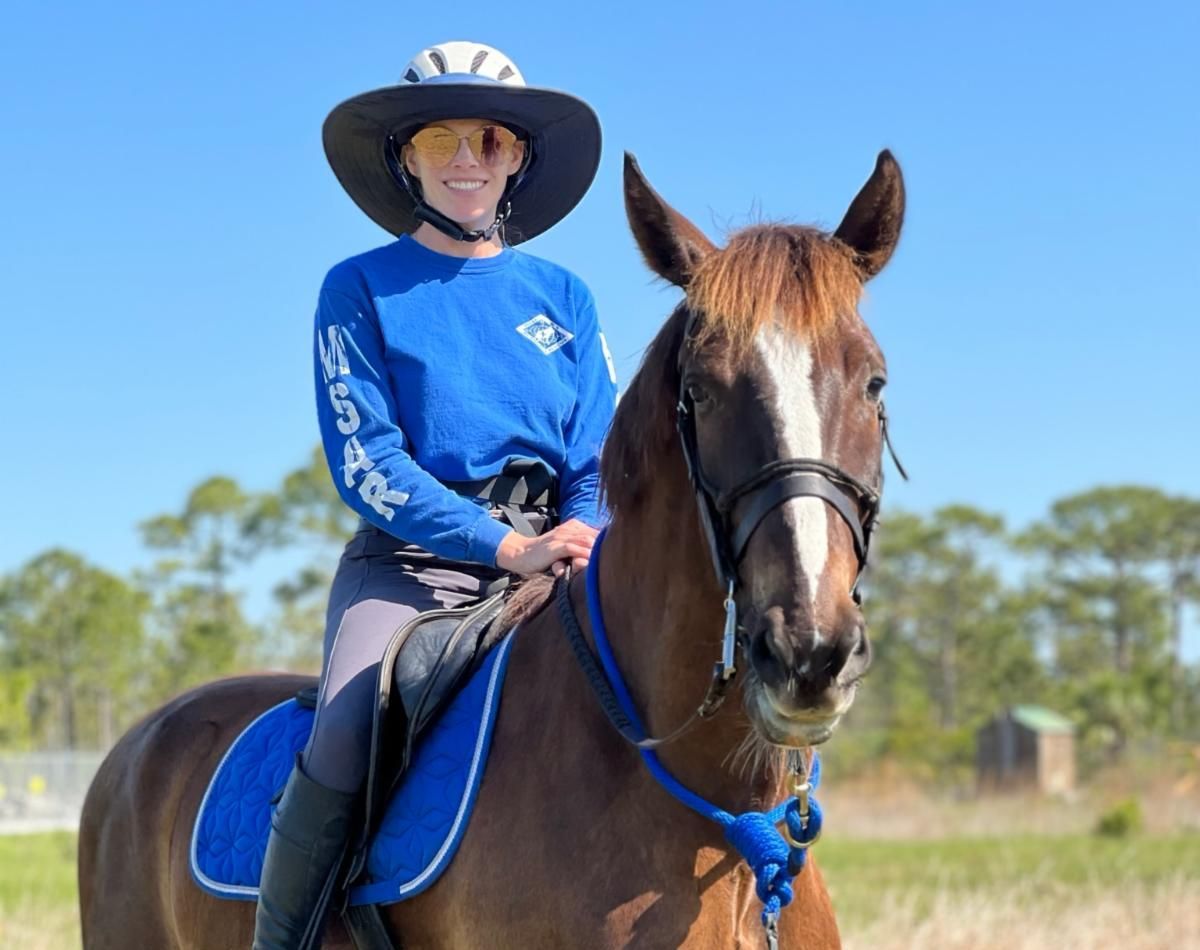
Our equine team faces the same principle — high-drive animals, heavy work, Florida heat — and handlers should plan conditioning, cooling and veterinary support for the horses with the same seriousness.
7. Standards give us the vocabulary, not the readiness
National standards define what a team member or team must be able to do. They are essential, and a team should know which ones it works to. But read closely, they leave the readiness question with us.
ASTM F2209-20, the standard guide for training a Land Search Team Member, sets out the minimum knowledge, skills and abilities for that position.[9] It calls for training to be documented through a position task book or by field demonstration under qualified supervision, and for proficiency to be demonstrated for initial qualification and then as often as the authority having jurisdiction requires. In other words, the standard defines the skill; the recurrence — the readiness — is ours to set and to prove.
FEMA’s National Incident Management System provides resource typing definitions and position qualifications for search and rescue, collected in the Resource Typing Library Tool, along with physical and medical fitness levels defined under the National Qualification System.[10] When a request arrives through statewide mutual aid, it arrives in this language. A team that can describe itself in NIMS terms is a team an emergency manager can actually order.
NFPA 2500 (2022) consolidated the former NFPA 1670, 1983 and 1858 into a single standard covering operations and training for technical search and rescue incidents, and life safety rope and equipment.[11] It is most relevant to our water and technical work. NFPA 1006, the professional qualifications standard for technical rescuers, remains separate.
None of these documents can tell an incident commander whether the member who certified to them two years ago can do the work tonight. That is the gap a readiness program fills.
8. A readiness check, layer by layer
The checklist below is a working tool. Each item states what “ready” looks like, a practical way to verify it, and the warning sign that it has quietly lapsed. It is written for any volunteer team, not only ours.
Searcher
Ready: Member can be rolling within the team’s stated response time, for the position the agency asked for.
-
Check it: Availability check-in on every callout and every no-notice drill; counted by position, not by name.
-
Red flag: The roster count is quoted to agencies; nobody knows how many actually answered the last three callouts.
Ready: Accuracy skills (navigation, radio, ICS forms, clue and scene handling) used or drilled within the last six months.
-
Check it: Skill-currency log: date each member last demonstrated each skill under observation.
-
Red flag: Currency is “they passed the course in 2023.”
Ready: Member is fit for the work and heat-ready for the season.
-
Check it: Annual self-declaration of medical fitness; pack-weight walk; documented heat-season training.
-
Red flag: First hot-weather exertion of the year happens on a live search.
Ready: Personal gear packed, charged and checked.
-
Check it: Monthly go-bag check with a short written list; batteries dated.
-
Red flag: Gear is “in the truck somewhere.”
Canine / equine
Ready: Evaluation or certification current for the task being requested.
-
Check it: Certificate date and scope against the request; training log for the last 12 months.
-
Red flag: Certification lapsed, or covers a different discipline than the task.
Ready: Animal conditioned for the work and a cooling plan in place.
-
Check it: Conditioning record; trained cooling behavior; water and thermometer in the kit.
-
Red flag: Animal works until the handler “sees it slow down.”
Ready: Health and vaccination records current; emergency vet identified.
-
Check it: Records in the vehicle; nearest emergency vet named at every briefing.
-
Red flag: Nobody knows where the nearest after-hours vet is.
Equipment
Ready: Radios, GPS units, lights and medical kits work and are charged.
-
Check it: Dated monthly function check; spare batteries rotated.
-
Red flag: Equipment is tested at the staging area.
Ready: Vehicles, boat and aircraft are serviceable and legally current.
-
Check it: Maintenance log; registrations, inspections and pilot currency on file.
-
Red flag: A known mechanical fault is “being worked on.”
Organization
Ready: Callout system reaches every member at any hour, and the team knows who answered.
-
Check it: Unannounced test callouts at varied hours, with response logged.
-
Red flag: The callout tree has not been tested since it was written.
Ready: Agreements, insurance and credentials allow the team to be used when it arrives.
-
Check it: Annual review of MOUs, insurance and member credentials.
-
Red flag: The team is turned away at the perimeter for paperwork.
Ready: Records are kept that an agency, a court or the board can rely on.
-
Check it: Training, deployment and readiness records reviewed quarterly.
-
Red flag: Readiness cannot be shown on paper when someone asks.
9. Five numbers worth reporting every month
Readiness that is not measured is readiness that is assumed. A team’s leadership can track it with five numbers, reported to the board every month and available to any agency that asks:
-
Deployable strength by position. How many members, by position (searcher, team leader, K9 team, equine team, diver, UAV pilot), are currently available and current — not how many are on the roster.
-
Skill currency rate. For each accuracy-critical skill, the percentage of deployable members who demonstrated it under observation in the last six months.
-
Time to first team rolling. Measured from request to the first qualified team departing, on no-notice drills — never estimated.
-
No-notice drill response rate. The share of members who answered an unannounced test callout, and how many said they could deploy.
-
Equipment readiness. The percentage of critical equipment items checked and found working within the last 30 days.
We recommend at least one unannounced test callout every quarter, rotated across weekdays, weekends, daytime and the middle of the night. A test callout that always happens on Saturday morning measures Saturday morning.
FOR THE BOARD
- Adopt a written readiness standard that defines the team’s stated response time and the five measures above.
- Start a skill-currency log with a six-month recurrence for accuracy-critical skills.
- Write a hot-weather first-operational-period plan, including a named heat watch and the authority to pull members.
- Make a trained cooling behavior, cooling water and a thermometer part of the standard K9 kit, and set an equivalent plan for the equine team.
- Schedule quarterly no-notice test callouts and report the results.
10. What the evidence does and does not say
It is worth being clear about the limits of what is cited here.
- The survival-versus-time data come from seven years of Oregon search and rescue missions, mostly in wilderness terrain. They show the direction of the relationship clearly; they do not give Florida-specific numbers.
- The skill-decay findings come from meta-analyses across many fields — military, medical, sport and laboratory tasks. They have not been measured specifically in volunteer searchers. The six-month recurrence we recommend is our judgment from that evidence, not a published SAR standard.
- The heat fatality pattern comes from a small number of occupational enforcement cases. It is consistent with long-standing NIOSH guidance, but the case count is small, and volunteers were not the population studied.
- The canine temperature and cooling studies used small numbers of dogs. They are the best field evidence available and point the same way, but they are not the last word.
- We are not aware of any published study that directly measures the readiness of volunteer search and rescue teams. That absence is itself a reason for teams to keep their own records.
The bottom line
A team is not ready because it was certified. It is ready because tonight, at this hour, it can put qualified people and animals in the field quickly, keep them working safely, and bring every one of them home. That is a number. Measure it, report it, and work to improve it — because the family on the other end of that 02:40 call is already counting the hours.
Prepared for the worst, providing the Best . . . Until All Come Home
ABOUT PRSAR
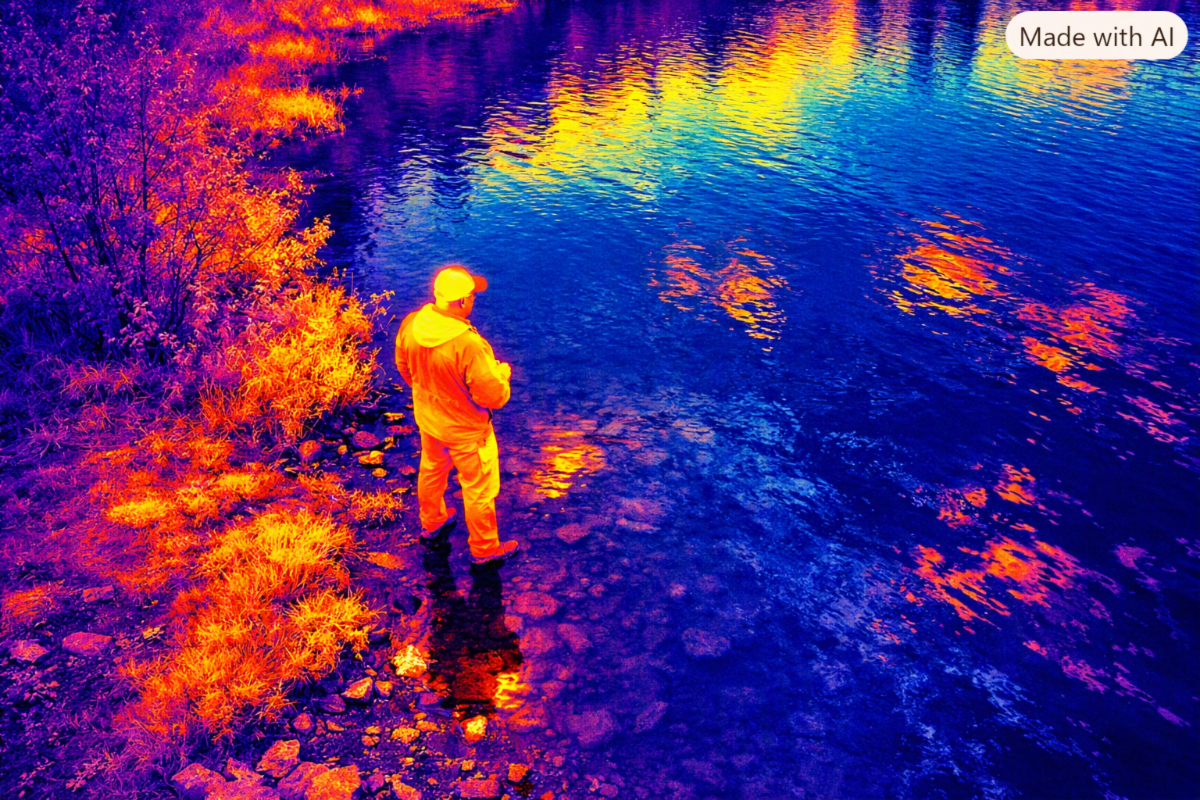
Peace River K9 Search and Rescue Association, Inc. is a Florida nonprofit, 501(c)(3) volunteer organization serving Hillsborough, Charlotte, DeSoto, Collier and Lee counties. PRSAR fields canine teams, an equine scent team, divers and multispectral UAV capability in support of law enforcement and emergency management agencies searching for missing persons.
This article is part of the PRSAR Standards & Practice Series. It is general guidance for search and rescue teams and the agencies that use them. It is not medical, veterinary or legal advice.
References
1. Adams AL, Schmidt TA, Newgard CD, Federiuk CS, Christie M, Scorvo S. Search is a time-critical event: when search and rescue missions may become futile. Wilderness Environ Med. 2007;18(2):95–101.
2. Arthur W Jr, Bennett W Jr, Stanush PL, McNelly TL. Factors that influence skill decay and retention: a quantitative review and analysis. Hum Perform. 1998;11(1):57–101.
3. Tatel CE, Ackerman PL. Procedural skill retention and decay: a meta-analytic review. Psychol Bull. 2025;151(6):696–736. doi:10.1037/bul0000481
4. Arbury S, Jacklitsch B, Farquah O, Hodgson M, Lamson G, Martin H, Profitt A. Heat illness and death among workers — United States, 2012–2013. MMWR Morb Mortal Wkly Rep. 2014;63(31):661–665.
5. National Institute for Occupational Safety and Health. Heat Stress: Acclimatization. DHHS (NIOSH) Publication No. 2017-124. Cincinnati, OH: NIOSH; 2017.
6. Jacklitsch B. Adjusting to work in the heat: why acclimatization matters. NIOSH eNews / Science Blog. 2014.
7. Niedermeyer GM, Hare E, Brunker LK, Berk RA, Kelsey KM, Darling TA, Nord JL, Schmidt KK, Otto CM. A randomized cross-over field study of pre-hydration strategies in dogs tracking in hot environments. Front Vet Sci. 2020;7:292. doi:10.3389/fvets.2020.00292
8. Parnes SC, Mallikarjun A, Ramos MT, Capparell TR, Otto CM. Voluntary head dunking after exercise-induced hyperthermia rapidly reduces core body temperature in dogs. J Am Vet Med Assoc. 2024. doi:10.2460/javma.24.06.0368. See also University of Pennsylvania, Penn Today coverage of the study, September 2024.
9. ASTM International. ASTM F2209-20, Standard Guide for Training of Land Search Team Member. West Conshohocken, PA: ASTM; 2020. doi:10.1520/F2209-20
10. Federal Emergency Management Agency. NIMS Guideline for the National Qualification System. Washington, DC: FEMA; 2017. See also the NIMS Resource Typing Library Tool (RTLT) for search and rescue resource typing definitions and position qualifications.
11. National Fire Protection Association. NFPA 2500, Standard for Operations and Training for Technical Search and Rescue Incidents and Life Safety Rope and Equipment for Emergency Services. 2022 ed. Quincy, MA: NFPA; 2022.
12. National Volunteer Fire Council. Fire Service Fact Sheet and Make Me A Firefighter department materials (volunteer firefighter counts drawn from NFPA U.S. Fire Department Profile data). Greenbelt, MD: NVFC; 2024–2025.
|