Metal Market Update - November 2022
|
|
|
Greetings!
We trust this email finds you well and we hope this information adds value to your busy day. We appreciate the opportunity to connect with you and your Team in all facets of the business cycle so please don't hesitate to call us at 704.568.3001 or email us at sales@wardve.com if we can be of any assistance.
|
|
Industrial Manufacturing News
|
|
The ISM Manufacturing Index (PMI) continued to decline in October, registering a 50.2 reading from the 50.9 level in September. The new orders metric contracted for the fifth consecutive month, possibly pointing to lower demand in the near future. On a positive note, the price index for materials decreased for the seventh straight month.
October’s Consumer Confidence reading fell to 102.5 from September’s 107.8 mark. Persistently high inflation, increasing interest rates, and the prospect of recession contributed to the decline. Even with these very real headwinds, consumers indicated increasing sentiment to purchase major appliances, vehicles, and homes.
In October, WTI Oil registered price gains for the first time since May. Starting the month at $83.63 per barrel, oil rallied on OPEC+ production cuts and U.S. oil export data to close at $88.23 per barrel. The upward potential of oil is uncertain as strict COVID-19 lockdowns in China continue to dampen demand from that economy.
The online US Oil Rig Count is at 770 which is up 5 compared to last month's report and up 220 from November 5 of 2021 (a high of 1609 in October of 2014 before oil pricing dropped below $20 per barrel at the end of that year). This key and leading indicator shows the current demand for products used in drilling, completing, producing, and processing of hydrocarbons which all of us use every day as fuel sources and finished products.
|
|
News & Insights on Materials |
|
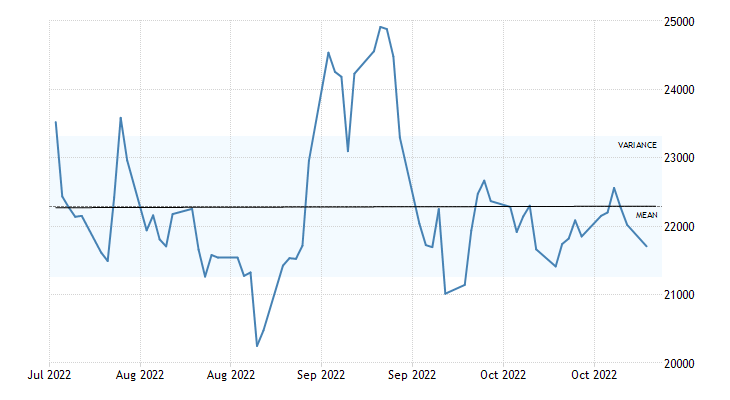
Nickel reversed course slightly in October, falling back to August’s average price ($9.95/lb.) The commodity began the month at $9.64/lb., hovered near the $10 mark for weeks, and closed at $9.88/lb. The aforementioned lockdowns in China have curtailed stainless steel production, which negatively impacted nickel consumption. While still in the exploratory phase, Indonesia is considering forming a nickel cartel (like OPEC) to manipulate prices in the future. This is a story worth keeping an eye on.
Domestic steel mills continued to remain steady in October, as they did in August and September, with no price movements on PVQ plate. It looks less likely that we’ll see any more upward movement in 2022.
Commodity stainless and duplex plate deliveries remain in the 7 to 12-week range, while Nickel alloy plates range from 12 to 26 weeks. Carbon Steel plate mill deliveries reside in the 6 to 10 week delivery range.
Welded tubing –Stainless strip supply has stabilized, keeping smaller quantity deliveries in the 10 to 16 week range, with larger quantity orders still in the window of 18 to 25 weeks. Carbon steel tubing deliveries have lead times ranging anywhere from 12 to 20 weeks when strip is available. Welded nickel alloy tubing ranges from 16 to 26 weeks, with some cases of 30 week deliveries.
Seamless tubing - Current schedules reflect 10 to 22 weeks or more for carbon steel (26 to 30 weeks for Western European carbon seamless) and 10 to 30 weeks for stainless. Seamless nickel tubing is being offered at the 10 to 12 week delivery window so long as hollows are in stock. If hollows are not readily available, anticipate deliveries of seamless nickel tubing in the 20 to 32 week timeframe.
The metal market is still in a tremendous state of uncertainty and price volatility, so please don't hesitate to reach out if you have any questions.
|
|
90 Day Nickel Price Trend |
|
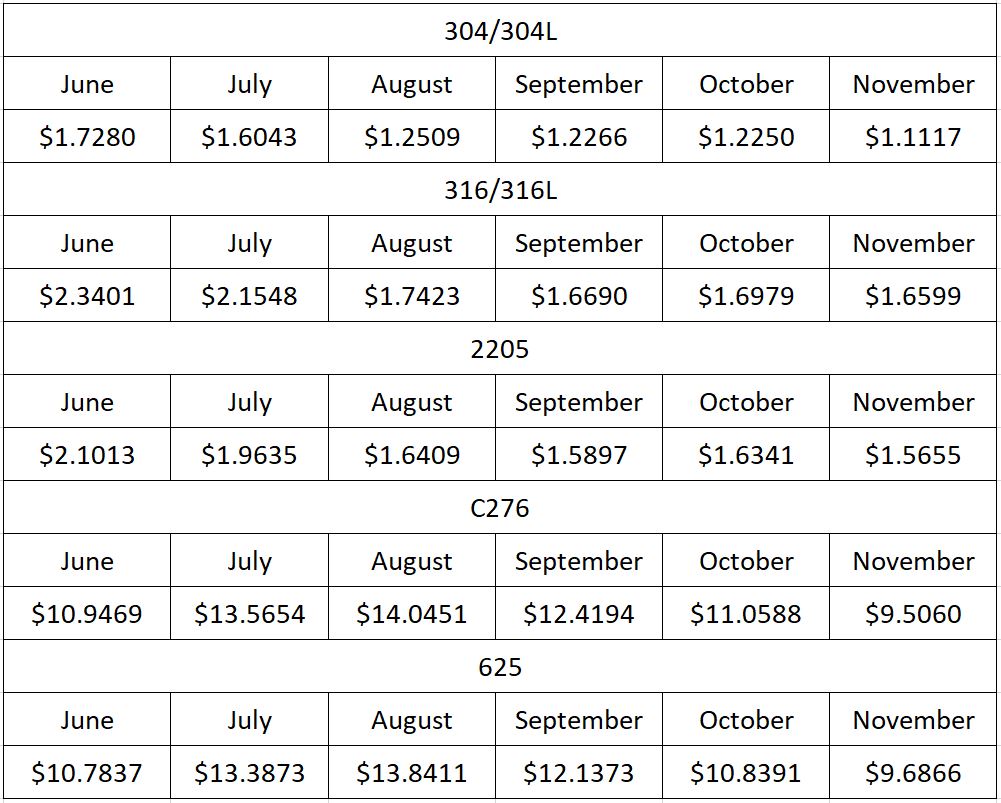
Material Surcharge History |
|
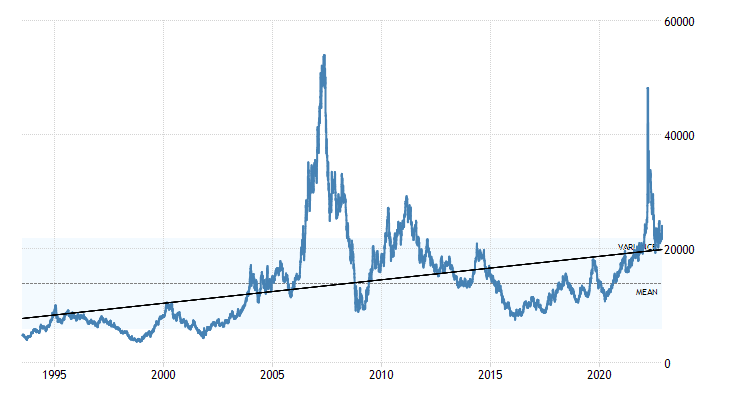
Historical Nickel Price Data |
|
Nickel Prices have had an interesting ride over the past two decades with a low of $2.20/lb. in October of 2001 (following September 11 events) and a high of $23.72/lb. in May of 2007. Surcharges trail Nickel prices by approximately two months, so they would have been at their lowest in December of 2001 (304 was $0.0182/lb.) with the peak in July of 2007 (304 was $2.2839/lb.).
The chart below illustrates Nickel price by way of U.S. Dollar per Metric ton.
|
|
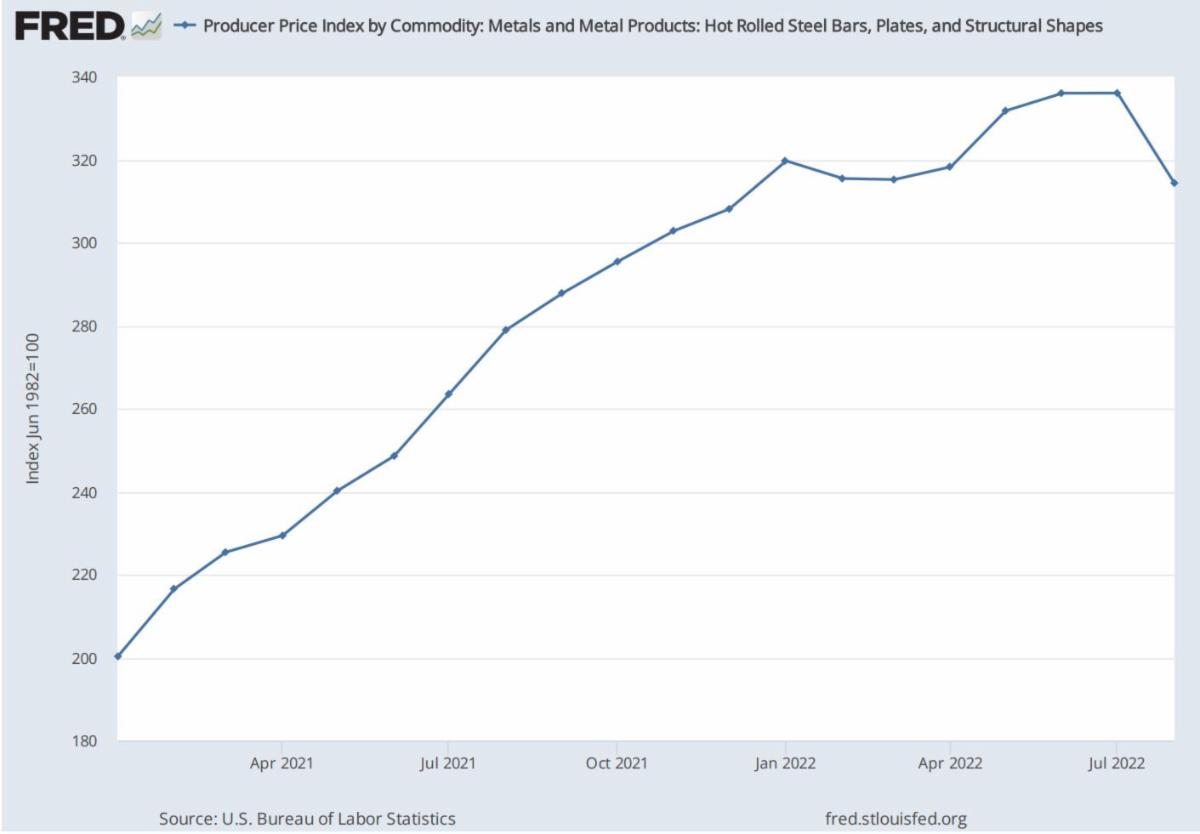
Price Index: Hot Rolled Bars, Plate, and Structural Shapes |
|
ASME Code, TEMA and API Facts - Did you know? |
|
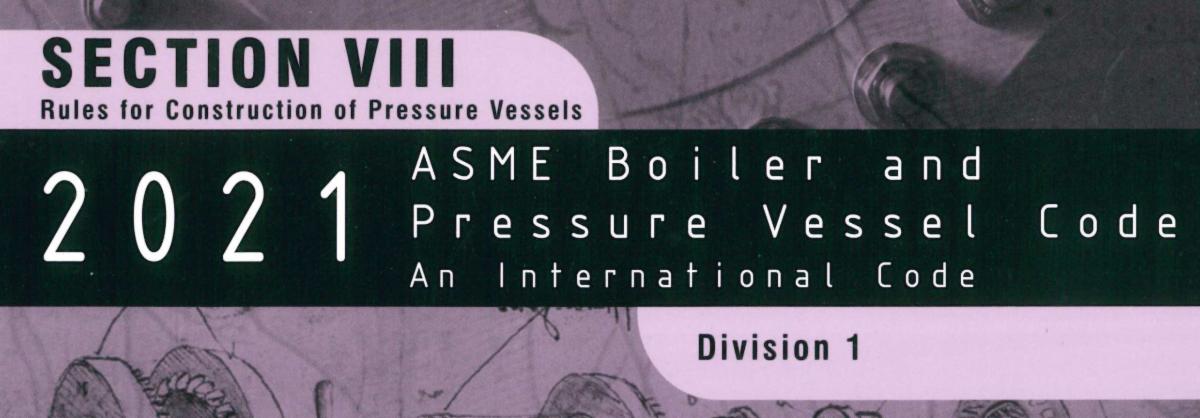
Fatigue Analyses
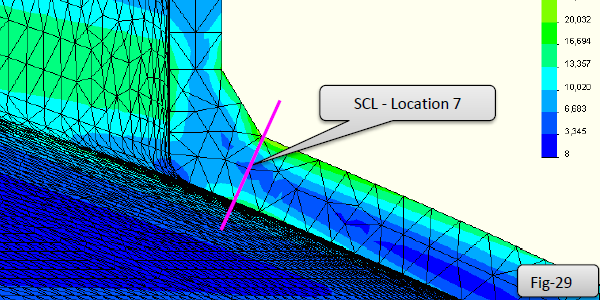
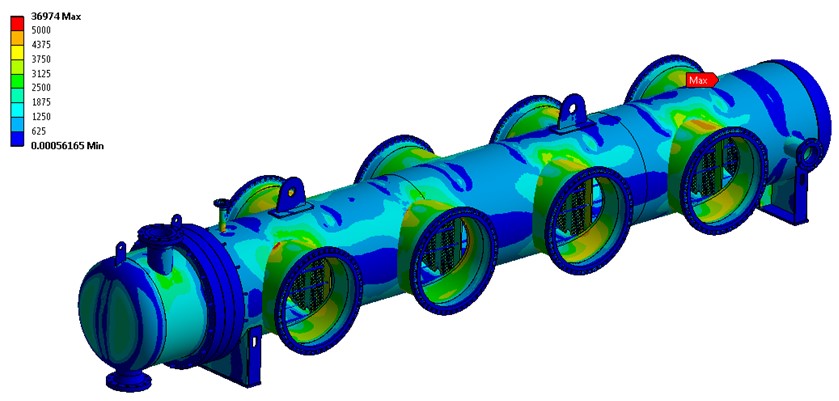
When a vessel (or part of a vessel) is subjected to pressure loads that repeatedly cycle from low to high, the fatigue life of the vessel may need to be evaluated. This is outside the scope of Section VIII Division 1, but it can be accomplished with finite element analysis (FEA) and the fatigue evaluation methods given in Division 2 of the code. Fatigue curves (S-N curves) are provided for each material type. If the evaluation shows that the allowable number of cycles are less than the design life of the vessel, then geometry changes may be needed to increase the operating life.
The analysis can also be performed for cyclic external loads, such as piping loads on a nozzle. However, cycling temperatures do not normally need to be considered in the same way, since an increase in temperature does not directly cause stress in a component. Contact us if you have any questions about fatigue life calculations of a pressure vessel.
|
|
TEMA Update - The 10th edition of the TEMA Standards are available for purchase as of April 15th, 2019. Please visit www.tema.org to get your copy on order today!
|
|
Benefits of a Specialty Turnkey Service Provider
|
|
Field Repair Work: The Human Factor
This is likely the toughest expectation of all to “manage” when it comes to work in the field. From sleep deprivation to problems at home; from disagreements with co-workers to simple math errors; there are aspects of a project that can be identified but are hard, if not impossible, to manage.
Additionally, cognitive functions such as attention, detection, perception, memory, judgment, reasoning, decision-making, motor control, and speech are all highly variable – not just between different people, but the same person’s cognitive functions can vary from day to day, based on an almost unlimited number of factors.
Physical functions and qualities such as strength, speed, accuracy, balance, and reach are also variable and can tend to derail finely-planned projects and whatever contingencies that are in place.
Also, it’s important to remember that smaller projects are at a higher risk of falling prey to "The Human Factor" since there are fewer workers to fill in the gaps when needed. In the end, we are all a group of people who must work together to achieve a common goal. Communication, Empathy and our own personal Reliability/Consistency are all attributes we all must call on every day to motivate ourselves and everyone involved in a project to move closer to the target, whatever that happens to be.
In closing, always remember that, even when expectations and pressure are high, it is critical to maintain a mutually respectful Customer-Vendor-Manpower relationship. All too often, bad communication (whether intentional or not) leads to bad blood and can result in bad decisions. Every once and a while, even the best of us has a bad day and we should always strive to empathize in every interaction. Almost everyone is going through an unpleasant something in their life that can and will often bleed over into their work life.
Strive to be the Calm and Patient Voice of those around you.
We understand "The Human Factor" all too well and know how to calmly work through these types of situations. We are here to help and to make sure all of your projects go as smoothly as possible!
|
|
|
|
|
|
|