|
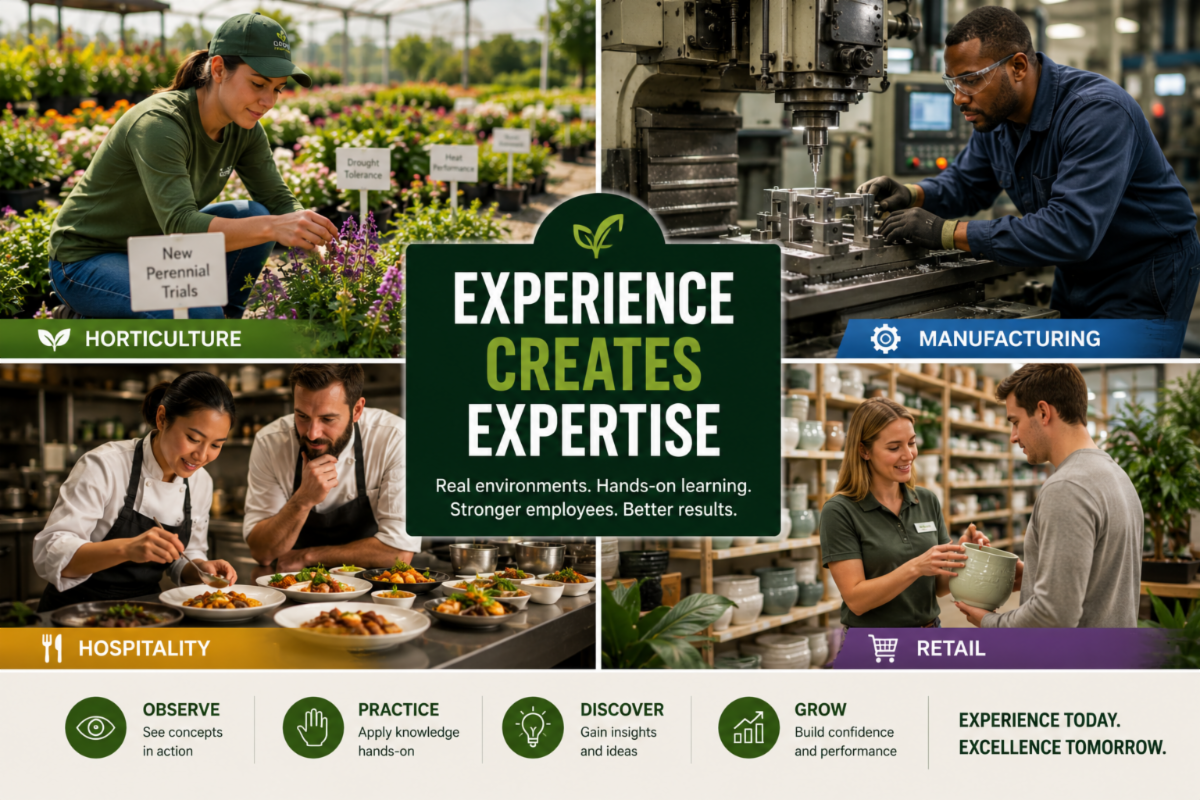
Many businesses invest heavily in employee training through manuals, online courses, meetings, and shadowing experienced team members. While these methods all have value, some of the most effective learning happens through direct experience. Increasingly, companies across a wide range of industries are discovering the value of creating “trial workspaces” — controlled environments where employees can learn, experiment, observe outcomes, and build confidence through hands-on involvement.
The concept is simple: people often retain knowledge more effectively when they actively engage with it rather than simply reading or hearing about it.
Examples and Ideas
In manufacturing, a trial workspace may involve employees testing production methods, equipment settings, or workflow improvements in a controlled setting before implementing them on the main floor. In retail, it may mean creating product demonstration areas where staff can personally use, compare, and understand products before advising customers. In hospitality and food service, employees gain valuable insight by participating in mock service scenarios or tasting and evaluating menu offerings firsthand.
The same idea applies in office-based industries. Sales teams can benefit from role-play environments that simulate real customer interactions. Marketing departments can test campaigns internally before launching publicly. Technology companies often create sandbox environments where employees can safely explore software, troubleshoot issues, and experiment without risk to live systems.
Benefits Beyond Technical Skill Development
These learning environments do more than improve technical skills. They encourage problem-solving, curiosity, collaboration, and communication among employees. Team members become more engaged because they are participating in the learning process rather than passively receiving information.
Perhaps most importantly, experiential learning builds confidence. Employees who have personally tested, observed, or practiced something are often more comfortable making decisions, answering questions, and interacting with customers or clients. That confidence tends to translate into better service, stronger performance, and greater overall workplace effectiveness.
Businesses also benefit from uncovering new ideas. Trial environments frequently spark innovation because employees feel more comfortable exploring alternatives and sharing observations in a lower-pressure setting.
Cost Factor
Creating these opportunities does not necessarily require major investment. Often, it begins with intentionally setting aside space, time, or processes that allow employees to safely learn through experience.
Some Thoughts to Leave You With
In a competitive business environment where adaptability and knowledge matter more than ever, companies that create opportunities for hands-on learning may find themselves developing not only more capable employees, but stronger organizations overall. A business becomes more valuable when knowledge exists throughout the organization and not just in the owner's head.
|