Covering Kids & Families of Indiana Newsletter |
|
|
|
What Can We Learn from the Unwinding of Continuous Medicaid Enrollment?
She writes, "Medicaid is the nation’s largest public insurer and most important public health first responder. It was designed to serve as a vital health care safety net for all eligible people when care is needed, and it continues to play this vital role for millions. It is now time for policy reforms to address enrollment stabilization, which would recognize that Medicaid is a critical point-of-need safety net but also an ongoing insurer for millions."
|
|
|
|
Hispanics Make Up Nearly Half the Nation's Uninsured
Nearly 1 in 5 Hispanic Americans do nothave health insurance, a share almost three times greater than Anglos. Hispanics account for close to half of all those in the country who are not covered. It might be tempting to pin this on immigration status, but that is an incomplete explanation.
The Center for Migration Studies estimates that there about 7.4 million undocumented immigrants of Hispanic origin in the U.S. Half of those 7.4 million do not have health insurance, but that makes up only about a third of the total number without coverage in a Hispanic population of 65 million.
Emergency room care is the most expensive of all, but this is where people whose health problems have gone undiagnosed and untreated end up. “All those uncompensated emergency room bills are sure to be reflected in the next year’s insurance prices,” says Arturo Vargas Bustamante, a public health researcher and professor at UCLA. “It’s an incredibly inefficient way of paying for health care.”
Even in states where they might be eligible for Medicaid coverage, some Hispanics are reluctant to apply due to uncertainty about immigration policy. Immigrants who are seeking to become lawful permanent residents can run into trouble on their path to citizenship if they are determined to be a “public charge,” reliant on certain forms of government support. Technically, they could even be subject to deportation, though this is extremely rare. (Only one-tenth of one percent of deportations result from public charge determinations.)
For decades, Medicaid, Medicare, and nutritional assistance programs were excluded from the forms of government aid that were considered in a public charge assessment. This exemption was ended by the Trump administration. That rule change was, in turn, revoked by the Biden administration in 2021, but the back and forth has created anxiety.
It’s possible that a new administration could reverse current policy, especially at a time when immigration policy is so politically charged. Some Hispanics lawfully in the country worry that accessing health benefits might harm their long-term citizenship prospects.
|
|
|
|
NEWS FROM THE INDIANA SCHOOL HEALTH NETWORK |
|
|
|
Registration for the Indiana School Health Network Conference is Open!
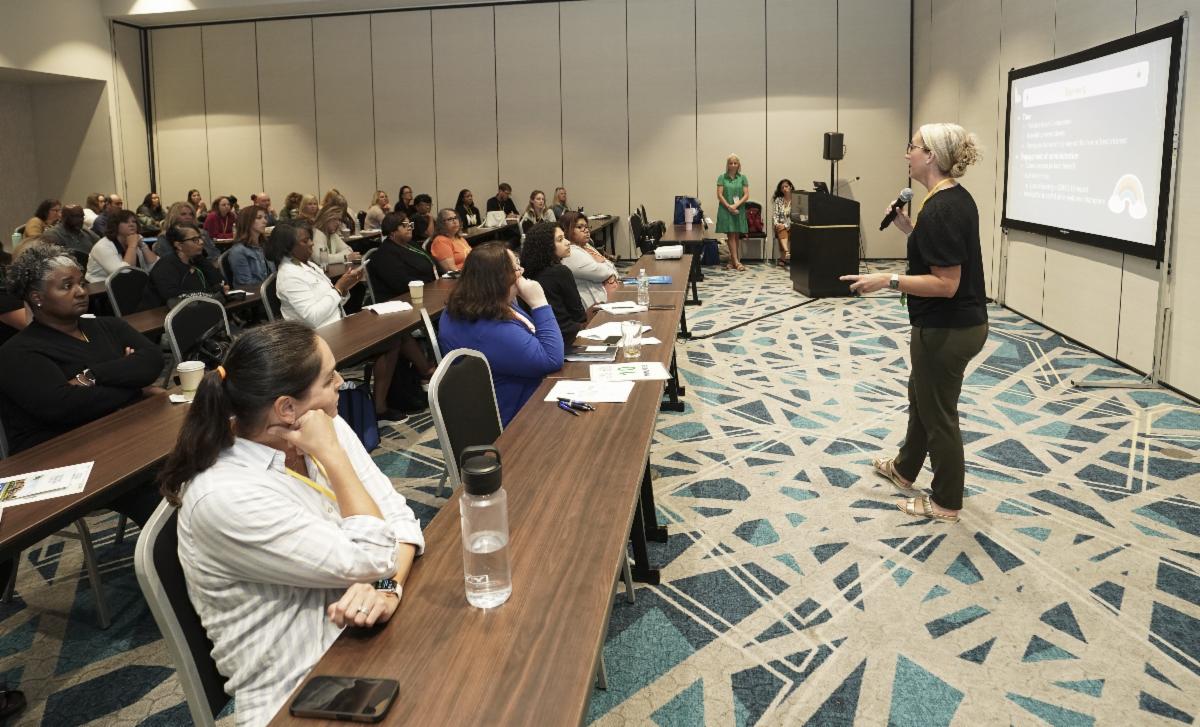
Covering Kids & Families of Indiana is excited to announce the Indiana School Health Network Conference will be FREE to attend this year. The conference will be held on June 4-5, 2024 at the Embassy Suites in Plainfield. In addition to no cost, pre-conference sessions have been added for June 3rd. Up to 14 free continuing education credits will be offered for nursing, social work, certified health education specialists (CHES), and library professionals. General certificates of attendance will also be provided.
The Seeds of Hope: Growing a Strong Future for Hoosier Kids conference will encourage discussions and initiatives that highlight innovative approaches, community involvement, policy changes, and evolving opportunities. Keynotes include sessions on trauma-informed nutrition security, school-based Medicaid reimbursement, Indiana’s behavioral health strategic plan, and school culture and belonging.
|
|
|
|
USDA Updates School Nutrition Standards
Research shows that school meals are the most nutritious food source for school children. On April 25, 2024, USDA’s Food and Nutrition Service (FNS) published the final rule titled, Child Nutrition Programs: Meal Patterns Consistent With the 2020-2025 Dietary Guidelines for Americans. Updated standards include: sodium reduction, whole grain requirements, new limits on sugar in products and overall weekly limits. Changes to school menus are not required until school year 2025-26, at the earliest.
|
|
|
|
Disparities in Health
An evaluation by the Commonwealth Fund considered 25 measures of healthcare quality, service, and access for five ethnic and racial groups. The evaluation assessed the impact on healthcare access and finances when someone is uninsured, underinsured, or has gaps in coverage. Findings show disruptions to Medicaid coverage disproportionately impact people of color.
The evaluation also suggests various policy changes including universal, affordable, and equitable healthcare coverage. This could look like a 12 month period of continuous Medicaid eligibility or auto-enrollment in Medicaid for uninsured eligible individuals, among other things.
|
|
|
|
Short-Term Insurance
The Departments of Health & Human Services, Labor, and Treasury released final regulations effective September 1, 2024, setting new standards for short-term, limited duration health insurance (STLDI).
-
Requires that issuers of STLDI and "hospital and fixed indemnity" policies provide updated and prominent disclosures to consumers
- Revises the definition of STLDI to a policy that expires after three months
These regulations seek to address health equity concerns and increase consumer awareness that these plans do not provide comprehensive coverage.
|
|
|
|
Overlapping Marketplace Enrollments
The Centers for Medicare & Medicaid Services (CMS) launched a project to assist consumers who find themselves enrolled in multiple Marketplace plans (overlapping enrollment). The Complex Case Help Center will reach out to identified consumers to assist. Assisters can also report cases where a consumer has been enrolled without their consent through the Complex Case web form or by calling the Marketplace Call Center at -1-800-318-2596.
|
|
|
|
Marketplace Standards
This month, the Department of Health & Human Services released a final “Notice of Benefit and Payment Parameters” for plan year 2025 to set standards and requirements for the Marketplace and health insurers.
While this year the annual rule includes many notices for state-based Marketplaces - Indiana uses the federal Marketplace - there are some rules that may impact Indiana.
- States can add routine adult dental benefits to essential health benefits (EHB) benchmark plans
- Rule creates permanent monthly special enrollment period (SEP) for people at or below 150% federal poverty level.
- Consumers who do not reconcile advanced premium tax credits (APTC) will receive a notice warning them that failure to do so for two years could result in the loss of APTC.
- To reduce administrative burdens and promote equity, Marketplace must accept an applicant’s attestation that they not incarcerated.
|
|
|
|
Spanish Speaker Survey
In December of 2023 (during the unwinding), Protecting Immigrant Families conducted a survey of Spanish-speaking immigrants to gain understanding of the challenges faced by families. Over 2,000 respondents from 43 states participated. Seventy-five percent of those participating had children with Medicaid coverage and 38% had Medicaid coverage for themselves.
The survey identified several data points that could help navigators understand obstacles to outreach and enrollment in Spanish-speaking immigrant populations.
- 66% knew little or nothing about the Medicaid redetermination process
- Those that knew at least a little about the redetermination process heard about it mainly from TV/radio station, healthcare provider, family member or friend/co-worker
- Only 4% heard about it from schools
- Only 5% heard about it from community organizations
- More than half heard misinformation about Medicaid
- 18% heard that using Medicaid could negatively impact future applications for permanent residency
- 14% reported hearing that having Medicaid could put a family member without documents at risk for immigration enforcement
|
|
|
|
Special Education Advocacy Curriculum
Students with disabilities sometimes need extra support to succeed in school. A federal law called the Individuals with Disabilities Education Act (IDEA) helps make sure eligible students get special education services tailored to their needs so they can learn side by side with their peers as much as possible.
Understanding the special education process is important for families of children with disabilities to make sure schools are complying with the regulations set forth in IDEA.
- Understand what’s required by law to support students with disabilities.
- Learn about IDEA, Section 504, individualized education programs, and more.
- Become a better advocate for students with disabilities.
Start the training now—in English or Spanish—and make sure your student is set up for success.
|
|
|
|
HPV Patient and Parent Interventions
The American Cancer Society in partnership with the National HPV Vaccination Roundtable and the Indiana Immunization Coalition are launching three webinars to provide information that will help health care providers improve their HPV vaccination rates.
Speakers will discuss HPV vaccine improvement interventions targeted for patients and parents. They will emphasize resources for back-to-school initiatives and tools for increasing HPV vaccination.
For more information about this HPV webinar series, see the series flyer.
Date: May 8, 2024
Time: 2:00pm to 3:00pm ET
|
|
|
|
Understanding Drug Use and Addiction
Drug addiction is a complex disease, and quitting usually takes more than good intentions or a strong will. Drugs change the brain in ways that make quitting hard, even for those who want to. Fortunately, researchers know more than ever about how drugs affect the brain and have found treatments that can help people recover from drug addiction.
|
|
|
|
Medicaid and CHIP Behavioral Health Services: Impact of School-Based Mental Health Care
The Connecting Kids to Coverage Campaign is hosting a webinar to present information on trends in youth mental health, Medicaid coverage, and school-based mental health services.
The webinar is on May 8, 2024 at 3 pm E T. You can register here.
|
|
|
|
Pathways to Aging
The Family and Social Services Administration (FSSA) launches the new Pathways to Aging this summer for Medicaid enrollees who are 60 years and older and who are eligible for Medicaid based on age, blindness or disability. On April 18th they presented a stakeholder update which is now posted to the FSSA YouTube channel.
|
|
|
|
|
|
IHCP Enrollment
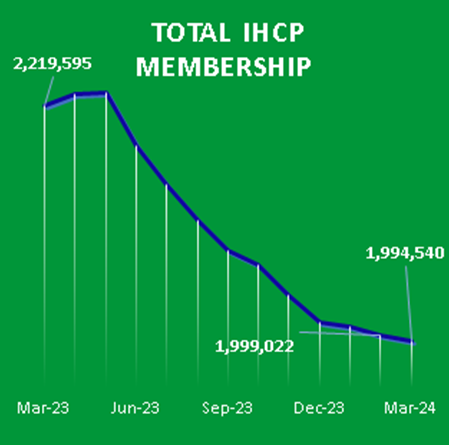
Total membership decreased in March.
With 1,994,540 members, there were 4,482, or -0.22%, fewer members in March 2024 than in February 2024.
|
|
|
|
|
© 2023 Covering Kids & Families of Indiana | All Rights Reserved |
|
|
|
|