|
MEHER SPIRITUAL CENTER
Meher Baba's Home in the West
| | |
"The dawn of love facilitates the death of selfishness. Being is dying by loving. If you cannot love one another, how can you love even those who torture you?
-Meher Baba
Discourses, 7th Revised edition, by Meher Baba pg. 13
| | | |
Dear Meher Center Friends and Family,
Greetings from Meher Spiritual Center.
This past week the Center held the 36th annual Youth Sahavas, hosting 63 participants, including 25 new to the event. The focus of this loving, high energy gathering is on companionship with Meher Baba, and on the experience of His presence at Meher Center. During this special time, the atmosphere of the Center was filled with His loving presence, creating an especially sweet Sahavas. The event went quite well, thanks to the many staff and volunteers who make this Sahavas possible every year.
Also, we are happy to announce that from October 5th to 11th, theater artists Judith Shotwell and Mary Sutton will be our Artists in Residence at the Center. More information will be provided in the coming weeks.
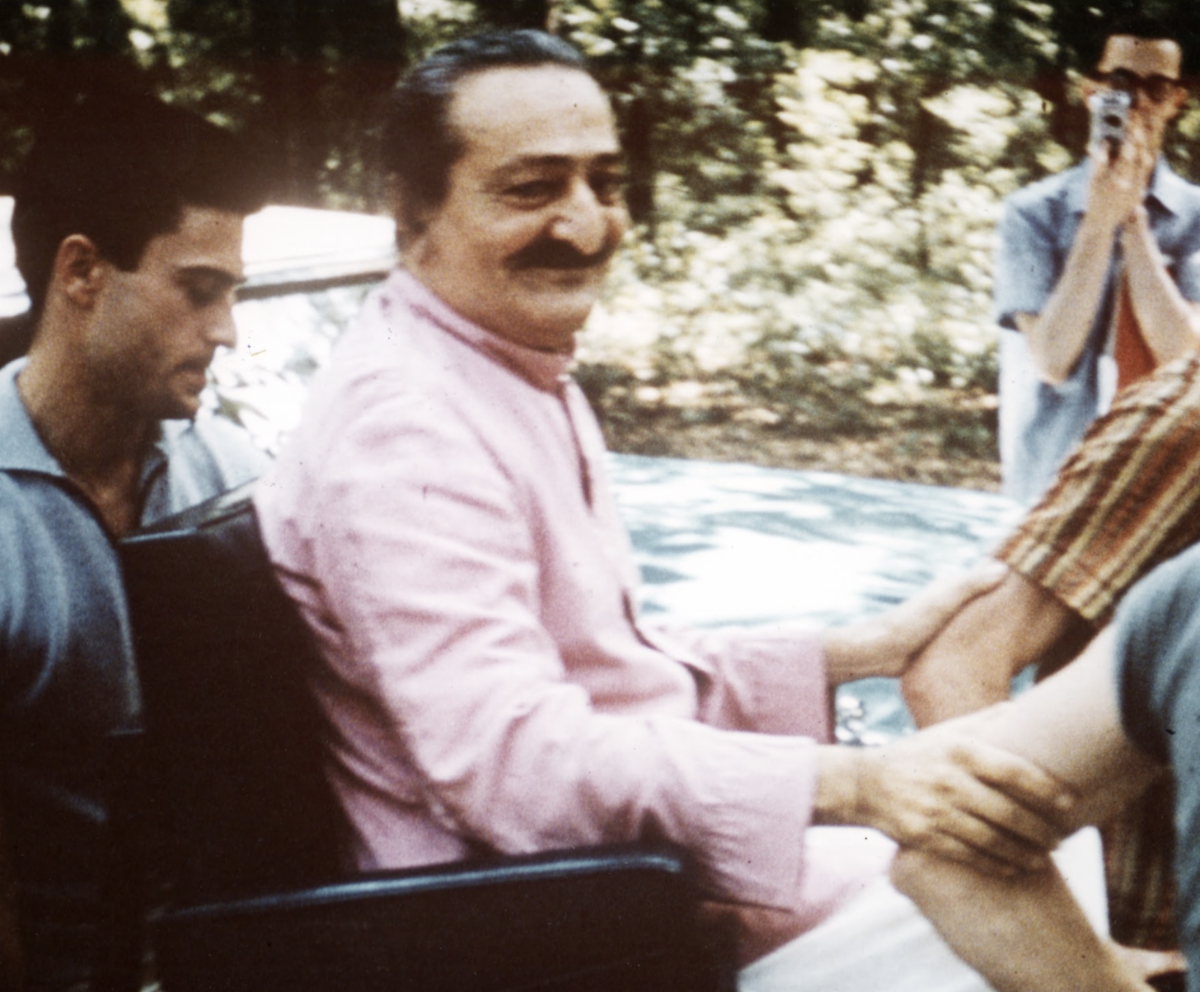
This month marks the 70th anniversary of Meher Baba’s second visit to His Center in Myrtle Beach. Below is a passage from Lord Meher describing a few moments from that time.
At 3:30 in the afternoon, when he had finished the interviews, Baba invited everyone to come to his house. The whole group, now about 80 persons, walked behind him for half a mile through the woods to his house. The day was hot and humid, and Baba wore only light cotton pants and a sadra. When they arrived, Baba sat under the large oak trees at the edge of the cliff. Filis wrote: "As we sat in a semicircle facing the beloved Master, it seemed that history was repeating an age-old pattern, and the lake sparkling through the trees might have been the lake of Galilee."
On top of his pink coat, which he had re-donned, Baba was wearing a symbolic garland made of seven sand-dollar sea shells, given to him by "Elinorkit." The seven shells, tied together with a string of seven colored ribbons, were ornamented with various figures, meant to represent the seven main evolutionary stages from unconscious stone to conscious man. Baba pointed to the garland and said, "It represents the seven stages of man." Noticing one figure had broken off, he joked, "The animal kingdom is gone ... the missing link!"
Then he playfully took Ben Hayman's white golf cap and put it on his own head, again amusing all.
With a happy look, Baba told them:
"I want you all to know that I have stayed in many, many places. In India, when I went on mast trips to different places, I stayed sometimes in palaces, sometimes in dharamshalas or special rest houses, sometimes in temples or huts, and sometimes under trees or on station platforms, where the sweepers or Untouchables would follow me. But here [gesturing toward his house], Elizabeth has built a very comfortable house for me. Everything here is her contribution to me. She has given the whole 500 acres as a gift to me. She has made everything possible just through her love for me. Tomorrow is Elizabeth's birthday. I am just in time to celebrate her birthday. Tomorrow I will have to embrace her seven times! None of you must give any gifts, however."
"Now the house is open. Go in and see everything, but do not run away with anything! Don't slip, the floor is very slippery. It is some kind of special carpet."
They laughed, and Baba added, "Of all places in the world, I feel most comfortable in this house, even though the climate here is hot and humid, I like this place."
Baba stood on the porch like a gracious host, as each of his lovers filed past him, one by one, into the house. One man tried to take off his shoes and enter barefoot, but Baba stopped him. When all stood in his bedroom, Baba sat on the edge of his bed and chatted with them for a little while.*
In Meher Baba’s love and service,
Buz Connor
For Meher Center board and staff
*Lord Meher, by Bhau Kalchuri, Online Version, pp. 4019-4020.
| | A Celebration of Youth Sahavas | | |
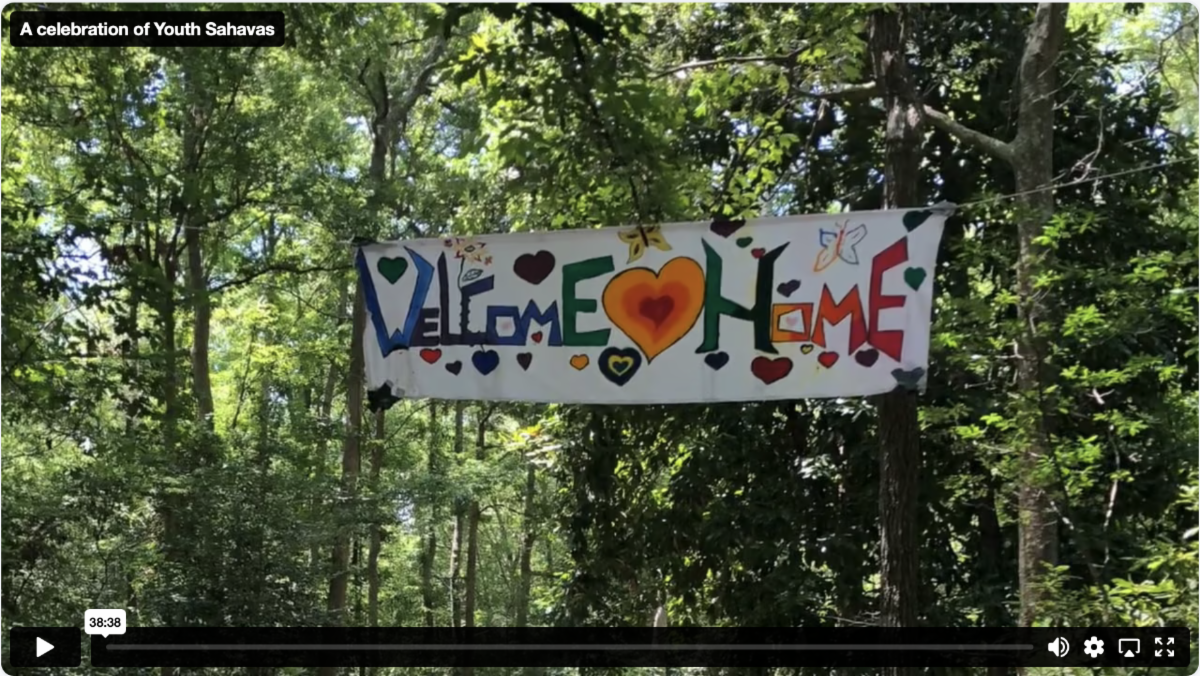
To mark this summer's 36th annual Youth Sahavas, we are resharing this delightful video of past sahavases. Made in 2020 to honor 30 years, it is full of songs, testimonials, and pictures that tell a heartfelt story of this memorable and, for many, life-transforming event.
Video, 38:38
Meher Center, Summer 2020
Meher Center Archives
| | |
Baba's Umbrella Bearers
By Valerie McKean
| | |
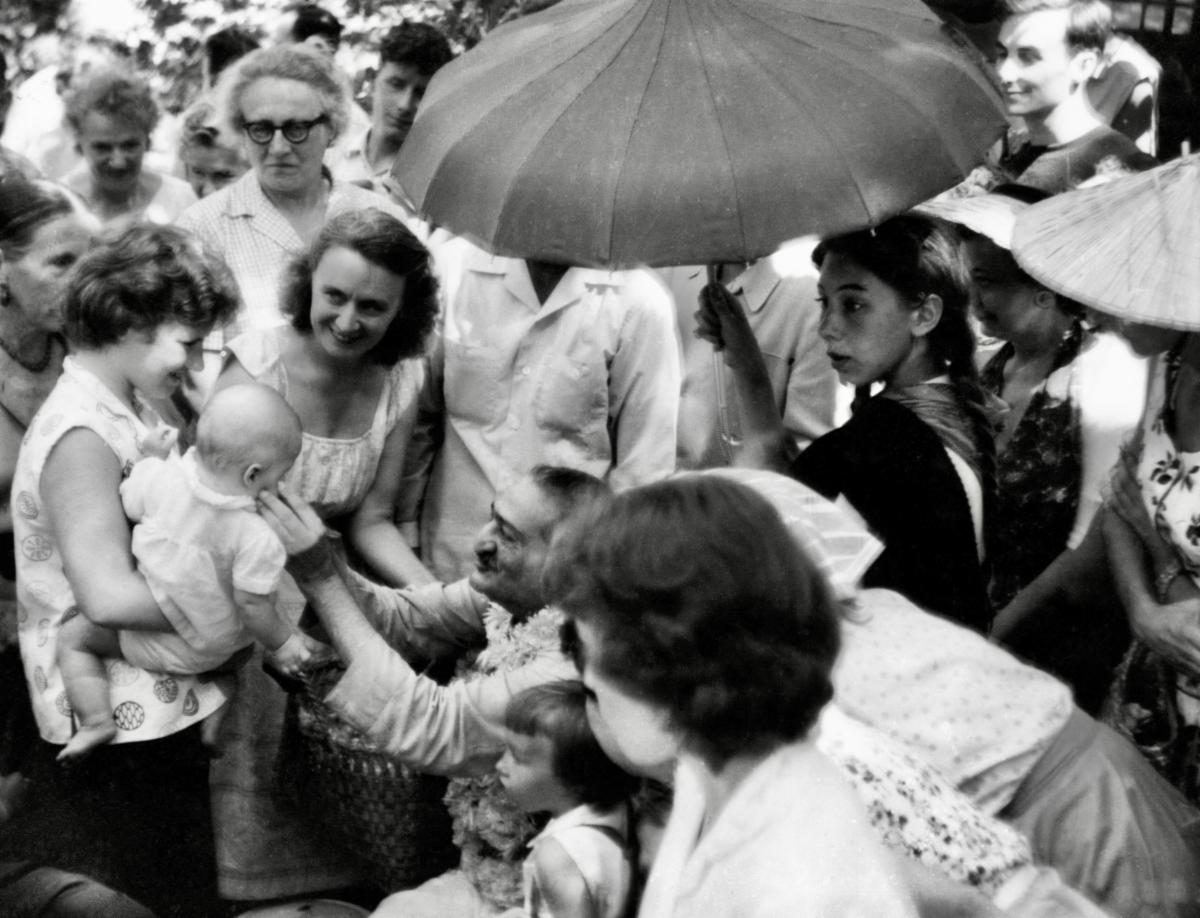
For thousands of years, images of gods and goddesses, royalty, and enlightened beings have appeared shaded and protected from the elements by an umbrella held by a steadfast attendant. For the mandali and devotees of Meher Baba, the role of umbrella bearer came with a bonus: the chance to be closer to their Beloved. Here are a few stories, gathered from the 1940s and 50s.
Filis Frederick recalled that during Baba’s 1956 visit to New York City, Eruch Jessawala was ever ready with “the inevitable black folded umbrella.”1
Murshida Ivy Duce noted that it was easy to spot Baba in a crowd by looking for the hallmark umbrella held by a mandali member. In a letter to Billi Eaton, Baba’s sister, Mani, recorded that the Marathi Sahavas group was to arrive the next day, December 2, 1955. “... it's lovely to watch from the kitchen verandah the long procession climbing Seclusion Hill with Baba. We can always spot the Beloved in the crowd even from that distance — often it is His pink coat and sadra and Shatrughna holding the umbrella over Him.” 2
Shatrughna Kumar Ghildial, known as Kumar, met Meher Baba in Dehradun in 1950. He and his family became devoted to Baba. Four years later, Meher Baba called him to be with Him for one week, and that week turned into nearly a year. Baba gave Kumar strict orders: he was not to purchase anything; he was not to communicate with his family. Additionally, he was instructed not to leave the compound unless he was accompanying Baba as His umbrella bearer.
At mass darshan events in Hamirpur, Andhra and other locations, Kumar often stood next to Baba, umbrella in hand. In 1955, Baba called him from Dehradun for a month. “Kumar was made the Commander-in-Chief to control the crowds. He performed his duty diligently. Whenever Kumar would come and stay with Baba, he would be Baba's ‘umbrella man’ protecting Him from the sun.” 3
Children as well as adults wished for the chance to protect Meher Baba. One of Meherwan Jessawala’s first duties to assist Baba came in 1942, while in Dehradun. Young Meherwan accompanied Baba as He walked from the women’s residence to the men’s ashram. He told Bill LePage: “If it was sunny then I endeavored to hold the umbrella over His head. This was very difficult because of my small height, and the distance was about a mile. Baba continued to walk at a fast pace, and while I tried very hard to hold the umbrella high with one hand fully stretched, and with the other hand clutching His extra scarves and alphabet board, at the same time keep up with Him, many times one of the spoke ends would bump His head. I felt my inability to avoid this happening, but He did not seem to mind, giving me a chance to serve Him to the best of my ability.”4
During Meher Baba’s 1958 visit to Meher Spiritual Center, a children’s birthday party was held. Wendy Haynes Connor, who was six years old at the time, recalled, “I began to notice different people holding the umbrella over Baba’s head to shade Him from the sun. Baba would clap and call for this person or that person to come take a turn holding the umbrella. This went on for some time. Well, the more I watched the more this longing grew to hold the umbrella for Baba. In fact, the longing grew so much that I felt I might pop.”
Baba clapped and Beryl Williams passed the umbrella to Wendy: “Now it was my turn to hold the umbrella for Baba, and I was overjoyed! Again, time stopped, and I was in heaven. I don’t know how much time passed but, all of a sudden, I realized that the umbrella was slowly sliding downward. It was pretty heavy. It wasn’t a parasol, but a very substantial umbrella.” 5 Still happy, Wendy valiantly tried to steady the umbrella by holding it with both hands, the umbrella continued to slip. Baba clapped and Jeanne Shaw came to the rescue.
Several days later, Wendy’s mother, Jane Haynes struggled with her feelings of wanting to be the chosen one to carry the umbrella. It was a beautiful sunny day and after spending the morning in the Barn with Baba, the group walked to the beach. Baba was carried over the dunes by Margaret’s male dancers. As the group returned, Jane thought: “If only I could carry the umbrella for Baba. He knows every thought and wish — He will let me.” But others were called and Jane’s thoughts and mind raced, “Baba knows every inner wish — He doesn’t know what I am thinking of or He would let me carry the umbrella.’ Jane was tormented on the walk back from the beach, she wrote, “This thought, in its selfishness and lack of faith, persisted all the way back.”
Later, Baba called her to the Lagoon Cabin. He asked her, “Was there something you wanted to tell Me Jane, while we were at the Beach?” Jane replied, “Only to ask you if I might carry the umbrella, and to say that I love you Baba.” Jane wrote, “The words were almost lost in my tears. Baba with the sweetest of smiles, embraced me and said: ‘Yes, but this is even better is it not?’ And he held me close” 6
December of 1959 found twenty-one-year-old Alain Youell on his first trip to India to meet Baba. On the 27th, Meher Baba washed the feet of twenty-seven lepers. Baba took the umbrella out of Francis Brabazon's hand and put it in Alain's hand; Alain then shaded Baba for part of His work. After washing the lepers' feet, Baba placed His forehead on their feet, and then gave each one five rupees. Alain recalled, “I have never felt, I have never seen, and I have been in some extraordinary places and situations in my life, anything like what those ‘beautiful birds in ugly cages’ received from Baba that day, and I received too, and everybody around received.” 7
In October 1959, Dr Hoshang Bharucha experienced precious moments of protecting Baba with an umbrella. As they strolled through the garden at Meherazad, Baba told him "This is a walk in the garden of Allah, and I truly mean it.”8 A few days later, as he walked Baba home from Mandali Hall, Hoshang said, “Baba, four days of our stay are already over’... Baba looked at him with love and gave him a kiss.”9
1. Filis Frederick, “Journey of the Heart”, Awakener Magazine Online ed, Vol 4 No 3, Spring - Summer, 1957
2. A Love So Amazing, by Billi Eaton, p. 97
3.Tales of Meher Baba’s Love, by Bal Natu, p. 144
4.The Divine Humanity of Meher Baba, Vol. III, by Bill Lepage, pp. 23-24
5. Waves and Waves of Love, by Carolyn Ball, pp. 136-137
6. Letters of Love, compiled and edited by Jane Barry Haynes, pp. 60-61
7. Meher Baba Talk, Alain Youell, Meher Baba Assoc. UK, November 15, 2015, You Tube
8. Lord Meher, by Bhau Kalchuri, On Line ed., p. 4602
9. Ibid., p. 4607
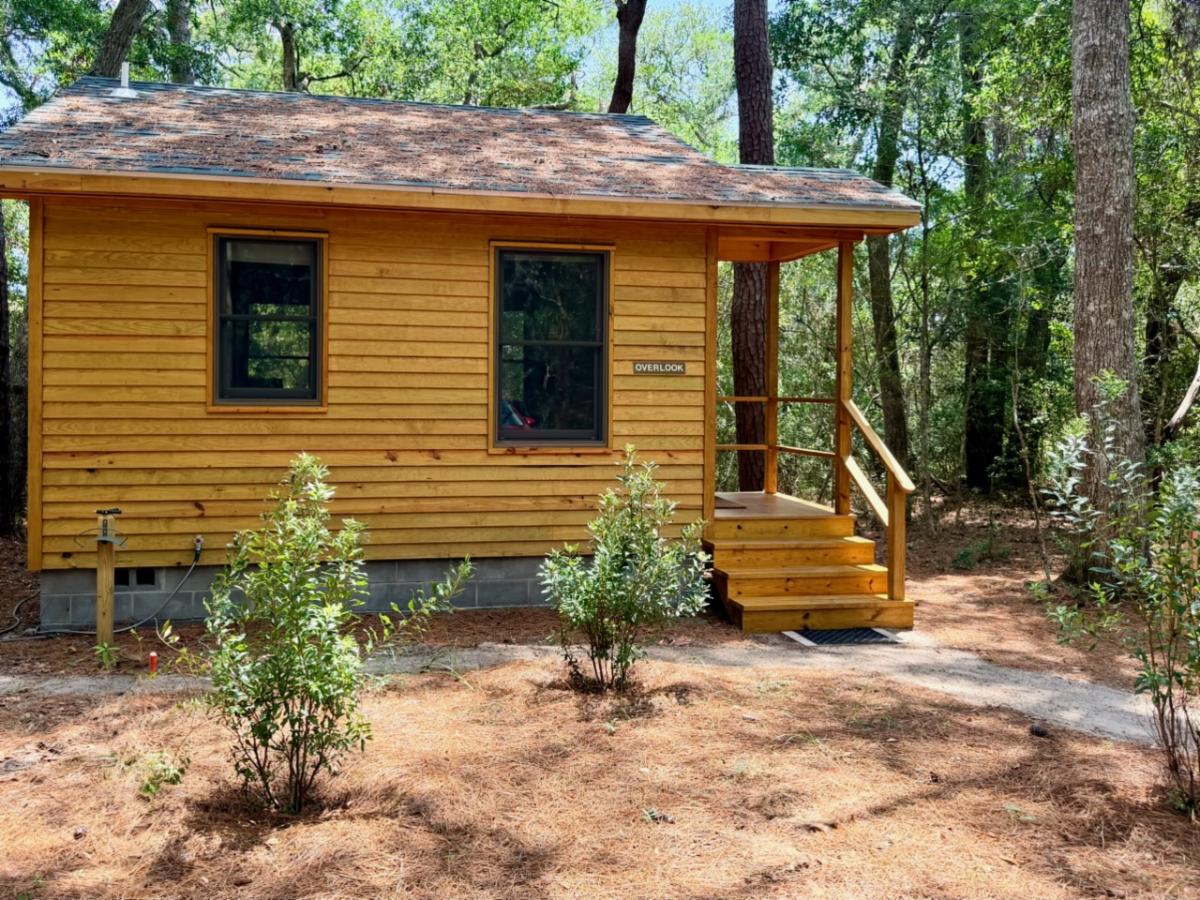
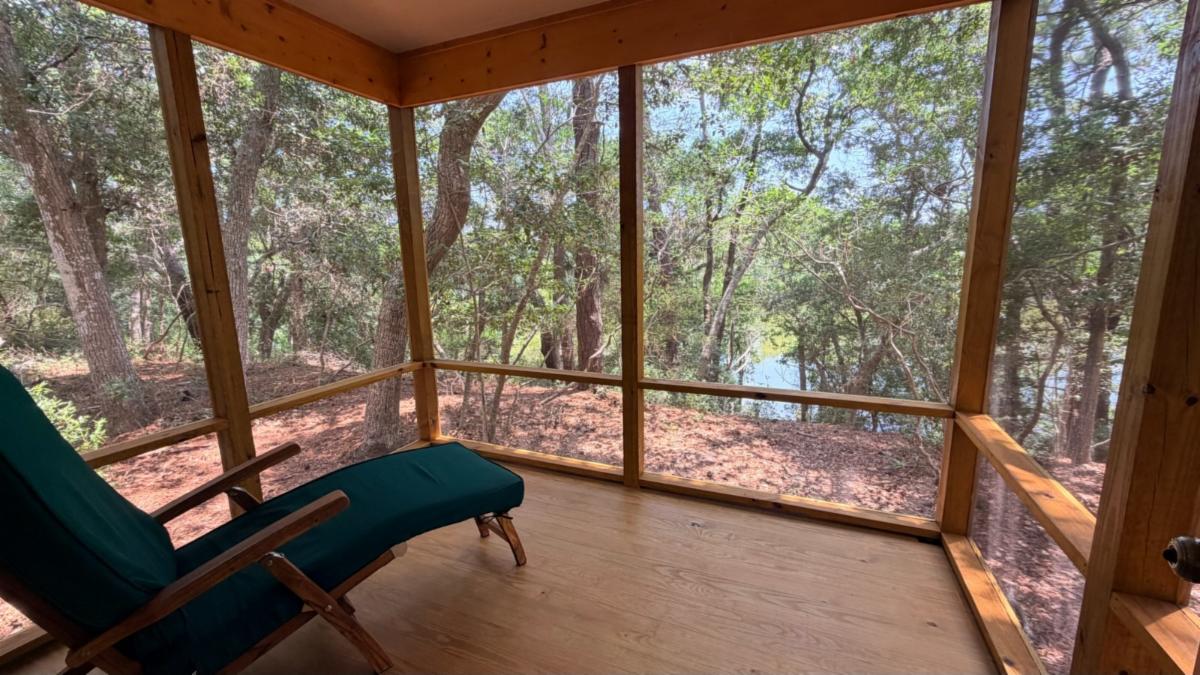
| | Life on Center: The Overlook! | | Introducing Meher Center's newest cabin: The Overlook! Just as petite and secluded as The Hermitage, The Overlook is a single occupancy cabin equipped with a twin-size bed, kitchenette, electric cooktop, private bathroom and shower, and a gorgeous screened in porch. It also includes a mini-split heating and cooling unit. The wood cabin rests atop an elevated bank overlooking Long Lake, for a serene, solitary and tranquil retreat. | | |
The Sheer Force of Joy
By Preeti Hay
| | |
The Center’s connection to the Racepath community dates back to the 1950s through Bessie Graham (Elizabeth’s housekeeper) who brought her grandchild to meet Baba at the Children’s Birthday Party. That relationship was carried on
and strengthened through Happy Club in the 1960s. And it has continued for decades since, when each year kids from Phoenix Renaissance's summer youth program visit the Center as one of their field trips, and the love is renewed and rekindled. With a connection so old, the love that it generated has aged like a fine, perfectly aged wine.
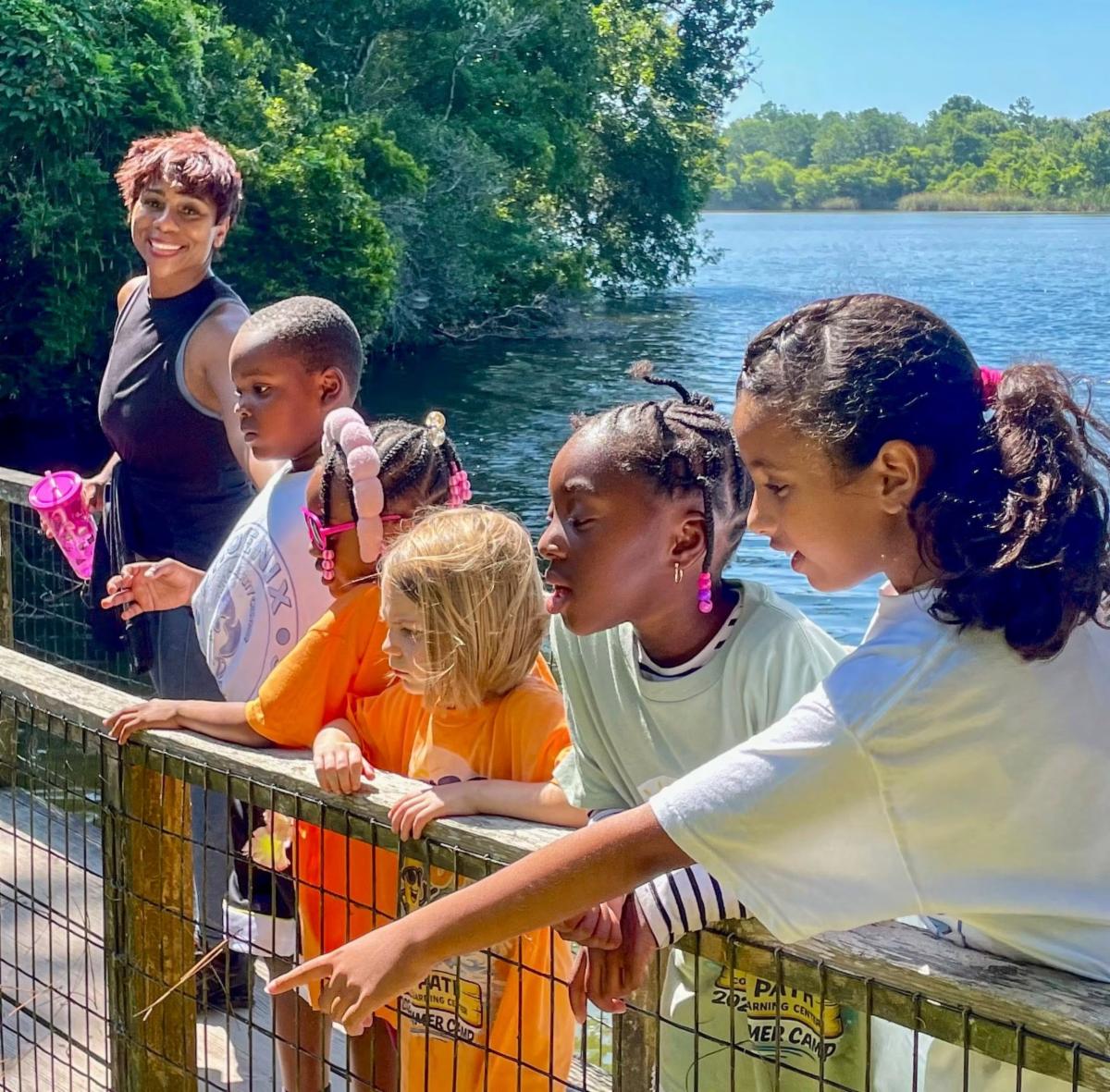
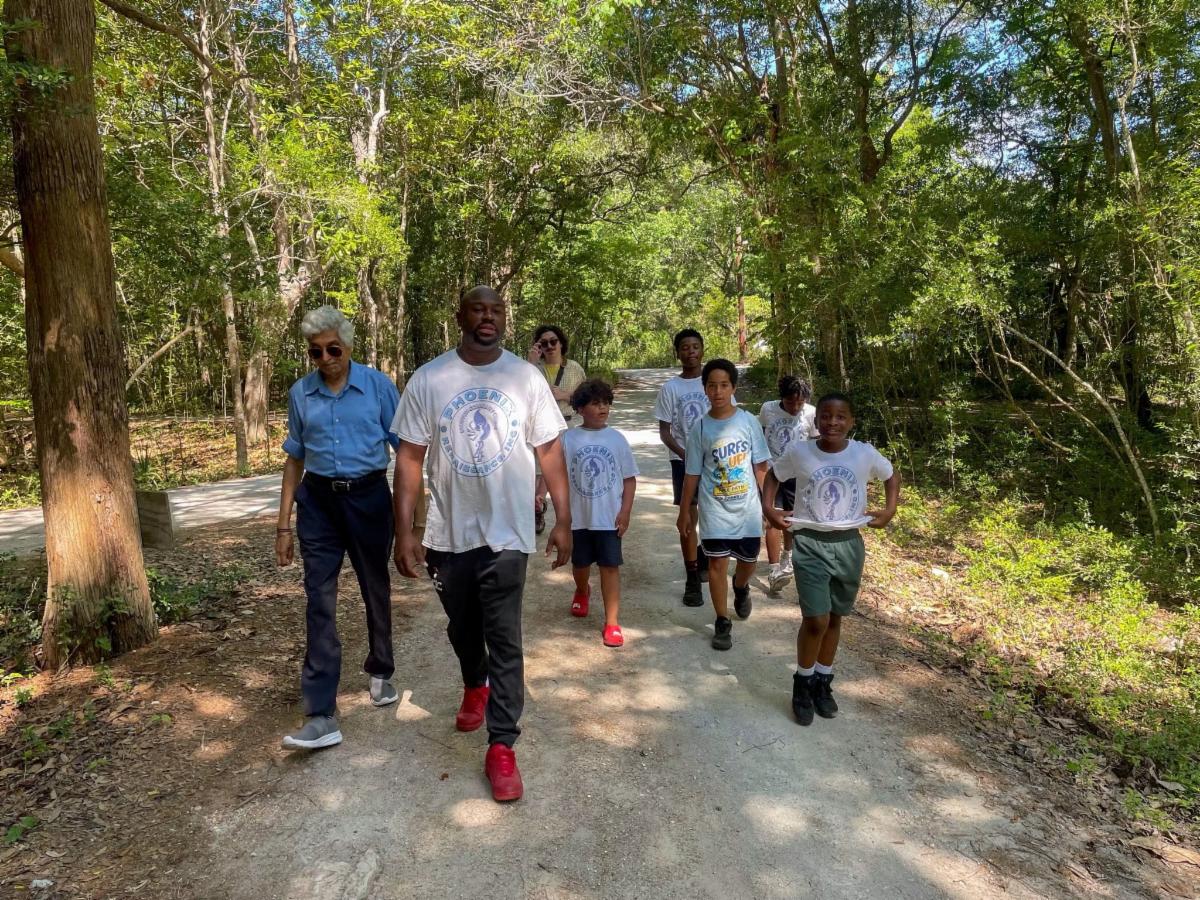
I had the great opportunity to be part of the heart opening visit this year. On June 23, 2026, about fifty children arrived with staff and volunteers from Phoenix Renaissance. Peter Goodman is one of the coordinators for this visit. He is on the Meher Center staff and also a member of Phoenix Renaissance Board. “As soon as they arrived, I knew that this year would be different because the number of kids was much larger,” he says. “And there would be that many more children who would experience the Center as part of this connection between the two organizations.”
First, they walked to Saroja library where they were greeted by Meher Center Librarian, Susan MacDonald-Lesnik. “Welcoming all the wonderful children to the library was a true joy. Nearly fifty children, dressed in their brightly colored shirts, filled the Reading Room, settling onto the floor and sofas until every corner of the space was alive with energy and anticipation,” says Susan.
Karen Vassal, the CEO of Phoenix Renaissance, who accompanied the children, says, “The joy on our children’s faces as they listened attentively during story time, sang songs together, explored the library, and discovered the beauty of the Center was unforgettable.”
After the library, the children walked through the nature trails of the Center sanctified by Baba’s presence. Then, they arrived at the playground where a pizza lunch was served to them, followed by free play at the Center playground. Karen Vassel says, “For us this isn’t just any field trip, it is an opportunity to slow down, appreciate nature, experience something new, and create lasting memories in a place that always welcomes them with open arms.”
After having sunk into the ever-abundant energy of the Center, the children went to the Meeting Place for more to follow. Meher Center staff, Peter Goodman and Gabe Wood were accompanied by Center volunteer, Dineen Carta, for a music concert. The concert began with the “Itsy-bitsy Spider” with each child’s fingers climbing along as they sang. That was just the ice breaker. Soon, a palpable feeling of God made itself evident in the room through songs like “He’s Got the Whole World in His Hands ,” “Amazing Grace,” “This Little Heart of Mine,” and more.
All the children knew the words by heart. They were uninhibited and uproarious. Some jumping in their seats and others dancing and moving in a sweet unison of rhythm. As I watched this deep visceral knowing of God in their pure expressions, tears came to my eyes for the commonality between us. It felt that God, who had been here, and continues to be here, was brought into the room by the sheer force of joy.
From gospel to pop songs, the music took a life of its own, resonating throughout the Meeting place like never before. Peter Goodman says, “My favorite part was when a child came up and sang, ‘This Girl is on Fire’ by Alicia Keys.” It was a hoot!
After the music, with hearts full of love, the children departed, already excited about their next visit to the Center. The experience left everyone who helped with a feeling of loving reflection. “What touched me most were the spontaneous comments from several of the children, who shared how much they loved looking out over the lake and how much they enjoyed the peaceful feeling—or ‘vibe,’ as one of them put it—of the library,” says Susan MacDonald-Lesnik.
Melissa Collins, Meher Center staff and coordinator for the day’s activities, sums it up by saying, “The Center's relationship with Racepath is extremely meaningful in carrying on the legacy of Happy Club and those who worked so hard to foster those early relationships. Some of the Racepath staff were Happy Club kids or kids that came to the Center through Racepath visits, and I think it speaks so beautifully to the spirit of the Center and the power of Baba's Love and Grace that He continues to bring our communities together generation after generation.”
| | | | |