|
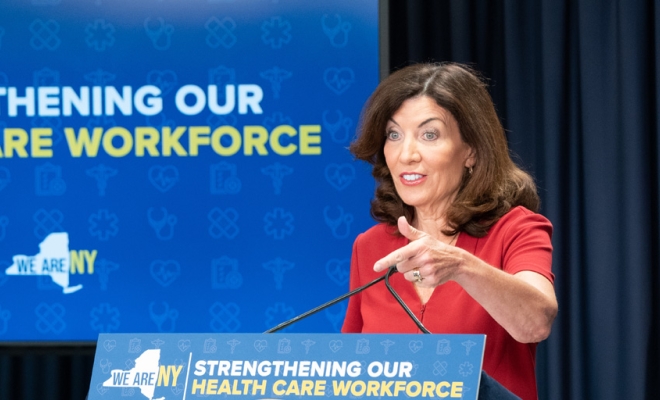
Governor Hochul Announces $646 Million to Recruit and Train Thousands More Health Care Workers Across New York
Governor Kathy Hochul today announced three Workforce Investment Organizations (WIO) will receive awards totaling up to $646 million over the next three years to implement the Career Pathways Training (CPT) Program, which will recruit and train thousands of new health, mental health, and social care workers across New York. This program will also provide new career advancement opportunities to many current health care workers throughout the State. The WIO awardees are 1199SEIU Training and Employment Funds, Iroquois Healthcare Association, and the Finger Lakes Performing Provider System. Today's announcement is made possible through the Governor's 1115 New York Health Equity Reform Waiver approved in January. Read more here.
|  | |
Attorney General James Secures $1.5 Million from Digital Marketing Company for Misleading New Yorkers Seeking Mental Health Care
New York Attorney General Letitia James last week secured $1.5 million from a digital marketing company, 4K Apps, Inc. (4K Apps), for operating a network of deceptive websites that misled tens of thousands of New Yorkers seeking mental health services, substance abuse treatment, and senior living facilities. 4K Apps is a digital marketing company hired by companies to drive customers to their website to buy their product or service. The Office of the Attorney General (OAG) found that 4K Apps ran dozens of websites with directories of health care facilities throughout the state and listed phone numbers that led people to call 4K Apps’ clients instead of the health care facilities listed on the websites. As a result of the settlement, 4K Apps will pay $1.5 million and update all its websites to accurately reflect who consumers are calling. Read more here.
Related: Nearly 1 in 4 US Adults Sought Mental Health Treatment in Past Year
|  | |
Are We Thinking About the Youth Mental Health Crisis All Wrong?
Chloé Johnson, 22, has been feeling hopeless lately.
She’s struggling to focus on classes at her local community college in Dallas while also working full-time, making $18 an hour as a receptionist. Her car broke down, so the $500 that she had managed to save will now go toward a down payment for a used vehicle.
And she was recently passed over for a promotion. “Right now it just feels, like, very suffocating to be in this position,” said Ms. Johnson, who was diagnosed last year with bipolar II disorder, depression and A.D.H.D. “I’m not getting anywhere or making any progress.” It’s an endless loop: Ms. Johnson’s mental health has worsened because of her financial difficulties and her financial problems have grown, partly because of the cost of mental health treatment but also because her disorders have made it more difficult to earn a college degree that could lead to a more lucrative job. Read more here.
| 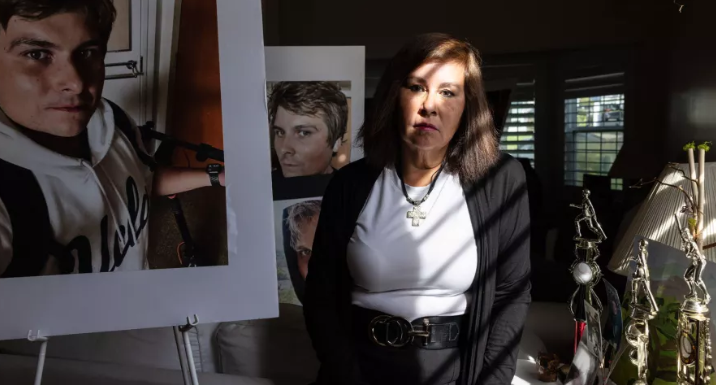 | |
Her Son Died Of An Overdose In His Dorm Room. Where Was The Narcan?
In the summer of 2020, Monica Vera-Schubert talked to NPR about her long struggle to get insurance coverage for her son Bobby’s addiction treatment. They’d recently prevailed, he was getting sober, and Vera-Schubert, a single mom, expressed immense gratitude. “My son is alive; I appreciate every moment I have with him,” she said. In the years that followed, Bobby became a devoted student, got into his dream school of UCLA, and sometimes joined his pharmacist mom as an activist, giving talks and warning others of the dangers of prescription-drug abuse. “I always tell him, ‘Bobby, I'm so proud of you,’” Vera-Schubert said at the time. Bobby would respond, “Mom, I’m so proud of you.” That was four years ago. This spring, Vera-Schubert reached out again, saying Bobby had relapsed. On April 12, a roommate found him slumped over his desk in his dorm, apparently overdosed from fake Xanax pills laced with fentanyl. Bobby Schubert was 29. Read more here.
Related: The search for solutions for managing campus overdose risk
|  | |
Study Shows Text Messages Help Youth at Risk for Suicide Feel Supported After Discharge
As the nation's youth mental health crisis continues, providers continue to find ways to help address gaps in care. Patients who receive care for suicidal thoughts and behaviors need extra support as they transition after they are discharged from inpatient care or the emergency department. Caring Contacts are validating messages sent to patients via text messages, postcards or letters to offer patients ongoing care and support without placing any demands (such as reminders to attend their next appointment). At Nationwide Children's, Caring Contacts has been implemented in a text-based format, as part of the hospital's Zero Suicide quality improvement work. Read more here.
|  | |
The FDA Didn’t Approve MDMA. Is the Medical System Ready for Any Psychedelic?
For a while, MDMA looked poised to make history. After decades of advocacy from impassioned supporters, the party drug best known as ecstasy emerged as the frontrunner to be the first psychedelic approved by the U.S. Food and Drug Administration (FDA). It would have been the first new therapy for post-traumatic stress disorder (PTSD) in two decades. But the FDA quashed advocates’ dreams on Aug. 9, saying MDMA cannot be approved based on the data currently available and requesting additional research to prove the drug is safe and effective. That decision does more than table the issue for now. It also calls into question whether the U.S. medical system is ready for legal psychedelics at all. Read more here.
Related: FDA’s Rejection of MDMA for PTSD Could Signal Setback for Psychedelic Industry
| |
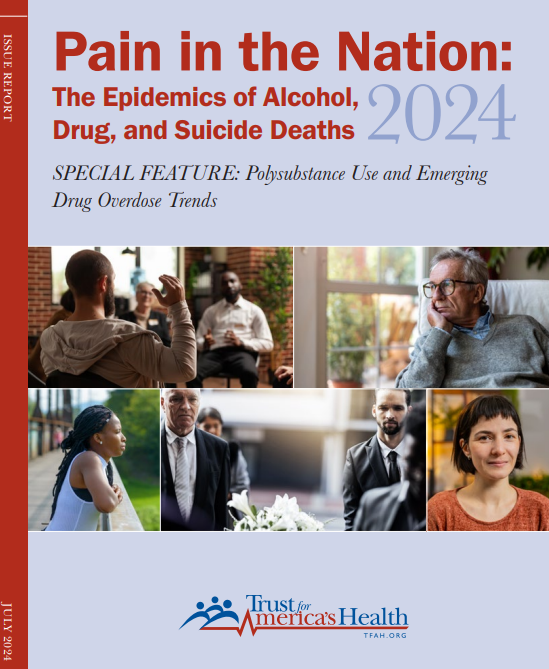
Pain in the Nation 2024: The Epidemics of Alcohol, Drug, and Suicide Deaths
This report provides an in-depth analysis of alcohol and drug-related statistics and mortality trends, with a special emphasis on polysubstance use and drug overdose issues. It includes comprehensive data on substance use and mortality, featuring U.S. maps that illustrate overdose and suicide rates, with detailed breakdowns by race, and comparisons between metro and non-metro areas. Additionally, the report presents state-by-state statistical trends, offering targeted policy recommendations to combat substance use. Examples from rural areas are highlighted to illustrate effective strategies.
Related: The relationship between psychiatric inpatient length of stay and suicide prevention
|  | |
How CHAMP Helps Individuals Overcome Health Insurance Obstacles to Accessing Mental Health and Substance Use Care
Each year, thousands of New Yorkers struggle with mental health and substance use disorders. When they finally reach out for help, health insurance should not stand in their way. Unfortunately, the complicated structure of health insurance poses problems for many. To address this New York State created the Community Health Access to Addiction and Mental Health Care Project (CHAMP) to help individuals navigate and overcome insurance barriers to treatment for anyone seeking treatment for mental health or substance use disorders. Read more here.
|  | |
Justice Center Reports on 2023 Activity
There were more than 85,000 reports made last year to the Justice Center for the Protection of People with Special Needs, according to the agency’s annual report for 2023. A majority of the Justice Center investigations in 2023 found that allegations of abuse and neglect were unsubstantiated – 57.5 percent in state-operated facilities and 64.2 percent in private facilities. Of the 1,015 substantiated cases in state facilities, about 30 percent fell into the two most serious category of offenses. About a quarter of the 2,556 substantiated cases at non-state facilities fell into the top two categories. The report can be reviewed here. For more on the working of the Justice Center and its origins, check out the “Justice for All” series from 2023.
|  | |
Addressing The Politics Of The Rural LGBTQ+ Opioid Epidemic
Southern Illinois, bordering Missouri to the west and Indiana to the east, is a unique case study into the US’s evolving opioid epidemic. In many ways, it’s the polar opposite—politically and socially—of Chicago, which is some five hours north on I-55. Southern Illinois is a rural, red-leaning region that thrived on coal mining before automation upended the industry in the 1990s. Today, it’s a mishmash of Dollar Tree and Dollar General stores, fast food restaurants, and farming fields—and, surprisingly, plays host to a vibrant LGBTQ+ community and a glut of queer-friendly social spaces. It also has some of rural America’s largest pride celebrations, a number lavishly celebrated in June across the region. The “everybody knows everybody” nature of rural communities tends to both attract and repel queer people. Low-cost real estate, proximity to loved ones, and outdoor recreation can serve as magnets, while discrimination and limited dating options pose significant quality-of-life issues. Establishing a supportive social network can be especially challenging for queer youth in rural areas, who often turn to opioids and other drugs to cope. Once they begin using those drugs, they often find little in terms of support. Read more here.
|  | |
CMS Targets Psychiatry Shortage With Final Rule
America continues to grapple with a persistent behavioral health workforce crisis, with just over a quarter of the national mental health needs met. The situation is particularly dire in psychiatry, with projections estimating a 20% decline in the number of adult psychiatrists by 2030, even as demand continues to rise. The U.S. Department of Health and Human Services recently issued a final rule designed to combat this shortage, designating funds to inflate the psychiatry workforce and support underserved communities. The final rule implements section 4122 of the Consolidated Appropriations Act of 2023, which provided Medicare with funding for at least 200 new graduate medical education slots in 2026. Half of these slots must be dedicated to psychiatry or psychiatry subspecialty residencies. Read more here.
| |
 |  |  | |
UPCOMING EVENTS & TRAININGS
Person-Centered Care: Applications in Methadone Maintenance Treatment and Outpatient Program Settings
August 15, 2 - 4 pm, NCROTAC
Telemedicine and Treating Opioid Use Disorder in Rural Populations
August 19, 1 - 2 pm, NCROTAC
School Mental Health Resource & Training Center Summer Academy for School Staff
August 20, 8:30 am - 12 pm, August 21, 9 am - 12 pm, MHANYS
Workforce Solutions Jam | Payment Reform: The Promise and Potential of Value Based Purchasing for a Thriving Workforce
August 20, 1 - 2 pm, National Council for Mental Wellbeing
Ask the Expert: Collaborative Approaches to Providing Mental Health and Law Enforcement Services
August 20, 2 - 3:30 pm, CSG Justice Center
Beyond the Hype: What Research Tells Us About Social Media’s Role in Youth Mental Health
August 20, 3 - 4 pm, Child Mind Institute
Interdisciplinary Care in Opioid Treatment: The Role of Addiction Psychiatrists in Opioid Treatment — Mastering the Art of Opioid Treatment
August 20, 3 - 4:30 pm, NAADAC
Barriers to Care: Solutions for Mental Health and Substance Use Treatment Provision in Rural Communities
August 21, 12 - 1 pm, National Council for Mental Wellbeing
Impact of the Inflation Reduction Act on New Treatments for Mental Illness
August 21, 1 - 2 pm, Rural Minds
Psychotherapeutic Approaches in PTSD Treatment
August 22, 12 - 1 pm, PsychU
Peer Recovery Support Series: Passionate Professionals; Dispassionate Practice — Ethical Boundaries in Non-Clinical Roles
August 22, 12 - 1:30 pm, NAADAC
Guiding Principles and Recommendations for Trauma-Responsive Treatment Courts
August 22, 12:30 - 2 pm, SAMHSA's GAINS Center
Behavioral Treatments for Alcohol Use Disorder: Using Harm Reduction as a Path Forward
August 22, 1 - 2 pm, PCSS
Understanding Mental Health Disparities Within Rural LGBTQ+ Communities
August 22, 1:30 - 3 pm, NIMH
Applying Evidence-based Practices to Obtain Officer Buy-in for Deflection and Pre-Arrest Diversion Initiatives
August 22, 2 - 3 pm, COSSUP
What Now: Xylazine in the Age of Opioid Use Disorder
August 27, 1 - 2 pm, National Council for Mental Wellbeing
Assessing Equity in Crisis Response Organizations and Systems: Tools, Challenges, and Strategies
August 27, 1 - 2 pm, SAMHSA
Interdisciplinary Care in Opioid Treatment: The Role of Counselors in Opioid Treatment — Guiding the Path to Recovery
August 27, 3 - 4:30 pm, NAADAC
Building Bridges Between Harm Reduction and Treatment for People with Substance Use Disorders
August 28, 11 am - 12 pm, NCROTAC
Developing Youth Mental Health Services for Immigrant and Rural Communities in Eastern Long Island
August 28, 1 - 2 pm, NY Health Foundation
Peer Recovery Support Series: Infinite Pathways — Embracing Diverse Identities to Support Recovery
August 29, 12 - 1:30 pm, NAADAC
Medications for Opioid Use Disorder in Criminal Justice Settings: Current Updates in Case Law
August 29, 2:30 - 4 pm, SAMHSA's GAINS Center
State Peer to Peer Learning Session: Facilitating Care Across the Crisis Continuum: The Roles of Peers Throughout the Crisis Service System
August 29, 3 - 4 pm, SAMHSA
Albany Stratton VA Community Mental Health Summit
September 6, 9 am - 3 pm
Family Connections: Managing Suicidality and Trauma Recovery
September 12, 12 - 1:30 pm, SPCNY
Three Crucial Factors in Treating Suicide Risk Lessons Learned from the Interpersonal Theory of Suicide
September 12, 1 - 2 pm, National Council for Mental Wellbeing
Suicide by Poisoning: Current Data, Prevention Strategies, and How You Can Help
September 12, 1 - 2:30 pm, SPCNY
Increasing Accessibility of Mental Health Services for Unhoused Populations in Rural and Urban Communities
September 18, 12 - 1 pm, National Council for Mental Wellbeing
Rural Health Symposium - Binghamton, NY
September 19 - 20, NYS Association for Rural Health
Timely and Adaptive Strategies to Optimize Suicide Prevention Interventions
September 19, 1 - 3 pm, NIMH
Ask the Expert: Family-Centered Reentry Programming
September 25, 2 - 3:30 pm, CSG Justice Center
Expanding Access to Crisis Care by Breaking Down Social and Technology Barriers
October 1, 12 - 1 pm, Behavioral Health Business
New York State Trauma-Informed Network & Resource Center Conference
October 23 - 25, Saratoga Springs, NYSTINRC
| |
CLMHD CALENDAR
AUGUST
Children & Families Committee Meeting
August 20: 11:30 am - 1 pm
Membership Call
August 21: 9 - 10:30 am
SEPTEMBER
CLMHD Office Closed - Labor Day
September 2
Executive Committee Meeting
September 4: 8 - 9 am
LGU Clinic Operators Meeting
September 10: 10 - 11:00 am
Addiction Services & Supports (ASR) Committee Meeting
September 12: 11 am - 12 pm
Developmental Disabilities Committee Meeting
September 12: 1 - 2:30 pm
Mental Health Committee Meeting
September 12: 3 - 4 pm
Children & Families Committee Meeting
September 17: 11:30 am - 1 pm
Membership Call
September 18: 9 - 10:30 am
Mental Hygiene Planning Committee Meeting
September 19: 1 - 3 pm
SAVE THE DATE
Fall 2024 Full Membership Meeting
October 23-25, Clayton, NY (Jefferson County)
| |