|
|
Because Digestive Health Matters |
International Foundation for Gastrointestinal Disorders October 2022 eNewsletter |
|
|
Greetings!
October is Health Literacy Month. Health Literacy Month is a time to recognize the importance of making health information easy to understand and the health care system easier to navigate.
When living with a chronic gastrointestinal (GI) disorder, being health literate often means that you are your own researcher. These conditions require you to become knowledgeable about symptoms, diagnoses, and treatments that are available for your conditions.
Increasing public knowledge surrounding chronic GI disorders is important not only this month, but every month. We encourage you to join us and share the resources that you use to learn more about your GI disorder.
|
|
|
|
IFFGD has teamed up with GI physician, Dr. Miguel Saps, and created a survey to learn more about patients' experiences transitioning from pediatric to adult GI care. This transition can be difficult and confusing. We want to better understand the biggest impacts, both good and bad, that this transition has had on you or your child's illness journey. |
|
We would love to hear from both patients and parents to learn more about the multiple perspectives surrounding this experience. Please click the button below to complete this short survey. Your answers are confidential and will not be disclosed by IFFGD unless we are granted permission. If you have any questions please contact us at iffgd@iffgd.org.
|
|
The Gutsy Perspective is a nonprofit that focuses on raising awareness and supporting the Short Bowel Syndrome (SBS) community. There is a lack of research surrounding the experiences of children with SBS and their families. The goal of the Gutsy Perspective is to bring patient and family member voices to the forefront and reshape the narrative around quality of life issues with SBS for children and their families.
Their website offers a variety of resources including, a monthly newsletter, publications, surveys and more.
Click the button below to learn more about the work this organization is doing.
|
|
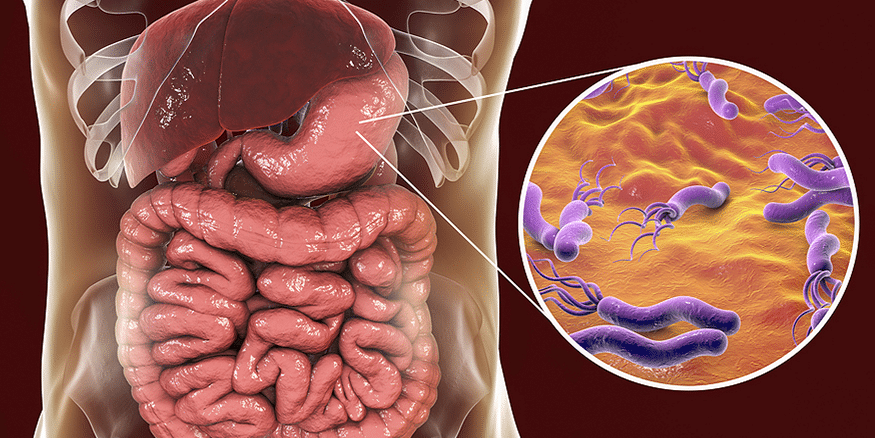
Helicobacter Pylori (H. pylori) is a spiral shaped bacteria that lives in the mucous lining of the stomach to protect itself from the harsh acid environment. This is one of the most common types of infections, affecting more than half of the population worldwide.
H. pylori infections can range from mild to serious. Some people might experience little to no symptoms while it can cause serious conditions in others.
About 10-15% of patients to have H. pylori will develop an ulcer while an even smaller percentage can develop gastric cancer.
To learn more about H. pylori, click the button below to watch Dr. William Chey's short presentation. To view this material in fact sheet format, click here.
|
|
This is a free event hosted by IFFGD where we will educate the community about access to healthcare and treatment and how to best advocate for yourself in the medical field. Due to COVID-19 protocols, the event will be virtual and available as a YouTube Premiere on October 15th at 10:00 am.
The educational event will cover a variety of advocacy topics including how to utilize patient assistance programs, understanding and navigating insurance for selecting the right plan, appeals processes and so much more.
Click here to register for the virtual event link and tune in to our YouTube premiere on October 15th to learn how to advocate for yourself in health care. |
|
IFFGD first designated GERD Awareness Week in November 1999. Each year during the week of US observed Thanksgiving, IFFGD encourages people experiencing GERD-related symptoms to consult their healthcare provider or contact us to receive information and support. GERD Awareness Week will take place from November 20th-26th this year
1 in 5 people suffer from gastroesophageal reflux disease (GERD) in the United States, and close to 5 million people are admitted to the hospital each year for chest pain.
In recognition of GERD Awareness Week, IFFGD will acknowledge GERD's daily complications for patients by raising awareness through online and educational campaigns.
Click the button below to learn more about GERD and stay tuned for more information on our awareness week resources.
|
|
With the rise of technology and the use of cell phones, it's easier than ever before to find information online. As information becomes increasingly available online, more and more people turn to the internet to answer their health questions.
A report by the Pew Research Center revealed that adults in the United States use online resources, including search engines and social networks, as significant sources of information about symptoms, treatments, and support.
Knowing what resources are reliable and up-to-date can be challenging. That’s why we have created a guide to help you be better informed about the health information you find online.
Click the button below to learn more.
|
|
Clinical trials and research studies help to improve our understanding of the underlying mechanisms of diseases and advance the development of new and better treatment options. By participating in a study, you can help further the advancement of research and learn more about your condition.
Here are 3 studies currently recruiting participants:
|
|
Thoracic Neuromodulation for Diabetic Gastroparesis |
|
Effectiveness of the Lifestyle Eating and Performance (LEAP) program for the treatment of irritable bowel syndrome (IBS) |
|
Evaluation of Patients With Gastrointestinal Disease |
|
Nitin Ahuja, MD, MS is an Assistant Professor of Clinical Medicine in the Division of Gastroenterology and Hepatology, where he also serves as Co-Director of the Program in Neurogastroenterology and Motility and Associate Program Director of the Gastroenterology Fellowship at the University of Pennsylvania. He graduated from Harvard College and the University of Michigan Medical School before training at the University of Virginia and the Johns Hopkins Hospital. |
|
|
His interests in gastrointestinal motility and disorders of gut-brain interaction were solidified in fellowship, where he trained with mentors in upper and lower pathology. He continues to see patients in clinic with symptoms that span the entirety of the gastrointestinal tract. He has served as primary investigator for clinical trials involving gastroparesis and irritable bowel syndrome as well as other research projects on pelvic floor dysfunction and small intestinal bacterial overgrowth. At the University of Pennsylvania, he is fortunate to work closely with colleagues who are experts in adjacent clinical niches and allied disciplines, and with trainees passionate about joining the effort to better understand and treat these complex conditions.
Alongside his clinical and research work on neuromuscular disorders of the gastrointestinal tract, he is a writer with broad interests in the history, literature, and culture of medicine. His essays have appeared in Aeon, Slate, The Washington Post, The Yale Review, and The New England Journal of Medicine, among other forums.
|
|
IFFGD is a nonprofit organization. We rely on donor support to fund research and to provide reliable information and support to those affected by chronic gastrointestinal disorders.
|
|
|
|
|
|
|