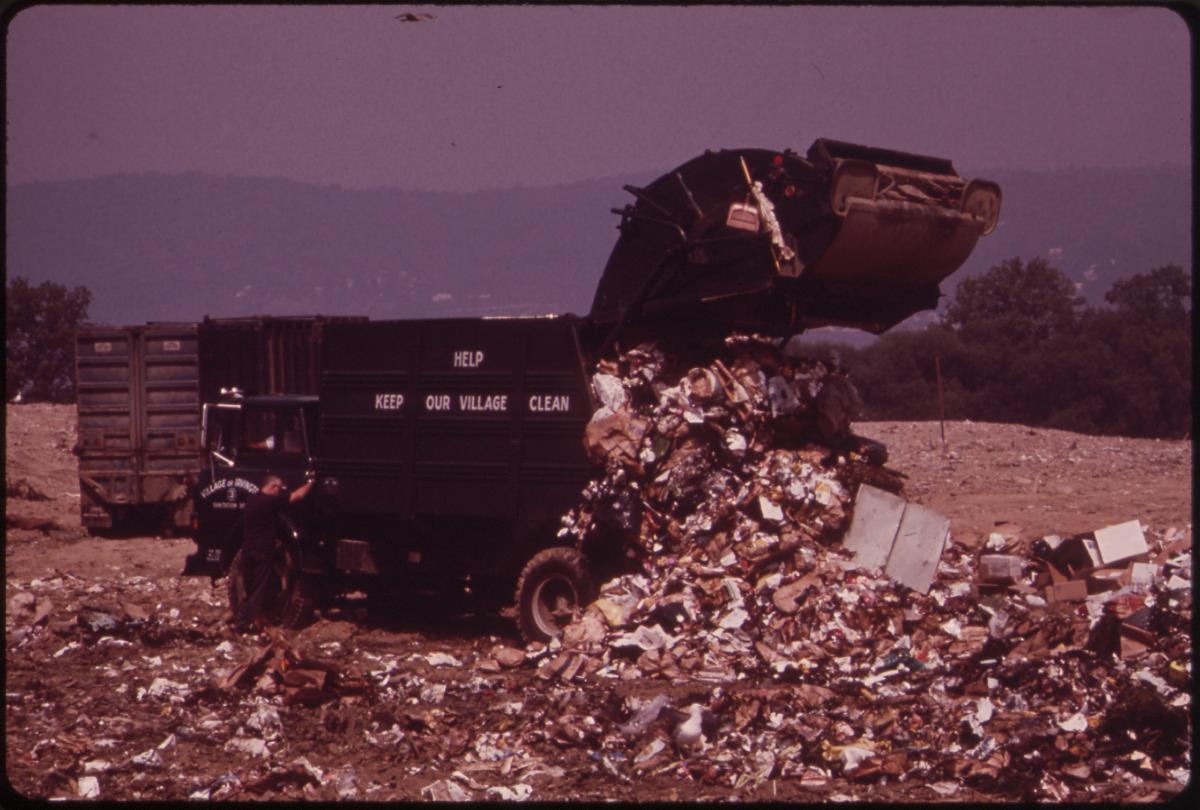
HELP KEEP OUR VILLAGE CLEAN. A Village of Irvington sanitation truck at the Croton Point landfill, on the Hudson, August 1973. All photographs by Wil Blanche, DOCUMERICA, U.S. National Archives. | | |
GARBAGE WATER
What we signed, and why the reservoir is in this story
There is a word for the liquid that drains out of a landfill after it rains, and the word is leachate, which sounds technical enough that nobody pictures it. New York River Watch, the statewide project run out of Kingston that spends its time on exactly this kind of thing, would like you to picture it, so they call it garbage water, which is what it is: rain that has gone down through a hill of everything we threw away and come out the bottom carrying a sample of all of it, PFAS included.
Here is what happens to it. In New York, roughly 530 million gallons of the stuff a year is collected from landfills and trucked or piped to sewage treatment plants, which were built to handle what comes out of people, not what comes out of a landfill, and which do what they can with it, discharge the rest into rivers and lakes, and send the solids back to the landfill, where the rain goes through them again, and the whole cycle starts over a little more concentrated than the time before. Some of those rivers and lakes supply drinking water for more than two million New Yorkers.
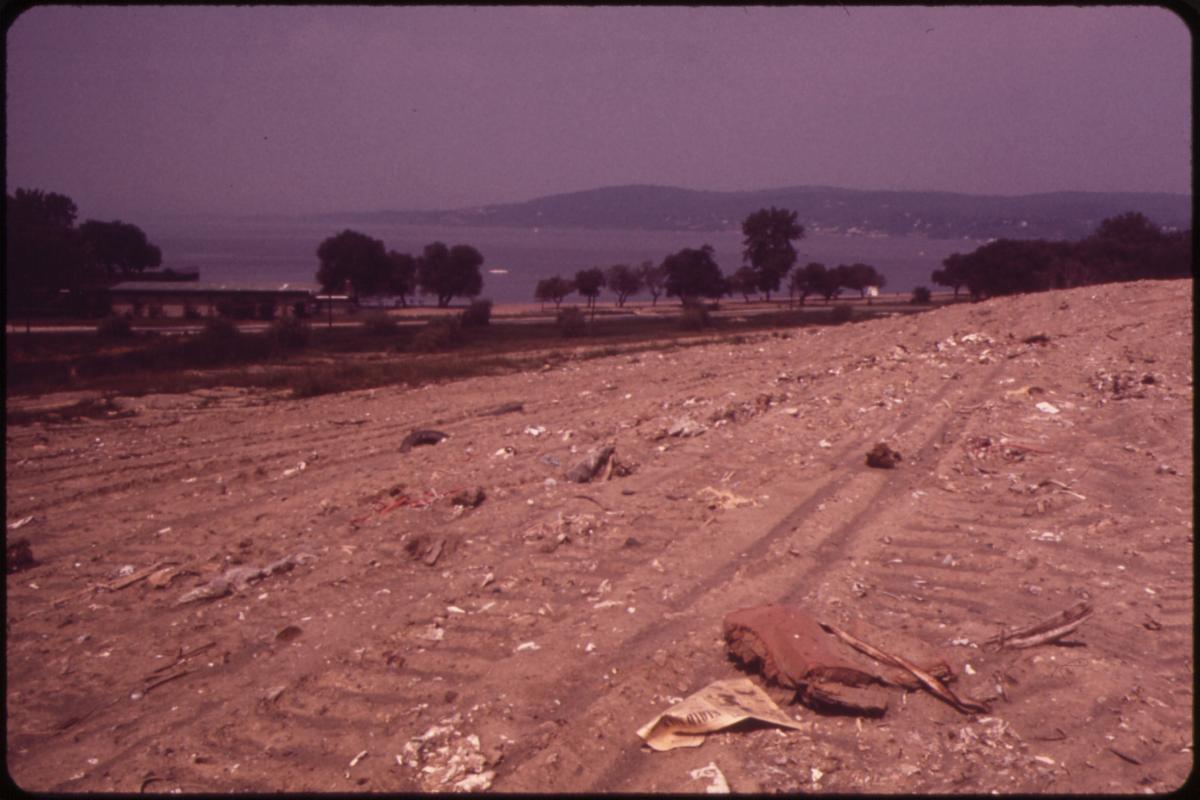
None of this is new. Open dumps bred rats and caught fire, so we buried the garbage under a foot of dirt every night, and it worked. Garbage water had been coming out the bottom all along; by the 1960s that was clear, and in 1976 Congress passed the law that eventually required a liner underneath the garbage and pipes on top of it to catch what came through. Then the question was where the pipes went, and the answer nobody chose was the sewage plant. In 2000 the EPA looked at whether landfills should treat leachate before sending it there, and decided not to require it.
| | One foot of earth over the garbage—enough to stop the rats, not the rain. | | |
This summer the state proposed its first real rules for any of this. River Watch calls them a start, and they are. They are also a start with a hole in it, and the hole is worth walking through, because it turns out to be most of the landfills.
The rule reaches active landfills that take ordinary garbage or construction debris, 32 of them statewide. At least 82 landfills in New York send leachate to sewage plants. The difference is the kinds of place the rule doesn't name.
The biggest group is closed landfills, 45 of them, and the thing I did not know until this week is that a landfill does not stop making garbage water when it stops taking garbage. A closed landfill gets capped, clay and plastic and soil on top, and the cap slows the rain down but doesn't stop it; the waste underneath keeps breaking down for decades, and a landfill with a collection system goes on pumping leachate out and sending it to the sewage plant, by truck or by pipe. Croton Point, in Westchester, so graciously serving as our visual aid this week, closed in 1986 and was still piping at least 10.9 million gallons a year to the Ossining plant between 2019 and 2023. That is the group every landfill near us belongs to: New Paltz, the Town of Ulster, Catskill, Jockey Hill, Hurley, Saugerties, all closed, all still draining, all outside the rule.
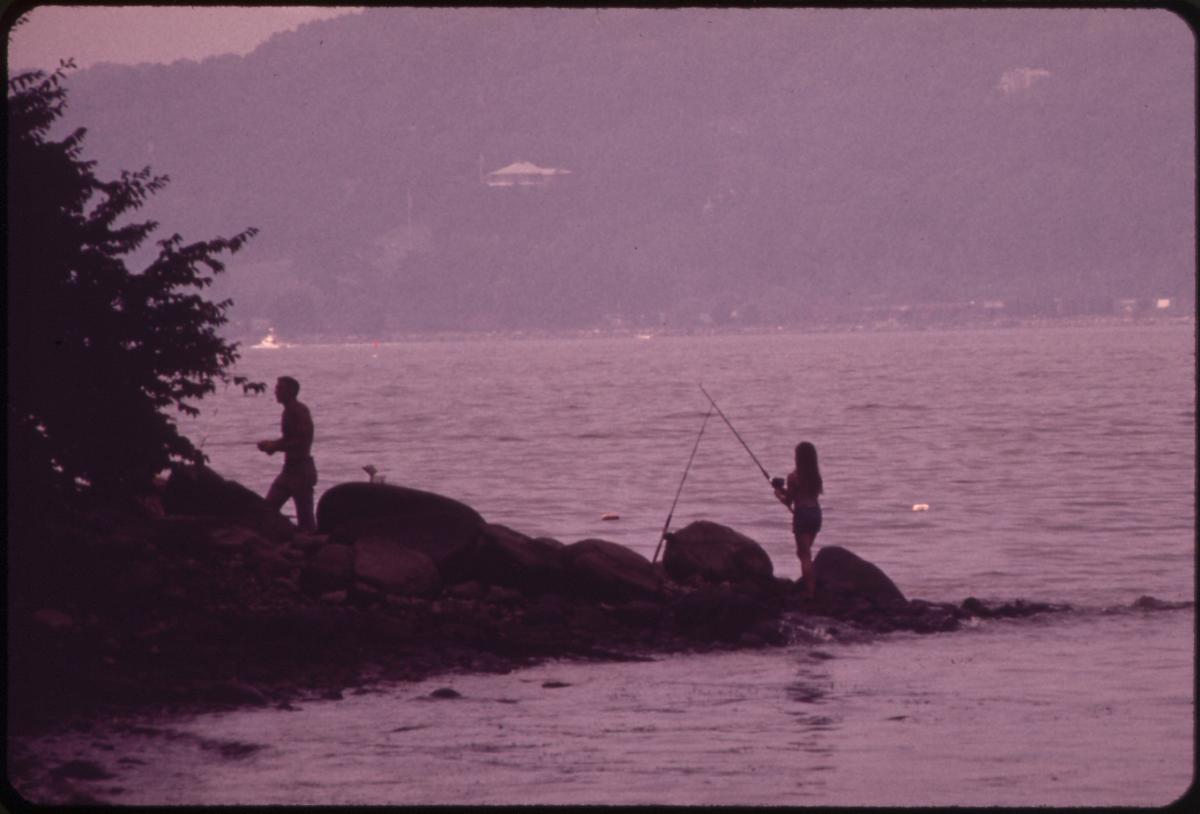
| | Fishing from Croton Point Park, a few hundred feet away. | | |
The rest are ash landfills, where what's left after trash is burned goes to be buried, and leachate trucked in from landfills in other states, which a New York rule can't reach. Add those up and the coalition counts at least 74 million gallons a year that would go on arriving at sewage plants untreated after the rules take effect. So more than 100 organizations and 700 individuals filed comments asking the Department of Environmental Conservation to close the gap before the rules are final, the comment period ended September 9, 2026, and we, WLC, signed on.
So did Scenic Hudson, Clearwater, Riverkeeper, and the Ulster County Resource Recovery Agency, which is the outfit that collects the leachate from the closed landfills in the town of Ulster and New Paltz, two of the six above, and asked the state to regulate them anyway. The report behind the comments is at leachateloophole.org, and it is worth an hour. If you have a minute instead, they have also mapped it: your sewage plant, and the drinking water intake below it.
| | |
WHY A LAND TRUST CARES ABOUT SEWAGE PLANT CHEMISTRY
Because the other way to keep water clean is to keep it from getting dirty in the first place, and the way you do that is by protecting the land rain runs off of, which is the arrangement the Ashokan Reservoir has lived under for a hundred years. The reservoir was built to give New York City water. It is the land around it, protected by agreement between the city and the watershed towns since 1997, that lets New York drink that water unfiltered, something only a handful of American cities are allowed to do, and the permission holds only as long as the watershed stays the way it is. Leachate rules and land conservation are the same job from opposite ends. Ours is the end where the water is still clean.
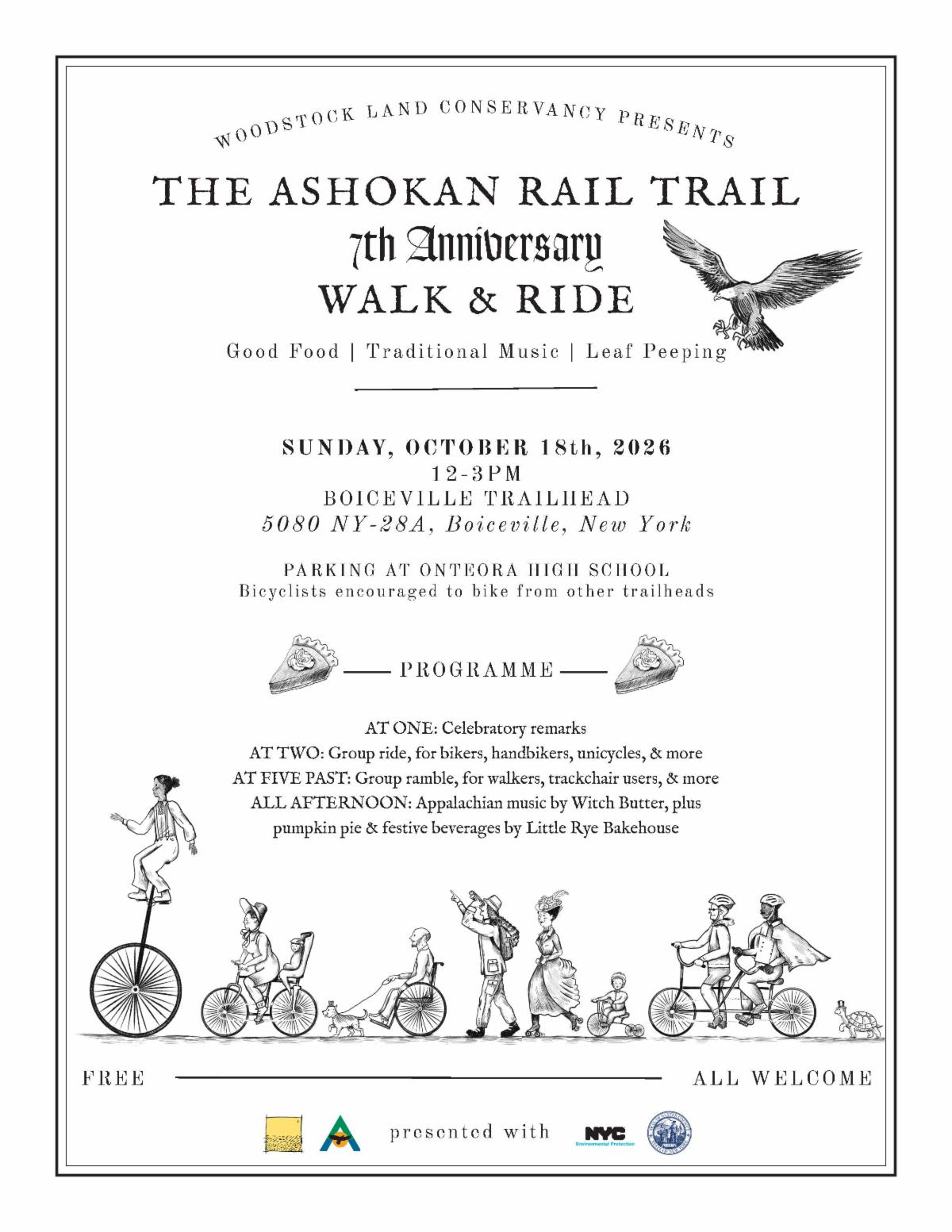
| Speaking of our favorite drinking water to look at. Save the date: the Ashokan Rail Trail is turning seven. On Sunday, October 18, 2026, noon to 3 p.m., we're celebrating the trail's seventh anniversary at the Boiceville trailhead, with NYC DEP and Ulster County: remarks at 1, a group ride at 2, a group walk right after, music from Witch Butter, pie from The Little Rye Bakehouse, and a look back at the valley that's under the water (more on that to come...) Free, everyone welcome, parking at Onteora High School. There will be a newspaper. | If someone sent you this, you can get your own! If you got it from us, forward it to someone who'd like to know what's in the water. | | | | |