|
Product Stewardship Updates
February 6, 2025
| |
CELEBRATE PSI'S 25TH ANNIVERSARY AT THE U.S. PRODUCT STEWARDSHIP FORUM, JUN 3-5 | |
|
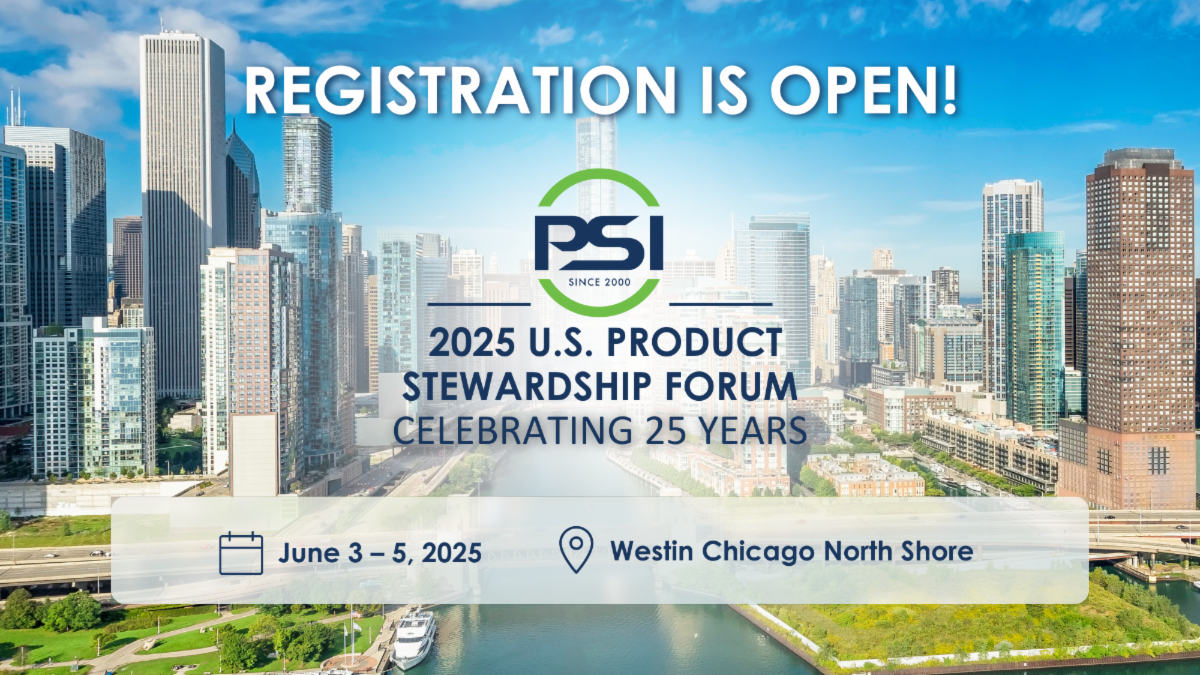
Join 300 EPR leaders from around the globe on June 3-5, 2025 at the Westin Chicago North Shore for cutting-edge EPR solutions, information sharing, brainstorming, and networking. Registration is open!
For more than two decades, PSI’s U.S. Product Stewardship Forum has been the one place to go for meaningful content and in-depth conversations on the EPR issues that matter most. The Forum is consistently ranked by participants as the best EPR conference in the U.S. based on the caliber and expertise of speakers, and the breadth of stakeholder perspectives represented – including private industry (producers, PROs, waste management), U.S. governments at all levels, environmental groups, academics, and international companies and governments.
“This was the best EPR conference I have ever attended. Highly recommend – great ROI. I will be at the next one.” - Mark Johnson, Senior VP of Policy & Government Affairs, Washington Retail Association
| |
OREGON MATTRESS STEWARDSHIP PROGRAM KICKS OFF | |
Kathryryn Tripp / Unsplash | |
|
On January 1, 2025, Oregon took another big step toward achieving its 2050 vision for materials management with the launch of a new statewide mattress stewardship program. The program, Bye Bye Mattress, branded and run by the Mattress Recycling Council (MRC), will now collect and recycle used mattresses across the state. The program is expected to reduce illegal dumping, save local governments and taxpayers money, boost material recovery and recycling (about 75% of a mattress is recyclable), and create local jobs. MRC is contracting with three Oregon-based mattress recyclers – Environmentally Conscious Recycling, St. Vincent de Paul, and Klamath Works – to process mattresses locally. MRC, which also operates the decade-old mattress stewardship programs in California, Connecticut, and Rhode Island, has recycled 15 million mattresses to date.
The Oregon mattress stewardship program represents an evolution in the mattress EPR model – PSI refers to it as Mattress EPR 2.0! The Oregon program incorporates lessons learned and best practices from the initial three states, while also maximizing statewide convenient access with permanent collection sites in every county and prioritizing environmental and social equity. The new law also requires MRC to study how to enhance services for low-income individuals and multifamily residents.
PSI played a significant role to facilitate the nation's first model mattress EPR bill in 2012 with the Connecticut Department of Energy and Environmental Protection, numerous Connecticut local governments, Reworld (formerly Covanta), the International Sleep Products Association (ISPA, the mattress industry trade association), and others, which led to the three original state laws. In 2022, PSI again played a key role in facilitating discussions with ISPA and MRC, this time with the OR Department of Environmental Quality, Metro regional government (both PSI founding members), and MRC to arrive at the final legislative language.
PSI members and partners have access to resources on mattress EPR in our online resource library, as well as individual technical policy support. To join a a national mattress policy workgroup and for seeking further information can contact Megan Mabin, PSI’s mattress lead, at info@producststewardship.us. To become a PSI member or partner, contact Amanda Nicholson at info@productstewardship.us
| |
WASHINGTON INTRODUCES TEXTILES EPR BILL | |
|
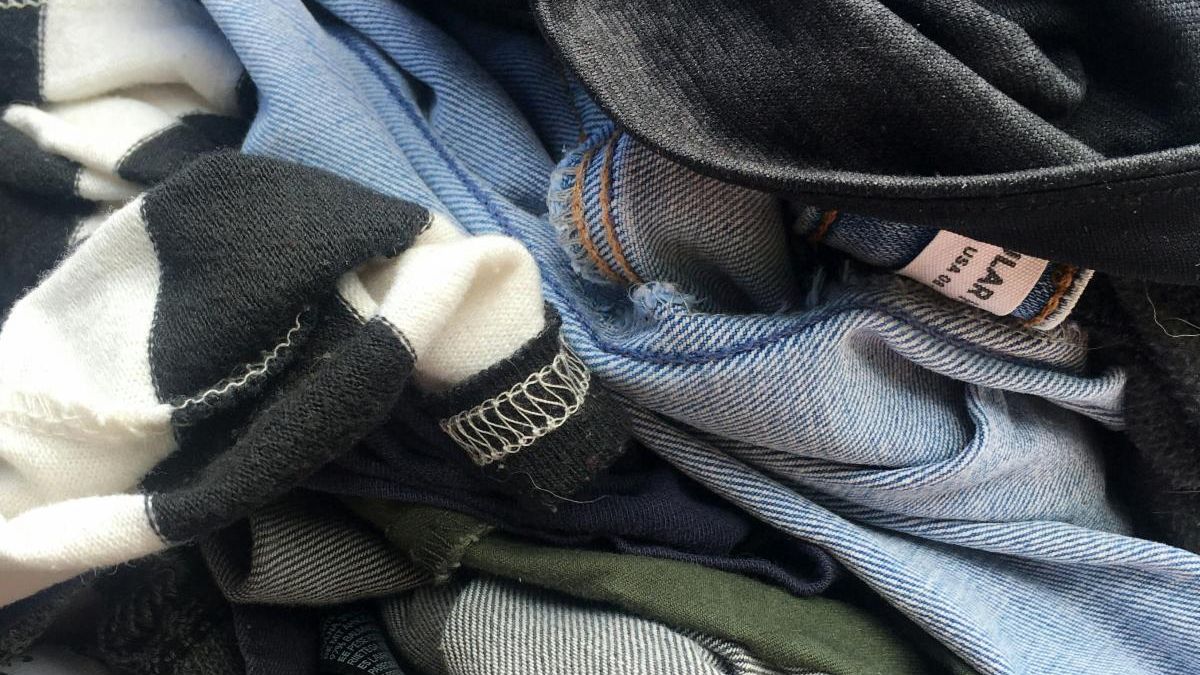
Washington State Representative Cindy Ryu recently introduced HB 1420, a textiles EPR bill that builds on the momentum of California’s groundbreaking textiles EPR law, passed in 2024, which is the first in the nation. The New York State legislature has also introduced a textiles EPR bill for the second year.
Building on Washington’s strong EPR track record—including laws for electronics, lighting, solar panels, pharmaceuticals, paint and batteries—HB 1420 reflects best practices for textiles stewardship, including a clear product scope, statewide convenient access, performance targets to be set in the program plan, statewide education, eco-modulated fees, and a comprehensive program plan to be approved by the state oversight agency. Like California’s law, it also includes a provision for the producer responsibility organization to support water conservation and microplastic and microfiber filtration technologies for laundries.
Members and partners can follow the legislation through PSI’s real-time legislation tracker.
| |
|
Minnesota’s packaging EPR program marked a key implementation milestone with the appointment of its multi-stakeholder advisory board, an important program element that ensures robust oversight and diverse stakeholder input. The advisory board is comprised of 18 members representing stakeholders along the value chain, including retailers, waste haulers, local governments, recycling facilities and processors, reusable packaging systems, and manufacturers of covered materials.
This multi-stakeholder advisory board model, a concept developed and promoted by PSI with input from its government members and other key stakeholders, provides a forum for all stakeholders to contribute to the development of the producer-run program, ensuring transparency, accountability, and balanced representation. It’s a true example of democracy at work! Along this line, PSI is pleased to be facilitating the Colorado advisory board, applying its vast expertise in facilitation and mediation, coupled with its knowledge of EPR policy, to foster effective, inclusive governance within EPR programs.
Regarding Minnesota, PSI also worked with Hennepin County and Ramsay County, along with multiple stakeholders to develop a consensus policy that entered the legislative process and emerged as the law that is currently being implemented. Producers that are responsible for selling covered materials in Minnesota are required to register with Circular Action Alliance, the producer responsibility organization for the Minnesota program, by July 1, 2025.
| |
A MUST-READ FOR ALL EPR PROFESSIONALS! | |
|
PERSPECTIVES ON PRODUCT STEWARDSHIP:
Navigating an extended producer
responsibility path to a circular economy
by Scott Cassel, CEO and Founder of PSI
| |
Learn about the emergence of the EPR movement in the U.S., Canada, and Europe; the basic elements and best practices reflected in all effective EPR bills; how to build consensus with other stakeholders; and key definitions, terminology, and issues. Includes in-depth case studies on how EPR bills were developed and laws implemented regarding packaging, paint, and batteries. | |
|
Managing Leftover Paint: How PaintCare Helps Realtors and Contractors
A Free Virtual Meeting of the Missouri Product Stewardship Council Paint Workgroup
February 26, 2025 at 10:00 AM – 11:00 AM CT
| |
|
Join the Missouri Product Stewardship Council Paint Workgroup, PaintCare and the Product Stewardship Institute (PSI), on Wednesday, February 26th from 10-11am Central Time for a special information session about paint stewardship in Missouri.
This virtual meeting will explore practical solutions for responsibly managing leftover paint, tailored to the needs of real estate professionals, contractors, and home builders. Learn how PaintCare can save you time, money, and effort while contributing to sustainability.
We’ll discuss Missouri’s Paint Stewardship bill, SB 239, sponsored by Senator Jamie Burger. If enacted, this legislation would bring the PaintCare program to Missouri, offering a convenient, cost-effective solution for recycling leftover paint across the state. SB 239 is built on a landmark mediated agreement that PSI facilitated nearly 20 years ago, which resulted in a model paint stewardship bill that is the basis for laws in 12 states and the District of Columbia.
| |
|
Oregon's Packaging EPR Law
Understanding the Covered Product Exemption under ORS 459A.869(13)
February 4, 2025 at 9:00 AM – 10:30 AM PT
| |
|
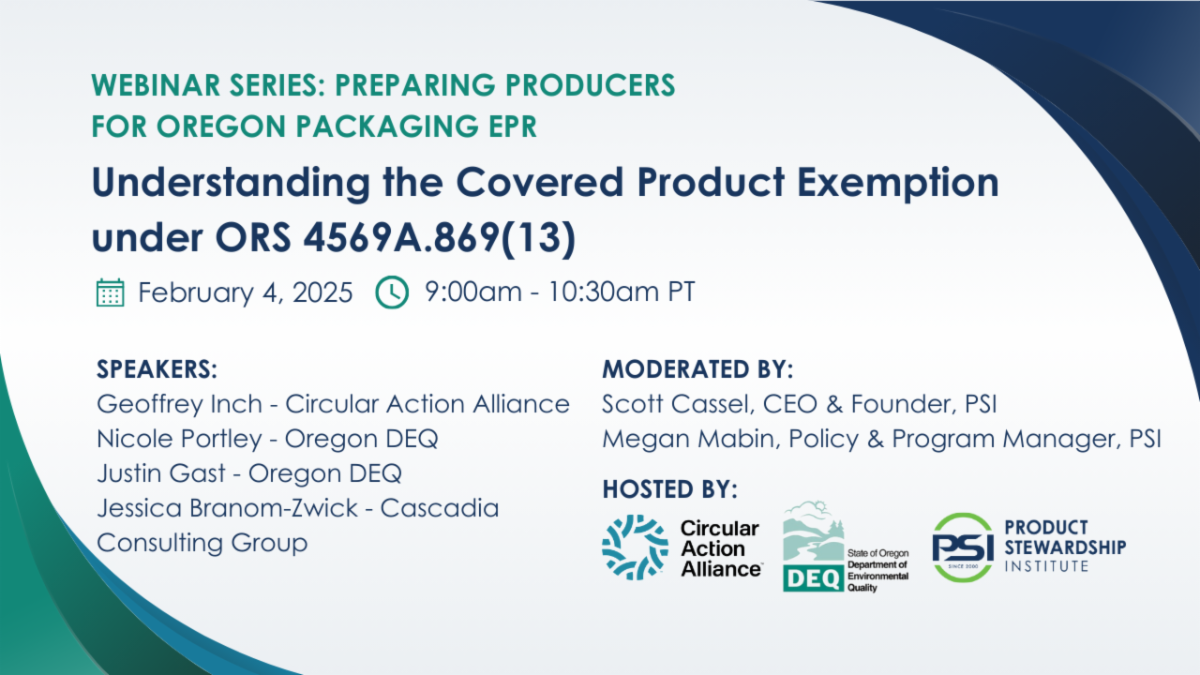
Hosted by the Product Stewardship Institute on behalf of the Oregon Department of Environmental Quality (DEQ) and in partnership with Circular Action Alliance (CAA), this is the final webinar in a five-part webinar series informing producers about their obligations under Oregon’s Plastic Pollution and Recycling Modernization Act – the state’s new extended producer responsibility (EPR) law for packaging, paper, and food serviceware – which begins July 1, 2025.
Pursuant to ORS 459A.869(13), materials recycled outside of the commingled system can qualify for an exemption from the definition of “covered product,” meaning that producers need not pay fees on them if they meet three criteria pertaining to how the materials are collected, handled, and recycled by responsible end markets. This webinar will describe the process for implementing this exemption for 2025 fees, which will include DEQ solicitation of exemption claims from producers.
| |
- The U.S. aluminum beverage can recycling rate has dropped to 43%, the lowest point in decades. Industry groups cite stagnant recycling systems as the cause and emphasize the need for policy, like EPR, to address the issue. Read more.
- With rulemaking complete, implementation of packaging EPR in Oregon begins in earnest, with preparations in process for service and facility upgrades. Read more.
- EPA releases latest recycling rate estimates for packaging materials, including PET, HDPE, aluminum, steel, cardboard, paper, and glass – a combined 38.9%.
- A study from the National Institute of Standards and Technology suggests that AI could help detect lithium-ion battery valve breakage 94% of the time, helping to prevent fires. Read more.
- Federal administration changes cause confusion for environmental program funding. Read more.
- Right to repair movement for electronics grows with 10 bills so far this year. Read more.
- Alliance of consumer brands and nonprofits support deposit return system bill in the Washington State legislature. Read more.
- Oregon polystyrene ban goes into effect. Read more.
|
|
The Product Stewardship Institute is a policy expert and consulting nonprofit that pioneered product stewardship in the United States. Since 2000, PSI has helped enact 141 extended producer responsibility (EPR) laws across 20 product categories in 33 states — the bedrock on which the circular economy is built. We work with businesses, nonprofits, academia, and governments to ensure that products are responsibly managed from design to end of life. Join us at www.productstewardship.us. | |
|
The Product Stewardship Institute, Inc. is an equal opportunity employer and provider. Persons with disabilities who require alternatively formatted materials to ensure effective communication should contact Amanda Nicholson at info@productstewardship.us or 617.236.4855.
| | | | |