Volume 7 Issue 11 | November 2025

We offer a Nod To November: the marvels of the plant world, a garden thug, a cautionary tale, and a woman who helped change the way we garden.

This is the 75th  issue of The Root of It—75 issues delivered to you at 5:30 a.m. on the first of every month.  It’s been a joy to write and produce. Thank you for your comments and for joining us on our journey. We’ll see you on December 1st at 5:30, or perhaps after you’ve had your breakfast. The Staff

The Root of It newsletter ends with our monthly quotation. If you find your newsletter has been clipped by your email provider please click HERE for a webpage version of the newsletter.

LOOK AROUND

Oh, the energy!

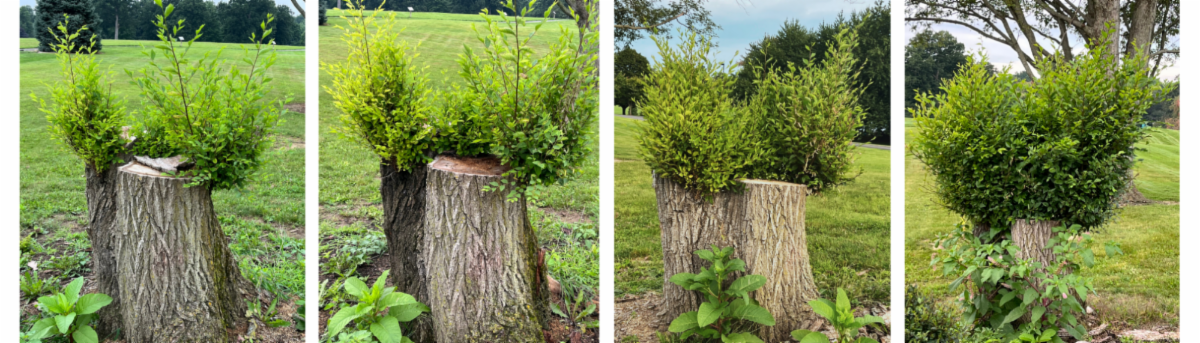
photos by K Edgington

One August day my grandkids and I were drawn by roaring chainsaws and big booms to the felling of several mature elm trees a few blocks from our home. Watching the big equipment in action provided an afternoon of entertainment for three year-olds and seniors alike. Weeks later, I chanced to walk that way and was struck by the tall sprouts coming from the perimeter of those elm stumps. “Amazing,” I thought, “What energy it must take to start anew!” Then, “What triggered that new growth?” 


The ability to capture energy through photosynthesis is unique to plants, who then stockpile the energy in the form of carbohydrates (sugars) in branches, roots, seeds, and trunks. Think about the storage of carbohydrates in a tree as a bank.  The highest concentration of carbohydrate reserves are banked in the roots, and those stores fluctuate as energy is deposited and withdrawn. When the tree is in leaf and photosynthesizing, deposits are put in the stored energy bank, and the bank is flush.  Plants use energy daily to build new tissue (roots, stems, flowers, and leaves) and for metabolic processes—withdrawals.  Energy reserves are tapped for the nighttime needs of plants, and for the needs of plant parts, like tubers, bulbs, and roots when not supported by photosynthesizing leaves. The production of seeds and nuts is a costly business. Although the metabolic rate of most plants drops in winter, energy is still required for respiration and other functions, and trees go to the bank for winter needs. The stresses trees experience, and the energy required to deal with them, can take the bank balance into the insufficient funds area, negatively affecting next year’s performance. Energy from carbohydrates—stored and expended—is the metabolic currency that fuels the plant world. And when a catastrophic event occurs, such as the felling of those elms, cached energy in their roots powers growth needed to keep the plants alive.


But where did those stump sprouts come from—the bark had been thick and impervious—and what plant communique set the growth in motion?


Dormant buds hold the key to the mystery of the growth sprouting from the elm stumps. At the beginning of a tree’s life, dormant buds form at the root collar (the area where roots meet the stem) and along its trunk and branches. The root collar buds are in for the long haul, sometimes living the entire life of the tree, and can cluster in woody swellings, called lignotubers, just below the tree surface. Their sole purpose is to prolong the tree’s life after a catastrophic event (the felling of our elm trees) or an extreme environmental event, and the sprouts they produce are strong and stable because they can grow their own roots.


Epicormic buds exist all along the tree’s trunk and branches. They are produced all during the life of the tree, and as the tree grows they extend outward so they are just below the new bark.  Although relatively short-lived, they are on constant duty, giving rise to new branches, leaves, and flowers. The tree canopy produces hormones called auxins, which provide the on/off switches for the root collar and epicormic dormant buds. While they flow, the buds remain dormant. Stop the flow (with a pruning cut or a chain saw for instance), and the buds swell and break open. New growth begins.  


The new shoots I witnessed on the felled elms arose from their banks of stored energy and activated epicormic buds working in concert to save the life of the trees. It is a reminder of the elegance and complexity of the plant world, with its systems and contingency plans that are always in play. Look Around!

K Edgington

LEAF BRIEF

This Bittersweet is Bad News


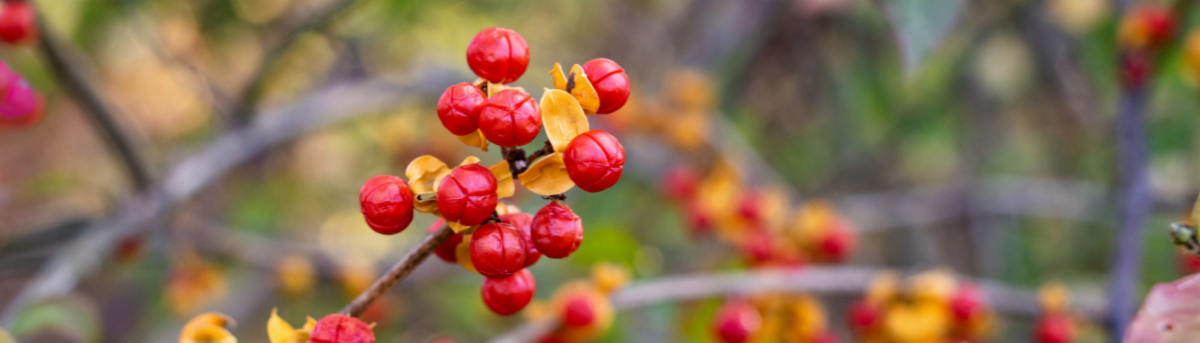
photo by E Barth-Elias

At first glance, Asian bittersweet vine seems like a gift from nature. Glossy rounded leaves turn a vivid yellow in fall and bright yellow/orange-sheathed berries that split open to reveal scarlet seeds create an eye-catching display. But beneath that pretty exterior lurks an aggressive invader that smothers trees, strangles shrubs, and can fell entire trees under its weight. For Ohio gardeners, Asian bittersweet should never be invited into the landscape.


Asian or Oriental bittersweet, Celastrus orbiculatus, is a deciduous woody vine that was introduced to the United States in the 1860s as an ornamental plant that controls erosion but quickly wore out its welcome with its aggressive spread that outcompetes native plants. Unflatteringly nicknamed “anaconda of the plant world”, it earns its bad reputation by forming dense mats of vegetation, quickly twisting around tree trunks, girdling trees and blocking sunlight. It adapts to many landscapes including rocky slopes, grasslands, and floodplain forests, taking advantage of neglected sites, like abandoned fields, forests, woodland edges and roadsides.


Now prevalent in the eastern US in every state but Florida, Asian bittersweet is successful on many levels. Not only do the vines choke out the competition, they thrive in the shady conditions created by its own dense growth. The attractive red berries, which persist all winter, are ingested by birds and mammals and can be spread over wide areas. These same berries and vines are popular in wreaths and other décor, but using them outdoors allows its escape into the wild. In addition, Asian bittersweet hybridizes with the well-behaved American bittersweet (Celastrus scandens) threatening its existence in its own habitat. HERE'S how to tell the difference between the two.


So how do we eradicate this 800-pound gorilla plant? With perseverance! Small seedlings and young suckers can be hand-pulled, making sure to get as much of the root system as possible to prevent resprouting. For larger infestations, use the window cut method: sever the vine at ground level and again at chest height. Leave the dead vine hanging in the tree to wither—trying to pull it down can damage trees or cause falling hazards. Because cutting alone triggers aggressive root suckering, you must follow up:


Cut-Stump Treatment: Immediately apply a systemic herbicide like glyphosate or triclopyr to the freshly cut stump surfaces.


Foliar Spray: Alternatively, allow the plant to leaf out and spray the new foliage during mid-to-late summer (July or later) when the plant is actively pulling nutrients down into its roots.


It takes several years of diligent monitoring to completely eradicate this pest. For more on these strategies, check out THIS GUIDE.


A plant that strangles trees and smothers forests isn't a fall decoration; it's a botanical bully that needs intervention. Enjoy the colors of autumn, but leave this gorgeous tyrant out in the cold. Your trees (and local eco-system) will thank you.

J Gramlich

CREATURE FEATURE

Save Our Stump...A Cautionary Tale

The elderly man surveyed his yard, hands stuffed into jacket pockets to protect against the November chill. Lawn dotted with mature trees sloped down to open field and woods. A small creek wound through, catching the rays from the setting sun. Perfect, almost.


The screen door banged open. “Hey Grandpa,” the small boy said. “Whatcha doing?”


“Enjoying the view,” he replied, “Except for that.” He pointed to a massive stump at the back of the yard. “It was a beautiful white oak, 70 feet tall. Hit by lightning a few years ago, and now it’s just a dead stump.” He shook his head. “Looks awful. I’m having it dug up this week.”


 “Can I go see it?”


 “Tomorrow morning. It’s getting dark now.”


They went inside, and a grey squirrel bolted across the lawn, chittering madly. “SOS! BIG problem!” he yelled, leaping up on the stump.


“What problem?” The opossum said, busily digging grubs out of the rotting wood of the stump and popping them in his mouth. “We’re fully booked for three seasons.”


“The hooman is digging up the stump! He says it’s dead!”


“WHAT?” the opossum replied, spraying grubs everywhere. “He can’t do that! This tree supports all kinds of life!”


The eastern screech owl dropped down out of the sky. “The tree is dead. But new life begins almost immediately.” she said. “Insects arrive. Termites and beetle larvae feast on the dead wood. Carpenter ants and carpenter bees tunnel through the stump, building nests. Other creatures come to eat them.”


She clacked her bill together menacingly. “But the stump isn’t just about food. I rented it to stay warm in winter and raise my babies in spring. I gave a deposit!”


“It’s MINE!” shrieked the red fox—everyone covered their ears at the awful sound. “I booked February and March for MY kits!”


“What about us?” the raccoons hissed, fur puffing up in anger. “We got a special rate for really cold winter nights. AND it’s perfect for our babies this spring.”


“We may have double-booked.” the opossum whispered to the squirrel.


“That’s your job!” she hissed back. “I’ve got it for my kits this winter, next summer to stay cool, for a look-out spot year-round, and my favorite nut cracking spot on top.” She paused. “And I may have promised it to 15 flying squirrel cousins for January—they pack in together for warmth.”


“Double-booked?” the sharp-eared owl hooted. “Tell that to him.” She nodded toward the black bear foraging at the edge of the field. “This is HIS favorite spot for snacking this time of year.”


A pile of leaves rustled and a mouse appeared. “Don’t forget about us!” it squeaked, warily glancing at the owl before disappearing into a tiny crevice.


“The stump is a wonderful place to meet friends for dinner,” the owl remarked, eyes gleaming.


The spotted salamander poked out from a bark flap. “I’m heading into a root cavity right now to brumate*. And so are the snakes. We’re goners if they dig it up.” She flicked her tail pointedly at the squirrel. “You gotta fix this,” she said, and vanished underground.


“She’s right,” said the crow, plucking insects from crevices. “This stump provides food, shelter from the elements and protection from predators for all kinds of creatures. Dead wood’s an incredible resource for animals. Maybe the hooman just doesn’t know.”


 “Let’s tell him!” the skunk said. “I know how!“ He arched his back and lifted his tail.


“Stop!” the squirrel yelled. “I’ve got a better way. Crow, grab that crayon you stole from the kid. Racoons, find some blank paper in the recycle bin. Meet back here pronto!”


The next morning, Grandpa and the little boy arrived at the stump. A square of paper was carefully tucked against it, held in place with a rock. A grey squirrel was standing on top of the stump. Staring, hard.


The printing was messy, but readable. “S O S” was scrawled across the top in red crayon. Underneath that read “SAVe OuR STuMp”.


The paper was covered with muddy animal paw prints of all different shapes and sizes, ranging from a mouse to—was that a bear?


“What is it?” the child asked.


Grandpa looked at the squirrel. The squirrel looked at Grandpa.


“I think somebody’s trying to tell us something,” Grandpa finally said.


“What are you gonna do?” he asked.


He smiled. “Listen.”


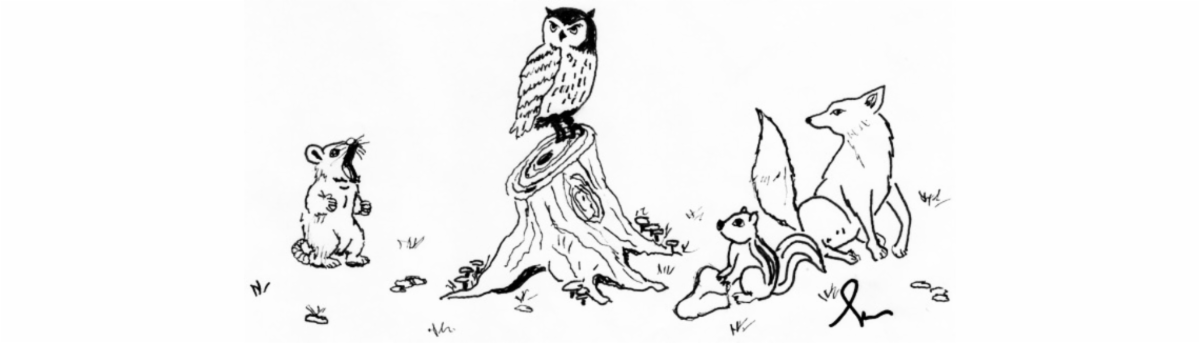
A FUN IDEA: COTTAGE MADE FROM OLD TREE STUMP ATTRACTS HOST OF ANIMALS TO THE GARDEN


*Brumation is a seasonal period of dormancy utilized by cold-blooded animals.

C Christian

AN UNEXPECTED PLEASURE

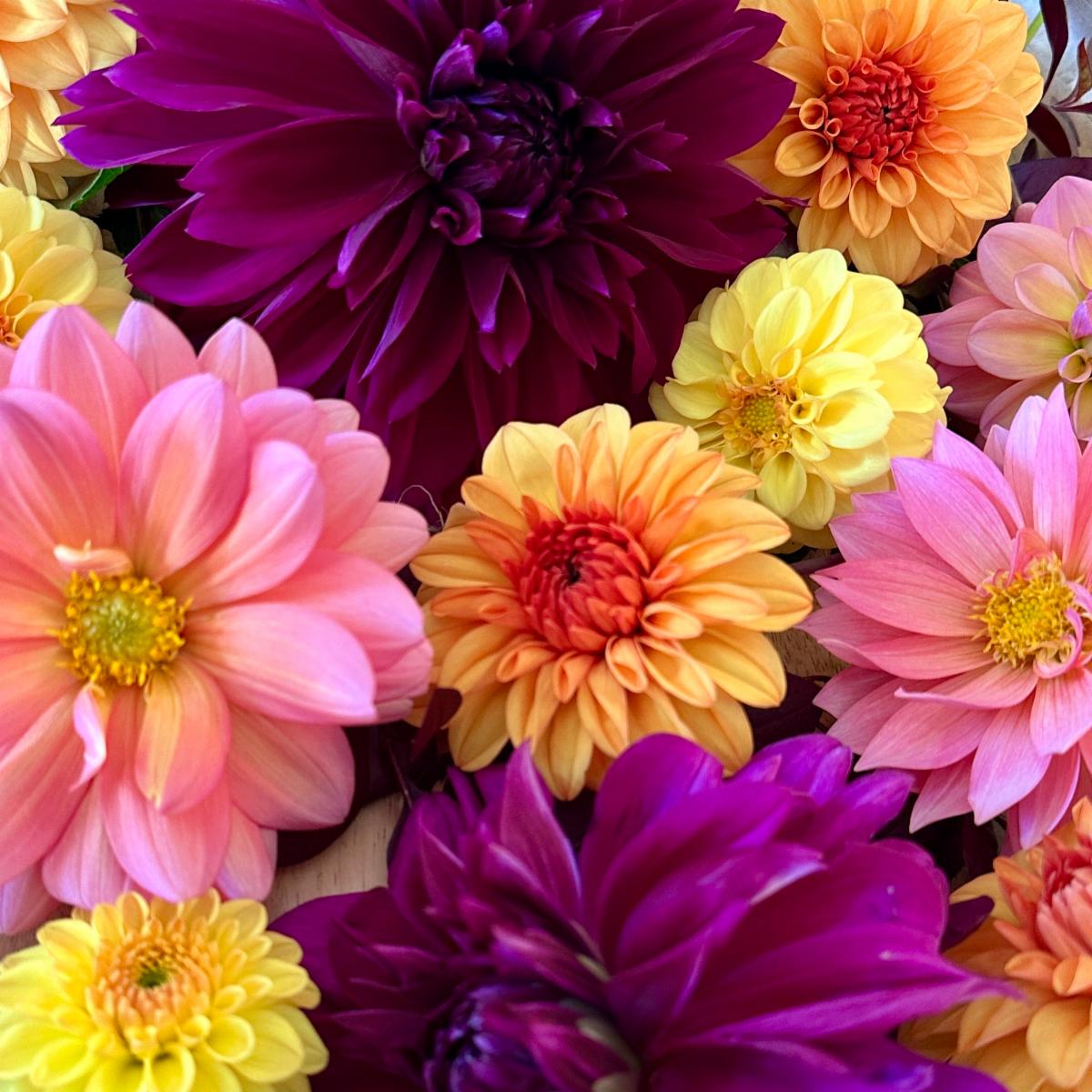
A surprise bumper crop of dahlias this year!

photo by E Barth-Elias

GARDEN DESIGN GREATS

Ellen Biddle Shipman


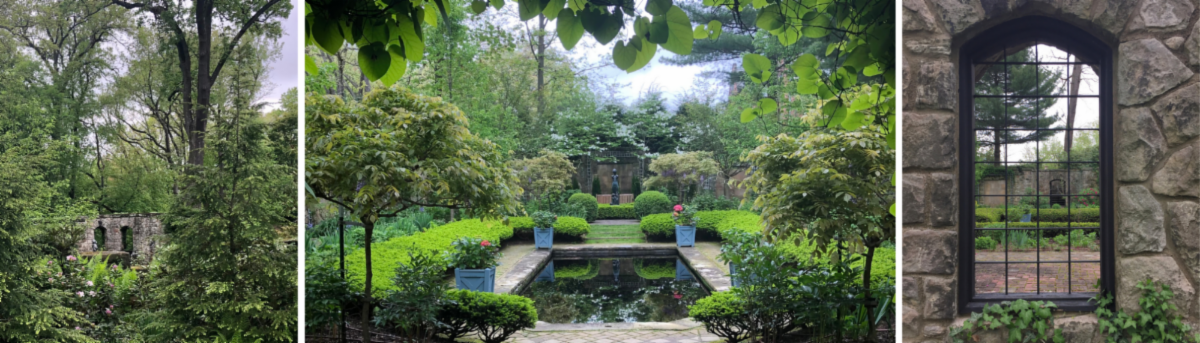
The English Garden, Stan Hywet

photos by E Barth-Elias

Many professions in late 1800s America were the sole purview of men, and landscape architecture was no different. It took a woman with artistic talent, family need and an eye toward the future to lead the profession toward a softer, more colorful landscape.


The Civil War was only four years past when Ellen Shipman was born in Philadelphia. Her earliest years were spent on the American frontier as her father’s military career took the family to Texas and the Arizona Territories.


However, as a teen, she returned East to a Baltimore boarding school where her penchant for color and design began to assert itself. After boarding school, she spent a year at what was called the Harvard Annex, which would eventually become Radcliffe College. She met and married Louis Shipman, a Harvard student and playwright.


They joined the Cornish Art Colony in New Hampshire, founded by sculptor Augustus Saint Gaudens, where she worked alongside such luminaries as Maxfield Parrish, Isadora Duncan, and architect Charles Platt, who mentored her during her early career.


Platt gave her informal training in design and construction. She used that training to landscape the gardens at her two houses within the colony, echoing the style of the colony’s larger celebrated gardens. She turned to full-time landscape architecture after her divorce from Shipman, enabling her to support her three children. Her connection to Platt brought her such clients as the DuPonts, the Fords and the Astors.


As her practice grew, Shipman made it a point to hire only women, especially from the Lowthorpe School of Landscape Architecture for Women. Shipman was instrumental in creating space for women in the landscape.


Of that she said, "Until women took up landscaping, gardening in this country was at its lowest ebb. The renaissance of the art was due largely to the fact that women, instead of working over their boards, used plants as if they were painting pictures as an artist."


Those of us in Northeast Ohio are familiar with her work for the Seiberlings, the English Garden at Stan Hywet. This hidden treasure incorporates features that became synonymous with Shipman’s style, such as paths that not only form the garden border, but also subdivide it into smaller rooms. She used distinctive statuary, espaliered trees, stands of wisteria and small evergreens, all bordered with colorful flowers.


In 1933, “House and Garden” magazine named Shipman the Dean of Women Landscape Architects, not only for her prolific body of work (she designed over 600 gardens during her 40-year career) but for championing women in the field. She lectured widely, mostly to garden club women who made up the bulk of her clientele. She never joined the American Society of Landscape Architects, saying that membership was unnecessary to her career.


As with Gertrude Jekyll in England, Ellen Biddle Shipman saw gardening as an art form, using water, flowers, shrubs, and trees as her pallette. We in Northeast Ohio are fortunate to have one of her designs close by to remind us what such an art form can do for the human spirit. 


ELLEN SHIPMAN BIOGRAPHY: The Cultural Landscape Foundation

S Vradenburg

DOWN AND DIRTY

November Checklist:

  • Continue to plant spring bulbs before the soil freezes.
  • Protect roses from winter cold by mounding soil or mulch at base. Shorten long canes to prevent wind damage.
  • Do a final garden clean up: harvest leftovers, clear plants and their supports and cover with mulch, straw or a cover crop to protect soil.
  • Take advantage of nice weather to pick weeds and rake leaves on the lawn. One last mowing keeps things tidy and helps curb disease.
  • Bring color indoors with bulbs. Paperwhites and amaryllis are good choices.
  • Disconnect and drain garden hoses.  Turn off and clear outside water faucets and sprinklers.
  • Clean and lubricate garden tools.
  • Protect young and newly planted trees from deer browsing damage.  HOW CAN I PREVENT DEER BROWSING DURING THE WINTER MONTHS: Iowa State Extension

J Gramlich

The evening wind made such a disturbance just now, among some tall old elm-trees at the bottom of the garden, that neither my mother nor Miss Betwey could forbear glancing that way. The elms bent to one another, like giants who were whispering secrets, and after a few seconds of such repose, fell into a violent flurry, tossing their wild arms about, as if their late confidences were really too wicked for their peace of mind. 

Charles Dickens ~ David Copperfield

NEW GROWTH!

November 6th: Springfield Coffee Chat ~ 2491 Canfield Road ~ 9:00 to 10:00am.

Growing Tea Plants in Ohio presented by Rachel Chapman ANR Educator

Contact: Frank Crawford Spinelli fspin53@gmail.com


November 20th: Springfield Coffee Chat ~ 2491 Canfield Road ~ 9:00 to 10:00am.

Natural Products and Home Remedies for Insect Control in the Garden

Presented by Maggie Rivera ANR Educator

Contact: Frank Crawford Spinelli fspin53@gmail.com


More learning opportunities:

We invite you to share The Root of It with your friends and family. If you would like to subscribe to our mailing list please visit our website, scroll to the bottom, and click on the subscribe link.

The Root of It staff: Karen Edgington (Editor), Emma Barth-Elias (Photo Editor), Carolyn Christian, Jennifer Gramlich, Sarah Vradenburg, and Geoff Kennedy (Technical Advisor)

We Would Like your Feedback
Contact us at: newsletterscmg@gmail.com

To discontinue receiving this newsletter please click on the UPDATE YOUR PROFILE link below. You may then choose what types of information you would like to receive from us.