PLUS: What to do now to prepare for an FY26 brownfield grant
RESOURCES FOR REVITALIZATION
SEPTEMBER 2025
Using your Brownfield Success Story to Support Project Momentum
A brownfield success story can be anything from a groundbreaking celebration to an innovative cleanup technique used in remediation. By telling your story, you make sure it resonates with the people who matter most and show the good work you are doing to your community, elected officials, and grant-issuing agencies. Read more on CCLR’s blog.
Nature-Based Solutions: Using Nature to Heal Nature
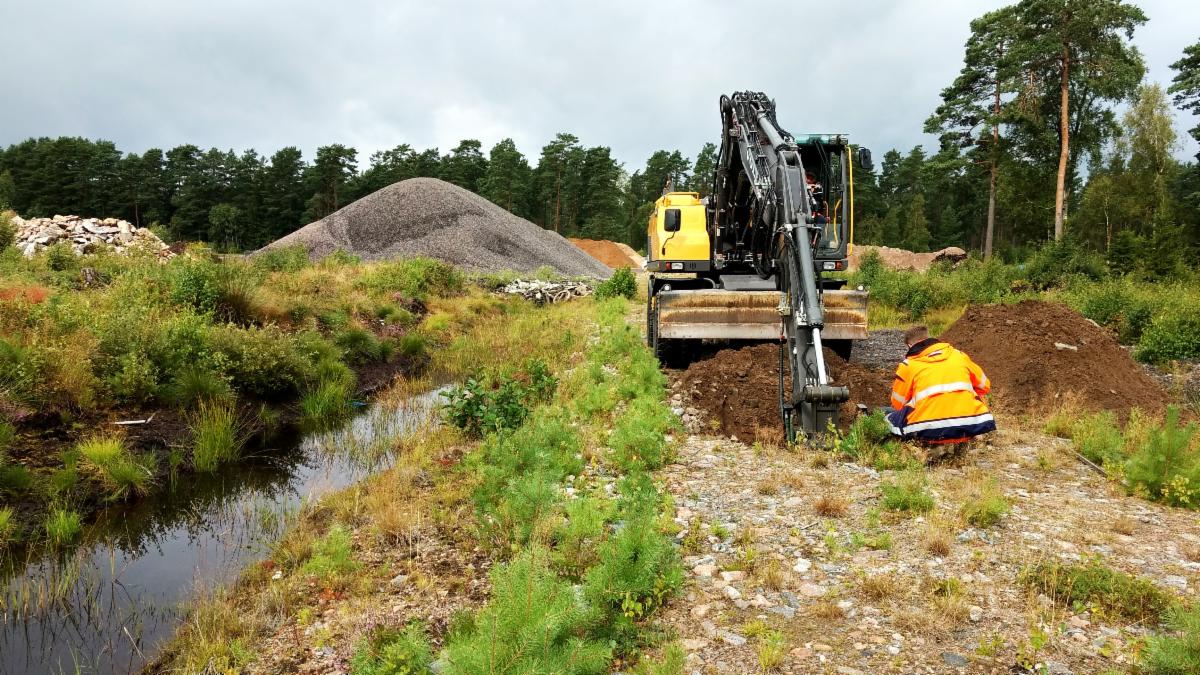
Brownfield projects reduce environmental impact and promote sustainability by revitalizing sites instead of fueling sprawl. They also create opportunities to use nature-based remediation to clean up contamination and harness local ecosystems to strengthen climate resilience. Learn how CCLR can help integrate nature-based solutions for brownfields on our new Nature Based Solutions page.
Your Go-To Guide for Brownfield Data and Funding Resources
CCLR compiled Using Data to Make Your Case: Leveraging Investment for Equitable Redevelopmentto help you navigate the broad landscape of tools and data platforms that can support sustainable, community-led land reuse. Whether you are working on grant applications, shaping policy or championing change in your neighborhood, this guide is a quick and reliable reference for data on health, social conditions, economic indicators and state specific resources.
This guide has been updated for 2025 to reflect changes in federal data resources.
CCLR in Chicago! 2025 National Brownfields Training Conference
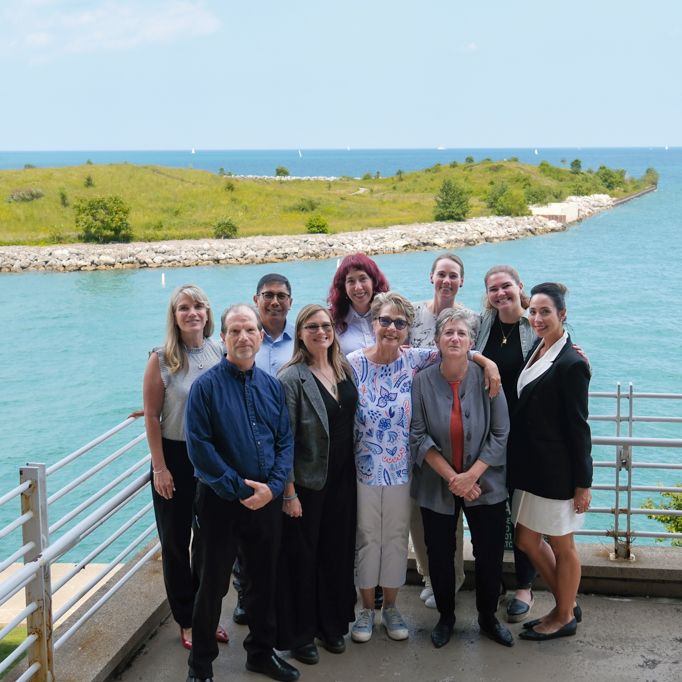
CCLR staff and consultants had an exciting (and busy) time at Brownfields 2025. Our team presented ten sessions covering Brownfields 101, AI in land reuse, and how to stack and sequence funding. We enjoyed meeting up with grantees at the Regional Open Houses, the R9 All States meeting, and our Peer Group in-person get-together. As always Brownfield Karaoke was a hit and the community reception on Navy Pier dazzled with a firework show. We were glad to
hear Chicago showcase its story of revival across the conference from the cleanup of the Chicago River, to rebuilding after the Great Chicago Fire, to all the innovative brownfield reuses happening now.
We hope we were able to connect with you at Brownfields 2025. If you missed the conference, or one of our sessions, you can view all session presentations here. And if you still can’t get enough brownfields, register for the California Land Recycling Conference, Sept. 16-18 in Carson, CA.
Three Things To Do Today to Prepare for a FY26 MAC Grant Application
CCLR anticipates that the FY26 EPA Brownfield Grant Application Period will open in September or October. This year Multipurpose, Assessment and Cleanup (MAC) Grants will be available.
If you plan on applying for an FY26 MAC grant, here are three things you should do today:
Create/confirm your www.grants.gov account. Setting up an account is a slow process, so get started ASAP.
Generate an Unique Entity Identifier (UEI) on www.sam.gov
Call your regional EPA office to ask any questions. Once the RFA is out EPA will only be able to discuss threshold criteria and all other questions must go through CCLR.
EVENTS
FY26 Brownfield Grant Workshop
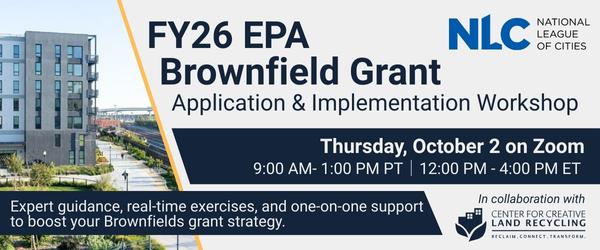
Thursday, October 2 │ 9:00 AM PT│ Zoom Webinar│ Register Now
In collaboration with the National League of Cities, CCLR will give an insiders’ look at program changes, application tips, and strategies to make your FY26 EPA Multipurpose, Assessment, and Cleanup (MAC) Brownfields Grant application stand out. This is more than just a webinar, join us for a cost-free, four-hour workshop with interactive exercises to sharpen your funding strategy, gain exclusive resources you can put to work immediately, and have the chance to book one-on-one office hours with our team for personalized guidance after the session. Whether you intend to apply in FY26 or FY27, this workshop will set you on the path to application success!
There’s still time to register for the Oregon Infrastructure Summit
From housing and broadband to childcare and climate resilience, smart infrastructure planning is essential to Oregon’s future. The Summit brings together leaders and stakeholders from across the state —including Tribal nations, local governments, ports, state agencies, and industry—to explore the future of Oregon’s infrastructure.
CDFA Tribal Finance Webinar Series
September 9 & September 10 │ 1:00 - 2:30 PM PT, 3:00 - 4:30 PM ET│Register Now
This free series offers a comprehensive approach to advancing infrastructure, connectivity, and growth on tribal lands. With a dedicated grant writing workshop that provides actionable insights, you'll leave prepared to make a positive impact in your community.
Grow America EPA Brownfields Revolving Loan Fund Office Hours. Bring your questions, opportunities, and challenges regarding Brownfields financing and redevelopment.
Wednesday, September 24 @ 3-5pm ET/12-2pm PT: Register here.
Wednesday, October 22 @ 3-5pm ET/12-2pm PT: Register here.
Wednesday, November 19 @ 3-5pm ET/12-2pm PT: Register here.
Alaska Department of Environmental Conservation: State and Tribal Response Program Workshop
Alaska DOE invites Tribal Response Program (TRP) partners from around Alaska to join this in-person workshop to discuss home heating oil tanks, spill response and clean up, brownfield planning and more!
Meet Your Fulcrum Potential: Balancing Power Between Community Members and Land Reuse Practitioners
Wednesday, October 29│11:00 AM PT on Zoom │ Register now
Save the date for CCLR and Groundwork USA’s dynamic webinar designed for nonprofits and community groups interested in supporting equitable brownfields redevelopment.
Rural and Tribal Assistance Pilot Program - Amended NOFO
Applications Accepted from September 8, 2025 - October 8. 2025
The Rural and Tribal Assistance Pilot Program NOFO provides up to $54.2 million in no-match grants on a first-come, first-serve basis to support legal, technical, and financial advisors to help advance infrastructure projects in rural and tribal communities. This amended NOFO combines Fiscal Years (FY) 2024 and 2025 program funds, with a $20 million set-aside for Tribes. Read more.
The Alaska Department of Environmental Conservation (DEC) Brownfield Assessment and Cleanup (DBAC) Services application is now open.
Application closes November 14, 2025.
Every year, DEC assists Alaskan communities in conducting site-specific and community-wide environmental assessment and cleanup services through DBAC services. The 2025-2026 DBAC application can be found here: https://dec.alaska.gov/spar/csp/brownfields/assessment-cleanup/dbac-app/.
Please reach out to Nabi Qureshi with Alaska DEC (nabi.qureshi@alaska.gov) or the Alaska DEC Brownfields team (dec.brownfields@alaska.gov) if you have questions or concerns.
Alaska SB67 – Firefighting Substances Disposal Reimbursement Program
In 2024, the Alaska Legislature passed Senate Bill (SB) 67, to create the Firefighting Substances Disposal Reimbursement (FSDR) program. The FSDR program’s goal is to ensure that Aqueous Film-Forming Foam (AFFF) is disposed of according to state and federal law to prevent environmental contamination and protect public health. The Alaska Department of Environmental (DEC) Division of Spill Prevention and Response (SPAR) provides assistance to eligible communities for reimbursement of expenses to dispose of AFFF. Learn more and apply for the FSDR program here.
Washington Department of Commerce's Connecting Housing to Infrastructure Program (CHIP) reduces or covers infrastructure costs so local governments can create affordable housing. Apply by September 26. Read more.
Read two new reports from EPA!
2025 Brownfields Federal Programs GuideInformation about federal agencies and organizations, their missions and connection to brownfields, and the programs that provide technical or financial assistance relevant to brownfields. Read now.
EPA’s Community Actions That Drive Brownfield RevitalizationThis guide includes six actions to help prepare local communities for brownfield reuse. Read now.