|
Council of Producers & Distributors of Agrotechnology
Terry Kippley, CPDA
| |
|
It was a busy and productive week in Washington DC as we brought in our Endangered Species Act (ESA) Mitigation Committee for meetings at the U.S. Department of Agriculture and the Environmental Protection Agency to discuss utilizing drift reduction adjuvants (DRAs) as an ESA mitigation tool.
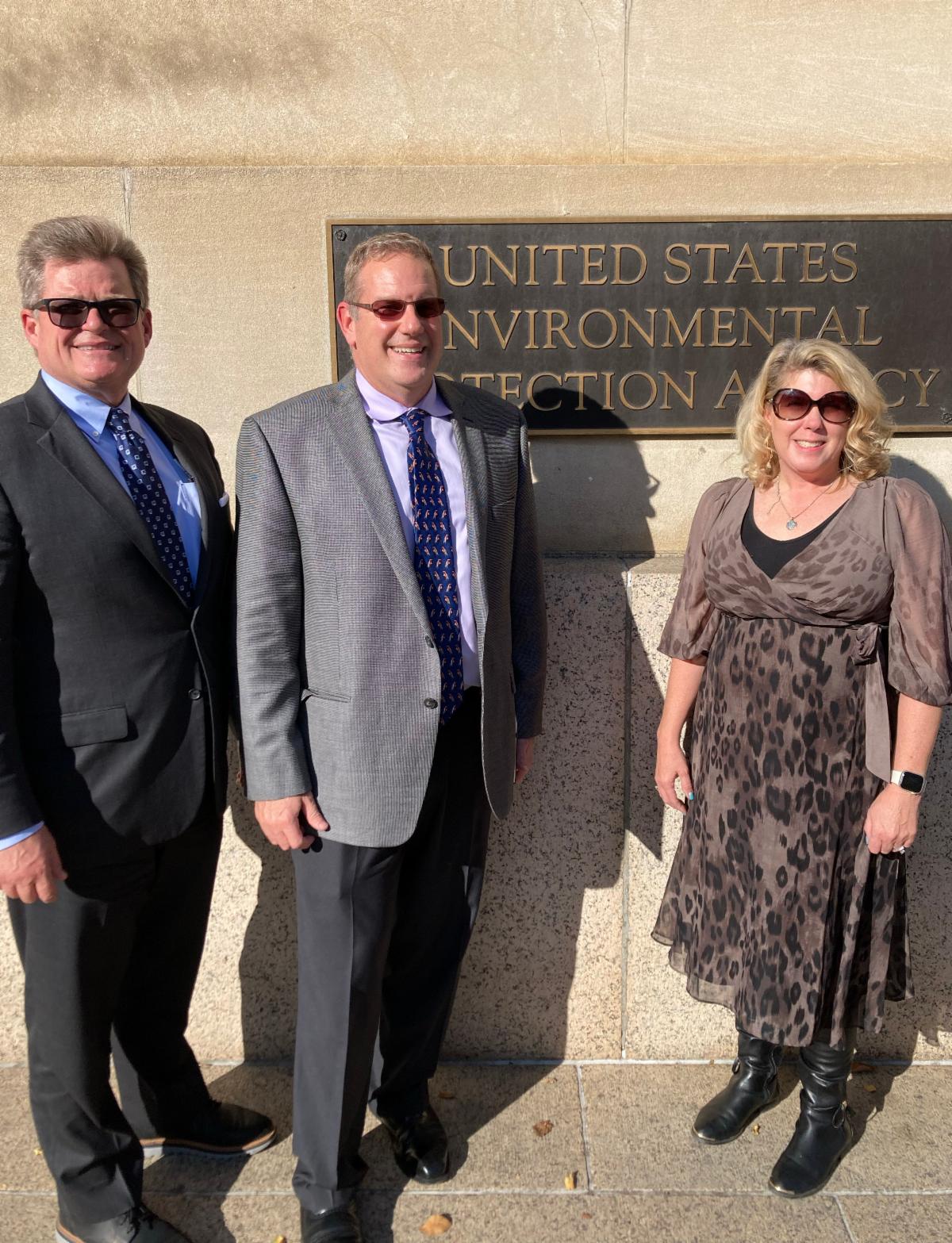
Closing out our week, I was joined on Wednesday by Dave Bolin of Atticus for a high-level meeting at EPA Headquarters with EPA’s Office of Pesticide Programs, and members of his senior staff to discuss Pesticide Registration Improvement Act (PRIA) implementation challenges. Sherry Hutcheson, CPDA EPA Committee Vice Chair joined remotely.
| |
Terry Kippley, CPDA; Dave Bolin, Atticus; Laurie-Ann Flanagan, DCLRS | |
|
USDA Meetings
Our CPDA ESA Mitigation Committee and staff organized two meetings at USDA Headquarters on Monday to discuss using DRAs to mitigate and reduce ESA no-spray pesticide buffers. We also met with USDA’s Natural Resources Conservation Service (NRCS) staff to discuss broader adoption of adjuvants in NRCS conservation programs.
Our group was led by Eileen Bernard of Nutrien and Dr. Connor Ferguson of Simplot who are the Chairs and Vice-Chair respectively of the CPDA ESA Mitigation Committee.
We were also joined by Dr. Andrew Hewitt, who is recognized by regulatory agencies worldwide for his research and understanding of spray drift. Of particular importance is Dr. Hewitt’s work for more than a decade as the Project Manager for the Spray Drift Task Force where he helped develop the main databases and models used by pesticide regulators in the U.S., Australia, Canada, and New Zealand.
| |
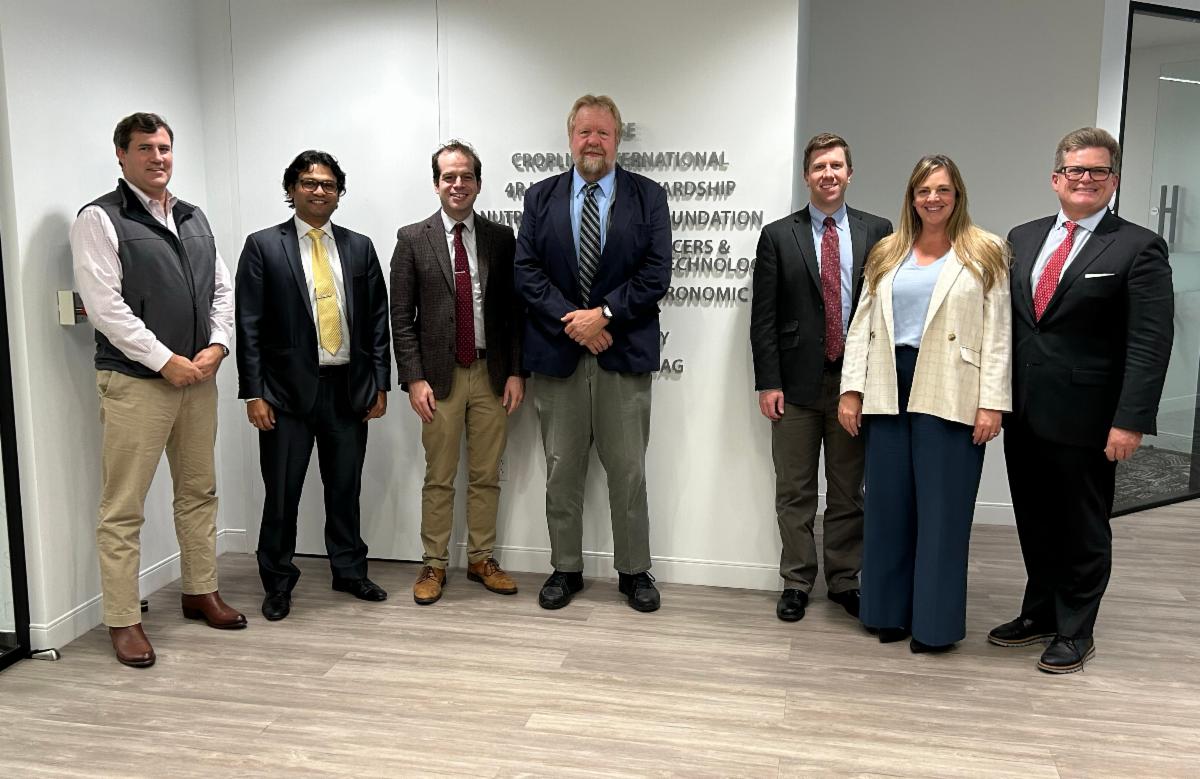
Dr. Andrew Hewitt, CPDA; Dr. Connor Ferguson, Simplot; Eileen Bernard, Nutrien; Kimberly Nesci, OPMP; Jay Vroom, CPDA; Scott Rawlins, CPDA. | |
|
Office of Pest Management Policy
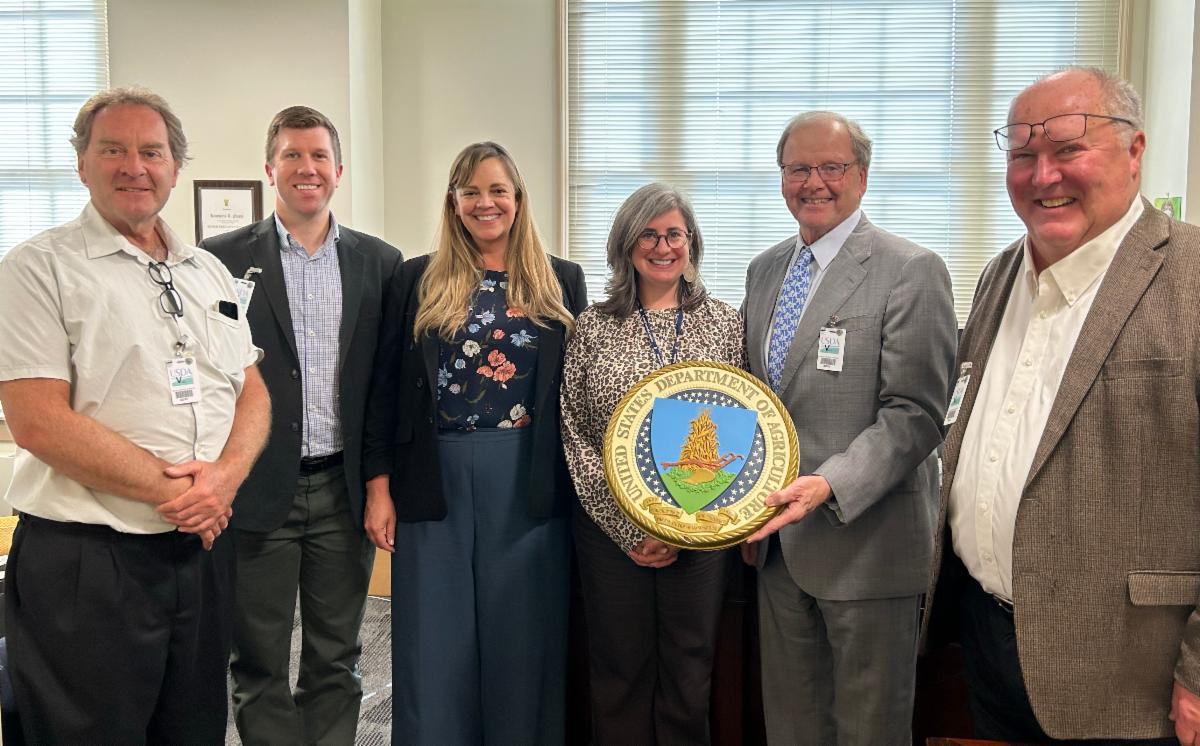
We kicked off our USDA meetings on Monday with a visit with Kimberly Nesci. Kimberly is the Director of USDA’s Office of Pest Management Policy (OPMP). OPMP serves as the USDA lead on pesticide regulation and policy. OPMP is the primary USDA liaison to EPA and focuses on ensuring that the needs of growers are represented.
We provided Kimberly and her team with an overview of the benefits of using DRAs to reduce ESA no-spray buffers and given that background, they were able to provide us with valuable feedback and advice on interacting with EPA.
| |
Kimberly Nesci, OPMP; Terry Kippley, CPDA; Dr. Connor Ferguson, Simplot; Eileen Bernard, Nutrien. | |
|
Natural Resources Conservation Service
Later Monday, we met with Dr. Terron Hillsman, Director of the Ecological Sciences Division for NRCS. Dr. Hillsman is an NRCS veteran with 30 years’ experience as a soil conservationist, state outreach coordinator, and as district conservationist. In his current role, Dr. Hillsman is responsible for the development and maintenance of the National Conservation Practice Standards.
Our meeting with him was timely for three reasons. First, adjuvants are part of the NRCS Conservation Practice Standards but undervalued as part of NRCS voluntary programs. Second, the NRCS practice standards are up for their periodic 5-year review. As such, we planted the seed and plan to share CPDA data with NRCS scientists showing the benefits of expanding adjuvant use among USDA’s conservation programs. Finally, with ESA mitigation as a top-of-mind issue at USDA, we were able to demonstrate how adjuvants are a farmer’s “easy button” for reducing no-spray buffers.
| |
Terry Kippley, CPDA; Dr. Andrew Hewitt, CPDA; Scott Rawlins, CPDA; Eileen Bernard, Nutrien; Dr. Connor Ferguson, Simplot, Dr, Terron Hillsman, NRCS. | |
|
EPA’s Office of Chemical Safety and Pollution Prevention (OCSPP)
On Tuesday morning, we met with EPA’s political leaders within OCSPP. This included Jake Li, who is the Deputy Assistant Administrator for Pesticide Programs and Rod Snyder, who is the Senior Agriculture Advisor to EPA Administrator Michael Regan. This is one of a series of meetings we have held with Jake and Rod discussing adjuvants as a key component of EPA’s ESA mitigation strategy.
| |
Dr. Manojit Basu, CropLife America; Rod Snyder, EPA; Ed Messina, EPA; Jake Li, EPA; Terry Kippley, CPDA. | |
|
Pesticide Policy Coalition (PPC)
On Tuesday afternoon, CPDA hosted a DRA lunch briefing for the PPC. The PPC membership includes grower groups, trade associations, small businesses, and state departments of agriculture.
There was great interest in our briefing with 20+ people attending in-person with another 25 tuning in virtually. For some groups, this was the first time learning about DRAs. While the PPC has generously supported the inclusion of DRAs as an ESA mitigation option in their comments to EPA and letters to Capitol Hill, this briefing should expand and bolster that support.
| |
Cameron Bishop, Simplot; Dr. Manojit Basu, CropLife America; Kyle Kunkler, Soybeans; Steve Hensley, PPC Chair; Dr. Connor Ferguson, Simplot; Eileen Bernard, Nutrien; Terry Kippley, CPDA. | |
|
EPA’s Environmental Fate and Effects Division (EFED)
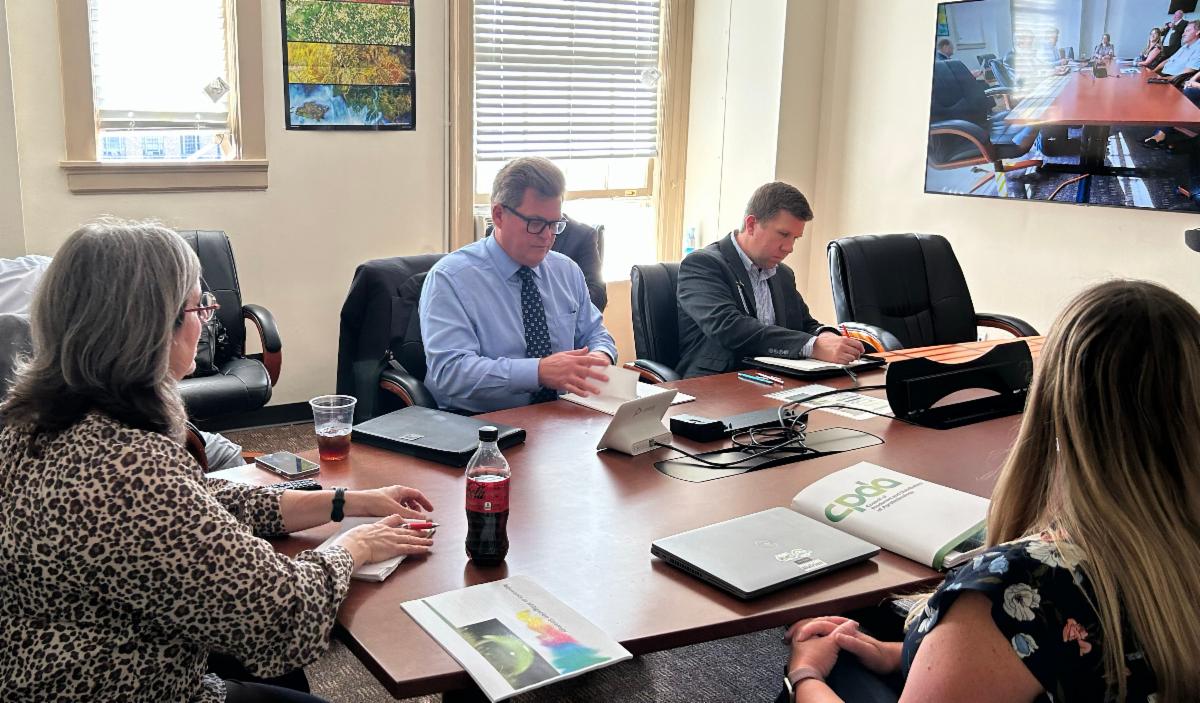
On Wednesday morning, we met with EFED’s Jan Matuszko, Amy Blankinship, and their staff. Jan is the Division Director and Amy is the Deputy Division Director. Ultimately, EFED will be responsible for evaluating and validating our pesticide DRA environmental data, so getting their input was a priority of this week’s meetings.
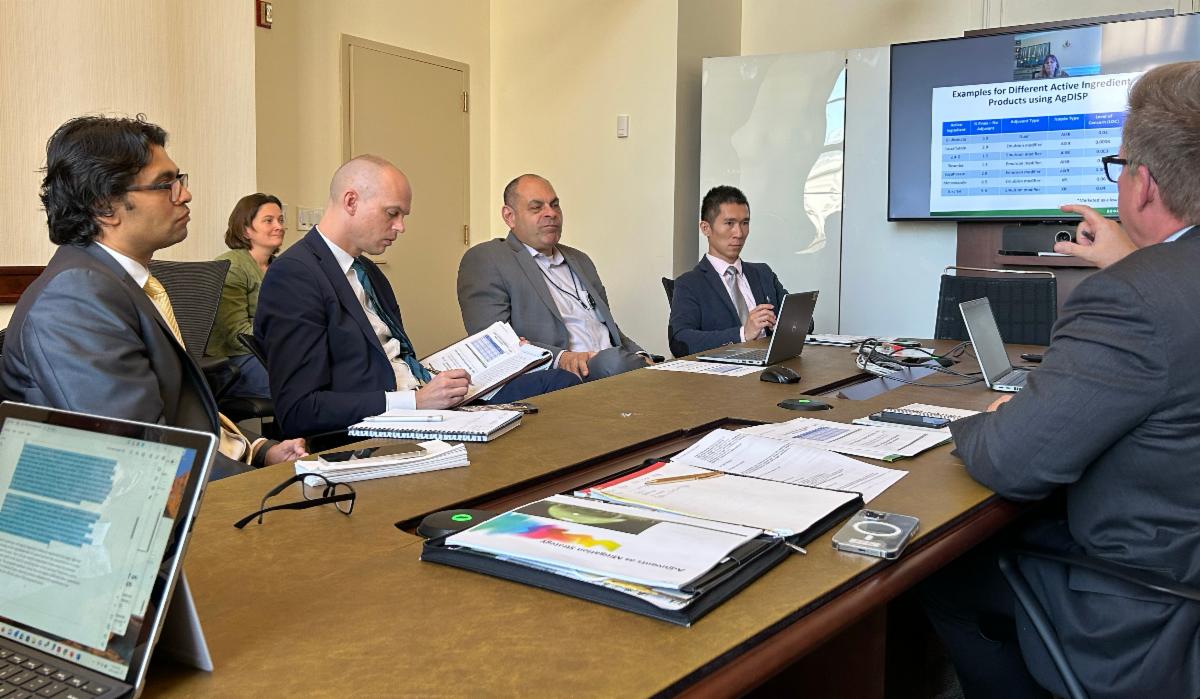
Based on this meeting and others, I believe we now have a path forward that will incorporate our significant DRA database into EPA’s models. This information can then be utilized to reduce ESA no-spray buffers.
| |
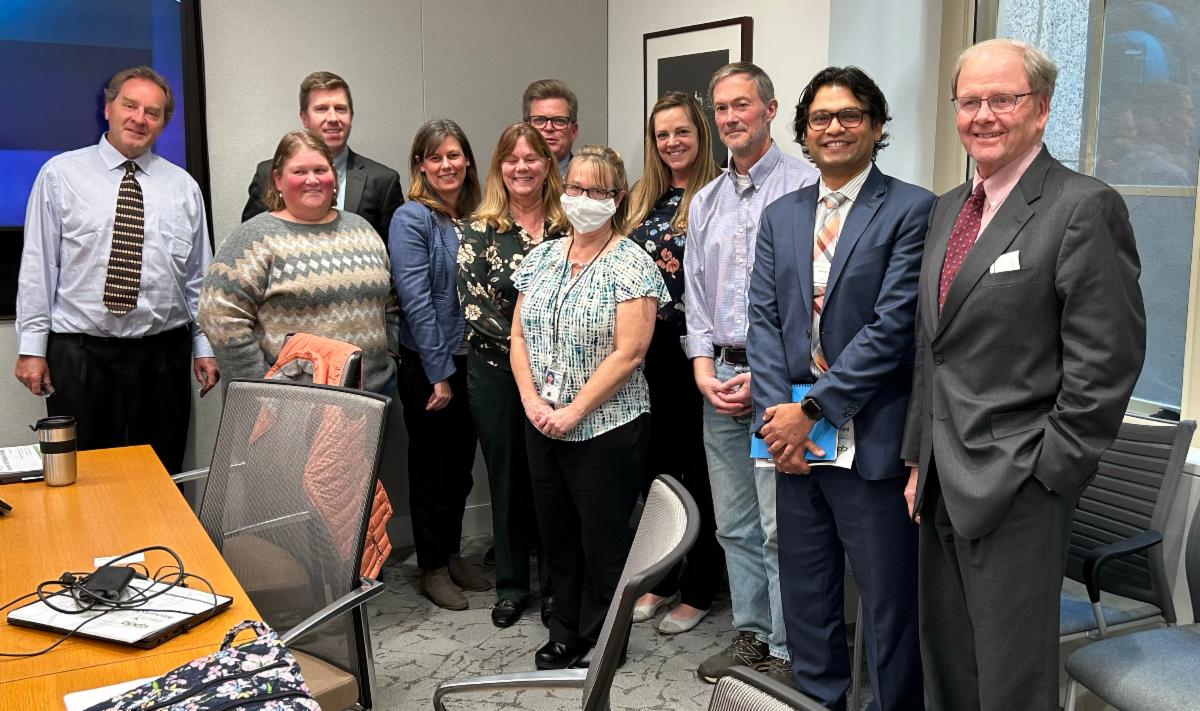
EFED staff and the CPDA team. | |
|
PRIA Implementation Meeting
We closed out our busy week, where I was joined by Dave Bolin of Atticus and the entire PRIA Coalition for a meeting with Ed Messina of OPP and his senior staff to discuss PRIA implementation.
PRIA V passed Congress late last year and it was designed to give OPP the tools it needed to meet its obligations and timelines for regulatory submissions. Unfortunately, there are still significant problems, and this meeting was designed to offer our support to OPP while highlighting internal changes OPP should focus on.
For OPP’s part, they are still struggling with staffing shortfalls, funding, and front-end processing issues. Confounding this are internal IT issues that have defied all federal efforts to fix them.
With this busy and productive week in our rearview mirror, I can’t thank the efforts of our CPDA volunteer leaders enough for taking time out of their busy schedules to travel to Washington DC to lend their voices and expertise to address CPDA priority issues.
I would also be remiss if I didn’t mention our CPDA team of Jay Vroom, Scott Rawlins and Tim Cansler for the pick-and-shovel work they do in conducting preliminary briefings and organizing meetings. Special thanks to Dr. Manojit Basu for his leadership on the use of adjuvants as a potential ESA mitigation tool and leveraging his working relationship with the EPA for the overall benefit of our industry.
| |
|
How do I get my DERs?
Details on EPA’s rationale for a pesticide registration decision are often spelled out in the Data Evaluation Records (DERs) prepared by EPA staff on the studies submitted by the registrant in support of the application. Some states insist on seeing those DERs before approving state registration of products. Historically the registrant’s timely access to those DERs has been problematic, often available only via Freedom of Information Act (FOIA) request, with associated delays. PRIA 5 contains a new requirement to complete the DERs and provide them to the applicant by the time the registration decision is made, while respecting data confidentiality.
See details below of a November 14 webinar, hosted by the PRIA Coalition of registrant trade associations, for EPA staff to explain the new process for releasing DERs. You must register to receive the link for the webinar. Lynn Vendinello of OCSPP’s Office of Program Support will lead the webinar.
| |
|
Webinar: EPA's Implementation of Data Evaluation Records (DERs)
Join the PRIA Coalition on November 14 at 12:00 PM EST to discuss EPA's implementation of Data Evaluation Records (DERs) under PRIA 5. This initiative aims to provide applicants with these records at the time of decision review.
This session will uncover the new process of receiving and downloading the DERs; explore how EPA will release DERs to applicants at decision review time, while upholding confidentiality of proprietary information; and provide insight into how EPA fulfills this PRIA 5 requirement, ensuring an efficient and transparent process.
Register in advance for this webinar. After registering, you will receive a confirmation email containing information about joining the webinar.
| |
|
ASTM Committee E35 Meeting
in DC on Pesticides
November 7–9, 2023
Washington Hilton, Washington, DC
| |
|
CPDA State & Federal
Regulatory Update
Monday, November 13, 2023
2:00–3:00pm EST
| |
|
Launching the Future of Ag Retail
Building on more than 30 years of bringing the ag retail industry together to learn and share ideas, the 2023 ARA Conference & Expo will convene Nov. 28-30 in Orlando. This year's theme of Launching the Future of Ag Retail reflects the need to adapt to take on our current challenges while positioning ourselves to meet the challenges of the future head on.
| | | | |