|
|||||||||
THE SKILLFUL EDUCATORTeaching & Leading with Intention
IDEAS WORTH PUTTING INTO PRACTICE
|
|||||||||
|
QUESTIONING The Questions We Ask Shape the Thinking Students DoDesigning purposeful questions that move students toward deeper thinking |
|||||||||
|
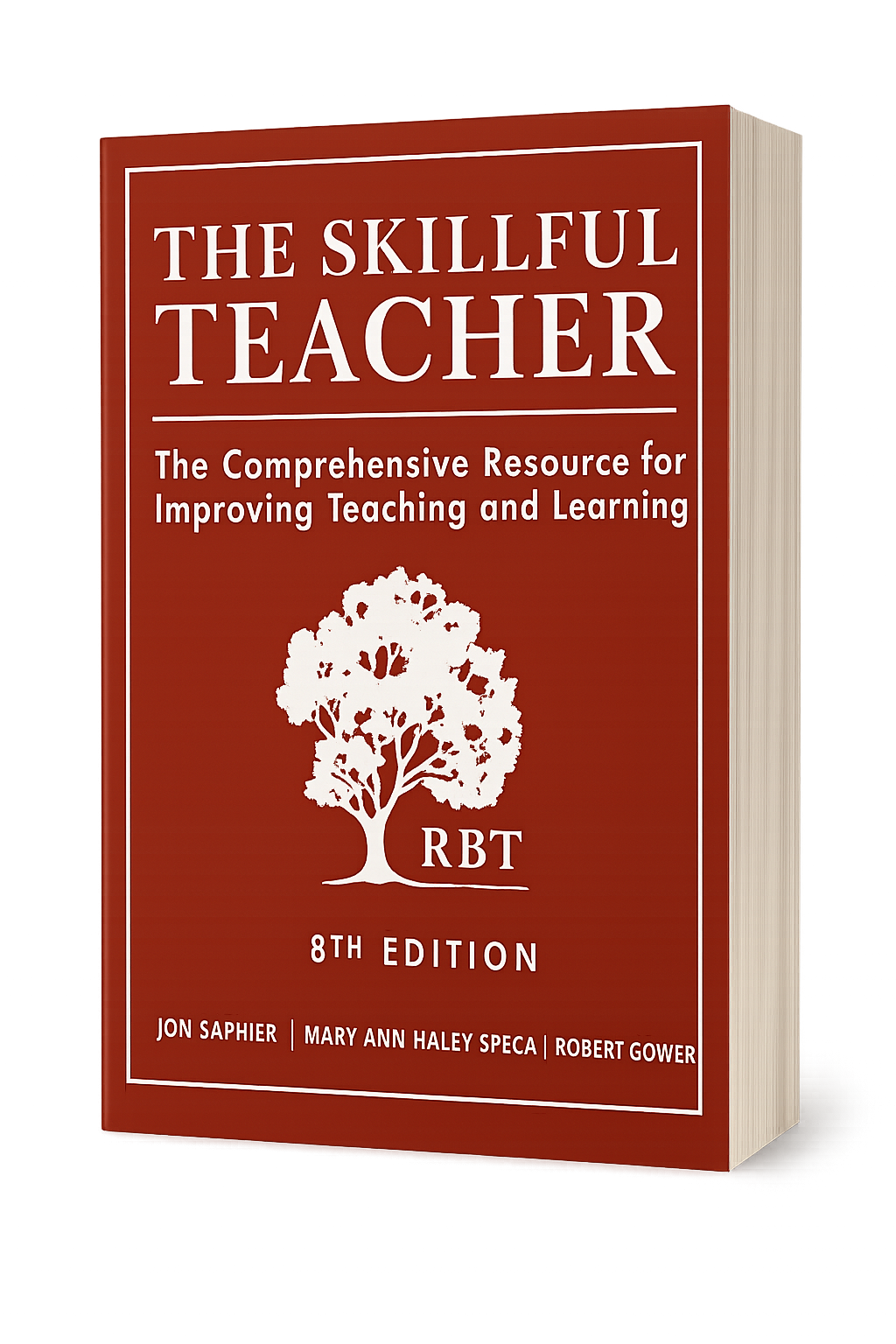
Questions are everywhere in classrooms. In fact, The Skillful Teacher, 8th Edition notes that teachers spend between 35 and 50 percent of teaching time posing questions. But the important question isn't simply how many questions we're asking. It's:
Skillful questioning is deliberate. We choose questions for a purpose, match them to what students are supposed to learn, and sequence them so that all students have opportunities to build toward deeper thinking. |
|||||||||
|
WHY IT MATTERS Start With the ThinkingQuestions can serve very different purposes: checking for understanding, surfacing misconceptions, maintaining attention, stimulating curiosity, extending thinking, framing big ideas, or promoting transfer. The Skillful Teacher describes questioning as an entire toolbox—the tool we choose should match the goal in the moment. So rather than beginning with: What's a good question I could ask? Try beginning with: What do I want students to be thinking about right now? Then look at the lesson objective. If students are expected to compare, analyze, explain, or evaluate, do the questions they encounter actually ask them to do that thinking? The cognitive level of our questions should match the cognitive target of the learning. |
|||||||||
|
TRY THIS Build a Questioning StrategyBetter questioning doesn't simply mean asking more higher-order questions. Students need foundational knowledge and understanding to engage in more complex thinking. The key is purposeful sequencing. Begin with the higher-order thinking you want students to reach, then plan a progression of questions that will help them get there. A questioning strategy is more than a collection of individual questions. It's a deliberately designed sequence in which each question builds on the thinking that came before it. For one upcoming lesson:
|
|||||||||
|
SMALL SHIFTS, BIG IMPACT Protect the Thinking TimeEven a carefully designed question loses its power if students aren't given time to think. Mary Budd Rowe's research found important changes when teachers purposefully paused for at least three seconds after asking a question: more students responded, responses became fuller, and the level of thinking increased. The pause after a student answers matters too. Waiting three to five seconds gives that student an opportunity to elaborate—and everyone else time to process, connect, question, or add another perspective. Try this simple pattern:
Notice what happens when silence becomes thinking time rather than something to fill. |
|||||||||
|
FOR INSTRUCTIONAL LEADERS Who Is Doing the Thinking?During classroom visits, don't simply count the number of questions a teacher asks. Listen for what happens around them. Consider: Purpose: What is the question intended to accomplish? Cognitive demand: Does it match the learning objective? Sequence: Do questions build toward deeper thinking? Participation: Who gets the opportunity to think and respond? Wait time: Is there enough time for students to formulate and extend their thinking? Then ask one larger question: Who is doing most of the cognitive work? The goal isn't a classroom in which the teacher asks excellent questions all period. It's one in which thinking questions are properly placed to generate increasingly rich thinking among students. |
|||||||||
|
RESEARCH CONNECTION It's Not Just About Asking Harder QuestionsResearch on classroom questioning points to a more nuanced conclusion than simply "ask more higher-order questions." Meredith Gall's research on teacher questioning found that higher-cognitive questions can promote deeper thinking, but lower-cognitive questions also play an important role—particularly when students are building the knowledge and understanding they need for more complex thinking. The effectiveness of a question depends on what students are learning and what we want them to do with that learning. Kathleen Cotton's 1988 synthesis of classroom-questioning research reinforced this finding. She concluded that there is no single "best" cognitive level of questioning for every situation. Effective questioning depends on the learning goal, content, students, and the teacher moves surrounding the question—including wait time and purposeful probing and follow-up. Together, the research reinforces an important principle from The Skillful Teacher: effective questioning isn't about making every question harder. It's about deliberately using and sequencing questions to move students toward the thinking the learning requires.
Sources: Gall, M. D. (1984). "Synthesis of Research on Teachers' Questioning." Educational Leadership, 42(3), 40–47. Cotton, K. (1988). Classroom Questioning. School Improvement Research Series, Close-Up No. 5. Northwest Regional Educational Laboratory. |
|||||||||
|
FEATURED RESOURCE Plan a Questioning Strategy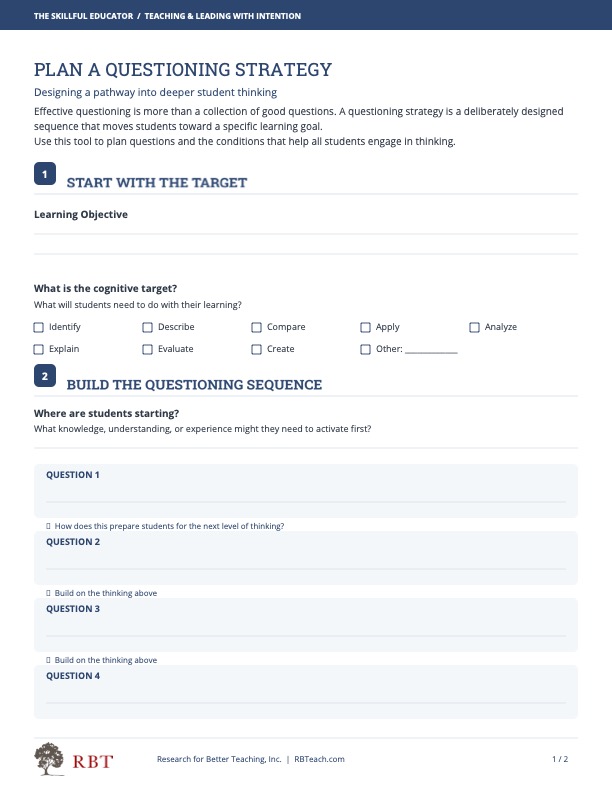
Our Plan a Questioning Strategy tool helps educators put these ideas into practice with an upcoming lesson. Use it to:
|
|||||||||
|
RBT'S WINTER OPEN COURSES Professional Learning That Strengthens PracticeJoin educators from across schools and districts for sustained professional learning grounded in The Skillful Teacher. |
|||||||||
|
WINTER OPEN ENROLLMENT Studying Skillful TeachingPromoting Motivation, Learning, and Achievement
Class format: Hybrid Instructor: Christina Olansen-Rilli
|
|||||||||
|
WINTER OPEN ENROLLMENT Analyzing Teaching for Student ResultsStrengthening Observation, Analysis, and Feedback Develop the knowledge and skills to analyze teaching practice, identify evidence of student learning, and engage in meaningful conversations about instructional improvement. Grounded in The Skillful Teacher, ATSR supports instructional leaders in making thoughtful, evidence-informed decisions about teaching and learning.
|
|||||||||
Share the Learning with ColleaguesFinding Teaching & Leading with Intention useful? Pass it along to a colleague! Invite others to subscribe for practical teaching strategies, research insights, ready-to-use resources, and professional learning opportunities from RBT.
Follow RBT
|
|||||||||
|
Research for Better Teaching More high-expertise teaching, for more students in more classrooms, more of the time. www.RBTeach.com |