RETIREMENT SECURITY MATTERS
A forum for retirement innovation information sharing focused on
states, supporters, and service providers.
|
|
Greetings! welcome!
to Retirement Security Matters – where we talk about retirement readiness innovation by states, supporters, and service providers.
|
People! It's summertime. We don't know where all this content is coming from, but it is must-read:
|
- Treasurer Beth Pearce on innovation in the great state of Vermont
- How to get small businesses to start retirement plans with Jeff Rosenberger, Guideline
- SFRP updates – new growth metrics – and California, Connecticut, Illinois, Maryland and Oregon
- Grant’s Best Practices: state-specific research
- New research from Morningstar on MEPs and PEPs, and
- Whew! Pix of the Week
|
Are Greener Days Coming to the Green Mountain State?
|
|
 |
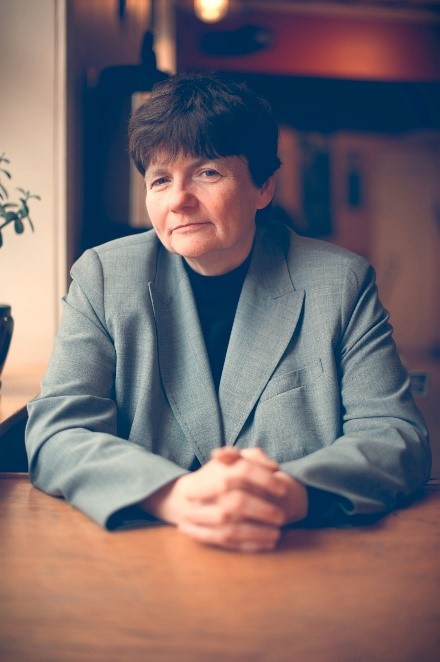
Beth Pearce, Treasurer, Vermont
|
|
|
|
We talk a great deal about Auto IRAs in this space, but that’s not the only model states are pursuing. Like many others, Vermont didn’t like what forecasts were saying about retirement readiness and they’re taking steps to expand access. We talk with long-time
Treasurer Beth Pearce to get her perspective and the latest update from the Green Mountain state. Here’s a light bite to get us started and you’ll find the rest of the piece
here.
Treasurer Pearce, Beth, tell us about your involvement in retirement security in Vermont. We know this is very important to you.
Well, for me it ties into one of the goals of the Treasurer's Office, which
|
|
|
|
is to provide every person in Vermont an opportunity for financial well-being. You want it for yourself, you want it for your family. We want it for every single person in Vermont.
We know you've been looking at retirement readiness in Vermont, and that's brought you to where you are today. What are you learning?
We teamed up with AARP and they did a study that determined there were
104,000 employees in Vermont – 45% of our workforce -- that did not have access to retirement savings at work. You really do need that to succeed. Folks just don't put enough aside for savings any other way. We recognize that if you're trying to do it yourself, it can be confusing. And, Social Security is not going to cut it.
[continued below]
|
|
How to Get Small Businesses to Start Retirement Plans
|
|
|
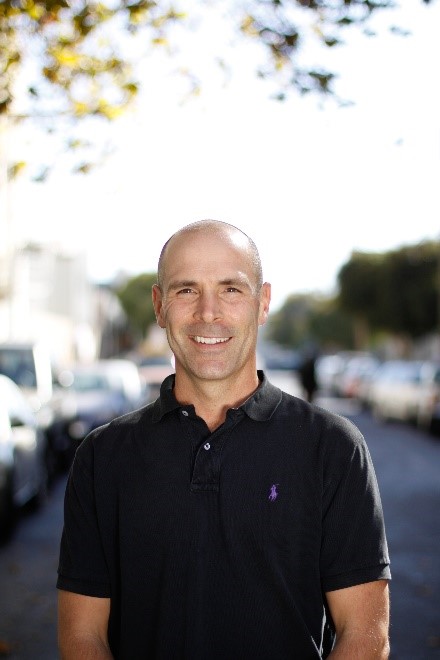
Jeff Rosenberger, COO, Guideline
|
|
|
|
There’s a dilemma in the marketplace – it starts with, “why don’t more businesses offer retirement plans?” Somewhere between 35% and 45% of the employed workforce in the US aren’t covered by retirement plans at work. Not including gig and independent workers.
We know the workplace is a great place to save. Get that money tucked away on a payroll-deduction basis before it gets into your paycheck … and before you spend it. Workplace plans have their advantages. They let you save quite a bit more than IRAs do. Most plans have an employer contribution or match, and sometimes both. Many plans offer financial wellness tools and education. But you can’t take advantage of these cool features if your employer doesn’t offer a plan.
|
|
|
|
So what does it take to entice employers? We chat with the COO of one of the companies that’s working to crack the code –
Guideline. As usual, our conversation with Jeff Rosenberger goes too deep to be fully captured below, but you can
catch the rest of our great discussion here.
Jeff, we’d love to have you tell us about yourself.
Thank you for having me. I'm the Chief Operating Officer at Guideline where I’ve been for the last four years. Our co-founders started Guideline in 2015 based on their experience at a prior startup, TaskRabbit, where they struggled to get a high quality 401(k). Based on the challenges our CEO Kevin Busque faced, he started thinking about how to build a better small business 401(k) solution.
[continued, below]
|
|
State Facilitated Retirement Programs in Rollout and Study Mode
|
|
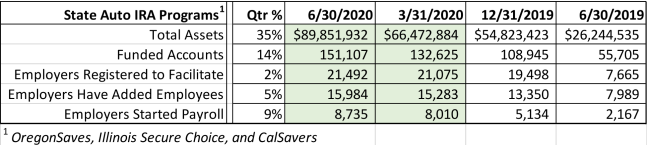
Fresh figures from the three funded Auto IRA programs. Despite the ongoing pandemic and its impact on workers and savers of all stripes, assets are up 35% across the three programs and 64% year to date. The number of funded accounts is up 14% for the quarter and 39% year to date. The rate of growth in employer registrations is down, but more employers have started making payroll deductions, enabling workforce savings. California’s first deadline kicks in on September 30, and it looks like aggregate assets will cross the $100 million mark in July or August.
And, here’s the
latest action report for your favorite states:
|
|
The
CalSavers
board met on Monday of this week. The board was presented with a
report on program participation and funding
for the quarter ending June 30, 2020. Participation continues to increase. The program now boasts almost 2,000 registered employers, more than 15,000 funded accounts and total assets of $5.2 million. The deadline for mandatory registration of employers with 100 or more employees was extended from July 1 to September 30 of this year due to the pandemic. It will be interesting to see how the numbers move after the effective date of the mandate.
|
|
The
OregonSaves
Board is scheduled to meet on
August 4.
|
|
Illinois’ Secure Choice Board
is scheduled to meet on
August 11
.
|
|
The
Connecticut Retirement Security Authority
last met in May and is scheduled to meet again on
August 21
. They’re reportedly working out details of their servicing contract with RFP winner BNY Mellon.
|
|
And, last but not least! We anticipate that the
MarylandSaves
board will make decisions related to their program administration and investments RFP in August. We’re looking forward to sharing an in-depth feature covering Maryland shortly.
|
|
Grant's Best Practices: State-specific research brings home the need to increase retirement security and savings
|
|
There is no shortage of research indicating that workers in the United States are not saving enough for retirement and many lack access to workplace plans. But for policy makers trying to establish a government facilitated savings solution in their own state, it’s important to have state-specific data to make the case. Why? Because data on the retirement savings gap in your own state will highlight the problem and the need for solutions in a way that the national data does not.
In our
last edition
Wisconsin State Treasurer Sarah Godlewski reported that by 2030 Wisconsin is projected to have a 60% increase in Wisconsinites who are 65-plus. “If you think about that, if we do nothing – and people can’t live off their Social Security alone – the expectation is that there’ll be 400,000 elderly Wisconsinites living in poverty by 2030.” Those numbers, specific to her state, paint a compelling picture about the plight of retirement-age Wisconsinites and the potential strain on the state’s social safety net.
Research that sheds light on retirement insecurity among workers in industries unique to a state – particularly in industries that are a critical part of the state’s economy – can add a sense of urgency to the need to increase savings and familiarity in terms of putting a face to those who are impacted most by the current lack of retirement savings options and illustrating the way in which retirement insecurity is distributed across variable such as gender, income level and race and ethnicity. Think fisheries in coastal states, farm workers in agricultural states and tourism-related service workers in states that rely heavily on tourism, to name a few examples.
So how does one go about gathering or finding state-specific data?
This can be a challenge, particularly when limited resources make it difficult to conduct original research.
In some cases, states have passed “study bills” as precursors to moving forward with legislation to establish new retirement savings programs. These are generally accompanied by an appropriation of funds that make it possible to conduct original research.
Stay tuned:
in coming editions we’ll discuss the importance of leveraging partnerships with stakeholders and practical advice on cultivating and maintaining strategic relationships with stakeholder groups.
_________
New Research:
Hot off the presses from Morningstar,
Paperwork or Panacea (free download)
. Authored by
Lia Mitchell
, this piece takes a close look at emerging PEP products and considers their future pathway with the benefit of hindsight – from the world of MEPs, which have been around “for decades,” and about which “little is known”.
Here's a recap
. The 13-pager contains insight for public and private sector innovators alike. (Aron Szapiro,
featured here
, contributed to this white paper.)
|
|
... Vermont,
continued from above
|
|
That review and those findings led you to take some action.
Right. My predecessor (Treasurer Jeb Spaulding) and I looked at it in 2005 or 2006. We attended a retirement readiness session at Dartmouth with Maine and New Hampshire. At the time to be very candid, the investment community felt a little uneasy with some of the ideas that came forward. They said, let's see if we can make some inroads into this retirement access issue. And frankly when we took a look at the numbers 10 years later, they were pretty much the same in terms of need.
So we created the
Green Mountain Secure Retirement Plan with the help of the banking and investment community, and a lot of enthusiasm. It is for employers that have 50 or fewer employees, and that do not already have a plan in place. The plan is a state-based Multiple Employer Plan which will be launched in partnership with a private sector provider later this year.
Tell us – what does it take to stand up a state-based MEP.
Our approach has been first to identify well-qualified providers by RFP, to establish servicing parameters, and to execute a contract. We are done with that process and the board will be approving the contract shortly.
And now obviously with COVID-19 affecting all of us, it’s challenging us to think about how to work with our business community effectively.
Our goal will be to have a series of small meetings with businesses asking them, how do we approach the Plan rollout in this environment. We’ll look for a representative group from different constituencies. Because we don't want to wait until the pandemic is over. Employers and workers need this support now.
You’re right. This is an unusual time. Is it the wrong time to be approaching employers?
Thank you Treasurer Beth Pearce! Folks, if you’d like to stay close to this initiative, the Treasurer says: “We’d love that. There are several great ways. You’ll find good information on our
Treasury page for retirement security
. After the upcoming board meeting, there should be a formal update on the site. If folks want to stay close to the process and reach out they can certainly
contact us directly
. Interested employers should contact us as well – we keep a running list in order to stay well connected.”
|
|
... Guideline,
continued from above
|
|
What are the defining characteristics of your product offering – what were Kevin and the cofounders looking for?
It's very much a software solution and the cofounders all have tech backgrounds vs. coming from financial services. For example, we enable our clients to set up a 401(k) plan without talking to anybody if they use one of our integrated payroll partners. That said, most of our clients do want to talk with someone at least briefly about plan design, but they can go through the plan setup process entirely on their own in 10-15 minutes.
Your pricing is different than many, as well.
You’re right. We don't charge fees based on assets under management, and as far as I know we are the only 401(k) provider that doesn’t. We charge a $39 or $99 monthly fee along with an $8 monthly per participant fee for each participating employee. The plan sponsor, the small business, pays those fees and they only pay for the employees that participate. The participants just pay the underlying costs of the Vanguard index funds and standard transaction fees if they need to withdraw or take a loan.
So, tech-based with flat fee-based pricing. Are you using automatic features?
Yes. From the beginning, the co-founders were very much of the mindset of starting with a “clean sheet of paper”. How would you design a great 401(k) plan for small businesses today?
Auto-enrollment was near the top of the list. And you've seen the stats which highlight that younger workers and lower wage workers really benefit from auto-enrollment. Otherwise those folks are less likely to engage and enroll. Because all our plans have auto enrollment, we see participation around 85% across our plans. Turns out, inertia is a tremendously powerful force.
We hear that employers hesitate to start plans because it's complicated. They're not sure where to go. You know, it's not something you do every day. What do you think is important to making it easy?
We bet you want to know more! Catch the rest of this chat
right here.
Jeff, thank you for sharing your insights and approach with us today.
Interested in more? Check out www.guideline.com or follow @Guideline401k and @RosenbergerJeff on Twitter.
|
|
A couple of things you might not know about Beth Pearce. One, she loves birds. And two, she’s spent some time and worked in Massachusetts. Any guesses as to where these cairns may be? (pre pandemic!) Couple of hints: there’s a deep conical pond nearby. And an author learning to live the simple life built a cabin here by hand in the 1840’s.
|
|
|
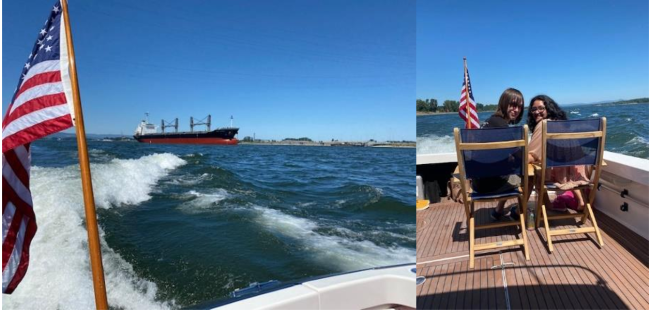
On the other coast, we’ve got blue skies on the Willamette River and around Sauvie Island, just northwest of Portland. The island -- famous for its fertile soil, luscious crops, and a large shallow lake, is also part of the western migratory flyway.
|
|
|
|
|
Jeff Rosenberger joins us from a little further south. We love a good selfie. And dog pix! Here’s the family cruising around Lake Tahoe on a hike with pup Glacier. Glacier looks even happier in pic #2 after a swim. Good Boy!
|
|
|
|
|
Back in Oregon on a 100-degree day, we enjoy some time on the water. It’s good to have #FWB! (Friends with boats) --
|
|
|
|
On a more serious note, sometimes you have to take a break and go indoors. When you do, you will be eternally grateful for heavenly mercies, good medical professionals, and siblings who pull together to collaboratively solve tough care questions … via Zoom. #wegotyou Dad! (Postscript, Dad is now back at home and
doing great.)
|
|
♥
OK, that's a wrap.
If you like this piece, please stick with us. We’ll be back in about two weeks. If you don’t like it, please unsubscribe. Comments for us? Please
let us know. Want your own subscription? Request one
here. All information shared is from public sources or used with express permission.
|
|
Looking for another great retirement savings innovation resource? The
Center for Retirement Research at Boston College
develops and hosts terrific content and proprietary research related to states, financial security, social security, and more.
If you want a great source of broad-based, consumer-focused retirement news, Jeffrey H. Snyder’s
The Morning Pulse
is your ticket. You can
subscribe here
.
MEPS and PEPS
: We’re speaking at an industry-focused conference alongside some experts you won’t want to miss on August 27. More info
here
. Hosted by Chris Carosa’s
FiduciaryNews
with over 130 attendees at last count.
|
|
|
|
|
|
|