When the weather warms up, most of us start reaching for lighter food. Fresh fruit, crisp vegetables, and meals that do not keep you standing over a hot stove. For older adults, summer meals can do something useful beyond tasting good. They help with staying hydrated through the hottest stretch of the year.
Hydration sounds like an easy thing to stay on top of, but it can slip past seniors before they notice. As we age, the sense of thirst tends to fade, so an older adult may already be low on fluids before they ever feel like reaching for a glass of water. Add in hot weather, a few common medications, a chronic health condition, or an afternoon spent outdoors, and dehydration becomes a genuine concern.
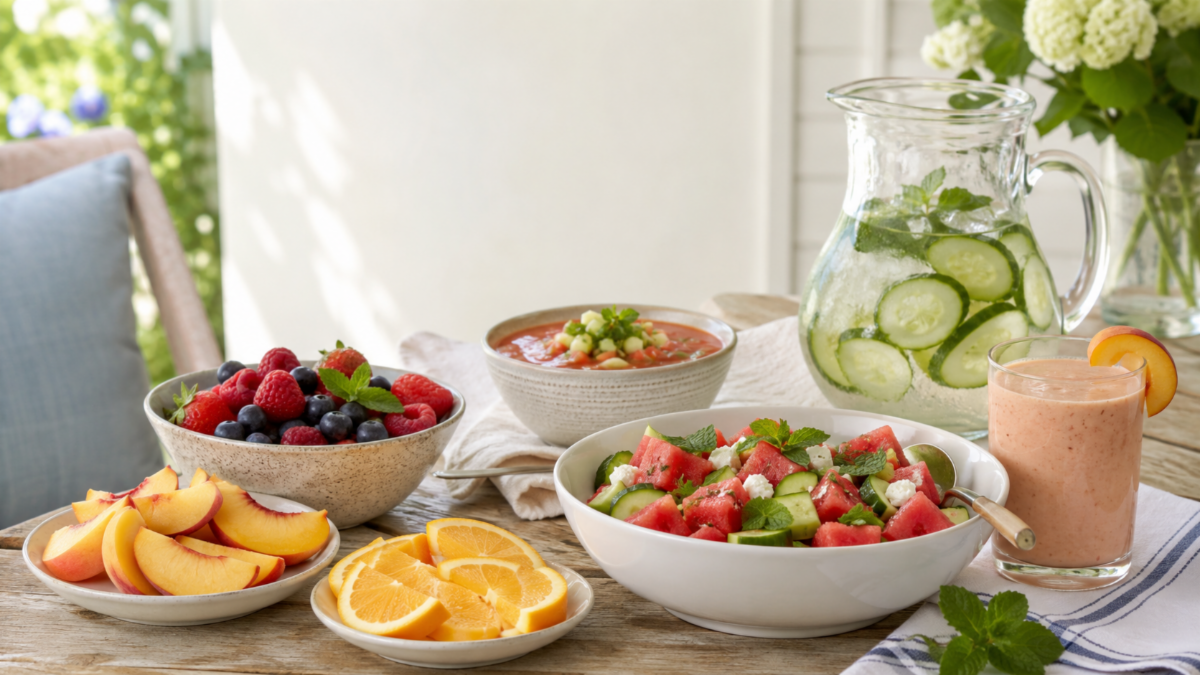
Plain water is not the only answer, though. Water matters, but a lot of summer foods carry plenty of fluid on their own. Juicy fruit, crisp vegetables, fresh herbs, chilled soups, smoothies, and a handful of no-cook meals can all do double duty. They taste like summer, and they help with hydration at the same time.
Cucumbers, watermelon, oranges, berries, tomatoes, lettuce, zucchini, peaches, celery, and yogurt are all worth keeping in the kitchen. Most of them are easy to chew, quick to put together, and gentle on the stomach, which makes them an easy yes on a warm day.
Why Hydration Matters More in the Summer
Hydration touches nearly everything the body does. It helps regulate temperature, keeps digestion moving, supports the kidneys, aids circulation, and has a hand in energy and mental clarity. For seniors, staying hydrated can also lower the risk of dizziness, weakness, constipation, urinary tract issues, and heat-related illness.
Summer pulls more fluid out of the body through sweat, even during light activity. A short walk, an afternoon of gardening, time spent sitting outside with family, or an outdoor event can all raise the need for fluids. Anyone taking diuretics or certain heart, blood pressure, or kidney medications should be especially mindful and follow their doctor's guidance on how much to drink each day.
One of the easiest fixes is to work hydration into meals and snacks instead of waiting on thirst to show up. Small amounts, offered often, tend to go down more easily than one big glass. A glass of water with breakfast, a fruit-forward snack mid-morning, a chilled soup at lunch, and a refreshing salad at dinner add up over the course of a day without anyone having to think too hard about it.
Here are a few recipes that do exactly that.
|